“The only thing that makes life possible is the persistent, courageous effort to improve things.”
— Olive Chancellor reflecting on her mission and the nature of reform.

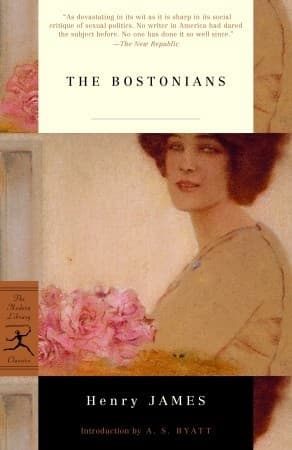
Henry James (1885)
Genre
Literary Fiction / Historical Fiction
Reading Time
12-15 hours
Key Themes
See below
Sign in to track this book
After the Civil War, a young speaker becomes the focus of an ideological and romantic conflict between a determined Boston suffragist and her conservative Southern cousin.
Basil Ransom, a poor, traditional Southern lawyer, travels to Boston to visit his wealthy and very progressive cousin, Olive Chancellor. He is immediately struck by the city's unique intellectual and social atmosphere, especially the strong women's rights movement Olive is deeply involved in. Basil, a firm conservative, finds much of this new way of thinking confusing and even unpleasant. During his visit, Olive takes him to a gathering where he first meets Verena Tarrant, a young woman with a remarkable talent for speaking without notes, whose parents use her abilities for their own gain. Basil is interested in Verena, though he criticizes the platform she is given.
Olive Chancellor is deeply moved by Verena Tarrant's powerful presence and her seemingly natural understanding of the feminist cause. She sees Verena not just as a skilled speaker, but as a pure and selfless vessel for the movement's ideas. Olive quickly forms a strong attachment to Verena, inviting her to live in her refined Boston home and offering to develop her talents. Olive imagines Verena as the future face of the women's rights movement, a public voice that can express the cause with unmatched passion and belief. This mentorship soon grows into a deep, possessive emotional bond, with Olive protecting Verena from the outside world.
Despite his initial doubts about Verena's public role, Basil Ransom finds himself more and more drawn to her. He sees her as a beautiful and easily influenced young woman, rather than just a symbol of a movement he dislikes. He believes she is being controlled by Olive and her parents, and that her true self is being hidden. Basil starts looking for chances to speak with Verena privately, trying to pull her away from Olive's influence and the public stage. His conservative views directly clash with Olive's progressive plans, setting the stage for a subtle but intense fight for Verena's loyalty and affection.
Verena Tarrant, a naturally agreeable and loving young woman, is deeply loyal to Olive Chancellor, who has given her a comfortable life, intellectual stimulation, and a sense of purpose. Olive's influence is strong, and Verena truly believes in the cause she supports. However, Basil Ransom's constant attention and his direct appeals to her as a woman, not a public figure, begin to awaken new feelings in her. She is not used to such personal romantic interest and finds herself increasingly confused. Verena values Olive's friendship and the importance of her public mission, but also feels a growing, unsettling attraction to Basil and the traditional life he represents.
With Olive's careful guidance, Verena's reputation as a speaker grows, and she becomes a celebrated figure in the women's rights movement. Her engagements become more frequent and important, ending with a highly anticipated speech in New York. This success, however, makes the rivalry between Olive and Basil stronger. Olive becomes more possessive and demanding of Verena's loyalty, seeing Basil as a direct threat to their shared mission and their bond. Basil, meanwhile, becomes more determined to save Verena from what he sees as a life of public use and emotional control, making his intentions clear to both Verena and Olive.
The turning point of Verena's career is a major speech scheduled in New York. Olive, always her protector, goes with her, carefully planning every detail of her appearance. Unexpectedly, Basil Ransom also travels to New York, determined to make one final, strong appeal to Verena. The close presence of the three in the busy city creates almost unbearable tension. Basil's presence is a constant, annoying reminder to Olive of her shaky hold on Verena. Verena, caught between them, feels great emotional strain as the moment of her most important public address approaches, and her personal loyalties are deeply tested.
On the day of her highly anticipated New York speech, Verena Tarrant is confronted by Basil Ransom. He passionately argues against her public life, appealing to her desire for a private, domestic existence and offering her his love and a traditional marriage. Basil's arguments, along with Verena's own growing doubts about the constant demands of her public role, create an intense inner struggle. She feels the weight of Olive's expectations and the cause she has supported, but also the strong pull of a conventional life and personal happiness offered by Basil. This confrontation leaves her deeply shaken and unsure of her path.
In a dramatic turn, just moments before she is to appear on stage for her most important speech, Verena Tarrant makes a clear choice. Swayed by Basil Ransom's strong appeals and her own emotional confusion, she decides to give up her public career and her commitment to the women's rights movement. This decision is a crushing blow to Olive Chancellor, who has put her entire being into Verena's success and their shared future. Olive is left utterly devastated and shamed, her dream of Verena as a feminist icon shattered, and her very personal bond with Verena permanently broken.
Verena's unexpected departure from the stage leaves Olive Chancellor to face a confused and disappointed audience alone. The public shame is immense, not only for the immediate failure of the event but for the perceived betrayal of the cause and Olive's personal project. Her carefully built world, centered on Verena and the feminist movement, falls apart. This public failure is made worse by the personal loss of Verena, whom Olive had come to love and rely on. Olive is left to deal with the bitter defeat of her ideals and the deep emptiness left by Verena's absence, a sharp contrast to her earlier strong hopes.
After deciding to leave the public stage, Verena Tarrant fully commits to Basil Ransom. She chooses to marry him, accepting the traditional role of a wife and leaving behind the life of a public speaker and feminist activist that Olive Chancellor had so carefully prepared for her. This choice shows Verena's final embrace of a conventional, domestic existence, putting personal love and a private life over public advocacy. While she may feel a lingering sadness for Olive, her decision marks a clear shift towards the future Basil offers, a future far from Boston's intellectual and political energy.
Verena Tarrant and Basil Ransom marry, and the novel ends with them starting their life together. However, the ending is not entirely happy for Verena. While she has chosen love and a traditional path, there is some uncertainty about her future happiness. The narrator suggests that Verena's tears on her wedding day might point to a deeper, unspoken regret or a difficult adjustment to her new reality, hinting that the 'happiness' she has chosen may come with its own limits and sacrifices. Basil has 'won,' but the cost to Verena's spirit and the ideals she once held is quietly questioned.
The Protagonist/Antagonist
Olive begins as a powerful, controlling figure and ends as a defeated and humiliated one, losing both her protégé and her public standing.
The Protagonist
Verena evolves from a naive, manipulated speaker into a woman who makes a definitive, albeit ambiguous, choice for personal love over public duty.
The Antagonist/Protagonist
Basil begins as an outsider observing a strange new world and ends as the triumphant suitor who 'wins' Verena, solidifying his traditional worldview.
The Supporting
Mrs. Luna remains largely static, serving as a foil to Olive and a source of minor social friction.
The Supporting
Miss Birdseye remains a consistent, idealized figure representing the historical roots of the movement, largely unchanged by the novel's events.
The Supporting
Mr. Tarrant remains a static character, consistently motivated by self-interest and the exploitation of his daughter's gifts.
The Supporting
Mrs. Tarrant remains a static character, supportive of Verena's public role so long as it brings benefit.
The Supporting
Dr. Prance maintains her sensible and pragmatic outlook throughout the novel, serving as a stable background character.
The novel explores the conflict between a woman's public role as an activist and her wish for a private, personal life. Verena Tarrant is pulled between the public image Olive Chancellor creates for her and the traditional home life Basil Ransom offers. Her choice to leave the stage for marriage highlights the societal expectations and personal sacrifices involved in either path. This theme is central to Verena's inner struggle, as seen in her tearful acceptance of Basil's proposal, suggesting that even her chosen private life might have its own restrictions.
““She was a public woman, and she must develop her great gift. She was a 'personage,' and she must be treated as such.””
James criticizes and examines different parts of the growing women's rights movement in 19th-century Boston. He shows both the true idealism and the potential for manipulation, self-interest, and too much emotion within the movement. Olive Chancellor represents intense, almost fanatical, dedication, while the Tarrants show the opportunistic side. The novel questions how effective and risky such movements can be, especially when personal desires and possessiveness get mixed with noble goals. The 'Bostonians' are shown with a mix of admiration and critical distance, highlighting their intellectual passion and social quirks.
““The whole point was that Verena was not to be a wife, she was to be a priestess.””
A main theme is the fight for control over Verena Tarrant between Olive Chancellor and Basil Ransom. Olive's devotion to Verena is very possessive, almost an obsessive love, where she tries to shape Verena into her ideal. Basil, similarly, wants to 'save' Verena and bring her into a life guided by his own traditional values. Verena becomes a point of disagreement, showing how even seemingly kind relationships can be driven by a desire for power. This theme is clear in Olive's despair when Verena chooses Basil, symbolizing her complete loss of control.
““He had never seen a creature so completely in the hands of another, so utterly without a will of her own.””
The novel directly addresses the strict gender roles of the late 19th century. Olive Chancellor and the Boston feminists actively challenge these roles, advocating for women's independence and public voice. In sharp contrast, Basil Ransom supports traditional male-dominated structures, believing a woman's place is in the home as a wife and mother. Verena's journey shows this conflict, as she is pulled between the radical new possibilities and the comforting familiarity of established norms. Her eventual choice emphasizes the strong societal pressures that shaped women's lives, even amid calls for freedom.
““The whole world was going to be changed by the action of women.””
The novel subtly explores the cultural and ideological differences between the post-Civil War North (specifically Boston) and the South. Basil Ransom, a Confederate veteran and strong conservative, represents the traditional, rural South, while Olive Chancellor and her group embody the progressive, intellectual, and reform-minded North. Their clash over Verena's future is not just personal but also represents the ongoing ideological divisions in a nation still figuring out its identity after the war. Basil's poverty and Olive's wealth also highlight the economic differences that followed the conflict.
““He flattered himself that he was a man of the past, or, at any rate, of the present, and not of the future.””
Characters who highlight each other's traits through contrast.
Olive Chancellor and Basil Ransom serve as foils, representing diametrically opposed ideologies and temperaments. Olive's intense, progressive, and possessive feminism contrasts sharply with Basil's traditional, conservative, and patriarchal views. This contrast intensifies the central conflict over Verena Tarrant, making their struggle for her allegiance a battle of worldviews. Similarly, Mrs. Luna acts as a foil to Olive, highlighting Olive's seriousness and idealism through her own frivolity and conventionality. These foils emphasize the novel's thematic concerns about gender, society, and control.
Verena symbolizes the future of womanhood and the prize in an ideological battle.
Verena Tarrant functions as a powerful symbol throughout the novel. To Olive Chancellor, she is the embodiment of the new woman, the pure and inspired voice of the feminist movement, representing hope for a liberated future. To Basil Ransom, she symbolizes the idealized traditional woman, innocent and in need of protection from public life, representing the preservation of conventional roles. Her extraordinary speaking gift itself symbolizes the potential power of women's voices, which is then either harnessed for a cause or silenced for domesticity. Her ultimate choice, therefore, becomes a symbolic statement about the direction of society and women's place within it.
The use of humor, exaggeration, and incongruity to critique social movements and characters.
James employs biting satire and irony to critique both the excesses of the Bostonian feminist movement and the rigid conservatism of Basil Ransom. The earnest, sometimes absurd, dedication of the 'Bostonians' is gently mocked, as are the Tarrants' mercenary exploitation of Verena. Basil's self-important traditionalism is also treated with a degree of irony. For example, the narrator often describes Olive's intense emotional states with a detached, slightly amused tone, highlighting the incongruity between her grand ideals and her personal neuroses. This allows James to explore complex social issues without fully endorsing or condemning any single viewpoint, providing a nuanced and often comical perspective on the era's social ferment.
A sophisticated, often ironic, and observant narrative voice.
The novel is told by an omniscient narrator who maintains a sophisticated, often ironic, and detached perspective. This narrator frequently offers psychological insights into the characters, particularly Olive Chancellor, while also making broader social observations about Boston and the women's rights movement. The detachment allows for a balanced, albeit critical, portrayal of all characters and their ideologies, preventing the reader from fully siding with either Olive or Basil. The narrator's voice is often witty and subtly judgmental, shaping the reader's perception of the events and the characters' motivations, especially in highlighting their self-deceptions and emotional complexities.
“The only thing that makes life possible is the persistent, courageous effort to improve things.”
— Olive Chancellor reflecting on her mission and the nature of reform.
“It was a religion that made one feel rather than think.”
— Describing the emotional, almost spiritual, fervor of the women's rights movement meetings.
“She was a woman who would have been a man if she could, and as she could not, she was a Bostonian.”
— A description of Olive Chancellor's strong, independent, and somewhat masculine will.
“The whole effort of the crude world, in the matter of women, was to make them as little as possible.”
— Verena Tarrant's father, Selah, expresses his view on the societal suppression of women.
“He knew that he should have to pay for it, but he had a vague belief that he should be able to pay in some way that wouldn't be too hard for him.”
— Basil Ransom contemplating the consequences of his actions and desires.
“The most important thing for a woman was to be herself, and not to be afraid of it.”
— Verena Tarrant's burgeoning self-awareness and desire for independence.
“The future was a dark, rich, almost lurid picture, and she felt herself drawn into it.”
— Olive Chancellor's intense vision of the future of the women's movement and her role in it.
“There was a kind of high, pale, slightly ascetic elegance about her.”
— A physical description of Olive Chancellor, reflecting her austere and dedicated personality.
“He had a theory that women ought to be kept in their places, and that their place was the home.”
— Basil Ransom's traditional, conservative views on women's roles.
“It was an age of 'movements,' and this particular one was the most interesting of all.”
— Narrator's commentary on the proliferation of social movements in the late 19th century.
“She would have liked to have been a man, if only to have the power of doing something.”
— Olive's frustration with the limitations placed on women in her society.
“The public was a monster of a hundred heads, and each head had a different appetite.”
— Describing the unpredictable and diverse nature of public opinion and reception.
“She felt that she had a mission, and that her mission was to rescue Verena.”
— Olive Chancellor's possessive and protective feelings towards Verena Tarrant, viewing her as a project.
“The idea of women's rights was, in his mind, simply a monstrous joke.”
— Basil Ransom's dismissive attitude towards the women's suffrage movement.
Ready to see how well you understood this book? Take our interactive quiz with 10 questions.
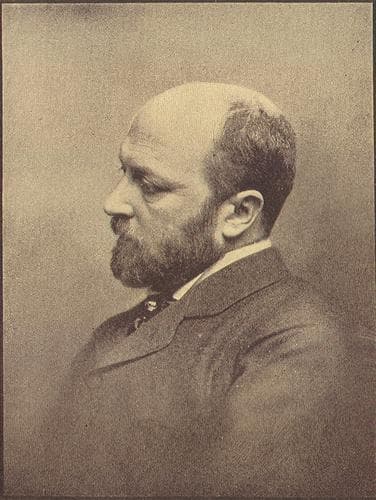
Henry James was an American-British author. He is regarded as a key transitional figure between literary realism and literary modernism, and is considered by many to be among the greatest novelists in the English language. He was the son of Henry James Sr. and the brother of philosopher and psychologist William James and diarist Alice James.







