“The world was not always a safe place for small people, and the more they travelled, the more dangers they seemed to encounter.”
— Reflecting on the perils of their journey and the vastness of the world outside the house.

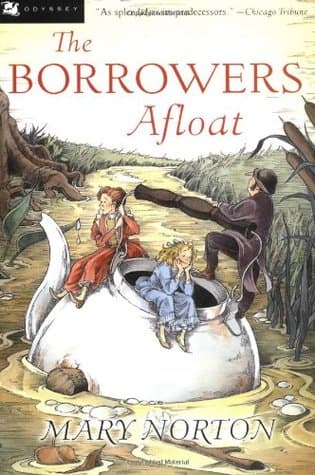
Mary Norton (1959)
Genre
Fantasy / Children's / Young Adult
Reading Time
150 min
Key Themes
See below
Sign in to track this book
The miniature Clock family leaves their home and journeys down a cottage drain in a soap dish, seeking a new home and facing floods, famine, and a clever enemy.
The miniature Clock family—Pod, Homily, and their daughter Arrietty—live a risky life under the floorboards of a large country house, taking what they need from the humans who live there. Their peace ends when they hear the human owners, Mr. and Mrs. Pott, talking about moving. Homily worries about the unknown and losing their comfortable life. Pod, always practical, starts looking at their options, while Arrietty, more adventurous, is curious about a new world, though she shares her parents' worry about surviving without humans to borrow from. The house, once safe, becomes a place of coming abandonment, forcing the Borrowers to face their biggest fear: exposure and the unknown.
As the human family packs, the Clocks realize they must leave. With no other clear way out, Pod finds a drain leading from the house. Homily fears the dark, wet, and unknown passage, but they have no choice. Arrietty, surprisingly brave, helps her father get ready. They make a temporary boat from a soap dish and, with Pod steering, start a frightening trip down the drainpipe. The rushing water, the echoing darkness, and the fear of being swept away test their courage. They emerge, wet and confused, into the outside world, a place much larger and more dangerous than their familiar home under the floorboards. This marks a big change in their lives.
After their difficult escape, the Clocks find themselves in a strange, overgrown garden, exposed to everything. They are confused and vulnerable. Here they meet Spiller, a quiet Borrower boy who lives outdoors. Spiller is a mystery to the house-dwelling Clocks; he is resourceful, good at hunting and fishing, and moves with an independence they have never known. Despite being quiet, he offers them a place to stay: an old teakettle by the river. Spiller's practical skills and knowledge of the wild contrast with Pod's house-borrowing experience, and his presence brings a new dynamic, offering both a possible friend and a challenge to their ideas of Borrower life.
The teakettle, though basic, gives the Clocks shelter. Homily struggles to adjust to the lack of comforts and the constant dampness, missing her old, comfortable home. Pod, with Spiller's help, learns new skills like fishing and gathering wild berries. Arrietty, however, thrives outdoors. She enjoys the freedom, the fresh air, and the lessons Spiller teaches her about surviving in the wild. She watches Spiller's quiet efficiency and begins to appreciate a different way of life. This time is a big learning period for the Clocks, making them give up their reliance on human 'borrowings' and embrace a more self-sufficient, though challenging, life, guided by Spiller's unique knowledge.
Just as the Clocks start to settle into their new routine by the river, their past returns. Milk Eye, a strange human boy who had found the Borrowers in their old house and caused them much trouble, appears again. He is a persistent and somewhat mean threat, wanting to catch and watch the miniature people. His presence near the river fills Homily with fear, and even Pod, usually calm, feels renewed dread. Milk Eye's return means their fight for survival is not just against nature, but also against the unpredictable and often dangerous curiosity of humans, forcing them to stay alert.
Nature itself becomes a strong enemy when heavy rain makes the river swell greatly. The water level rises steadily, threatening to cover their teakettle home. Homily panics, sure they will drown. Pod and Spiller work quickly to secure their belongings and get ready for an emergency. Arrietty, though scared, watches her father and Spiller's calm determination, learning the importance of quick thinking in a crisis. The rising water creates a sense of urgency and coming doom, showing how fragile their lives are and how vulnerable they are to the strong forces of nature, forcing another desperate escape.
With the teakettle underwater, Pod, Homily, Arrietty, and Spiller are again without a home. Spiller, always resourceful, quickly builds a new, larger boat from an old wooden cigar box. This boat is sturdier than their previous soap dish, but the river is powerful. They set off downstream, navigating rapids and debris, facing the constant threat of overturning. Homily is very nervous, while Arrietty finds a strange excitement in the adventure, despite the danger. This journey shows their resilience and Spiller's cleverness, as they are carried further into the unknown, relying on their shared courage to survive the dangerous currents and find a new safe place.
As they drift downstream, the Clocks and Spiller eventually see something unexpected: a small village of other Borrowers. This community lives in the walls and under the floorboards of various houses, much like the Clocks once did. The discovery is both a relief and a surprise. Homily is happy at the thought of a more settled life and the company of her own kind, while Arrietty is fascinated by how these Borrowers have adapted. Pod is careful, watching their customs and considering them as a new home. This meeting offers a look into a larger Borrower world, hinting at the possibility of belonging and a shared history.
The Clock family tries to join the Borrower village, finding a temporary home in an unused doll's house. Homily first enjoys the company of other female Borrowers, sharing stories and borrowing tips. However, the village Borrowers are more isolated and wary than she expected. Arrietty, while curious, finds some of their customs limiting and misses the freedom of the outdoors. Pod, always observing, notices their routines and the hierarchy of their society. This time shows the different ideas of Borrower life—the settled, community-focused existence versus wild independence. The Clocks realize that finding a true home means more than just finding other Borrowers; it means finding a place where they truly belong.
Milk Eye, with his ability to find Borrowers, eventually discovers their new village. His presence causes panic among the settled Borrowers, who are less used to direct human contact and more easily found than the Clocks. The villagers, fearing for their safety and hidden lives, become agitated and suspicious. Milk Eye's constant pursuit shows the ongoing threat humans pose to the Borrowers' survival, even when they think they are safe. His arrival disrupts the village's fragile peace and makes the Clocks question if this community can truly offer the security they seek, bringing their journey back to the threat of human interference.
The new threat from Milk Eye, along with the difficulties of fitting into the village, forces the Clock family to make a big decision. Homily, despite her initial happiness, now feels the village is too exposed and relies too much on old borrowing methods. Arrietty longs for the open spaces and wild adventures she had with Spiller. Pod, practical as ever, weighs the risks and benefits of staying versus leaving again. The village, once a sign of hope, now feels like a trap. The family struggles with wanting community versus needing safety and independence, eventually choosing to continue their nomadic life with Spiller, who remains a steady, if quiet, friend.
After much thought, the Clock family, with Spiller, decides to leave the Borrower village. They see that the village, while offering temporary rest, cannot give them the long-term security and freedom they want, especially with Milk Eye still around. Homily, though at first hesitant, now understands they must move on. Arrietty is eager for new adventures, and Pod, having seen the limits of village life, is ready to find a more suitable home. Their departure shows their commitment to their unique, adaptable lifestyle, a mix of Pod's resourcefulness, Homily's resilience, and Arrietty's growing independence, with Spiller as their constant guide and protector in the wild.
The Clock family, with Spiller, continues their journey along the river. They are again in Spiller's cigar-box boat, moved by the current and Spiller's expert navigation. Their destination is still unknown, but their determination to find a safe and lasting home is stronger than ever. Arrietty continues to learn survival skills from Spiller, while Homily, though still prone to worry, has become more resilient. Pod remains the steady, thoughtful leader, adapting to the challenges of their nomadic life. The journey highlights their ongoing search for a place where they can truly belong, showing their lasting spirit and the hope that a permanent and secure home awaits them, free from human interference and nature's whims.
The Protagonist
Arrietty evolves from a sheltered, slightly naive house-Borrower to a more independent and resourceful individual, embracing the wild and learning survival skills.
The Protagonist
Pod expands his skillset from house-borrowing to wild survival, demonstrating adaptability and leadership in extreme circumstances.
The Protagonist
Homily's journey forces her to confront her fears and adapt to harsh conditions, gradually building resilience and appreciating the simple joys of survival.
The Supporting
Spiller remains largely unchanged, serving as a consistent example of wild Borrower resilience and a catalyst for the Clocks' adaptation.
The Antagonist
Milk Eye serves as a recurring external threat, his character remaining static as a symbol of human danger.
The Mentioned
They are static characters, serving as the initial catalyst for the plot.
The Supporting
They represent a different possible future for the Clocks, but ultimately serve to highlight the Clocks' unique path.
The main theme of the book is the Borrowers' constant fight for survival in a human-sized world. From their first escape down the drain to living in a teakettle and navigating a flooded river, the Clock family must always adapt to new and dangerous surroundings. Pod's cleverness, Homily's growing strength, and Arrietty's adventurous spirit all help them overcome problems. Spiller shows ultimate adaptability, living a life completely separate from human 'borrowings.' This theme appears in scenes like Pod learning to fish and Arrietty embracing the wild, showing their ability to change and last.
“One had to live, after all. And if one lived, one must find food and shelter.”
Throughout their hard journey, the Borrowers are always looking for a safe and permanent home. Their initial removal from their familiar house starts them on a search for belonging, both physically and socially. Homily misses the comforts of a stable home, while Arrietty seeks a place where she can truly be herself. Meeting the Borrower village offers brief hope of community, but ultimately shows that 'home' is more than just a physical place or even other Borrowers; it is about security, freedom, and peace. Their continuous journey shows that home is a changing idea, always evolving with their needs.
“Home was somewhere else, always somewhere else.”
The book subtly explores how humans affect the natural world and, by extension, the Borrowers' lives. Human actions, from moving house to leaving trash, directly determine the Borrowers' fate. Milk Eye's constant pursuit shows the danger of human curiosity and the problems it causes. Even natural events like the flood are linked to the larger human world, as the river environment is not untouched but contains human debris. The Borrowers constantly navigate a world shaped by human presence, reminding readers of humanity's broad influence on even the smallest creatures and environments.
“Humans were like giants, moving through their lives, leaving destruction and opportunity in their wake.”
The story explores the tension between individual independence and the safety of community. Spiller shows complete independence, surviving entirely on his own terms in the wild. The Clock family, initially relying on humans, learns to become more self-sufficient through their journey. Their meeting with the Borrower village presents the appeal of community and shared resources, but also shows its limitations, such as conformity and a higher risk of being found. The Clocks eventually choose a path that mixes both, keeping their family unit while embracing some wild independence, suggesting that true strength comes from a balance between self-reliance and chosen companionship.
“It was one thing to be free, but quite another to be alone.”
The world is viewed from the tiny scale of the Borrowers.
This device immediately immerses the reader in the Borrowers' unique reality. Everyday objects like a thimble become a bucket, a soap dish a boat, and a drainpipe a terrifying tunnel. This perspective amplifies the stakes of their journey, making ordinary challenges monumental and highlighting their vulnerability. It also allows for a detailed and imaginative description of their environment, forcing the reader to reconsider the scale and function of common items. This device is crucial for generating empathy and understanding their constant struggle for survival.
The narrative is structured as a continuous quest for a new home.
The entire story is framed as a journey, both physical and metaphorical. The Clocks' journey from the house to the river, then downstream, and through the village, is a literal quest for a safe haven. Metaphorically, it represents their evolution from a sheltered existence to a more resilient and independent one. The journey provides a continuous source of conflict, new environments, and character development, pushing the Borrowers to adapt and grow with each new challenge they face on the road to finding belonging.
Milk Eye represents an unpredictable, relentless human threat.
Milk Eye functions less as a complex character and more as an embodiment of the unpredictable and dangerous aspects of the human world. His 'milky' eye and persistent tracking make him a looming, almost mythical threat. He doesn't act out of malice but out of a disturbing curiosity, which is even more terrifying because it's detached from the Borrowers' suffering. He serves as a constant reminder that even when the Borrowers escape natural dangers, they are still at the mercy of human whims, symbolizing the larger, uncontrollable forces they must contend with.
Subtle hints of future events or dangers.
The novel uses subtle foreshadowing to build tension and prepare the reader for upcoming challenges. For instance, early discussions about the human 'beans' moving house immediately establish the impending crisis for the Borrowers. The initial mention of Milk Eye and his past encounters with Borrowers creates a sense of dread for his inevitable reappearance. These hints, often through overheard human conversations or the Borrowers' own anxieties, create a continuous undercurrent of suspense, making the reader anticipate the next obstacle in their perilous journey.
“The world was not always a safe place for small people, and the more they travelled, the more dangers they seemed to encounter.”
— Reflecting on the perils of their journey and the vastness of the world outside the house.
“It was not courage, exactly, nor was it fear; it was just a sort of grim determination to go on.”
— Pod's internal thought process as he faces a difficult situation.
“Hope, like a small, persistent weed, could grow in the most unpromising cracks.”
— Arrietty's enduring optimism despite their bleak circumstances.
“To be homeless was to be free, in a terrifying, exhilarating way.”
— The mixed feelings of the Borrowers after leaving the stable.
“Everything was borrowed, even time.”
— A philosophical realization about the nature of their existence.
“You couldn't stay in one place forever, not if you were a Borrower.”
— Arrietty's growing understanding of their nomadic lifestyle.
“The trick was not to be seen, not to be heard, not to leave a trace.”
— Pod explaining the fundamental rules of being a Borrower to Arrietty.
“Sometimes, the smallest things made the biggest difference.”
— Reflecting on how small borrowed items can be crucial for their survival.
“The greatest adventures were often found in the most unexpected places.”
— The family's journey on the teacup, a seemingly mundane object turned into a vessel.
“It was one thing to be brave, another to be foolhardy.”
— Pod's cautious nature contrasting with Arrietty's impulsiveness.
“The world was full of things to borrow, if only you knew how to look.”
— A core tenet of the Borrowers' philosophy and survival.
“There was a loneliness in being small, a constant awareness of the vastness around you.”
— Arrietty's introspective moment about her place in the large world.
“To move was to live; to stay still was to risk being found.”
— A driving force behind the Borrowers' constant migration.
“Even fear could be useful, if it made you clever.”
— Homily's pragmatic view on emotions and their role in survival.
Ready to see how well you understood this book? Take our interactive quiz with 10 questions.

Biography coming soon.







