“I am haunted by humans.”
— Death's final reflection on humanity's capacity for both cruelty and beauty.

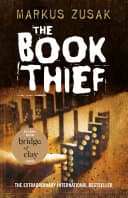
Markus Zusak (2007)
Genre
Historical Fiction / Young Adult
Reading Time
12-15 hours
Key Themes
See below
Sign in to track this book
Narrated by Death, a young German girl steals books and shares their power, showing the human spirit's strength during Nazi Germany.
In January 1939, nine-year-old Liesel Meminger is traveling with her mother and younger brother, Werner, on a train to Munich. Werner dies, and Liesel sees his burial in a snowy graveyard. Here, she finds and steals her first book, 'The Gravedigger's Handbook,' which fell from the gravedigger's pocket. Her mother then takes her to Molching, a fictional suburb of Munich, to live with her new foster parents, Hans and Rosa Hubermann, on Himmel Street. Liesel is quiet at first and struggles to adjust, especially with Rosa's harsh manner, but finds comfort in Hans's gentle nature.
Liesel starts school but struggles because she cannot read. She becomes friends with Rudy Steiner, a boy who loves Jesse Owens, and he quickly becomes her best friend. At home, Liesel has nightmares about her dead brother. Hans Hubermann, a kind and patient man, finds 'The Gravedigger's Handbook' under her mattress. He begins to teach Liesel to read using the book as their first lesson, patiently sounding out words in the basement. This shared secret and the act of reading create a deep, loving bond between Liesel and Hans, giving her a sense of stability and belonging during the growing political unrest in Nazi Germany.
In April 1940, Liesel and the people of Molching attend a Nazi book burning ceremony for Hitler's birthday. Liesel is horrified, especially when she hears a speaker blame communists and Jews for Germany's problems, connecting it to her family's disappearance. After the crowd leaves, Liesel sees a book that survived the flames: 'The Shoulder Shrug.' She quickly snatches it, burning her hand. Ilsa Hermann, the Mayor's wife, sees this from her car. This theft is a turning point, making Liesel a 'book thief' and increasing her understanding of words' power.
Ilsa Hermann, the Mayor's wife, invites Liesel into her home and lets her read books from her large private library. This becomes a safe place for Liesel, where she can escape her life's harsh realities. Meanwhile, the Hubermanns prepare for a secret visitor. Max Vandenburg, a young Jewish man, arrives on Himmel Street, having traveled from Stuttgart. He is the son of Erik Vandenburg, a Jewish soldier who saved Hans Hubermann's life during World War I. Hans, feeling he owes Erik, has promised to hide Max, putting his family in great danger under the Nazi regime. Max is hidden in the Hubermanns' basement.
Max Vandenburg, weak and scared at first, slowly gets better in the Hubermanns' basement. Liesel is wary at first but soon forms a deep friendship with Max. They share nightmares, and Max encourages Liesel's reading. He writes and illustrates two books for her: 'The Standover Man,' a story of his life and friendship with Liesel, written over pages of Hitler's 'Mein Kampf,' and 'The Word Shaker,' a fable about the power of words, also written on 'Mein Kampf' pages. Their bond grows as they share stories, silence, and the constant fear of discovery, finding comfort in each other during the war's isolation.
Liesel continues to steal books, often from the Mayor's library, though Ilsa Hermann seems to approve silently. She also steals 'The Dream Carrier,' and later 'A Song in the Dark' and 'The Last Human Stranger.' Rudy Steiner remains Liesel's constant friend, despite his own struggles with poverty and the Nazi Youth. He often goes with her on her stealing trips, though he does not know about Max. During a forced march of Jews through Molching, Hans Hubermann, unable to watch the suffering, offers a piece of bread to an old Jewish man. This act of kindness leads to Hans being whipped by a Nazi soldier and brings immediate danger to Max, forcing him to leave the Hubermanns' basement.
As punishment for his kindness, Hans Hubermann is drafted into the German army and sent to the front lines, assigned to the LSE (Air Raid Special Unit) to clean up after bombings. His absence leaves a gap in Liesel's life and adds to Rosa's already heavy burden. Liesel misses Hans greatly and worries about his safety. Meanwhile, Max Vandenburg, after leaving the Hubermanns' home, is recaptured by the Nazis and sent to Dachau concentration camp. Liesel is devastated by Max's departure and the uncertainty of his fate, feeling the deep loss of both her father figure and her closest friend.
While Hans is away, Liesel continues to read and write. She finds the blank journal given to her by Ilsa Hermann and begins to write her own story, which she calls 'The Book Thief.' This writing helps her cope, allowing her to process her experiences, her grief, and her love for those around her. She puts her heart into the story, detailing her life on Himmel Street, her stolen books, her friendship with Max, and Hans's kindness. Creating her own words gives her a sense of control and keeps the memories of those she cares about, especially as the war intensifies.
Hans Hubermann eventually returns home, injured in a bombing raid, which saves him from more combat. He is relieved to be back with Rosa and Liesel. However, the war's destruction soon reaches Himmel Street. One night, while Liesel is in the basement writing 'The Book Thief,' an Allied bombing raid destroys Himmel Street. Liesel is the only survivor, protected by the basement's depth. She emerges to find her world destroyed: Rosa, Hans, Rudy, and all her neighbors are dead. She is heartbroken, especially by Rudy's death, and kisses him for the first and last time, placing 'The Book Thief' on his chest.
Immediately after the bombing, Liesel is found by rescue workers, holding her book. Ilsa Hermann takes Liesel into her home, offering comfort and stability. Liesel struggles with her grief, carrying the weight of her losses. Years later, after the war, Liesel is working in Rudy's father's tailor shop. To her surprise and joy, Max Vandenburg, having survived Dachau, appears. Their reunion is emotional and deep, showing their lasting friendship and strength. Liesel eventually marries, has children, and lives a long life, always remembering her time on Himmel Street.
Decades later, when Liesel Meminger is an old woman living in Sydney, Australia, Death visits her to take her soul. As he collects her, he reveals that he has kept her finished book, 'The Book Thief,' which she had left on Rudy's chest that night. Death expresses his continued interest in humanity and the paradox of its capacity for both great cruelty and deep beauty. He returns her story to her, telling her he has read it many times. Liesel asks if he understood it, and Death replies, 'I am haunted by humans.' This final encounter brings Liesel's life full circle, emphasizing her story's lasting power and the human spirit.
The Protagonist
From a scared, illiterate orphan, Liesel transforms into a resilient young woman who understands the power of words, using them for comfort, connection, and finally, to tell her own story.
The Narrator
Death remains largely unchanged but his observations on humanity deepen and become more poignant through Liesel's story, culminating in his famous line, 'I am haunted by humans.'
The Supporting
Hans remains consistently good and kind, his moral convictions tested but never broken, ultimately sacrificing his life due to his compassion.
The Supporting
Rosa's character is revealed to be more loving and vulnerable beneath her gruff exterior, especially in her care for Max and her grief for Hans.
The Supporting
Rudy remains a loyal, playful, and good-hearted friend until his tragic, untimely death, which profoundly impacts Liesel.
The Supporting
Max endures extreme suffering but survives, his spirit nourished by his friendship with Liesel and his creative expression, ultimately reuniting with her.
The Supporting
Ilsa moves from a state of withdrawn grief to one of quiet benevolence, providing Liesel with crucial support and a path forward.
The Mentioned
Werner's brief life and death serve as a catalyst for Liesel's journey and her first act of book thievery.
Words are a central force in 'The Book Thief,' capable of both great destruction and creation. Hitler's words create hatred and war, leading to book burnings and persecution. Conversely, Hans Hubermann uses words to teach Liesel to read, creating love and connection. Liesel's stolen books become symbols of resistance and comfort, providing escape and understanding during air raids. Max Vandenburg reuses Hitler's 'Mein Kampf' to write stories of friendship and hope, showing how words can be taken back and turned into tools of humanity and resistance. Liesel's own writing of 'The Book Thief' is her ultimate way to process trauma and keep memories.
“I have hated the words and I have loved them, and I hope I have made them right.”
Despite Nazi Germany and the Holocaust's horrors, the novel shows acts of great kindness and compassion. Hans Hubermann's decision to hide Max, his gentle nature, and his impulsive act of offering bread to a starving Jew are examples of this. Rosa Hubermann, despite her harsh manner, shows great loyalty and care for Max and Liesel. Rudy Steiner's constant friendship and loyalty to Liesel, and Ilsa Hermann's quiet generosity, all contrast with the regime's systemic cruelty. These acts of humanity show the strength of the human spirit and the choice to love and connect even when hatred is widespread.
“I am haunted by humans.”
Loss is a common theme, experienced by almost every character. Liesel deals with the loss of her brother and mother, leading to recurring nightmares. Ilsa Hermann lives with silent grief for her dead son. Max Vandenburg endures the loss of his family and freedom. The war itself brings widespread loss and destruction, ending in the bombing of Himmel Street, where Liesel loses her foster family and best friend. The novel shows grief as a complex, lasting process, but also one that can lead to deeper empathy and a greater appreciation for life and connection. Liesel's coping methods, especially reading and writing, become ways to process and honor her losses.
“She was a girl. In Nazi Germany. How fitting that she was learning to read in a basement, on a street called Himmel, which in English meant Sky.”
Liesel's journey is about finding her identity. Initially an illiterate orphan, she defines herself through her relationship with words and her 'book thievery.' Her name, Liesel Meminger, becomes linked with the stolen books and the stories she reads and writes. Her friendship with Max, a fellow 'wordsmith,' further strengthens her understanding of herself. By the end, she is not just a foster child, but 'The Book Thief,' the author of her own story, showing her strength and the power of individual choice in shaping one's own narrative despite outside pressures.
“When she came to write her story, she would wonder when the books and the words started to mean not just something, but everything.”
Provides a unique, philosophical, and foreshadowing perspective on human events.
The choice of Death as the narrator is a central and distinctive plot device. This allows for an omniscient, detached yet empathetic perspective on the events of World War II and Liesel's life. Death's observations on humanity's capacity for both good and evil, his philosophical musings, and his frequent foreshadowing of events (including character deaths) create a unique narrative tone. This device also provides a meta-commentary on storytelling itself, as Death is ultimately collecting and presenting Liesel's story, 'The Book Thief,' to the reader.
Hints at future tragic events, creating suspense and a sense of impending doom.
Death frequently employs foreshadowing, often explicitly stating when a character will die or what fate awaits them. For example, he reveals Rudy's death early in the narrative. While this might seem to diminish suspense, it instead creates a profound sense of dramatic irony and pathos, allowing the reader to anticipate and mourn the inevitable. This technique emphasizes the fragility of life during wartime and highlights the preciousness of the moments shared by the characters, making their eventual fates all the more tragic and poignant.
Symbolic objects that mark Liesel's journey and growth.
The books Liesel steals are more than just physical objects; they are pivotal plot devices that mark significant moments in her life and serve as symbols of her emotional and intellectual development. 'The Gravedigger's Handbook' is her first act of defiance and the catalyst for her learning to read. 'The Shoulder Shrug' is stolen from a Nazi book burning, marking her growing understanding of the power of words. Later books, like 'The Dream Carrier,' provide solace and connection. Each stolen book is a tangible representation of her journey, her resilience, and her burgeoning identity as 'the book thief.'
A place of both sanctuary and fear, where deep connections are forged.
The Hubermanns' basement serves as a crucial setting and plot device. It is a place of refuge where Hans teaches Liesel to read, fostering their bond. More significantly, it becomes the hiding place for Max Vandenburg, transforming it into a clandestine sanctuary and a symbol of resistance against the Nazi regime. During air raids, it offers physical protection, but it is also where Max and Liesel forge their deepest connection through words and shared vulnerability. Ultimately, it is the basement that saves Liesel's life during the bombing of Himmel Street, making it a space of both profound danger and miraculous survival.
“I am haunted by humans.”
— Death's final reflection on humanity's capacity for both cruelty and beauty.
“The only thing worse than a boy who hates you: a boy who loves you.”
— Liesel's thoughts on her complex relationship with Rudy Steiner.
“I have hated words and I have loved them, and I hope I have made them right.”
— Liesel reflecting on her journey with words and storytelling.
“A small but noteworthy note. I've seen so many young men over the years who think they're running at other young men. They are not. They're running at me.”
— Death's observation about soldiers in war.
“She was saying goodbye and she didn't even know it.”
— Death narrating a moment before a bombing raid.
“The words. Why did they have to exist? Without them, there wouldn't be any of this.”
— Liesel contemplating the power of words in Hitler's propaganda.
“He does something to me, that boy. Every time. It's his only detriment. He steps on my heart. He makes me cry.”
— Death describing his reaction to Rudy Steiner's fate.
“Sometimes I think my papa is an accordion. When he looks at me and smiles and breathes, I hear the notes.”
— Liesel describing her foster father Hans Hubermann's comforting presence.
“The consequence of this is that I'm always finding humans at their best and worst. I see their ugly and their beauty, and I wonder how the same thing can be both.”
— Death explaining his perspective on human nature.
“A snowball in the face is surely the perfect beginning to a lasting friendship.”
— Liesel and Rudy's first significant interaction.
“She leaned down and looked at his lifeless face and Liesel kissed her best friend, Rudy Steiner, soft and true on his lips. He tasted dusty and sweet.”
— Liesel saying goodbye to Rudy after he dies in a bombing.
“I wanted to tell the book thief many things, about beauty and brutality. But what could I tell her about those things that she didn't already know?”
— Death reflecting on Liesel's experiences during the war.
“The best word shakers were the ones who understood the true power of words. They were the ones who could climb the highest.”
— From the story within the story that Max writes for Liesel.
“He was the crazy one who had painted himself black and defeated the world.”
— Liesel's thoughts on Max Vandenburg's struggle for survival.
Ready to see how well you understood this book? Take our interactive quiz with 10 questions.

Markus Zusak is an Australian writer. He is best known for The Book Thief and The Messenger, two novels which became international bestsellers. He won the Margaret A. Edwards Award in 2014.







