“The past is never dead. It's not even past.”
— A recurring theme about the lingering influence of ancient evils and historical events on the present.

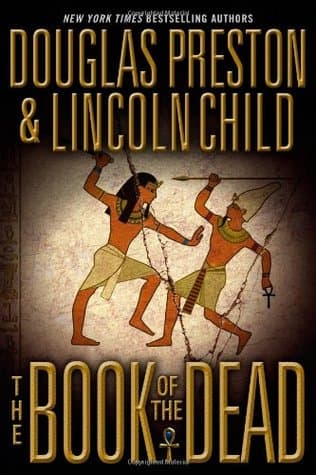
Douglas Preston (2006)
Genre
Thriller / Fantasy / Mystery
Reading Time
9-10 hours
Key Themes
See below
Sign in to track this book
Imprisoned FBI agent Pendergast must escape to confront his psychopathic brother, who has unleashed an ancient Egyptian curse upon a New York museum gala, igniting a catastrophic battle for their lives.
Special Agent Aloysius Pendergast is in a maximum-security prison. His psychotic brother, Diogenes, framed him for a series of murders. Pendergast's only contact with the outside world is through his former ward, Constance Greene, and Lieutenant Vincent D'Agosta. Diogenes sends Pendergast a cryptic message: the stolen gems from the New York Museum of Natural History, which Pendergast was accused of taking, have been returned — ground into dust. This act is Diogenes's twisted way of challenging Pendergast and showing his power, setting the stage for his next scheme. Pendergast realizes his brother is not finished and that he must escape to stop him.
After the humiliating return of the pulverized gems, the New York Museum of Natural History needs to fix its public image. Director Frock, under pressure, decides to reopen the Tomb of Senef, a spectacular ancient Egyptian exhibit that had been sealed since the 1930s due to unexplained deaths and whispers of a curse. Dr. Nora Kelly, an archaeologist, is skeptical, remembering the tomb's sinister history. The museum hopes the grand reopening will distract the public from the recent scandal, unaware they are about to unleash something more terrifying.
As museum staff, led by Dr. Nora Kelly, begin preparing the Tomb of Senef for its grand gala reopening, strange things happen. Ancient hieroglyphs hint at a powerful curse guarding the tomb, and unsettling incidents plague the workers. One night, a security guard is found gruesomely murdered within the tomb, seemingly by an unseen force. This echoes the deaths that led to its original closure. The incident chills the museum, confirming superstitions and raising questions about the tomb's past.
From his prison cell, Pendergast, with Constance and D'Agosta's help, starts to understand Diogenes's plan. He realizes that the pulverized gems and the reopening of the Tomb of Senef are not separate events but parts of a larger, more sinister plot. Pendergast deduces that Diogenes intends to use the tomb for a horrific spectacle during the reopening gala, targeting specific victims. This realization strengthens Pendergast's resolve to escape, knowing that many lives, and perhaps New York society itself, are in danger.
Using his intellect, careful planning, and help from a few allies he made in prison, Pendergast stages a daring escape. He manipulates the prison system, exploits security weaknesses, and uses his psychological skills to outwit the guards. His escape shows his resourcefulness and determination, driven by the urgency to stop Diogenes. Now a fugitive, Pendergast can pursue his brother, but he must operate outside the law, complicating his mission and putting him at greater risk.
Once free, Pendergast immediately contacts Lieutenant D'Agosta, who, despite Pendergast's fugitive status, remains loyal and trusts his assessment of the threat. Constance Greene also joins them; her knowledge of ancient history and Pendergast's family is very helpful. The trio begins a desperate hunt for Diogenes, following clues from his twisted genius. Their investigation leads them deeper into the history of the Tomb of Senef, ancient Egyptian lore, and the dark secrets of the Pendergast family, all while avoiding the authorities who are now chasing Pendergast.
As the gala approaches, the murders within the museum become more intense and bizarre. Victims are found in increasingly gruesome states, seemingly drained of life or subjected to ritualistic violence. These deaths fuel the ancient curse narrative among museum staff and the public. Nora Kelly and her team, initially skeptical, become increasingly unnerved. Pendergast, however, understands that while the curse provides a convenient cover, Diogenes is behind these horrors, using the tomb's legend to further his macabre agenda.
The night of the grand reopening gala arrives, a lavish event attended by New York's elite. As the Tomb of Senef is unveiled, Diogenes unleashes his full plan. The museum becomes a deadly labyrinth as he targets specific individuals, creating a horrifying spectacle of terror and death. The ancient curse seems to come alive as chaos erupts. Pendergast, D'Agosta, and Constance are inside the museum, trying to save lives and confront Diogenes amidst the unfolding nightmare. The opulent setting becomes a stage for a deadly game of cat and mouse.
Pendergast finally corners Diogenes deep within the Tomb of Senef. The brothers have a climactic and brutal confrontation, both physical and psychological. Diogenes reveals his twisted motivations, his deep resentment, and his intricate, years-long plot to destroy Pendergast and everything he holds dear. The fight is not just for survival but for the Pendergast family's soul, reflecting their shared traumatic past. The ancient tomb itself, with its dark energy, seems to witness their final, desperate struggle.
The battle between Pendergast and Diogenes ends, leaving one brother seemingly victorious and the other defeated. The museum is left in ruins, a result of the night's horrors. Authorities arrive to find a scene of carnage and mystery. Pendergast, having achieved his goal, must now deal with his fugitive status and the emotional toll of confronting his brother. Diogenes's fate, though seemingly sealed, leaves a lingering unease, suggesting that true evil is never entirely vanquished. The curse of Senef, whether real or imagined, continues to cast a long shadow.
The Protagonist
Pendergast begins imprisoned and framed, but through his ingenuity and determination, he escapes and confronts his deepest personal demon, his brother, ultimately reaffirming his commitment to justice despite personal cost.
The Antagonist
Diogenes orchestrates a complex and horrifying plan to destroy Pendergast and create a spectacle of terror, culminating in his ultimate confrontation and presumed defeat, though his influence lingers.
The Supporting
Constance moves from a confined existence to actively assisting Pendergast, demonstrating her invaluable intellect and loyalty while confronting aspects of her own past.
The Supporting
D'Agosta continues his role as Pendergast's steadfast ally, navigating the complexities of aiding a fugitive while upholding his own moral code.
The Supporting
Nora's scientific skepticism is severely tested by the events surrounding the Tomb of Senef, forcing her to confront the limits of her understanding.
The Supporting
Frock's attempts to salvage the museum's reputation lead to catastrophic consequences, forcing him to face the true cost of his decisions.
The Supporting
Proctor remains a steadfast and reliable presence, providing critical logistical support to Pendergast throughout his ordeal.
The novel explores the many forms of evil, personified by Diogenes Pendergast. His evil is not just a lack of good but an active, intelligent, and artistic destructive force, deeply rooted in psychological trauma and a twisted worldview. The 'curse' of the Tomb of Senef helps blur the lines between ancient malevolence and calculated human depravity. The book suggests that while ancient curses cause fear, the most terrifying evil often comes from the human mind, as seen in Diogenes's careful planning and enjoyment of suffering.
“Evil is not merely the absence of good; it is a force that, in the right hands, can be sculpted into something magnificent and terrifying.”
At its core, the story is a dark exploration of brotherhood. The bond between Aloysius and Diogenes is twisted by jealousy, resentment, and a shared traumatic past. Diogenes's entire motivation is to destroy his brother, a perverse form of intimacy. Pendergast, despite his brother's monstrousness, feels a deep, complicated sense of responsibility and connection, making their final confrontation a tragic and deeply personal battle. The theme shows how the closest relationships can become the most destructive.
“He was my brother. And because of that, I understood him in a way no one else ever could, or ever would.”
The past, both personal and ancient, strongly influences the story. The Pendergast brothers' traumatic childhood directly fuels Diogenes's madness and shapes Aloysius's relentless pursuit. At the same time, the ancient history of the Tomb of Senef, with its legends and curses, provides the setting and much of the symbolism for Diogenes's crimes. The novel argues that unresolved personal histories and forgotten ancient forces can significantly impact the present, often with catastrophic results, showing how history is never truly buried.
“The past is not dead. It is not even past. It haunts us, shapes us, and sometimes, it demands its due.”
The conflict between scientific reason and ancient superstition is a repeated idea. Dr. Nora Kelly, a scientist, first dismisses the idea of a curse, seeking rational explanations. However, the escalating horrors within the tomb challenge her view. Pendergast, while logical, also recognizes the psychological power of belief and the potential for ancient practices to be reinterpreted or used. The book suggests that while reason is important, there are forces, both human and perhaps supernatural, that defy easy categorization, forcing characters to confront the limits of their understanding.
“There are more things in heaven and earth, Horatio, than are dreamt of in your philosophy.”
The story often filters events through Pendergast's unique, sometimes subjective, perspective.
While not a first-person narrative, the story often aligns with Pendergast's deductions and insights, which, while usually correct, can lead to dramatic reveals or shifts in understanding. His genius can make him seem infallible, but the complexity of Diogenes's plans and the psychological depth of their conflict mean Pendergast (and thus the reader) is constantly learning and adjusting his understanding of the true danger. This creates suspense as the reader trusts Pendergast but also knows Diogenes is always a step ahead until the climax.
The ancient tomb serves as the central object driving the plot and setting the stage.
The Tomb of Senef functions as a MacGuffin in that its inherent mystery and ancient curse are what initially propel the museum's actions and attract public attention. However, it quickly transcends a simple plot device by becoming the central stage for Diogenes's elaborate scheme. Its historical context, perceived curse, and physical layout are integral to the unfolding horrors, providing both a cover for Diogenes's crimes and a symbolic battleground for the Pendergast brothers' final confrontation. It is both a catalyst and a character in itself.
The ancient curse initially misleads characters and readers from the true human villain.
The whispers and evidence of the 'curse of Senef' act as a significant red herring. The initial deaths and strange occurrences within the museum lead many characters, and the reader, to believe in a supernatural explanation for the horrors. This diverts attention from the true orchestrator, Diogenes Pendergast, who masterfully exploits these ancient superstitions to mask his own meticulously planned murders. The red herring enhances the mystery and allows Diogenes to operate with greater impunity until Pendergast uncovers the human agency behind the 'curse'.
Diogenes Pendergast is a highly intelligent, manipulative, and theatrically evil antagonist.
Diogenes Pendergast embodies the archetype of the mastermind villain. His crimes are not random acts of violence but meticulously planned, highly theatrical performances designed to torment his brother and make a grand statement. He demonstrates exceptional intellect, foresight, and an ability to manipulate people and events on a grand scale. This device raises the stakes, as Pendergast isn't just fighting a killer, but a brilliant strategist who anticipates his moves, making their conflict a chess match of wits and willpower.
“The past is never dead. It's not even past.”
— A recurring theme about the lingering influence of ancient evils and historical events on the present.
“There are more things in heaven and earth, Horatio, than are dreamt of in your philosophy.”
— Quoted by one of the characters, often Dr. Nora Kelly or Special Agent Pendergast, to highlight the existence of unexplained phenomena.
“The greatest trick the Devil ever pulled was convincing the world he didn't exist.”
— Used to describe the subtle, insidious nature of the antagonist's influence or the hidden dangers of the tomb.
“Fear is a powerful motivator. It can make you do things you never thought possible.”
— Reflecting on the extreme actions taken by characters under duress or the psychological impact of the tomb's horrors.
“Some doors, once opened, can never be closed.”
— Referring to the ancient tomb and the release of its contained dangers.
“Knowledge is power, but some knowledge is best left undisturbed.”
— A reflection on the ethical implications of uncovering ancient secrets, particularly those with malevolent properties.
“The dead do not always rest easy, especially when their sleep is disturbed.”
— Hinting at the supernatural forces awakened within the tomb.
“Even in the darkest places, there is always a flicker of hope.”
— A moment of resilience or optimism amidst the escalating dangers and despair.
“The greatest monsters are often those that wear human faces.”
— A commentary on the human antagonists and their cruelties, often overshadowing the supernatural threats.
“Time has a way of burying secrets, but it also has a way of unearthing them.”
— Discussing the ancient origins of the tomb and the modern discovery of its contents.
“Sometimes, the only way out is through.”
— A character's determination to face the dangers head-on rather than retreat.
“The line between sanity and madness can be perilously thin, especially in the dark.”
— Describing the psychological toll the tomb and its horrors take on the characters.
“History repeats itself, not because we fail to learn from it, but because we are destined to.”
— A fatalistic view on the cyclical nature of human folly and the resurgence of ancient evils.
“The truest horrors are not found in shadows, but in the hearts of men.”
— Emphasizing the malevolence of human characters over the supernatural elements.
Ready to see how well you understood this book? Take our interactive quiz with 10 questions.

Douglas Preston is a prolific author known for his suspenseful thrillers, often co-authored with Lincoln Child. Their collaborative works, including the popular Pendergast series featuring novels like 'Relic' and 'Blue Labyrinth,' have achieved international bestseller status. Preston also co-authored the non-fiction bestseller 'The Monster of Florence,' showcasing his versatility in both fictional and true crime narratives.







