“The past, she knew, was not a place to live, but a garden to visit, to tend, to understand.”
— Reflecting on the weight of history and memory, particularly concerning her family's past.

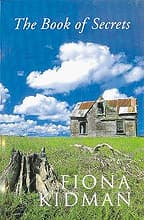
Fiona Kidman (1987)
Genre
Historical Fiction
Reading Time
300 min
Key Themes
See below
Sign in to track this book
After Scottish clearances, a strict preacher leads his followers across oceans to a promised land, but three generations of women challenge his rigid rules, finding their own paths through exile and hardship.
The novel begins with Norman McLeod and his Presbyterian followers in the Scottish Highlands in the early 19th century. Facing the Clearances and a spiritual dissatisfaction with the church, McLeod, a charismatic but strict preacher, convinces his community to travel to Nova Scotia, Canada. He wants to create a pure, self-sufficient society, free from outside influences and governed by his strict religious laws. The journey itself is difficult, testing the faith and strength of the emigrants, including young Kirsty, who already struggles with McLeod's absolute power.
In St. Ann's, Cape Breton, Nova Scotia, McLeod’s followers, driven by their faith and his strong leadership, work to clear land, build homes, and establish a settlement. McLeod, practical and visionary, sees the potential of shipbuilding to support the community. They build a fleet of ships, including the 'Margaret,' which symbolizes their cleverness and independence. Life in St. Ann's involves hard work, strict religious rules, and a growing sense of community. Yet, signs of disagreement and personal desire begin to appear beneath this ordered existence, especially among the women.
Kirsty, a spirited young woman, feels increasingly restricted by McLeod's strict social and religious rules in St. Ann's. Her desire for personal freedom and her questions challenge his authority. When she forms a relationship with a man outside McLeod's approved group, her action is considered unforgivable. McLeod, using his absolute power, publicly shames and banishes Kirsty from the community. This severe judgment shows the consequences of not conforming, and it starts a pattern of female resistance and exile that will happen again across generations within McLeod’s influence.
After years in Nova Scotia, McLeod believes the harsh climate and increasing outside influences are corrupting his community. He announces a new divine message: they must move again, this time to Australia. The decision, though met with some hesitation, is eventually obeyed. The community goes on another difficult sea journey aboard their self-built ships. This trip is shown as a test of endurance and faith, further strengthening McLeod’s control over his followers, who see him as their divinely chosen guide. The journey is long and challenging, making their identity as a migrating, isolated people stronger.
In Australia, McLeod and his followers try to settle again. However, they soon find that the land is not as promised, and the existing colonial society brings new challenges and temptations that McLeod believes harm his vision of a pure settlement. The perceived moral looseness and secular nature of Australian society deeply trouble him. After a relatively short and unsatisfying period, McLeod, still seeking the ideal, declares that Australia is not their promised land. He turns his attention to New Zealand, believing it offers the isolation and unspoiled environment needed for his community's growth, again showing his unwavering, though sometimes mistaken, belief.
The last part of their journey brings McLeod and his tired but strong followers to Waipu, Northland, New Zealand. Here, they find the isolation and fertile land McLeod had envisioned. The community, now toughened by decades of migration and self-reliance, begins building their new homes and farming the land. Waipu becomes their permanent refuge, a sign of their perseverance and McLeod’s lasting leadership. The settlement thrives physically, but McLeod’s strict rules remain, creating an environment where conformity is most important and personal desires are often suppressed for collective salvation and obedience to divine will.
Morag, Kirsty's daughter, grows up within the strict Waipu community, fully aware of her mother's banished status. She shows a quieter, more internal form of rebellion than her mother. While outwardly following community expectations, Morag deeply longs for a life beyond its rigid boundaries and a love that McLeod would not approve of. Her struggle shows how oppression works, where even unspoken desires can be seen as wrong. Morag's story explores the psychological cost of living under constant watch and the quiet strength needed to keep one's identity when facing strong social pressure, leading to her own conflict with McLeod's authority.
Elspeth, Morag's daughter and Kirsty's granddaughter, is the third generation of women to challenge McLeod's power. Unlike her mother and grandmother, Elspeth is more direct and open in her defiance. She questions McLeod's interpretations of scripture, his absolute power, and the patriarchal structures that control every part of community life. Her intelligence and independent spirit make her a strong opponent, and her public challenges threaten to break down McLeod’s carefully built society. Elspeth’s actions bring to a head the long-standing tensions between individual freedom and communal obedience, forcing a confrontation that will decide her place in Waipu.
Like Kirsty and Morag, Elspeth's open defiance of Norman McLeod's authority eventually leads to her banishment from the Waipu community. McLeod, despite his age, keeps his strong control, unwilling to tolerate any challenge to his divinely given leadership. Elspeth's exile, however, is not a defeat but an assertion of her individual will and a break from the cycle of repression. This repeated pattern of banishment highlights the novel's main theme of not conforming and the cost of challenging established power. It also shows the lasting strength and resilience of the women who dared to make their own way.
As Norman McLeod ages, his body and mind begin to decline, though his hold on the community remains strong until the end. His death marks a turning point for Waipu. The community, so shaped by his vision and personality, must now face a future without its central, dominating figure. His passing leads to reflection on his complex legacy—a man who led his people through great hardships to establish a thriving settlement, but also a tyrant whose rigid beliefs caused much personal suffering and exiled those who questioned him. The community must now decide how to move forward, either continuing his strict rules or accepting change.
After Norman McLeod's death, the Waipu community slowly changes. His strict rules loosen, and outside influences gradually reach the once-isolated settlement. While many original customs and beliefs remain, there is a gradual move towards more openness and integration with wider New Zealand society. The legacy of the banished women, especially Kirsty, Morag, and Elspeth, begins to be re-evaluated. Their stories serve as a reminder of the human cost of rigid adherence to dogma. The community works to preserve its unique heritage while embracing the inevitable changes of modernity, finding a new balance between tradition and progress.
In the novel's later sections, the descendants of Kirsty, Morag, and Elspeth begin to return to Waipu, or their stories are remembered and re-integrated into the community's narrative. This shows a form of reconciliation, not with McLeod himself, but with the painful past and a recognition of the sacrifices made by those who defied him. The novel ends with a sense of how memory and storytelling last, as these women's experiences become a part of Waipu's history. This offers lessons about resilience, the human spirit, and the ongoing struggle for individual freedom within community structures. Their secret stories are finally revealed.
The Antagonist
McLeod's arc is one of unwavering conviction and increasing isolation, as his rigid control alienates those who seek freedom, yet his vision ultimately establishes a lasting community.
The Protagonist
Kirsty's arc is one of initial defiance and subsequent exile, leading her to forge a life outside the strictures of McLeod's community.
The Protagonist
Morag's arc is one of internal struggle and quiet defiance, ultimately leading to her own form of banishment or marginalization.
The Protagonist
Elspeth's arc is one of open rebellion and ultimate banishment, serving as a powerful symbol of generational defiance and the pursuit of truth.
The Supporting
The community's arc is one of migration, establishment, and slow evolution, transitioning from absolute adherence to McLeod's rule to a more adaptable, modern identity after his death.
The Supporting
Donald's arc is brief but significant, serving as a catalyst for Kirsty's banishment and the first major challenge to McLeod's authority regarding personal relationships.
The Supporting
Not applicable as a character.
This is a central theme, shown through Kirsty, Morag, and Elspeth. Each woman, in her own way, breaks the strict moral and social rules set by Norman McLeod. Kirsty's romantic relationship outside the approved group, Morag's internal desire for freedom, and Elspeth's direct questioning of doctrine are all acts of not conforming. The novel shows the courage needed to defy strong authority and the severe consequences—often banishment—for those who do not follow the collective will. It explores the human desire for individual expression against the pressures of a moralistic, controlling culture. Their stories show that 'secret' acts of defiance can be as powerful as open rebellion.
““To defy the Prophet was to defy God Himself, and the consequences were known to all.””
The novel examines the nature of power, especially in the hands of a charismatic religious leader like Norman McLeod. His authority is absolute, coming from his perceived divine connection and his ability to inspire and control his followers. The theme explores how such power can be both constructive (leading his people through great hardship to establish a thriving settlement) and destructive (tyrannical control, suppression of individual freedom, and banishment). The challenges from the women highlight the abuse of power and the moral compromises made to keep it. It questions whether unquestioning obedience is right and how unchecked authority can corrupt.
““He ruled not by law alone, but by a force of will that bent all others to his purpose.””
Despite McLeod's oppressive rule, the theme of mutual support within the community is clear, especially in pioneer life. The settlers depend on each other for survival, building homes, farming land, and enduring dangerous journeys together. This collective effort allows them to establish settlements in Nova Scotia, Australia, and New Zealand. However, the novel also shows the limits of this support when it comes to individual disagreement. While there is a strong sense of communal identity, it comes at the cost of individual freedom for those who cannot conform, highlighting the tension between the benefits of collective strength and the suppression of personal freedom.
““They worked as one, a single body driven by the Prophet’s vision, yet within that body, individual hearts beat with their own secret rhythms.””
The difficult journey of McLeod's followers across continents, from Scotland to Nova Scotia, Australia, and finally New Zealand, clearly shows the pioneer experience. This theme includes the great physical hardship, the constant need to adapt to new environments, and the resilience needed to build new lives from nothing. The settlers face challenges of climate, land, and isolation, relying on cleverness and determination. Building ships, clearing land, and establishing self-sufficient communities all speak to the pioneer spirit. However, it also shows that even in new lands, old patterns of social control and conflict can continue, highlighting that the challenges are not just physical but also deeply social and psychological.
““Each new land promised freedom, but also demanded a fresh baptism of toil and sacrifice.””
The novel shows how the past, especially the stories of the banished women, continues to shape the present and future of the Waipu community. The 'secrets' of Kirsty, Morag, and Elspeth are not forgotten; they remain as whispers, lessons, and eventually, re-claimed stories. This theme explores how historical events, especially those involving injustice and repression, leave a lasting mark on later generations. The eventual return or remembrance of the banished women's descendants suggests a healing or a re-evaluation of the community's history, allowing for a more nuanced understanding of McLeod's legacy and the complex interaction between communal identity and individual truth. It shows how storytelling can preserve and reinterpret history.
““The stories of the banished women were not forgotten, but whispered, passed down like secret heirlooms, waiting for the right time to be told aloud.””
Following three generations of women to highlight a continuous struggle.
The novel employs a generational saga structure, focusing on the experiences of Kirsty, her daughter Morag, and her granddaughter Elspeth. This device allows the author to illustrate the enduring nature of Norman McLeod's influence and the repetitive patterns of repression and rebellion across different eras. By showing how each woman confronts McLeod's authority in distinct ways (overt defiance, quiet struggle, direct challenge), the novel emphasizes the evolving nature of nonconformity and the slow, incremental progress towards individual freedom within a rigid society. It also highlights the legacy of defiance and the intergenerational transmission of strength and resilience.
Multiple migrations symbolizing a search for an ideal, pure society.
The recurring motif of the journey or exodus is central to the novel. McLeod leads his followers from Scotland to Nova Scotia, then to Australia, and finally to New Zealand. Each migration is presented as a spiritual quest for a 'promised land' where his ideal, pure society can flourish, free from external corruptions. This device underscores McLeod's unwavering vision and his absolute control over his flock. It also highlights the immense physical and emotional sacrifices made by the community, emphasizing their resilience and faith. The continuous search for an elusive ideal land parallels the internal struggles of the characters seeking their own form of freedom.
The consistent expulsion of nonconformists as a tool of control.
The act of banishment serves as a powerful and recurring plot device. Kirsty, Morag (implicitly), and Elspeth are all, in different ways, cast out or marginalized from the Waipu community by McLeod. This device emphasizes the absolute nature of McLeod's authority and the severe consequences of nonconformity. It highlights the psychological and social isolation experienced by those who dare to challenge the established order. The repetition of banishment across generations underscores the theme of oppression and the high price paid for individual freedom, while also demonstrating the enduring courage of the women who choose their principles over communal acceptance.
Symbolizing hidden truths, untold stories, and suppressed histories.
The title itself, 'The Book of Secrets,' functions as a powerful metaphor throughout the novel. It represents the hidden truths, untold stories, and suppressed histories of the Waipu community, particularly those concerning the banished women. McLeod's community operates on a carefully constructed narrative of piety and obedience, but beneath this surface lie the 'secrets' of individual desires, acts of defiance, and the painful consequences of his tyranny. The novel's purpose is to open this 'book,' revealing these stories and giving voice to those who were silenced, thereby reclaiming their place in the collective memory and offering a more complete and honest account of the community's past.
“The past, she knew, was not a place to live, but a garden to visit, to tend, to understand.”
— Reflecting on the weight of history and memory, particularly concerning her family's past.
“Secrets were like seeds, buried deep, waiting for the right conditions to sprout into something beautiful or something monstrous.”
— Contemplating the nature and impact of hidden truths within the community.
“The land held its own memories, etched into the hills and valleys, whispered by the wind through the trees.”
— Observing the landscape of New Zealand and its historical significance to the Māori people and early settlers.
“Sometimes, the greatest strength lay not in fighting, but in enduring, in holding fast to what you knew to be true.”
— A character facing hardship and injustice, finding inner resilience.
“Love was a complicated country, with its own borders and customs, its own periods of peace and war.”
— Reflecting on a complex romantic relationship and its challenges.
“The silence could be a comfort, or it could be a cage, depending on who you were and what you were hiding.”
— Describing the atmosphere in a small, isolated community where much goes unsaid.
“History wasn't just dates and names; it was the breath of people long gone, still lingering in the air.”
— A character musing on the tangible presence of the past in their current life.
“The weight of unspoken words could be heavier than any physical burden.”
— A character feeling the strain of keeping a significant secret.
“Hope was a stubborn weed, finding purchase even in the most barren ground.”
— Amidst despair, a small flicker of optimism emerges for a character.
“To forget was to betray, not just the dead, but the future they had helped to shape.”
— Emphasizing the importance of remembering and acknowledging the struggles of previous generations.
“Sometimes, the truth was not a single, shining thing, but a collection of fractured pieces, each held by a different hand.”
— Exploring the subjective nature of truth and how different characters perceive events.
“The sea, relentless and indifferent, held more stories than any book could ever contain.”
— Observing the powerful and mysterious presence of the ocean in the lives of coastal communities.
“A woman's strength was often found in the quiet places, in the tending of fires, in the mending of lives.”
— Highlighting the often-unseen but vital contributions and resilience of women in the historical setting.
“Change was a slow, deliberate tide, eroding the old ways, but leaving new patterns in its wake.”
— Reflecting on the societal and cultural transformations occurring over time.
Ready to see how well you understood this book? Take our interactive quiz with 10 questions.

Biography coming soon.







