BookBrief
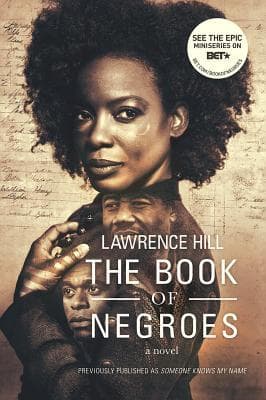
The Book of Negroes cover
Archivist's Choice

The Book of Negroes

Lawrence Hill (2007)

Genre

Historical Fiction

Reading Time

12-16 hours

Key Themes

See below

Track Your Reading

Sign in to track this book

Abducted from Africa and enslaved in America, Aminata's spirit helps her navigate revolution, loss, and a perilous journey back to her homeland, making her a symbol of freedom against the brutal tides of history.

Synopsis

Aminata Diallo, a smart, strong young girl, is abducted from her village in Mali in 1755 when she is eleven. Forced into the transatlantic slave trade, she survives the Middle Passage and is sold into slavery on a South Carolina indigo plantation, where she experiences great loss and abuse. She goes to New York during the American Revolutionary War, escapes her master, and becomes important by recording the names of Black Loyalists in 'The Book of Negroes' for their promised freedom. After the war, Aminata faces new hardships and prejudice in Nova Scotia. She then takes a dangerous trip back to Africa, settling in the new Freetown, Sierra Leone. Throughout her life, she searches for her lost love, Chekura, and her children, while dealing with questions of identity and freedom. Finally, Aminata travels to London, where her story helps the abolitionist movement, securing her place as a survivor and advocate against slavery.
Reading time
12-16 hours
Difficulty
Medium
Pacing
Moderate
Mood
Harrowing, Resilient, Reflective, Educational, Emotional
✓ Read this if...
You're looking for a powerful, meticulously researched historical account of slavery told through the eyes of an unforgettable protagonist, exploring themes of resilience, loss, and the fight for freedom.
✗ Skip this if...
You prefer light-hearted or fast-paced narratives, or find detailed descriptions of historical trauma and violence too distressing.

Plot Summary

A Fula Girl's Early Life and Abduction

Aminata Diallo, a smart and curious girl from the village of Bayo in West Africa, lives happily with her parents. Her mother teaches her midwifery, and her father teaches her storytelling and navigation. She is good with languages and observes her surroundings well. Her life changes suddenly when, at age eleven, slave traders attack her village. Her parents are murdered, and Aminata, with other villagers, is captured. She endures a difficult march to the coast, seeing great suffering and death, losing her innocence due to the brutality of her captors.

The Middle Passage and the Loss of Innocence

Packed into a slave ship, Aminata experiences the horrors of the Middle Passage. She sees the brutal conditions, disease, starvation, and despair that cause many to jump overboard. Amidst this suffering, she forms a bond with Chekura, a young man captured from a nearby village. She also learns of a planned revolt, which is brutally stopped. This further shows her the cruel reality of her situation. When she arrives in South Carolina, she is separated from Chekura and sold at auction to a cruel plantation owner named Robinson Appleby.

Life on a South Carolina Plantation

On Appleby's indigo plantation in South Carolina, Aminata works hard and suffers. She is physically abused and raped by Appleby. Despite the hardship, she secretly continues to learn to read and write, a skill her parents started teaching her. She also reunites briefly with Chekura, and they marry in a secret ceremony. Aminata gives birth to a son, Mamadu, but Appleby tragically takes him from her and sells him, a loss that deeply affects her. She eventually escapes Appleby's cruel rule, helped by a white woman who sympathizes with her.

New York and the Revolutionary War

Aminata goes to New York City, where she works as a domestic servant for a Jewish couple, the Lindo family. They treat her well and help her further her education in reading and writing. As the American Revolutionary War continues, the British promise freedom to slaves who join their side. Aminata, using her literacy, helps Captain John Clarkson, a British abolitionist. She is given the task of recording the names of Black Loyalists seeking passage to Nova Scotia in 'The Book of Negroes,' a historical document that promises freedom and land.

The Journey to Nova Scotia and Renewed Hardship

Aminata, with thousands of other Black Loyalists, goes on a dangerous journey to Nova Scotia, believing they are going to a place of true freedom. However, when they arrive in Birchtown, they find that the promises of land and equality are mostly unfulfilled. They face harsh winters, poor land, and widespread racial discrimination from the white loyalists already living there. Aminata struggles to survive, working odd jobs and facing constant prejudice, realizing that true freedom is still out of reach even in this promised land.

The Birth of May and the Search for Chekura

While in Nova Scotia, Aminata gives birth to a daughter, May, after a brief reunion with Chekura before they were separated in New York. She loves May, but the joy is mixed with the constant struggle to survive and the lingering pain of Mamadu's loss and Chekura's absence. She hopes to find Chekura again, searching for him among the new Black Loyalists and looking for any news of him. The harsh realities of Birchtown make raising May very difficult, showing how the British promises failed.

The Sierra Leone Company and the Return to Africa

Disappointed by the broken promises and racism in Nova Scotia, Aminata becomes an active voice among the unhappy Black Loyalists. She learns about the Sierra Leone Company, a plan by British abolitionists to create a free black colony in Africa, Freetown. Seeing this as a chance for true self-rule and a return to her homeland, Aminata decides to join the expedition. She believes this new venture offers the best hope for a truly free life for herself and her community, despite the dangers and uncertainties of the journey.

The Founding of Freetown and Further Disillusionment

Aminata makes the difficult journey back to Africa, landing in what will become Freetown, Sierra Leone. The initial hope for a self-governing black settlement quickly fades as the colonists face new forms of exploitation and control from the British administrators of the Sierra Leone Company. The land is hard, resources are scarce, and diseases are common. Aminata, using her literacy and intelligence, becomes a teacher and an advocate for her community, speaking out against injustices and fighting for the rights and promised independence of the settlers. She finds herself again dealing with a system meant to limit their freedom.

The Search for Her Roots and the Fulani People

Despite the problems in Freetown, Aminata feels a strong desire to reconnect with her roots. She travels into the African interior, hoping to find her original village of Bayo or at least some trace of her Fula people. This journey is dangerous, with threats from warring tribes and slave traders. While she does not find Bayo, she meets other Fula communities and learns more about her heritage. This brings some closure and understanding to her past, even as it shows the terrible impact of the slave trade on the continent.

London and the Abolitionist Movement

Aminata eventually travels to London, England, invited by the British abolitionist movement. Her life story, a testament to the brutality of slavery and human resilience, becomes a powerful tool in their campaign. She meets important figures like Granville Sharp and William Wilberforce, sharing her experiences and speaking publicly about the horrors she has endured. Her direct, clear testimonies put a human face on the arguments against slavery, making her a valuable asset to the cause, though she often feels like a symbol rather than a person.

The Book of Negroes and Lasting Legacy

In London, Aminata continues her work, helping to publicize the stories of those enslaved and advocating for their freedom. She helps the abolitionist cause by giving firsthand accounts and by her presence, showing the suffering and strength of enslaved people. Her testimony before the British Parliament is important, as she tells her life's journey, the injustices, and the lasting hope for freedom. She uses her voice to demand justice, leaving a lasting mark on the fight for abolition and securing her place as a survivor and a strong advocate for human rights.

Principal Figures

Aminata Diallo

The Protagonist

From a stolen child, Aminata transforms into a powerful advocate for freedom and a living symbol of resilience, never losing her sense of self despite immense suffering.

Chekura

The Supporting

Chekura remains a constant, albeit often absent, source of love and hope for Aminata, his fate mirroring the widespread loss and separation experienced by enslaved people.

Robinson Appleby

The Antagonist

Appleby remains a static symbol of unrepentant cruelty, his actions setting the stage for Aminata's lifelong struggle for justice.

John Clarkson

The Supporting

Clarkson serves as a catalyst for Aminata's journey to Nova Scotia and Sierra Leone, embodying the complex role of white allies in the fight against slavery.

Georgia

The Supporting

Georgia imparts crucial survival skills and a sense of shared humanity to Aminata, helping her adapt to the brutal reality of slavery.

Daddy Moses

The Supporting

Daddy Moses provides spiritual and communal leadership, embodying the enduring hope and faith of the Black Loyalists in Nova Scotia.

Mamed

The Mentioned

Mamed's memory serves as a constant reminder of Aminata's origins and the life stolen from her, motivating her quest for freedom and justice.

Sira

The Mentioned

Sira's memory highlights the loss of Aminata's nurturing childhood and fuels her innate compassion and desire to heal.

Themes & Insights

The Enduring Power of the Human Spirit and Resilience

Aminata's journey shows human resilience when facing great suffering. Despite being abducted, surviving the Middle Passage, forced labor, sexual assault, and losing her family and children, Aminata never truly gives up. She consistently finds ways to adapt, learn, and fight for her freedom and the freedom of others. Her ability to hold onto hope, even in the darkest times, and to keep striving for a better life, whether through literacy, advocacy, or building community, is central to the book. This is clear when she secretly learns to read and write on Appleby's plantation, using her mind as a tool for survival and, eventually, freedom.

I had walked a long way to get here. From Bayo to the coast. Across the ocean. To South Carolina, and then to New York, and then to Nova Scotia. I had learned to read and write, to listen and to speak. I had lost my children and found them again, in a way. I had seen the worst of humankind and the best. And I would keep walking, for as long as I could.

Aminata Diallo (Internal Monologue)

The Dehumanizing Impact of Slavery and Racism

The book details the widespread and dehumanizing nature of the transatlantic slave trade and later racial prejudice. From the brutal capture and Middle Passage to the daily violence and psychological torment on plantations, and the systemic discrimination faced by 'freed' slaves in Nova Scotia and even Sierra Leone, the book shows how slavery took away people's identity, family, and basic human rights. Characters like Robinson Appleby embody this cruelty, seeing enslaved people as property. The broken promises to the Black Loyalists in Nova Scotia further show how racism continued to deny true freedom and equality, even after legal emancipation.

I was a thing, a beast of burden, a body to be used, then discarded. They did not see me as a person. They saw only the blackness of my skin and the strength of my back.

Aminata Diallo (Internal Monologue)

The Search for Home and Belonging

Aminata's entire life is a constant search for a place where she can truly belong and feel safe. Stolen from her home of Bayo, she constantly tries to create a sense of community and family. Her various 'homes'—Appleby's plantation, the Lindo household, Birchtown, Freetown, and eventually London—are all temporary and imperfect. Each offers a different kind of belonging, but none provides the complete comfort of her lost childhood. Her journey back to Africa and her search for her Fula people highlight her deep desire to reconnect with her roots and find a place where her identity is fully recognized and respected, not constantly questioned or denied.

My home was not a place, but a memory. A place I had lost, and a place I longed to find again.

Aminata Diallo (Internal Monologue)

The Power of Literacy and Storytelling

Literacy and storytelling are important tools for survival, resistance, and identity in the book. Aminata's ability to read and write, first learned from her parents and later practiced in secret, gives her power in a world designed to keep her subservient. It allows her to record names in 'The Book of Negroes,' write letters, and ultimately, tell her own story. Storytelling, a tradition from her Fula heritage, helps preserve history, share experiences, and find meaning amidst trauma. Her spoken testimonies in London are key to the abolitionist cause, showing how personal stories can influence public opinion and drive social change.

I learned that words were a kind of weapon, and that to know them was to hold a power that could not be taken away.

Aminata Diallo (Internal Monologue)

The Complexities of Freedom

The book looks at the complex and often hard-to-reach nature of freedom. For Aminata and other enslaved people, freedom is not a single event but a continuous struggle. The British promise of freedom for Black Loyalists during the Revolutionary War turns out to be conditional and incomplete, leading to more disappointment in Nova Scotia. Even in Freetown, a colony founded on the idea of self-rule, the settlers face new forms of control and exploitation. The story shows that legal emancipation does not automatically mean true liberty, which includes economic independence, social equality, and the ability to live without fear of oppression. Aminata's eventual 'freedom' in London comes with the burden of being a symbol, highlighting the ongoing challenges even for those who escape direct enslavement.

Freedom, I learned, was not a place. It was a journey. And it was never truly finished.

Aminata Diallo (Internal Monologue)

Plot Devices & Literary Techniques

First-Person Narrative

The story is told entirely from Aminata Diallo's perspective.

The novel is narrated in the first person by Aminata Diallo, providing an intimate and deeply personal account of her life. This allows readers to experience her trauma, resilience, and evolving understanding of the world directly through her eyes. Her unique voice, shaped by her Fula heritage, her intelligence, and her experiences, lends authenticity and emotional weight to the historical events, making her journey intensely relatable and harrowing. The first-person perspective ensures that the reader is always privy to Aminata's inner thoughts and feelings, fostering a strong connection to her character.

The Book of Negroes (Document)

A real historical document central to the plot and Aminata's role.

The actual historical document, 'The Book of Negroes,' functions as a pivotal plot device. It is a ledger used by the British to record the names of Black Loyalists evacuated from New York to Nova Scotia, promising them freedom and land. Aminata's role in compiling this book, using her literacy skills, gives her agency and connects her directly to a significant historical event. The document represents both a promise of freedom and, later, the betrayal of that promise, as many listed individuals did not receive the land they were due. It symbolizes the complex and often broken agreements made with formerly enslaved people.

Flashbacks and Framing Device

The story is framed by Aminata's later life, with extensive flashbacks.

The novel uses a framing device, with an elderly Aminata in London recounting her life story to abolitionists. This structure allows her to reflect on her past with the wisdom of experience, providing context and emotional depth to earlier events. The narrative is largely composed of extensive flashbacks, beginning with her childhood and progressing chronologically through her life. This device emphasizes the cyclical nature of her struggles and triumphs, and highlights the enduring impact of her past on her present advocacy for abolition, giving her testimony a powerful, cumulative effect.

Literacy as a Tool for Survival and Empowerment

Aminata's ability to read and write serves as a crucial skill and source of power.

Aminata's literacy, first nurtured by her parents and later developed in secret, is a recurring and powerful plot device. It sets her apart from most other enslaved people and provides her with unique opportunities. It allows her to secure work with the Lindos, become the scribe for 'The Book of Negroes,' teach in Freetown, and ultimately, present her testimony in London. Her ability to read and write is not just a skill; it's a means of gaining information, asserting her intelligence, documenting injustices, and ultimately, empowering her to fight for freedom and carve out a meaningful existence in a world determined to silence her.

Critical analysis

Notable Quotes

Before I was Minny, I was Aminata. And before I was Aminata, I was something else, too, a child who had not yet been given a name.

Aminata reflects on her identity and the names she's had throughout her life, emphasizing the loss of her original African name.

My mind had been so long closed to the thought of freedom that it took me a moment to grasp what he was saying.

Aminata hears about the British promise of freedom for slaves who join their side during the American Revolution.

I was a free black woman, and I would make my own way. I would not be bought and sold again. I would not be owned.

Aminata's fierce resolve after gaining her freedom, vowing never to return to bondage.

My father used to say that the world was a big place, and there were many kinds of people in it, and all of them were worth knowing.

Aminata recalls her father's wisdom from her childhood in Bayo, Mali, before she was enslaved.

The ocean was a vast, indifferent beast, and we were its helpless cargo.

Aminata's description of the Middle Passage, highlighting the terror and dehumanization of the journey.

To forget was to die. To remember was to live, even if it meant living with pain.

Aminata's internal struggle to retain her memories of Africa and her past, despite the trauma.

I had been taught that the white man’s God was a God of love, but I saw little love in their actions.

Aminata's critique of the hypocrisy of slave owners who claimed religious piety.

The Book of Negroes was not just a list of names. It was a testament to survival, a record of lives that had refused to be erased.

Aminata reflects on the significance of 'The Book of Negroes' as a document of freedom and identity.

When you have nothing left to lose, you have everything to gain.

Aminata's mindset during desperate times, particularly when making bold decisions for her freedom.

My words were my most powerful weapon, sharper than any blade.

Aminata realizes the power of her storytelling and literacy in advocating for herself and her people.

Freedom was not a gift; it was a struggle, fought for inch by agonizing inch.

Aminata's understanding that freedom is not simply granted but must be actively pursued and defended.

I was a woman who had crossed oceans, outwitted slave catchers, and faced down the scorn of those who thought me less than human.

Aminata's self-assessment of her strength and resilience in her old age.

To be truly free, one had to be free in spirit, not just in body.

Aminata's philosophical reflection on the deeper meaning of freedom beyond physical liberation.

The world was full of good people and bad people, and often it was hard to tell the difference until it was too late.

Aminata's observation on the complexities of human nature after encountering various individuals throughout her life.

Quiz

Test Your Knowledge

Ready to see how well you understood this book? Take our interactive quiz with 10 questions.

10
Questions
~5
Minutes
?
Best Score

Key Questions (FAQ)

The novel follows the extraordinary life of Aminata Diallo, an African woman abducted from her village in Mali at age 11 in 1755. Her journey spans continents, from the horrors of the Middle Passage and slavery in America to the struggles of freedom in Nova Scotia and the eventual return to Africa, culminating in her advocacy for abolition in London.

About the author






