“The greatest truths are often hidden in plain sight, disguised as myth or legend.”
— Maureen's internal reflection on ancient stories and their underlying messages.

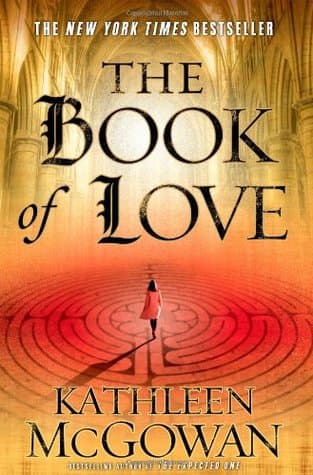
Kathleen McGowan (2009)
Genre
Thriller / Historical Fiction / Spirituality / Mystery / Romance
Reading Time
12-15 hours
Key Themes
See below
Sign in to track this book
A modern forensic archaeologist uncovers hidden codes in ancient texts and gospels, revealing a two-thousand-year-old conspiracy that could rewrite Christianity's foundations and expose a love story suppressed for millennia.
Maureen Paschal, a journalist focused on religious history, travels to Rennes-le-Château, France, to research Mary Magdalene. In the local church of Saint Mary Magdalene, she finds a hidden compartment and an ancient, coded manuscript. Written in an unknown language with unusual symbols, the manuscript immediately grabs her attention. Maureen feels a strong connection to the text and believes it holds secrets about Christianity's true history and Mary Magdalene's legacy. Her discovery quickly attracts powerful, hidden organizations who have protected these secrets for centuries, starting her on a dangerous path.
Understanding the manuscript's historical and spiritual importance, Maureen asks her friend and colleague, Father André, for help. Together, they start the hard work of deciphering the cryptic text, which seems to be a personal account from a woman close to Jesus. Their efforts are noticed. Bérenger Sinclair, a charming and mysterious scholar with deep knowledge of Gnostic texts and secret societies, contacts them and offers his help. Sinclair is very useful in decoding the manuscript's ancient language and symbols, but his sudden appearance and interest also raise questions about his true motives, hinting at a larger, hidden plan.
As Maureen reads more of the manuscript, she starts having clear, strong visions. These are not just dreams; they are intense experiences that take her back to 1st-century Judea, placing her directly in the life of a woman named Mariam. Mariam is a close follower of Jesus, aware of his most private teachings and his ministry. Maureen's visions become more frequent and detailed, showing events and talks not found in standard gospels. She starts to wonder if these are deep insights or if she is reliving Mariam's memories, suggesting a strong connection between them that crosses time.
The powerful groups guarding Mary Magdalene's secrets become more aggressive in pursuing Maureen and the manuscript. Cardinal Albani and his agents, representing traditional factions within the Vatican, use threats and surveillance to stop any information that might challenge church beliefs. At the same time, Maureen learns of an old, secret organization called 'The Guardians' or 'The Priory of Sion,' who have protected these sacred texts for centuries. While some Guardians, like Sinclair, seem to be on her side, others see her as a threat to their secrecy. The line between friend and enemy blurs as Maureen navigates this dangerous web.
Through Maureen's visions and the decoded manuscript, Mariam's (Mary Magdalene) story unfolds. It shows her not as a sinner, but as an educated, spiritual woman, an equal partner and beloved friend of Jesus. The text details her active part in Jesus's ministry, her deep understanding of his teachings, and her role as a leader among his followers. It highlights her intelligence and spiritual insight, challenging how she has been portrayed by the church for centuries. The manuscript suggests Mariam was meant to continue Jesus's mission after his crucifixion, a role later hidden and changed by male forces in the early Church.
The manuscript clearly describes what happened right after Jesus's crucifixion, focusing on Mariam's sadness, strength, and her efforts to keep his message alive. It details the growing hostility she faced from some of Jesus's male followers, especially Peter, who wanted to gain power and create a church hierarchy. Mariam's leadership and unique understanding of Jesus's teachings were seen as a threat. The text tells how her role was slowly pushed aside, her teachings twisted, and her identity slandered over time, leading to her gospel being suppressed and her true relationship with Jesus hidden. This historical change is a main revelation of the manuscript.
Facing growing danger and persecution in the Holy Land, Mariam, with a small group of loyal followers, including Martha and Lazarus, makes a risky sea journey. They sail to Gaul (modern-day France), bringing their spiritual teachings, sacred relics, and texts, including the manuscript Maureen found. This journey creates a direct line of sacred knowledge in Europe, hidden from the growing Roman Church. The manuscript describes their efforts to build communities and keep the 'true' teachings of Jesus and Mariam alive, setting up the esoteric traditions that would later appear in the region.
As Maureen continues to work with Sinclair and Father André, the full extent of the modern conspiracy becomes clear. They realize that powerful groups within the Vatican and other secret societies have worked for centuries to prevent the manuscript's contents from being known. These groups fear that revealing Mary Magdalene's true identity and central role would destroy their power. Maureen discovers that the suppression includes not just texts but also historical sites, artifacts, and the deliberate changing of historical records, all to maintain a specific story.
Amidst the historical discoveries and dangers, Maureen feels attracted to Bérenger Sinclair. Their shared search for truth and intense experiences together create a strong bond. Their relationship becomes a deep romance, making her already difficult situation more complex. Maureen struggles to balance her professional duties, the weight of the historical revelations, and her feelings for Sinclair, who also has secrets and a family line linked to the mysteries they are solving. This personal connection adds another layer of vulnerability and drive to Maureen's quest.
The climax shows Maureen, with Sinclair and Father André's help, confronting Cardinal Albani and his agents in a tense standoff. They get the manuscript and other important evidence. Maureen, now embodying Mariam's spirit, decides the truth must be shared with the world, despite the risks. Using her journalistic skills and Mariam's authentic voice from the manuscript, she prepares to publish her findings, challenging centuries of dogma and rewriting Christian history. The book ends with the significant impact of this revelation starting to spread globally, promising a new understanding of faith and history.
The Protagonist
Maureen transforms from a detached observer into an active participant, fully embracing her role as a modern-day vessel for ancient truths, finding love and purpose along the way.
The Supporting/Love Interest
Sinclair moves from a secretive guardian to openly collaborating with Maureen, revealing his true loyalties and finding a partner in his long-held mission.
The Historical Figure/Spiritual Guide
Her story is revealed through the manuscript, showcasing her journey from beloved disciple to persecuted leader, and ultimately, her enduring legacy through Maureen.
The Supporting
André grapples with the revelations that challenge his faith, ultimately finding a way to reconcile new truths with his spiritual beliefs and supporting Maureen.
The Antagonist
Albani remains steadfast in his conviction, ultimately defeated but not necessarily converted, representing the enduring resistance to historical revision.
The Historical Figure/Spiritual Teacher
His true teachings and relationship with Mariam are revealed, correcting centuries of misinterpretation.
The Mentioned/Supporting
Her story is part of the broader narrative of the women who preserved early Christian teachings.
The Mentioned/Antagonistic (historical)
His historical actions are revealed as instrumental in shaping the canonical narrative and suppressing the truth.
This theme looks at how the important role of women, especially Mary Magdalene, in early Christianity was intentionally lessened, twisted, and hidden. The manuscript shows Mariam as Jesus's equal, a spiritual leader, and a teacher, whose influence was systematically removed by male forces in the early Church. This hiding led to an imbalance in spiritual understanding, favoring a male-dominated hierarchy over Jesus and Mariam's inclusive teachings. Maureen's quest to reveal the truth directly challenges this historical unfairness, arguing for the return of the feminine principle to spiritual discussion.
““They feared the truth of the Woman, for it threatened their power over men.””
The novel examines the difference between historical fact and accepted religious belief. It asks readers to question the stories told by official institutions, specifically the Catholic Church, about Jesus's life and his followers. Maureen's discovery of the manuscript forces a re-evaluation of centuries of accepted 'truth,' showing how power structures can change history for their own goals. The conflict between Maureen and Cardinal Albani clearly shows this theme, highlighting the struggle between open investigation and strict adherence to tradition, and how freeing truth can break down old beliefs.
““Truth is not what is convenient, but what is real, no matter how uncomfortable.””
The idea of reincarnation and karmic connection is central to Maureen's journey. Her clear visions of Mariam's life are not just empathetic experiences but suggest a deep spiritual link, implying Maureen herself might be a reincarnation of Mary Magdalene or strongly connected to her soul. This connection allows Maureen to access memories and insights beyond normal historical research, making her uniquely suited to uncover and support Mariam's story. It suggests that certain souls are meant to finish tasks across lifetimes, adding a mystical element to the historical thriller.
““Sometimes, the past isn’t just history; it’s a memory waiting to be reclaimed.””
This theme explores how love, both divine and romantic, lasts through time and forms the basis of a lasting legacy. The manuscript reveals the deep love between Jesus and Mariam, not just as teacher and follower, but as spiritual partners. This love is shown as a powerful, transforming force that inspires their teachings and their strength in the face of persecution. In the present, Maureen and Sinclair's developing romance mirrors this ancient bond, suggesting that love helps reveal truth and drives the preservation of sacred knowledge. The book argues that true legacies are built on love, not power.
““Love, in its purest form, is the only truth that truly endures the passage of time.””
A cryptic, ancient text revealing suppressed historical truths.
The lost manuscript is the central plot device, serving as the catalyst for the entire narrative. Discovered by Maureen Paschal, it is a personal gospel written by Mariam (Mary Magdalene), detailing her intimate relationship with Jesus, his true teachings, and her subsequent persecution. Its coded language and hidden nature create the mystery, while its contents drive the plot's historical revelations and theological challenges. The manuscript is not just a document; it's a voice from the past demanding to be heard, triggering both historical exploration and a dangerous modern-day conspiracy.
Maureen's immersive experiences of Mariam's life.
Maureen's vivid, immersive visions of Mariam's life in 1st-century Judea serve as a crucial plot device. These are not merely dreams but powerful, almost hallucinatory experiences that blur the lines between past and present, suggesting a deep, possibly karmic, connection between Maureen and Mariam. These visions provide direct access to the historical narrative, allowing the author to present Mariam's story in a compelling, first-person manner. They also heighten the mystical element of the novel and underscore Maureen's unique role in uncovering the truth, making her more than just an investigator.
Ancient organizations dedicated to protecting or suppressing sacred knowledge.
The presence of secret societies, specifically 'The Guardians' (implied to be the Priory of Sion) and various factions within the Vatican, serves as a key plot device for generating conflict and intrigue. These organizations have been operating for centuries, either protecting the true legacy of Mary Magdalene or actively suppressing it. They represent the opposing forces in the battle for historical truth. Their hidden networks, ancient oaths, and willingness to employ extreme measures create the thriller elements, driving the danger and suspense as Maureen navigates their complex and often deadly agendas.
A real-world historical enigma serving as the story's starting point.
The real-world mystery surrounding Rennes-le-Château, a village in France long associated with Mary Magdalene, hidden treasures, and ancient secrets, provides a rich and credible backdrop for the novel. This location, with its enigmatic church and local legends, grounds the fictional narrative in historical and esoteric lore. It lends an air of authenticity and intrigue to Maureen's initial discovery, tapping into existing public fascination with historical conspiracies and religious mysteries, making the extraordinary events of the novel feel plausible within its chosen genre.
“The greatest truths are often hidden in plain sight, disguised as myth or legend.”
— Maureen's internal reflection on ancient stories and their underlying messages.
“Love isn't about finding the perfect person, but seeing an imperfect person perfectly.”
— A conversation between Maureen and Bérenger about the nature of true affection.
“History is written by the victors, but truth is whispered by the survivors.”
— Maureen contemplating the suppression of female voices and alternative historical narratives.
“Sometimes, the most dangerous secrets are the ones we keep from ourselves.”
— Maureen's realization about her own hidden past and forgotten memories.
“Faith is not about believing without doubt, but moving forward despite it.”
— A reflection on spiritual journey amidst uncertainty and challenging revelations.
“The past is never truly gone; it echoes in the present and shapes the future.”
— Maureen tracing the lineage of ancient mysteries and their modern-day implications.
“To truly know someone is to understand their wounds, not just their triumphs.”
— A discussion about empathy and deep connection within a romantic relationship.
“The heart has its own language, and sometimes it speaks louder than words.”
— Maureen experiencing a powerful emotional connection that transcends verbal communication.
“What we seek outside ourselves is often what we are meant to find within.”
— A spiritual realization about the source of personal power and wisdom.
“Every legend holds a kernel of truth, waiting to be unearthed by those brave enough to look.”
— Maureen's dedication to uncovering the historical reality behind mythical tales.
“There are no coincidences, only patterns we have yet to discern.”
— A character's belief in destiny and the interconnectedness of events.
“The greatest power lies not in control, but in surrender to the divine flow.”
— A spiritual teaching regarding letting go and trusting higher forces.
“Sometimes, the most profound answers come not from seeking, but from listening.”
— Maureen learning to quiet her mind and receive intuitive guidance.
“The true measure of a person is how they treat those from whom they can gain nothing.”
— A moral reflection on integrity and genuine compassion.
Ready to see how well you understood this book? Take our interactive quiz with 10 questions.

Biography coming soon.







