BookBrief
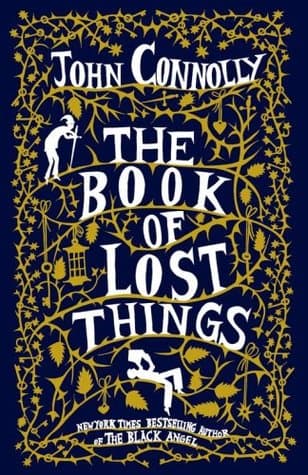
The Book of Lost Things cover
Archivist's Choice

The Book of Lost Things

John Connolly (2006)

Genre

Fantasy / Mystery / Young Adult

Reading Time

7 hr

Key Themes

See below

Track Your Reading

Sign in to track this book

Grieving the loss of his mother, young David tumbles through the whispering pages of his books into a warped fairy-tale land where familiar stories twist into dark, perilous quests for a mysterious tome holding the secrets of his own lost reality.

Synopsis

Twelve-year-old David is consumed by grief after his mother's death and struggles with his father's remarriage and the arrival of a new baby brother. He retreats into the books in his attic bedroom, which begin to whisper to him. One night, a mysterious fall transports him to a fantastical, yet dark and distorted version of fairy tale lands, populated by unsettling characters like talking wolves, a monstrous bear, and the sinister Crooked Man. David learns he must find the King and a legendary volume called The Book of Lost Things to return home. As David journeys through this dangerous realm, he encounters various characters, some helpful, some malevolent, and learns about the Crooked Man's influence. He discovers that the Crooked Man is manipulating many of the stories and creatures, trying to keep David from reaching the King and the book. Eventually, David reaches the King's castle, only to find that the King is frail and the Book of Lost Things is not what he expects. The Crooked Man reveals a deeper connection to David's own grief and the stories he loved. David confronts the Crooked Man, making a difficult choice that allows him to return to his own world, forever changed by his experiences, with a new understanding of loss, stories, and the power of imagination.
Reading time
7 hr
Difficulty
Medium
Pacing
Moderate
Mood
Dark, Melancholy, Mysterious, Reflective
✓ Read this if...
You enjoy dark fairy tale retellings, psychological depth in fantasy, and stories about grief, loss, and the power of imagination.
✗ Skip this if...
You prefer lighthearted fantasy or are sensitive to themes of childhood trauma and unsettling imagery.

Plot Summary

A Boy's Grief and Whispering Books

In 1940s London, twelve-year-old David is consumed by grief after his beloved mother succumbs to a long illness. He retreats to his attic bedroom, finding solace and escape in his books, which he increasingly perceives as whispering to him. His father, still reeling from the loss, quickly remarries a woman named Rose, who is pregnant with David's new half-brother, Georgie. This rapid change, coupled with the ongoing Blitz, deepens David's isolation and resentment. He feels displaced and forgotten, especially with the arrival of Georgie, who he secretly wishes ill upon. David frequently hears his father talking to a mysterious 'Crooked Man' about the war and the future, further fueling his anxieties and sense of unease within his own home.

The Call of the Woods and a Mysterious Fall

David's family moves to a large, old house in the countryside to escape the bombing in London. The house has a vast, overgrown garden with a high wall and a dense, ancient wood beyond. David is repeatedly drawn to a specific section of the garden, feeling an inexplicable pull towards the woods. One day, while exploring near the boundary, he hears a voice calling his name from the trees. Overcoming his fear, he climbs the wall and ventures into the dark, twisted woods. As he walks deeper, the path beneath him suddenly gives way, and he tumbles into a deep crevice, losing consciousness as he falls into an unknown place.

Awakening in a Land of Twisted Fairy Tales

David awakens in a strange, fantastical land, finding himself in a landscape that is both beautiful and unsettling. The trees are unnaturally tall, and the sky seems different. He soon encounters a gruff but seemingly benevolent Woodsman, who explains that David has fallen into a world where fairy tales and myths are real, though often twisted and dark. The Woodsman, a hunter of monstrous creatures, warns David of the dangers of this world and offers him shelter. David learns that this land is ruled by an ailing, reclusive King, who possesses a powerful and mysterious tome known as 'The Book of Lost Things,' which is said to contain all the stories of this world and beyond.

The Quest for the Book and the Crooked Man's Shadow

Believing 'The Book of Lost Things' might hold the key to returning home, David decides to seek out the King. The Woodsman, while initially reluctant, agrees to guide him part of the way, providing David with a hunting knife for protection. During their journey, David begins to encounter hints of the sinister Crooked Man, a recurring figure from his waking world's anxieties, who seems to exert influence over this land. The Crooked Man appears as a shadowy, manipulative entity, preying on people's weaknesses and fears. David realizes that this figure is not just a figment of his imagination but a powerful, malevolent force within this new reality.

Encounters with Unsettling Characters

As David continues his journey, he encounters various characters from familiar fairy tales, but they are often darker and more complex than he remembers. He meets a cynical and hardened Red Riding Hood, who is now a hunter herself, seeking revenge against the Wolf. He also encounters a group of dwarves, who are not benevolent but suspicious and greedy. Later, he finds himself in a labyrinth guarded by a lonely, melancholic creature known as the Labyrinth Man, who warns him against the dangers of the King's castle and the true nature of this world. These encounters force David to question his understanding of good and evil and adapt to the harsh realities of the land.

The Wolf and the Bear

David eventually confronts the Wolf, a cunning and dangerous creature. Through a combination of bravery and quick thinking, David manages to escape the Wolf's clutches, though not without fear. During his travels, David also encounters a talking Bear, a gentle giant who becomes his loyal companion and protector. The Bear, once a human prince cursed by the Crooked Man, is on his own quest to break the enchantment. Their bond strengthens as they face the perils of the land together, offering David much-needed companionship and a sense of belonging in this alien world.

The Crooked Man's Deceptions

The Crooked Man frequently appears to David in various guises, attempting to manipulate him and dissuade him from his quest. He whispers doubts into David's mind, preying on his grief, anger, and insecurities about his family. The Crooked Man offers David false promises of comfort and escape, trying to convince him to give up on finding the Book and returning home. David learns that the Crooked Man feeds on sorrow and resentment, thriving on the unhappiness of others. He represents David's inner demons and the destructive power of his negative emotions, constantly challenging David's resolve and moral compass.

Arrival at the King's Castle and the True Nature of the Book

After a perilous journey, David, accompanied by the Bear, finally reaches the King's castle. He finds the King to be frail and grief-stricken, consumed by the loss of his own son, who vanished long ago. The King's castle is a place of faded grandeur and sorrow. David learns that 'The Book of Lost Things' is not just a collection of stories but a living, changing entity that records the tales of those who have become lost in this world, and sometimes, the stories of their longing to return. It is a book of memory and sorrow, reflecting the experiences of all who enter this realm.

The Crooked Man's Revelation and David's Connection

The Crooked Man makes his final, most powerful appearance, revealing his true nature and his history with the King. He is the King's lost son, transformed by bitterness and jealousy. He became the embodiment of the King's own unacknowledged grief and resentment, growing into the malevolent force that now manipulates the land. The Crooked Man also reveals that he has been influencing David since his mother's death, feeding on David's own sorrow and anger towards Rose and Georgie. He tries to convince David to embrace his bitterness and stay in this world, promising him power if he joins him.

The Confrontation and the Choice

David confronts the Crooked Man, realizing that the villain is a manifestation of his own unaddressed grief and anger. He understands that his resentment towards Rose and Georgie has fueled the Crooked Man's power over him. In a moment of clarity, David chooses forgiveness and acceptance over bitterness. He recognizes the importance of love and family, even in their new form. He finally acknowledges that his mother would want him to find happiness. This act of acceptance weakens the Crooked Man, who is ultimately defeated not by violence, but by David's emotional growth and understanding. David finds his own story written in 'The Book of Lost Things,' and it is a story of love, loss, and ultimately, hope.

Return Home and Lingering Echoes

Upon his return, David awakens in his own world, back in his attic bedroom, but he is a changed boy. The experience has matured him, helping him to process his grief and accept his new family. While the vividness of his adventure fades over time, the lessons learned and the emotional growth remain. He looks at Rose and Georgie with new eyes, understanding his father's need for love and his own capacity for it. Although the fantastical world recedes into memory, David occasionally finds subtle reminders of his journey, like a whisper in the wind or a forgotten object, confirming that his adventure was real and shaped who he became.

Principal Figures

David

The Protagonist

David transforms from a resentful, grief-stricken child into a more understanding and accepting young man, learning to process loss and embrace new forms of family.

The Crooked Man

The Antagonist

The Crooked Man's history and true identity are gradually revealed, culminating in his defeat through David's emotional growth rather than physical force.

The Woodsman

The Supporting

The Woodsman remains largely consistent in his role as a protector and guide, helping David navigate the initial dangers of the new world.

The Bear

The Supporting

The Bear's backstory is revealed, and he finds companionship with David, sharing a common goal of escaping their respective curses/situations.

The King

The Supporting

The King's backstory and connection to the Crooked Man are slowly unveiled, revealing the source of the land's sorrow.

Red Riding Hood

The Supporting

She provides a darker perspective on a classic fairy tale character, showing the lasting impact of trauma.

David's Mother

The Mentioned

Her memory evolves from a source of paralyzing grief to a source of strength and inspiration for David's emotional growth.

Rose

The Supporting

Initially the object of David's resentment, she becomes a figure he eventually accepts and understands.

Georgie

The Supporting

Represents the 'lost thing' that David must find acceptance for, symbolizing his new family.

The Labyrinth Man

The Supporting

He serves as a cautionary figure, reflecting the despair that can consume those in the land.

Themes & Insights

Grief and Loss

The central theme of the book is David's grief over his mother's death. His journey into the fantastical land is a direct manifestation of his internal struggle to process this loss. The Crooked Man feeds on David's sorrow, and the King's own grief over his lost son mirrors David's pain. The book explores how grief can twist reality, lead to resentment, and the long, difficult path towards acceptance. Ultimately, David learns that true healing comes not from forgetting, but from acknowledging and integrating loss into one's life.

For in every adult there dwells the child that was, and in every child there lies the adult that will be.

Narrator

The Power of Stories and Imagination

Stories are important in this novel, both as an escape and a way to understand reality. David initially retreats into books, and these very books seem to draw him into the fantastical world. The land he enters is populated by twisted fairy tale characters, showing how stories shape perception and can be reinterpreted based on one's experiences. 'The Book of Lost Things' itself is a living record of these stories, representing memory, history, and the narratives people construct to make sense of their lives. It shows how imagination can be a refuge, but also a lens through which to confront difficult truths.

For stories are not just stories, they are the most important things in the world.

The Woodsman

Identity and Self-Discovery

David's journey is one of self-discovery. He grapples with who he is after his mother's death and the arrival of a new family. His resentment towards Rose and Georgie challenges his identity as his father's sole focus. In the fantastical world, he is forced to confront his fears, anger, and capacity for both good and ill. His interactions with characters like the Crooked Man, who embodies his negative emotions, force him to define himself and choose the kind of person he wants to be. By the end, he gains a stronger sense of self, accepting his new family and his place within it.

He was a boy who had lost his way, and now he was a boy who was trying to find it again.

Narrator

Good vs. Evil and Moral Choice

The book presents a nuanced view of good and evil, often blurring the lines found in traditional fairy tales. Characters like Red Riding Hood are not purely good, and the monsters are often tragic figures. The Crooked Man, while malevolent, is revealed to be a product of grief and resentment, making him a complex antagonist. David's internal struggle with his own anger and desire for revenge against his stepmother and half-brother mirrors the external conflict with the Crooked Man. The narrative shows that the choice between good and evil often lies within oneself, in how one chooses to respond to pain and loss.

There are worse things than monsters in the world, David.

The Woodsman

Acceptance and Forgiveness

A theme explored through David's emotional arc is the importance of acceptance and forgiveness. Initially, David struggles to accept his mother's death, his father's remarriage, and the existence of Georgie. His inability to accept these changes fuels his anger and makes him vulnerable to the Crooked Man. His triumph over the Crooked Man comes not through violence, but through an act of forgiveness – forgiving his father, accepting Rose and Georgie, and forgiving himself for his bitter thoughts. This theme shows that peace comes from embracing reality, even when it's painful, and extending grace to oneself and others.

Sometimes, David, the only way to win is to not fight at all.

The Bear

Plot Devices & Literary Techniques

The Portal to a Fantastical World

A magical gateway into a land where stories come alive.

The fall into the crevice in the old garden wall serves as the portal, a classic fantasy device that transports David from mundane reality into a magical, dangerous realm. This portal isn't just a physical transition but also a metaphorical one, representing David's descent into his own subconscious mind and his journey through the landscape of his grief and imagination. The fact that it's located in the 'old' part of the garden suggests a connection to forgotten or suppressed aspects of his life and the past.

The Book of Lost Things

A magical tome that records the stories of those lost in the fantastical world.

The titular 'Book of Lost Things' is a central symbolic and plot device. It's a magical book that collects the stories and experiences of everyone who enters the fantastical land, particularly those who are lost or forgotten. It represents memory, history, and the narratives we construct around our lives and losses. For David, it is initially a means to return home, but he discovers it also contains his own evolving story and the stories of those who, like him, are grappling with profound loss. It's a repository of both sorrow and hope.

Personification of Emotions (The Crooked Man)

An antagonist who embodies David's negative emotions and unchecked grief.

The Crooked Man is a powerful personification of David's (and the King's) unchecked grief, anger, resentment, and bitterness. He is not merely an external villain but a manifestation of the destructive potential of these emotions when left unaddressed. By giving David's inner turmoil a physical form, the narrative allows David to confront and ultimately overcome his internal struggles through an external battle, making the process of emotional healing tangible and dramatic.

Twisted Fairy Tales

Familiar fairy tale characters and narratives reinterpreted with darker, more complex themes.

The use of twisted fairy tales is a key device that grounds the fantasy world in familiar archetypes while simultaneously subverting them. Characters like Red Riding Hood and the Wolf, or even the concept of a 'prince' (the Bear), are presented in darker, more realistic, and often tragic ways. This device highlights the loss of innocence, the harshness of reality, and the idea that stories, like life, are rarely simple or purely good versus evil. It forces David, and the reader, to reconsider preconceived notions and to look beyond surface appearances.

The Parallel Worlds

The juxtaposed reality of wartime London and the fantastical land, mirroring each other's themes.

The novel uses two parallel worlds: David's reality in wartime London and the fantastical land he enters. These worlds are not entirely separate but reflect and influence each other. The bombing raids in London parallel the dangers in the fantasy world; David's grief and resentment manifest as the Crooked Man. This device underscores the idea that external reality and internal emotional landscapes are deeply intertwined, and that the fantastical journey is a metaphorical exploration of David's psychological state and his path to healing in the 'real' world.

Critical analysis

Notable Quotes

Stories are like spiders, with all they long legs, and stories are like spiderwebs, which man gets himself all tangled up in but which look so pretty when you see them under a morning dew, in a field of grass.

David's mother tells him this as a child, explaining the power and allure of stories.

We have such little time to be here, and we spend so much of it in unhappiness.

Reflection by David as he navigates the dangers of the fantasy world.

The world is full of stories, and from time to time they permit themselves to be told.

Narrator's observation about the nature of stories and their emergence.

There are things that are worse than wolves, and they are the things that wolves fear.

A warning given to David about the deeper dangers in the fantasy realm.

You cannot change what you are, only what you do.

Advice from a character to David about identity and action.

In every adult there dwells the child that was, and in every child there lies the adult that will be.

Narrator's reflection on the continuity between childhood and adulthood.

The problem with fairy tales is that they are not true. The problem with life is that it is.

David's realization about the harsh realities compared to stories.

Sometimes the things that may or may not be true are the things a man needs to believe in the most.

Thought on faith and belief in uncertain times.

A story is a letter that the author writes to himself, to tell himself things that he would be unable to discover otherwise.

Insight into the personal nature of storytelling and self-discovery.

The world makes sense to children, because they see it as it is, not as they are told it should be.

Observation about the clarity and honesty of a child's perspective.

Loss is a part of life, but it is also a part of stories. Without loss, there can be no heroes.

Reflection on the role of loss in shaping narratives and character.

The most beautiful things are often the most dangerous, and the most dangerous are often the most beautiful.

Warning about the deceptive allure of certain elements in the fantasy world.

To be a man is to be afraid, but to be a hero is to be afraid and to act anyway.

David's understanding of courage in the face of fear.

In the end, we are all stories. What matters is how we tell them.

Final reflection on the importance of narrative in defining one's life.

Quiz

Test Your Knowledge

Ready to see how well you understood this book? Take our interactive quiz with 10 questions.

10
Questions
~5
Minutes
?
Best Score

Key Questions (FAQ)

The novel follows twelve-year-old David, who retreats into his imagination after his mother's death and finds himself transported to a twisted fantasy realm. In this world, he must navigate dangers like the Crooked Man and the Loups to find the mysterious Book of Lost Things, which holds secrets that could help him return home while confronting his grief.

About the author