“It was a truth universally acknowledged that a vampire in possession of a good fortune must be in want of a witch.”
— A playful inversion of Jane Austen's famous opening line, setting the tone for Matthew and Diana's relationship.

Deborah Harkness (2014)
Genre
Fantasy / Historical Fiction / Romance
Reading Time
1250 min
Key Themes
See below
Sign in to track this book
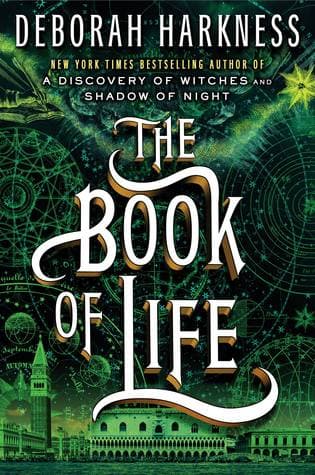
In the conclusion to the All Souls Trilogy, time-traveling witch Diana and vampire Matthew return to the present to face old enemies, uncover the secrets of Ashmole 782, and fight for their forbidden love and the future of all magical creatures.
Diana Bishop and Matthew Clairmont return from Elizabethan London to the present day at Sept-Tours, Matthew's ancestral home in France. They are accompanied by their twin children, Philip and Rebecca, and a group of historical figures including Gallowglass, Pierre, and Fernando. Their return is met with relief and worry by the assembled family, including Ysabeau, Marcus, Miriam, and Sarah. However, the joy is immediately lessened by the revelation that Stephen Proctor, Diana's father, has left her a message in a chess set: 'Find the Book of Life.' This message renews the urgency of their quest for Ashmole 782 and its missing pages, while also hinting at deeper mysteries about Diana's lineage and power.
Upon their return, Diana and Matthew focus on understanding Ashmole 782, now called the Book of Life. Diana discovers that the book is not just a historical text but a living entity, connected to her own magical lineage as a weaver. She realizes that the missing pages are not lost but are integrated into the book itself, revealing themselves only to her. With Miriam and other scholars' help, Diana deciphers new sections of the text, which contain information about the origins of creatures and the forbidden practice of creating new ones. This knowledge strengthens their belief that the book holds the key to breaking the Covenant and ensuring a future for creatures.
The Clairmont family faces a dangerous threat from Benjamin Fuchs, Matthew's illegitimate son from his vampire life in Bohemia. Benjamin, a renegade vampire, has been manipulating events and gathering power. He seeks to exploit the secrets of Ashmole 782 and Diana's unique abilities for his own malicious purposes, driven by revenge against Matthew and a desire for control. His existence complicates Matthew's already strained relationship with the Congregation and adds a personal and unsettling dimension to their struggles, forcing Matthew to confront a dark part of his past.
The Congregation, the governing body of creatures, remains a significant obstacle. Gerbert d'Aurillac, Peter Knox, and Satu Järvinen continue their pursuit of Diana and Ashmole 782, believing the book holds dangerous secrets. Their interference is constant, with Knox specifically targeting Diana's family and trying to undermine her authority. This pressure forces Diana and Matthew to navigate a complex web of political intrigue and old prejudices, making their quest for the book's secrets more perilous. The Congregation's strict adherence to the Covenant and their fear of change threaten to destroy any hope of a peaceful future for creatures.
A large part of their efforts goes into understanding the genetic basis of creature existence and why fertility is declining, especially among vampires. Working with Miriam and Marcus, they discover that the Book of Life contains a detailed genetic blueprint, showing the intricate connections between witches, vampires, and daemons. They realize that creature bloodlines are not as distinct as previously believed and that interspecies mixing might be important for the survival of all creatures. This research challenges long-held beliefs and the foundation of the Covenant, suggesting that the strict separation of species has been harmful.
The investigation into declining creature numbers leads Diana and Matthew to uncover a horrifying truth: the creation of new creatures. They learn that Benjamin Fuchs has been experimenting with human blood and daemon DNA, trying to artificially create new vampires and other creatures. This forbidden practice, driven by Benjamin's twisted ambition, shows the dangers of unchecked power and how far some will go to defy the natural order. The ethical implications are deep, and the existence of these 'new creatures' poses a threat to the delicate balance of the creature world.
The climax of their pursuit takes Diana and Matthew to Oxford, where Benjamin Fuchs has a hidden lair. They are joined by their allies, including Gallowglass and Fernando. A tense and dangerous confrontation follows, with Benjamin proving to be a formidable and cunning adversary. Diana, using the full extent of her weaver powers, plays a key role in the struggle, using her magic to combat Benjamin's dark arts. The battle is not just physical but also a clash of ideas, with Benjamin representing the destructive forces of unchecked ambition and old grudges.
During the confrontation with Benjamin, Diana fully uses her powers as a weaver. She not only defends herself and her family but also uses her unique ability to integrate the missing pages back into Ashmole 782. This act completes the book, turning it into a unified, living document, revealing all its secrets. Her mastery of weaving allows her to mend the fractured history of creatures and, in doing so, to symbolically mend the divisions between species. This moment shows her coming into her full power and destiny.
In a final struggle, Benjamin Fuchs is defeated. Matthew, confronting the son he never truly knew, plays a crucial role in Benjamin's downfall, but Diana's power and strategic thinking seal his fate. His defeat ends his dangerous experiments and his attempts to destabilize the creature world. The resolution of this personal conflict allows Matthew to finally accept his past and embrace his future with Diana and their children. The threat of Benjamin is neutralized, but the effects of his actions will remain.
With Ashmole 782 complete and its truths revealed, Diana and Matthew present their findings to the Congregation. The Book of Life clearly shows that the Covenant, which strictly separates creatures, is based on flawed understandings of creature biology and history. The evidence of interspecies fertility and shared genetic heritage forces the Congregation to confront the need for major change. While not an immediate dissolution, the revelations start a process of reevaluation, hinting at a future where creatures can coexist and intermarry without fear of persecution, preparing the way for a new, more inclusive covenant.
With the immediate threats gone and the Congregation forced to consider a new path, Diana and Matthew can finally focus on their family. Their twins, Philip and Rebecca, represent the promise of a new era for creatures, embodying the very interspecies union that the old Covenant forbade. Surrounded by their extended family at Sept-Tours and Bishop House, they look forward to a future where their children can grow up in a world free from the prejudices and dangers that have plagued their parents. The ending emphasizes themes of hope, love, and the strength of chosen family, setting the stage for a more harmonious existence.
The Protagonist
Diana transforms from a hesitant witch into a fully realized, powerful weaver, accepting her destiny and completing the Book of Life.
The Protagonist
Matthew confronts his past, particularly his relationship with Benjamin, and finds peace and purpose through his family with Diana.
The Antagonist
Benjamin's destructive path, fueled by resentment and ambition, culminates in his defeat and the end of his reign of terror.
The Supporting
Marcus steps into his role as a leader within the creature world, advocating for change and a new understanding of creature genetics.
The Supporting
Miriam continues her vital scientific work, contributing significantly to the understanding of creature genetics and the potential for a new Covenant.
The Supporting
Ysabeau, while still traditional, accepts Diana and her children fully, demonstrating her evolving understanding of family and the future.
The Supporting
Sarah continues to support Diana, finding solace and strength in her own relationships while embracing the new generation of witches.
The Supporting
Gallowglass continues his unwavering loyalty and protection of Diana and Matthew, embodying steadfast devotion.
The Supporting
Fernando maintains his role as a wise and supportive elder, a stable presence within the family.
The novel explores the broad and changing definition of family, moving beyond traditional bloodlines to include chosen families and interspecies relationships. Diana and Matthew's union, and the birth of their twins, challenge the old Covenant's rules, symbolizing a new era where love and loyalty transcend species. The family at Sept-Tours, a mix of witches, vampires, and daemons, shows that strength comes from unity and acceptance. Even Matthew's struggle with Benjamin highlights the complex and sometimes painful aspects of family ties, but ultimately reinforces the importance of the family he has chosen and built with Diana. The theme emphasizes that true belonging is found in acceptance and shared purpose, not rigid adherence to old laws.
““Family wasn’t just about blood. It was about who you loved, who you chose, and who was there for you when the world was falling apart.””
A central theme is the pursuit of knowledge to dismantle old prejudices and reveal uncomfortable truths. Ashmole 782, the Book of Life, is the ultimate symbol of this, containing the genetic and historical truths about creatures that contradict the Congregation's strict Covenant. Diana's scholarly background and Matthew's scientific research are important in uncovering these truths. The Congregation's resistance to change comes from ignorance and fear, while Diana and Matthew's quest is driven by a desire for understanding and a more just world. The book argues that true progress can only happen when people confront uncomfortable facts and challenge established dogma, even if it means overturning centuries of tradition. The revelations about interspecies fertility and shared ancestry fundamentally challenge the basis of creature segregation.
““The truth, like any good spell, was a living thing. It changed, it adapted, and it revealed itself in its own time.””
The novel deals with destiny, as implied by prophecies and old texts, and the characters' choices. Diana's role as a weaver and her connection to Ashmole 782 suggest a predetermined path, yet her decisions and actions ultimately shape the outcome. Matthew, too, must confront his past and choose to break free from cycles of violence. The characters are not just pawns of fate but active agents who make difficult choices, often defying expectations and traditions, to create their own futures. This theme explores whether their powerful abilities and old lineages dictate their lives, or if their love and determination can rewrite their destinies, suggesting a balance where destiny provides a framework, but free will dictates the details.
““Destiny was not a road map, but a compass. It pointed you in a direction, but you still had to walk the path.””
Love, in its various forms—romantic, familial, and platonic—is shown as the most powerful force in the story, driving characters to make great sacrifices. Diana and Matthew's love is the catalyst for much of the plot, inspiring them to face dangers and challenge old laws. The sacrifices they make, personal and professional, show the depth of their commitment to each other and their vision for a better world. This theme also extends to the love within their extended family, as characters like Gallowglass, Ysabeau, and Sarah consistently put themselves at risk for their loved ones' well-being. The novel suggests that love is not just an emotion, but a powerful, transformative force capable of overcoming prejudice and forging a new future.
““Love was the most powerful magic of all. It could mend what was broken, heal what was wounded, and make the impossible possible.””
An ancient, sentient manuscript central to creature origins and future.
Ashmole 782, or the Book of Life, serves as the ultimate MacGuffin and a crucial source of exposition. Initially a mysterious, missing manuscript, it is revealed to be a sentient entity intrinsically linked to Diana and the genetic origins of all creatures. It acts as a narrative device to reveal crucial information about the Covenant, creature bloodlines, and forbidden magical practices. Its completion by Diana's weaving powers symbolizes the integration of knowledge and the potential for a unified creature world, driving the entire plot forward and providing the answers needed to challenge the status quo.
A magical ability used to retrieve knowledge and shape the past/present.
Time travel, primarily facilitated by Diana's magical abilities, is a key plot device that allows characters to access historical periods, gather information, and influence events. In 'The Book of Life,' its immediate function is to bring Diana and Matthew back to the present with their children, establishing the current timeline and setting up the remaining conflicts. It also provides historical context for characters like Benjamin Fuchs and the origins of creature practices. While not as central to the 'present day' action as in previous books, the consequences of their time in the past profoundly impact the present narrative and character development.
Scientific investigation into creature biology, challenging magical dogma.
Genetic research, primarily conducted by Matthew and Miriam, acts as a scientific foil to the magical elements of the story. It serves as a plot device to uncover the biological truths behind creature existence, declining fertility, and the interconnectedness of species. This scientific evidence directly challenges the ancient, magically enforced Covenant and provides a logical, undeniable basis for changing the creature world's laws. It grounds the fantasy elements in a semblance of scientific rationale, making the revelations about creature origins more impactful and providing a path forward for coexistence.
An ancient set of laws segregating creatures, driving conflict.
The Covenant is the foundational plot device that establishes the central conflict and stakes of the entire series. It is an ancient set of rules that forbids interspecies relationships and interaction, leading to prejudice and fear among creatures. The quest to understand, challenge, and ultimately break the Covenant is the primary motivation for Diana and Matthew. Its existence creates constant tension and external threats from the Congregation, forcing the protagonists to seek radical solutions and proving its inherent flaws through their actions and discoveries from the Book of Life. The potential for its dissolution represents the ultimate goal of the narrative.
“It was a truth universally acknowledged that a vampire in possession of a good fortune must be in want of a witch.”
— A playful inversion of Jane Austen's famous opening line, setting the tone for Matthew and Diana's relationship.
“For the first time in my life, I understood that my destiny wasn’t a matter of fate, but a matter of choice.”
— Diana realizes her agency in shaping her future, particularly regarding her powers and relationship with Matthew.
“The past is never dead. It’s not even past.”
— A nod to William Faulkner, emphasizing the enduring impact of history and the past on the present for immortal creatures.
“Sometimes the greatest love story is the one you didn't see coming.”
— Reflecting on Diana and Matthew's unexpected and powerful bond.
“Knowledge is a dangerous thing. Especially when it’s true.”
— A recurring theme as characters uncover ancient secrets and the consequences of their revelations.
“We are all collections of our choices, and in the end, we have to live with them.”
— Characters facing the repercussions of their decisions, highlighting personal responsibility.
“Magic wasn't just about power; it was about understanding, about connection, about the subtle threads that bound the world together.”
— Diana's evolving understanding of the true nature of magic beyond simple spells.
“Family wasn't always blood. It was the people who stood by you, who loved you, who would fight for you.”
— Diana's found family, including the de Clermonts and her own coven.
“To truly live, you had to embrace the darkness as well as the light.”
— A reflection on the complexities of life and the balance between good and evil, particularly for supernatural beings.
“History wasn't just dates and names; it was the echo of lives lived, of passions felt, of stories told.”
— Diana, a historian, pondering the deeper meaning and resonance of the past.
“Sometimes, the greatest strength lies in vulnerability.”
— Diana and Matthew learning to be open with each other, despite their powerful natures.
“There are no ordinary lives, only lives that are not fully understood.”
— A philosophical observation about the depth and complexity of every individual's existence, especially in a world of creatures.
“The future was not a predetermined path but a tapestry woven by every choice, every action, every hope.”
— Emphasizing the dynamic and malleable nature of the future, shaped by individual and collective efforts.
“Love, it turned out, was not a weakness, but the very source of their power.”
— Diana and Matthew's realization that their bond makes them stronger, not weaker, against their enemies.
Ready to see how well you understood this book? Take our interactive quiz with 10 questions.
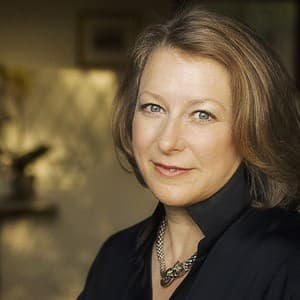
Deborah Harkness is a historian and author, best known for her bestselling All Souls trilogy, which includes 'A Discovery of Witches,' 'Shadow of Night,' and 'The Book of Life.' Her work masterfully blends historical research with elements of fantasy and romance, creating immersive worlds that captivate readers.







