“The dead days are coming, and with them, the time for the dead to walk.”
— Fagin's ominous warning to Boy as they prepare for the dangerous period.

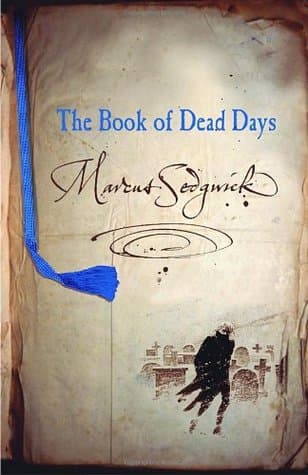
Marcus Sedgwick (2004)
Genre
Fantasy / Mystery / Young Adult
Reading Time
270 min
Key Themes
See below
Sign in to track this book
Between Christmas and New Year's, a desperate magician, his servant, and an orphan explore moonlit death fields and a subterranean city to escape a demonic pact before alchemy and sorcery claim his soul.
The story begins in a grim, gaslit city during the 'Dead Days' between Christmas and New Year's Eve. Valerian, a magician, is in trouble. A demonic entity, Malo, haunts him, coming to collect on a pact made years ago: Valerian's soul for magical power. With only days left until New Year's Eve, Valerian is frantic. His only companions are his loyal servant, Boy, and the sharp orphan girl, Willow, who has found a home with them. Valerian believes an ancient scroll holds the key to his salvation, hidden in the city's forgotten catacombs. He sends Boy on dangerous errands to gather information and supplies, while Malo's presence grows stronger.
Willow, observant and clever, starts to piece together clues from Valerian's cryptic words and the strange items Boy brings back. She finds a hidden message in one of Valerian's old books, hinting at a secret society and a location beneath the city. This confirms Valerian's suspicions about the scroll's location. The magician, weakened and desperate, tasks Boy and Willow with venturing into the city's sewers and catacombs. Their mission is to find the entrance to a legendary subterranean city, believed to hold the scroll and a powerful artifact that could break Valerian's pact with Malo. The young duo, though scared, understand their mission's importance and prepare for the dangerous journey.
Boy and Willow descend into the dark sewers, a world full of vermin and shadowed figures. They meet the 'Undertakers,' a secretive community living beneath the city, scavenging and maintaining forgotten passages. These people are wary but not hostile, offering warnings about deeper dangers. Boy's quick thinking and Willow's observations help them navigate the treacherous tunnels, avoiding collapsing sections and hidden traps. They follow their clues, slowly making their way towards the entrance of the legendary subterranean city, a place whispered about by the Undertakers. The air grows colder and heavier, with a sense of ancient power.
Boy and Willow find the hidden entrance, a disguised portal leading into a vast, ancient subterranean city. This city is inhabited by the 'Keepers,' a reclusive society preserving knowledge and artifacts from a bygone era. The Keepers, led by the stern Elder, are initially suspicious of the children. They dislike the surface world and protect their secrets. Boy and Willow must prove their intentions, explaining Valerian's problem and the urgent need for the scroll. The Keepers test their resolve and knowledge, slowly understanding the situation's gravity and the threat from Malo, a name that frightens even them.
With the Keepers' reluctant help, Boy and Willow find the ancient scroll in a hidden chamber. The scroll, however, does not contain a simple counter-spell. Instead, it reveals the true nature of Valerian's pact with Malo. It details a more sinister agreement than Valerian had admitted, involving not just his soul but a dangerous ritual that would unleash Malo's full power. The scroll also hints at a forgotten lineage and a connection between Valerian and the entity he sought to control. This revelation shatters the children's understanding of their master, forcing them to question his motives and the extent of his desperation. The weight of this knowledge falls heavily on them.
As the deadline nears, Malo's presence in Valerian's workshop becomes almost real. Through the scroll's revelations and Valerian's fragmented confessions, the children learn that Malo is not just a demon, but an ancient entity Valerian tried to harness for his ambitious magical experiments. The pact was not just for power, but a desperate attempt by Valerian to control something he barely understood, leading to a catastrophe. Malo seeks not only Valerian's soul but to fully manifest in the mortal world, using Valerian as a vessel. The stakes are higher than Valerian's life; it's about preventing an apocalyptic event. The scroll details how Malo can be stopped, but it requires a sacrifice of immense power and a specific bloodline.
Back in Valerian's workshop, the magician, now frail and consumed by Malo's influence, prepares a final ritual he believes will save him. However, the children, armed with knowledge from the scroll and the Keepers, understand that Valerian's ritual will only empower Malo. They discover that the scroll outlines a different, ancient ritual that can sever Malo's connection to the world and banish him. This alternative ritual requires a specific bloodline — one Valerian possesses — and a willing, selfless sacrifice. As the Dead Days end, the children realize they must confront Valerian, not just Malo, to save the world.
As New Year's Eve approaches, Boy and Willow confront Valerian, showing him the truth from the scroll. Valerian, driven to madness by fear and ambition, admits his darker intentions. He confesses he knew the full extent of the pact and the ritual's true purpose: to become an immortal vessel for Malo, gaining ultimate power. His initial story was a deception to manipulate the children. This betrayal deeply wounds Boy and Willow, who had trusted him. The revelation forces them to act independently, realizing that Valerian is no longer simply a victim but a willing participant in a dangerous scheme that threatens everyone. The final confrontation is set, with the fate of the city, and possibly the world, in the balance.
In a confrontation, Boy and Willow, aided by the Keepers' knowledge and their own courage, try to perform the true banishing ritual. Malo, almost fully materialized and possessing much of Valerian, fights back with terrifying force. The workshop becomes a storm of dark magic and raw power. Boy, using his agility and quick thinking, distracts Malo while Willow, guided by the scroll, attempts to complete the complex incantations. They try to appeal to the last parts of Valerian's humanity, hoping to awaken his will to resist Malo. The battle is not just against Malo, but for Valerian's soul, caught between redemption and damnation.
In a final, desperate act, Valerian, momentarily regaining control, makes the ultimate sacrifice. He uses his own life force to complete the banishing ritual, severing Malo's connection to the mortal realm and sending the entity back to its dimension. The workshop is in ruins, and Valerian is gone. Boy and Willow, though heartbroken, are safe. As the first light of New Year's Day breaks, the oppressive atmosphere lifts from the city. The Dead Days are over, and Malo's threat is averted. The children, now orphans, must forge their own path, forever changed by their journey and the sacrifices made.
The Protagonist/Antagonist
Valerian begins as a desperate, deceptive magician and ends as a self-sacrificing figure, redeeming himself by breaking the pact he initiated.
The Protagonist
Boy evolves from a passive, loyal servant to an active, courageous hero who makes his own choices.
The Protagonist
Willow grows from a sharp observer to an active participant, using her intellect to drive the plot and make critical decisions.
The Antagonist
Malo's influence grows throughout the story until it is ultimately banished, though its power leaves a lasting impact.
The Supporting
The Elder moves from a wary, protective leader to a crucial ally, sharing ancient knowledge to combat a greater evil.
The Supporting
The Undertakers serve as guides and informants, helping Boy and Willow navigate the initial stages of their underground journey.
This theme is central to Valerian's character. His desire for magical power leads him to make a pact with Malo, ultimately costing him his soul and nearly unleashing evil upon the world. The story shows how unchecked ambition can corrupt and blind individuals to the true consequences of their actions. Valerian's journey from a magician to a desperate, fear-ridden man consumed by his own creation shows the price paid for power gained unethically. His eventual sacrifice is a direct result of the debt incurred by his initial ambition.
“"Some doors, once opened, can never be truly closed, no matter the cost."”
Despite Valerian's manipulative nature, Boy and Willow's loyalty drives the narrative. Boy's devotion to his master, even in extreme danger, highlights his strong character. Willow's quick wit and determination to protect Boy, and ultimately to save Valerian despite his flaws, shows the impact of their bond. Their partnership helps them overcome obstacles in the subterranean city and confront Malo. Their friendship provides the emotional core of the story, proving that connection and mutual support are stronger than dark magic.
“"We're in this together, Boy. Always."”
The novel creates a sense of hidden worlds existing just beneath the familiar. The city's sewers, catacombs, and the Keepers' ancient subterranean city represent layers of forgotten history and secret knowledge. This theme emphasizes that there is more to the world than meets the eye, and that ancient truths and dangers often lie hidden. The discovery of the scroll and the Keepers' wisdom are important to understanding and fighting Malo, highlighting the importance of seeking out and preserving knowledge that might otherwise be lost. The 'Dead Days' themselves are a time when these hidden realities become more accessible.
“"The city breathes, but not all its breaths are taken in the light."”
Valerian's character arc explores redemption. Despite his deceit and ambition, he ultimately chooses to sacrifice himself to banish Malo and protect the world, showing that even those who have strayed can find a path to atonement. His final act shows that true power is not in control or ambition, but in selfless giving. This theme is highlighted by the tragic necessity of his sacrifice, which allows for balance and ensures the safety of Boy and Willow. It suggests that while past mistakes cannot be undone, their consequences can be lessened through ultimate selflessness.
“"To truly break a pact made in darkness, one must offer a light brighter than any shadow."”
A liminal period when magic is heightened and spirits roam.
The 'Dead Days' between Christmas and New Year's Eve serve as a crucial atmospheric and magical plot device. This period is described as a time when the veil between worlds thins, making magic more potent and allowing spirits and entities like Malo to exert greater influence. This heightened magical energy intensifies the urgency of Valerian's predicament and provides a plausible backdrop for the extraordinary events that unfold. It also adds a layer of gothic mystery and foreboding to the narrative, making the city itself feel like a character imbued with ancient, restless power.
A magical contract that drives Valerian's desperation and the central conflict.
The pact Valerian made with Malo is the primary instigating force of the plot. It establishes the ticking clock, the immediate threat, and the high stakes of the story. Initially presented as a simple exchange for magical power, its true, more sinister nature is gradually revealed, adding layers of complexity and betrayal. This device not only drives Valerian's actions but also forces Boy and Willow into their perilous journey, as they seek a way to break or circumvent the binding agreement. It exemplifies the classic Faustian bargain, where the promise of power comes with a terrible cost.
A cryptic document holding the key to Valerian's salvation or damnation.
The ancient scroll acts as a classic MacGuffin, a vital object that drives the characters' quest. Initially believed to contain a simple counter-spell, its true contents reveal the complex truth about Valerian's pact and Malo's nature. It serves as a source of exposition and a catalyst for major plot turns, guiding Boy and Willow through the subterranean city and ultimately providing the knowledge needed to confront the antagonist. The scroll represents hidden knowledge and the power of ancient wisdom, contrasting with Valerian's more modern, reckless approach to magic.
A hidden world beneath the city, guarding ancient secrets and knowledge.
The subterranean city and its inhabitants, the Keepers, function as a device to introduce ancient lore and provide crucial information. This hidden world serves as a physical and symbolic journey into the past, revealing truths that are lost to the surface world. The Keepers, as guardians of this knowledge, provide the exposition necessary to understand Malo's true nature and the means to defeat him. Their existence highlights the theme of hidden worlds and the idea that solutions to modern problems can often be found in forgotten histories and traditions.
“The dead days are coming, and with them, the time for the dead to walk.”
— Fagin's ominous warning to Boy as they prepare for the dangerous period.
“Magic is just science we don't understand yet.”
— Fagin's pragmatic view on the nature of what appears to be magic.
“Sometimes, the only way to find out who you are is to find out who you are not.”
— Boy's internal reflection on his quest for identity amidst the mysteries.
“The greatest trick the Devil ever pulled was convincing the world he didn't exist.”
— Referenced in a conversation about hidden dangers and unseen forces.
“Fear is a powerful motivator, but it's a terrible guide.”
— Fagin advising Boy on making decisions under duress.
“The past is never truly dead; it simply waits for the right moment to return.”
— A reflection on the lingering consequences of past events and secrets.
“Curiosity killed the cat, but satisfaction brought it back.”
— Boy's justification for pursuing dangerous questions despite warnings.
“There are more things in heaven and earth, Horatio, than are dreamt of in your philosophy.”
— A quote used to highlight the existence of unknown and mystical elements.
“Every secret has a cost, and some are too high to pay.”
— Fagin's somber thought on the burden of hidden truths.
“The world is a stage, and all the men and women merely players.”
— A theatrical quote reflecting the performative nature of some characters' lives.
“Sometimes, the truth is not what you want to hear, but what you need to know.”
— Boy confronting a harsh reality about his origins or the situation.
“To escape the maze, you must first understand its walls.”
— An analogy used for solving a complex mystery or problem.
“The greatest danger often lies not in what you face, but in what you refuse to see.”
— A warning about willful blindness to looming threats.
“Even in the darkest of times, a flicker of hope can ignite the greatest changes.”
— Boy finding resolve and courage amidst despair.
Ready to see how well you understood this book? Take our interactive quiz with 10 questions.

Biography coming soon.







