“The past is a country from which we have all emigrated. Our memories are our passports.”
— Ruth reflects on memory and her mother's past.

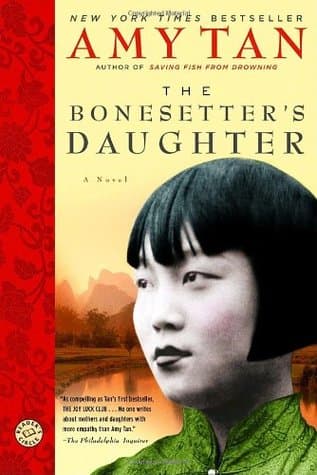
Amy Tan (1990)
Genre
Historical Fiction
Reading Time
9 hr 30 min
Key Themes
See below
Sign in to track this book
A mother's fading memories unlock a hidden past of ancestral curses, forbidden love, and shocking betrayals in a remote Chinese village, forever altering her daughter's understanding of their tumultuous bond.
The story opens with Ruth Young, a ghostwriter in San Francisco, thinking about her difficult relationship with her widowed mother, LuLing. LuLing is becoming more forgetful, misplacing items and repeating herself, a condition Ruth fears is Alzheimer's. Their interactions are often tense, marked by LuLing's criticisms of Ruth's choices, particularly her long-term relationship with Art Kamen, who is still married. Ruth feels a deep sense of obligation and frustration, having always felt misunderstood by her mother. LuLing, in turn, feels neglected by Ruth, sensing a growing distance as her memory declines. This initial dynamic sets up the central conflict of their mother-daughter relationship in the present day.
As her health declines, LuLing gives Ruth a stack of handwritten pages, explaining that they are her 'true story' and instructing Ruth to read them. These writings are in Chinese, a language Ruth understands but struggles to read fluently, especially the intricate script. This gift is a turning point. It represents LuLing's attempt to bridge the communication gap with her daughter and share a part of herself she has kept hidden for decades. Ruth, intrigued and somewhat daunted, begins the slow process of translating her mother's words, hoping to uncover the roots of their complex relationship and understand her mother.
The story shifts to LuLing's childhood in the remote mountain village of Immortal Heart, China, in the 1920s. She is raised by her foster mother, Precious Auntie, a mute woman whose face is disfigured by an old burn scar. Precious Auntie is the concubine of the Bonesetter, LuLing's biological father, though LuLing does not know this at first. Their bond is very close, as Precious Auntie is the primary caregiver and storyteller for young LuLing, teaching her calligraphy and sharing cautionary tales. The village is full of superstition and tradition, and the Bonesetter's family carries a perceived curse due to a past incident involving the theft of a valuable ink stick. This adds mystery and foreboding to their lives.
As LuLing grows older, her foster father, the Bonesetter, tries to arrange a marriage for her with the son of the wealthy Coffinmaker, a powerful figure in the village. This alliance is seen as good for the family, offering financial security and social standing. However, LuLing, headstrong and independent, resists the match, viewing the Coffinmaker's son as unpleasant. Her defiance creates tension in the household, particularly with the Bonesetter, who values tradition and family honor. Precious Auntie, unable to speak, shows her concern and disapproval of the forced marriage through her actions, subtly supporting LuLing's resistance.
LuLing's writings tell the legend of the ancient ink stick, a priceless family heirloom believed to bring good fortune, which was stolen generations ago. This theft is linked to the perceived curse on the Bonesetter's family, causing them ongoing bad luck. Precious Auntie reveals to LuLing that she was the one who accidentally broke the real ink stick and replaced it with a fake, a secret she has kept for years. This confession adds guilt and tragedy to Precious Auntie's past, explaining her self-imposed silence and her devotion to LuLing's family as a form of penance. The revelation challenges LuLing's understanding of her family's history and their misfortunes.
Through her writings, LuLing uncovers the truth about Precious Auntie. Precious Auntie was the Bonesetter's first love and concubine, and LuLing is, in fact, her biological daughter. The Bonesetter, under family pressure, was forced to marry another woman, abandoning Precious Auntie and their unborn child. In despair, Precious Auntie attempted suicide by drinking lye, which disfigured her face and made her mute. This act of sacrifice and heartbreak explains Precious Auntie's sadness and her fierce protectiveness of LuLing, who was raised as her niece, her true parentage kept secret to spare her from scandal. This revelation changes LuLing's perception of her family and her own identity.
The narrative recounts the tragic circumstances of Precious Auntie's death. After the truth of her relationship with the Bonesetter and LuLing's parentage is revealed, and after LuLing rejects the Coffinmaker's son, Precious Auntie, feeling responsible for the family's troubles and LuLing's perceived disgrace, takes her own life by drowning. Her death is a profound loss for LuLing, who feels deep guilt. Following this tragedy, LuLing is taken by her stepmother to live in Shanghai, cutting her off from her past in Immortal Heart. This forced relocation marks the end of LuLing's childhood and the beginning of an uncertain chapter, haunted by the secrets and losses of her past.
In Shanghai, LuLing finds herself in a very different environment from her quiet village. She works in a factory and tries to adapt to city life, but the trauma of her past and the loss of Precious Auntie continue to weigh on her. She eventually meets and marries Kai De, a man who offers her some stability and a chance to build a new life away from the shadows of Immortal Heart. Despite new beginnings, LuLing carries the emotional scars of her childhood, including guilt over Precious Auntie's death and a lingering sense of being an outsider. Her experiences in Shanghai shape her resilience and determination, but also contribute to her guarded nature.
LuLing and Kai De eventually decide to immigrate to America, seeking opportunities and a fresh start. They settle in San Francisco, where they work hard to establish themselves and raise their family, including their daughter, Ruth. The challenges of adapting to a new culture, language, and way of life are immense, and LuLing often feels isolated. She holds onto her Chinese traditions and values, which sometimes clash with her daughter's more Westernized upbringing. This period of immigration highlights the sacrifices and struggles faced by many newcomers, and the hope for a better life for their children.
After months of effort, Ruth finishes translating LuLing's handwritten stories. The revelations about Precious Auntie's true identity, her sacrifice, and LuLing's own painful past deeply affect Ruth. She realizes that her mother's often critical demeanor came from a lifetime of trauma, loss, and unspoken grief. The weight of these secrets had shaped LuLing's personality and her parenting style. This new understanding allows Ruth to see her mother not just as a difficult parent, but as a complex woman who endured immense suffering and made difficult choices, all while trying to protect her own daughter. The translation becomes a bridge between their two worlds.
Armed with the full knowledge of LuLing's past, Ruth approaches her mother. Despite LuLing's fading memory, Ruth shares the story she has translated, speaking the truths that have been buried for so long. This conversation is difficult, as LuLing's mind is no longer fully capable of processing the past. However, there are moments of clarity and recognition, particularly when Ruth speaks of Precious Auntie. This shared understanding, even if brief, allows for a fragile but profound moment of reconciliation between mother and daughter. Ruth is able to offer forgiveness, and LuLing, in her own way, accepts it, leading to a softening of their strained relationship.
After the revelations, Ruth's perception of her family and herself is changed forever. She understands the deep, if sometimes unspoken, love that LuLing had for her, a love shaped by sacrifice and resilience. Ruth also comes to terms with her own identity, acknowledging the strength and complexities of her Chinese heritage. Her relationship with Art, too, gains a new perspective, as she now understands the importance of honesty and commitment. The story concludes with Ruth finding peace and connection, not only with her mother but also with the generations of women who came before them. The 'bonesetter's daughter' legacy transforms from a curse into a symbol of enduring love and survival.
The Protagonist
Ruth transforms from a resentful daughter burdened by her mother's criticisms to an empathetic woman who understands and forgives her mother's past, embracing her heritage.
The Co-protagonist/Mother
LuLing's journey is revealed through her writings, showcasing her transformation from a defiant girl in China to a resilient woman burdened by secrets, ultimately finding a fragile peace with her daughter.
The Supporting/Pivotal
Precious Auntie's arc is revealed retrospectively, showing her tragic journey from a young woman in love to a disfigured, silent guardian, whose ultimate sacrifice shapes LuLing's life.
The Supporting/Antagonistic
The Bonesetter remains largely static, representing the societal pressures and traditions that drive the early conflicts in LuLing's life.
The Supporting
Art's character arc is tied to Ruth's; as she gains clarity from her mother's story, her relationship with Art is re-evaluated and potentially strengthened by newfound honesty.
The Mentioned/Antagonistic
The Coffinmaker's Son has no personal arc, serving primarily as a plot device to highlight LuLing's rebellious spirit and the societal pressures she faces.
The Supporting
Kai De's arc is secondary, primarily showing his role as a loving husband and father who provides stability for LuLing and her family.
The novel shows how stories, both written and oral, shape identity and understanding across generations. LuLing's handwritten account is how Ruth finally understands her mother's life and her own heritage. Translating these stories bridges cultures and time, allowing suppressed memories and truths to surface. As LuLing's memory fades, her written story becomes even more important, emphasizing the need to preserve personal histories. For example, Precious Auntie's stories to young LuLing, and later LuLing's own narrative, reveal the hidden layers of their lives.
“My mother's words are a ghost. They are there, but I cannot see them. Until I make them myself.”
The novel explores the complex and often difficult bond between mothers and daughters. The strained relationship between Ruth and LuLing, marked by criticism and misunderstanding, forms the present-day narrative. As Ruth learns about LuLing's past, she uncovers the deep love and sacrifices that shaped her mother, ultimately changing their dynamic. The relationship between LuLing and Precious Auntie, rooted in silent devotion and tragic sacrifice, further shows the profound and sometimes painful nature of maternal love, demonstrating how past traumas can affect future generations.
“I used to think my mother's criticisms were like a curse. Now I see they were a kind of love, twisted by her own pain.”
The narrative is driven by layers of long-held secrets and lies, especially those surrounding Precious Auntie's true identity and LuLing's parentage. These hidden truths deeply affect the characters' lives, shaping their identities and relationships. Precious Auntie's silence, LuLing's guardedness, and the family's perceived curse all come from concealed information. Unraveling these secrets helps Ruth understand her mother's often harsh demeanor and ultimately helps her reconcile with her own identity, which is deeply rooted in her family's hidden history. The ink stick, both real and fake, also symbolizes these layers of deception.
“Secrets are like rivers. They run underground, but they always come to the surface, bringing truth or poison.”
The novel explores the challenges of cultural identity, particularly for immigrants and their descendants. LuLing's struggle to maintain her Chinese heritage in America while raising a more Westernized daughter, Ruth, creates tension. The contrast between traditional, superstitious village life in Immortal Heart and modern San Francisco highlights the generational and cultural divide. Ruth's journey to understand her mother's past is also a journey to embrace her own Chinese roots, bridging the gap between her American present and her ancestral past. The novel shows how cultural expectations and traditions influence individual lives and family dynamics.
“In America, I tried to forget the ghosts of China. But they followed me, whispering in my dreams, reminding me who I was.”
The village of Immortal Heart is full of superstition, with the family's 'curse' and the legend of the ink stick playing a significant role in LuLing's early life. Characters grapple with the idea of predetermined fate versus their ability to make their own choices. LuLing's defiance against an arranged marriage and Precious Auntie's tragic sacrifices are moments where free will clashes with perceived destiny and societal expectations. Ultimately, the novel suggests that while past events and traditions have a powerful influence, individuals still have the ability to forge their own paths and reshape their understanding of their fate, as Ruth does by actively seeking the truth.
“They said the curse was on our family, but I saw it was only in the choices we made.”
LuLing's Chinese writings that reveal her past.
The manuscript is the primary narrative device, serving as the bridge between the past and present, and between mother and daughter. It allows the story to unfold in a dual timeline, with Ruth's present-day struggles mirroring and being illuminated by LuLing's past. The act of Ruth translating the text not only provides plot exposition but also symbolizes her arduous journey to understand her mother, creating a powerful metaphor for cross-cultural and intergenerational communication. Its existence is the catalyst for Ruth's character development and the resolution of the central conflict.
A family heirloom whose legend carries a curse.
The ancient ink stick functions as a powerful symbol and a key plot device. Initially believed to be a source of good fortune, its supposed theft and the subsequent 'curse' on the Bonesetter's family drive much of the early conflict and superstition in LuLing's childhood. The revelation that Precious Auntie broke the original and replaced it with a fake unravels a major secret, exposing her guilt and sacrifice. It represents the weight of hidden truths, the consequences of deception, and the way legends can shape a family's destiny.
Physical manifestations of past trauma and sacrifice.
Precious Auntie's muteness and her disfigured face are not just physical characteristics but potent plot devices. Her inability to speak forces her to communicate through written notes and gestures, heightening the mystery surrounding her past and emphasizing the unspoken burdens she carries. The scar itself is a constant visual reminder of her tragic suicide attempt and the profound betrayal she experienced. These elements serve to build suspense, hint at deeper secrets, and ultimately reveal the extent of her sacrifice and the depths of her love for LuLing, profoundly impacting the narrative's emotional core.
A present-day condition that drives the urgency of revealing the past.
LuLing's increasing forgetfulness, implied to be Alzheimer's, acts as a crucial plot device in the present-day narrative. It creates a sense of urgency for Ruth to understand her mother before all memories are lost, pushing her to translate the manuscript. Paradoxically, while her mind is failing, it is precisely this decline that compels LuLing to share her story, making her more vulnerable and open. This device highlights the fragility of memory and the importance of preserving personal history, adding a poignant dimension to the mother-daughter reconciliation.
“The past is a country from which we have all emigrated. Our memories are our passports.”
— Ruth reflects on memory and her mother's past.
“A mother is always a mother, no matter how old the child.”
— LuLing's perspective on the enduring bond.
“Secrets are like a disease. They eat away at you from the inside.”
— LuLing hints at the burden of unspoken truths.
“Sometimes the things we think are lost are only waiting to be found.”
— Ruth considers the possibility of rediscovering lost connections or information.
“To forget is to be like a stone, with no past, no future, only the present moment of its existence.”
— LuLing expresses her fear of losing her memories.
“Love is not a gift, but a choice. It is a decision that you make every day.”
— Ruth contemplates the nature of her own relationships.
“The truth is a river. You can dam it up for a while, but eventually, it will find a way to flow.”
— The inevitability of secrets being revealed.
“A daughter is a mother's mirror, reflecting her strengths and her weaknesses.”
— The intergenerational connection between mothers and daughters.
“We carry our ancestors with us, in our blood, in our bones, in our stories.”
— The deep connection to one's heritage.
“Sometimes, the greatest strength is not in holding on, but in letting go.”
— A theme of release and acceptance.
“The world is full of ghosts, some of them still living.”
— LuLing's perception of people haunted by their pasts.
“A story is not just what happened, but what it means to the person telling it.”
— Ruth's understanding of her mother's narrative.
“Even the smallest crack can let in the light.”
— A hopeful sentiment about finding understanding or peace.
“To be understood is to be loved.”
— Ruth's desire for connection with her mother.
Ready to see how well you understood this book? Take our interactive quiz with 10 questions.

Amy Ruth Tan is an American author of Chinese heritage, best known for the novel The Joy Luck Club (1989), which was adapted into a 1993 film. She is also known for other novels, short story collections, children's books, and a memoir.







