“There are things you can forgive, and things you can't. And I'm afraid, Tea, that you've done something unforgivable.”
— Tea's brother, Fox, confronting her after she accidentally raises him from the dead.

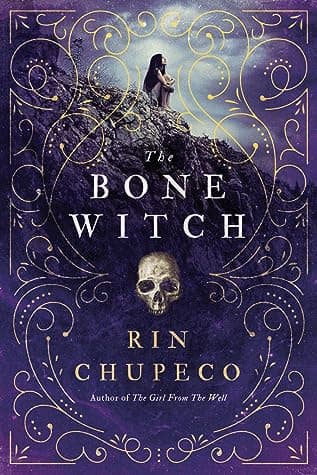
Rin Chupeco (2017)
Genre
Fantasy / Young Adult / Romance
Reading Time
9-10 hours
Key Themes
See below
Sign in to track this book
Feared for her necromantic gift that accidentally resurrected her brother, a young witch must master her dark powers and confront looming shadows to protect her world.
The story opens with Tea, a young girl from the village of Dalu, preparing for her brother Fox's heart-oathing ceremony. Tragedy strikes when Fox is killed by a grimoire, a monstrous beast. In her grief, Tea instinctively reaches out to him, and to everyone's horror, she accidentally resurrects Fox from the dead, bringing him back as a revenant. This act reveals her true nature as a bone witch, a feared magic-user, marked by her silver eyes and the ability to raise the dead. Her family and the villagers are terrified, especially her older brother Kaleb, who struggles with what her power means. Tea is then shunned by her community, including her own family, for this forbidden magic.
After she accidentally resurrects Fox, Tea is visited by Mykaela, an experienced bone witch, who sees Tea's potential and the danger she represents if not trained. Mykaela offers to take Tea and Fox to the city of Odalia to train Tea to be an asha, a powerful witch who can wield elemental magic and protect others. Tea, feeling outcast and alone, accepts. In Odalia, Tea begins her rigorous training, learning about elemental magic and the social customs, dances, and art of the asha. She struggles with the discipline and expectations, all while dealing with the fear and prejudice connected to her bone witch abilities.
In Odalia, Tea's training under Mykaela is demanding. She learns about the eight elements: fire, water, earth, air, metal, wood, light, and darkness. She also meets other asha, some of whom are wary or openly hostile towards her because she is a bone witch. Tea struggles with the elegant dances and social graces required of an asha, often feeling clumsy and out of place. Her elemental magic is hard to master, especially control over darkness, which is linked to her necromancy. Her brother Fox, now a revenant, stays by her side, a constant reminder of her forbidden power and a source of both comfort and fear. Tea also starts to learn about the political situation and the different groups within the asha community.
As Tea's training continues, unsettling rumors spread throughout Odalia. Whispers of a coming war against the Dark asha, a destructive force known as the 'Deathseeker,' reach the asha compound. The Deathseeker is said to be raising an army of dark creatures and threatening the peace of the eight kingdoms. Tea learns that her bone witch abilities, though feared, might be important in this coming conflict. Mykaela and other elder asha discuss strategies and the need to prepare for war, hinting at difficult choices and sacrifices. Tea begins to understand the larger implications of her powers and the role she might be forced to play.
Because of her unique abilities and Mykaela's influence, Tea is eventually summoned to the royal court, where she meets Prince Kian, the heir to the throne. Her presence causes a stir among the nobility and other asha, some of whom view her with suspicion. Tea navigates the complex political environment, attending lavish parties and formal gatherings, all while trying to maintain her asha training. She observes the tensions between the different kingdoms and the fear the Deathseeker has caused. Her closeness to the royal family and other powerful figures exposes her to deeper intrigue and the escalating threat of war, making her aware of how fragile their world is.
During her time at court and training, Tea has her first terrifying encounters with dark creatures, called 'daeva,' which are manifestations of the Deathseeker's power. These encounters are dangerous and force Tea to use her growing elemental and necromantic abilities in real combat situations. She witnesses the devastation these creatures can cause and the fear they inspire. These experiences confirm her understanding of the grave threat facing the kingdoms and the urgency of her training. She begins to realize that her bone witch powers, though shunned, are vital for fighting these dark forces, making her question the prejudice she faces.
As Tea spends more time at court, she develops a complicated relationship with Prince Kian. Despite the societal taboos surrounding a bone witch and a royal, they are attracted to each other. Their interactions are filled with stolen glances and quiet conversations, creating a bond amidst the political turmoil. Tea also deepens her friendships with other asha, particularly Kalen and Khalad, and relies on the loyalty of her brother Fox. These relationships provide her with much-needed support as she navigates her challenging path, but her romance with Kian adds another layer of danger and complexity to her life.
Throughout the main story are chapters set in a desolate future, where Tea, now older and hardened, tells her life story to a mysterious bard. She is in exile, having committed a grave act that led to her being hunted. These future chapters reveal a world ravaged by war and hint at the catastrophic consequences of her choices. The bard collects her story, seemingly for history or to understand the events that led to the current state of the world. This framing device creates suspense and foreshadows the tragic turns Tea's life will take, leaving the reader to wonder what terrible sacrifice she made and why she is now alone.
As the war intensifies, Tea is increasingly forced to confront what her bone witch powers mean ethically. She learns that using her necromancy to raise the dead comes at a significant cost, often involving the sacrifice of her own vitality or the essence of others. Mykaela warns her about the dangers of uncontrolled power and the fine line between salvation and corruption. Tea struggles with the burden of her abilities, understanding that while they are powerful weapons against the daeva, they are also deeply feared and carry a heavy moral weight. She knows that to defeat the Deathseeker, she will have to make deep and possibly heartbreaking choices.
The war against the Deathseeker and his daeva army escalates, with attacks becoming more frequent and devastating. The kingdoms are on the brink of collapse, and the asha struggle to hold the line. Tea's unique abilities are indispensable in certain battles, allowing her to turn the tide against the dark creatures. She fights alongside Prince Kian and other asha, showing her courage and growing mastery over her powers, both elemental and necromantic. The present-day story's climax sees Tea facing a direct confrontation with the Deathseeker's forces, pushing her to her limits and forcing her to make the first of the terrible sacrifices hinted at in the future timeline.
The Protagonist
Tea transforms from a timid, ostracized girl into a formidable, albeit burdened, bone witch who accepts her power and faces the consequences of her choices.
The Supporting
Fox remains a steadfast, silent presence, representing the direct consequence and constant reminder of Tea's bone witch abilities.
The Supporting
Mykaela remains a steadfast mentor, guiding Tea through her training and preparing her for the trials ahead.
The Supporting
Kian grows to trust and love Tea, becoming her ally and a beacon of hope amidst the growing darkness.
The Supporting
Kaleb moves from fear and rejection of Tea's powers to a reluctant, then fierce, acceptance and protectiveness.
The Supporting
Kalen remains a loyal and supportive friend, a constant source of comfort for Tea.
The Supporting
Khalad evolves from a cautious peer to a trusted and supportive ally for Tea.
The Mentioned
The Bard's arc is not fully explored in this book, serving mainly as a narrative device.
The Antagonist
The Deathseeker's influence grows, escalating the conflict and pushing the kingdoms to the brink of war.
Tea's journey is about accepting her identity as a bone witch, a power both feared and essential. She deals with the shame and ostracism connected to her necromancy, constantly feeling like an outsider even among other asha. Her struggle to embrace her silver eyes and the ability to raise the dead is central to her character arc, as she learns that true strength comes from within, not from trying to fit societal expectations. This theme is explored through her internal thoughts and her interactions with characters like Mykaela, who understands the burden of such power.
“"Your power is a gift, Tea. It is also a curse. The choice of what it becomes is yours alone."”
The novel shows the effects of prejudice and fear, mostly aimed at Tea because of her bone witch abilities. From her family's initial terror to the wary glances of other asha, Tea constantly faces judgment for something she cannot control. This fear comes from ignorance and superstition, as people confuse her power with evil. The book explores how this prejudice isolates individuals and how it can be overcome through understanding, courage, and the need for extraordinary circumstances, such as the coming war against the Deathseeker, which forces people to reconsider their biases.
“"They fear what they do not understand, little one. It is a burden all bone witches carry."”
A theme is the cost of wielding powerful magic, especially necromancy. Tea learns that resurrecting the dead has consequences, affecting her own vitality and potentially the balance of life and death. The story hints at the terrible sacrifices Tea will have to make to save her world, foreshadowed by the future timeline where she is exiled and burdened. This theme explores the moral dilemmas of power, the fine line between heroism and corruption, and the idea that true strength often requires deep personal sacrifice, both physical and emotional.
“"Magic always demands a price. The greater the magic, the greater the cost."”
Tea is put into a destiny she did not choose, marked by her bone witch abilities and the coming war. However, the story highlights her role in how she chooses to use her power and face her fate. While prophecies and the threat of the Deathseeker suggest a predetermined path, Tea's internal struggles and her relationships show the importance of individual choices. She constantly grapples with whether to give in to fear and isolation or to embrace her unique gifts for the greater good, showing that destiny may set the stage, but personal choices write the play.
“"You are destined for great things, Tea. But destiny is a road, not a cage."”
An older, exiled Tea recounts her story to a bard, creating suspense and foreshadowing.
The primary narrative of Tea's youth and training is told in the first-person past tense. However, this is framed by intermittent chapters set in a future timeline, also told from Tea's first-person perspective, where she is older, exiled, and recounting her life story to a mysterious bard. This dual timeline serves as a powerful framing device, creating suspense and foreshadowing the tragic events and difficult choices that will lead to Tea's future state. It immediately establishes a sense of a grand, epic story with significant consequences, making the reader constantly question what terrible fate awaits the younger Tea.
Tea's resurrected brother, serving as a constant reminder and consequence of her powers.
Fox, Tea's younger brother, is accidentally resurrected by her as a revenant. This serves as a critical plot device. Firstly, it immediately establishes Tea's bone witch powers and the fear they inspire. Secondly, Fox's continued presence is a constant, physical reminder of the consequences and nature of her magic, driving her motivation to understand and control it. He represents both a cherished bond and a source of societal fear, embodying the duality of her abilities. His inability to speak emphasizes Tea's internal struggle and the unique bond they share, making him a silent but powerful emotional anchor.
A physical mark signifying Tea's identity as a bone witch and a source of prejudice.
Tea's silver eyes are a distinctive physical characteristic that immediately marks her as a bone witch, differentiating her from others. This serves as a visual plot device to symbolize her unique and feared identity. It is a constant reminder of her difference and the prejudice she faces, but also a symbol of her innate power. The eyes are not merely cosmetic; they are intrinsically linked to her necromantic abilities and become a focal point for both fear and acceptance, representing the visible manifestation of her hidden, dangerous gifts.
A magical system governing asha powers and the world's balance.
The magical system of the Eight Elements (fire, water, earth, air, metal, wood, light, and darkness) is a foundational plot device. It provides the structure for Tea's asha training and the broader magical capabilities within the world. Each element has specific properties and applications, and mastering them is crucial for an asha. The element of 'darkness' is particularly significant for Tea, as it directly connects to her bone witch necromancy, highlighting the inherent link between her feared power and the accepted magical system. This system dictates the strengths and weaknesses of characters and the flow of magical combat.
“There are things you can forgive, and things you can't. And I'm afraid, Tea, that you've done something unforgivable.”
— Tea's brother, Fox, confronting her after she accidentally raises him from the dead.
“A asha is not just a dancer, or a fighter. She is a collector of stories, a keeper of memories, a weaver of fates.”
— Kaelen explaining the true nature and power of an asha to Tea.
“Some truths are like poisons. They may kill you, but they must be spoken.”
— Tea reflecting on the difficult revelations she must make.
“The dead have their own stories, and sometimes, they're more interesting than the living.”
— Tea musing on her unique ability to communicate with the dead.
“Fear is a powerful weapon. But so is courage.”
— Tea steeling herself before a dangerous confrontation.
“You can't escape your fate, Tea. But you can choose how you face it.”
— A mentor figure advising Tea on her path as a bone witch.
“Grief is a tricky thing. It can make you do things you never thought you would.”
— Tea contemplating the actions driven by her sorrow.
“The world is full of monsters, Tea. Some of them wear human faces.”
— Kiel warning Tea about hidden dangers and betrayals.
“Love is a dangerous game, little witch. Especially when you play with fire.”
— A character cautioning Tea about the risks of her romantic entanglements.
“Sometimes, the only way to save someone is to let them go.”
— Tea making a difficult decision regarding a loved one.
“Magic isn't good or evil. It's just power. It's what you do with it that matters.”
— Tea's reflection on the moral ambiguity of her abilities.
“Even the strongest heart can break. But it can also heal.”
— Tea finding hope amidst her despair and personal struggles.
“The past is a stubborn ghost. It always finds a way to haunt you.”
— Tea acknowledging the inescapable influence of her past actions.
Ready to see how well you understood this book? Take our interactive quiz with 10 questions.

Biography coming soon.







