“The wind was picking up now, and the sea was a great grey sheet, ruffled and torn at the edges.”
— Describing the weather and the sea's appearance.

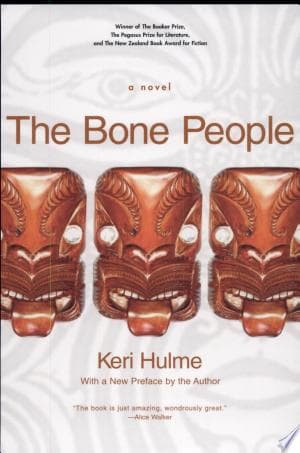
Keri Hulme (2005)
Genre
Literary Fiction / Fantasy / Historical Fiction
Reading Time
10-12 hours
Key Themes
See below
Sign in to track this book
On the wild South Island shores, a reclusive artist, a mute shipwreck survivor, and his volatile Maori foster father are drawn into a maelstrom of longing and violence, battling the very attachments they crave.
Kerewin Holmes lives an isolated life in a tower house on the New Zealand coast, dedicating herself to art and avoiding human connection. One day, her solitude is broken when a small, mute boy, Simon, breaks into her home. Simon, of ambiguous European and Maori heritage, is wild and uncommunicative, but Kerewin finds herself drawn to him despite her initial resistance. She tries to understand his background, learning he is an orphan adopted by a Maori factory worker named Joe Gillayley. Simon's presence stirs a dormant part of Kerewin, challenging her emotional barriers and forcing her to confront the possibility of connection she has long avoided.
Joe Gillayley, a Maori widower, adopted Simon after the boy was found shipwrecked and traumatized. Joe loves Simon, seeing him as a second chance after the death of his own family. However, Joe is tormented by an inner darkness and a history of violence, often lashing out at Simon physically. These brutal beatings are followed by intense remorse and attempts at reconciliation, creating a destructive cycle. Joe knows his failings and wants to be a good father, but his rage, fueled by grief and cultural displacement, often overwhelms him, leaving Simon scarred and fearful, yet still attached to his adoptive father.
As Simon continues to seek out Kerewin, a complex and often volatile relationship develops between the three. Kerewin offers Simon a sanctuary and an intellectual connection, teaching him to communicate through drawing and observation. Joe, initially wary and possessive of Simon, gradually begins to trust Kerewin, seeing her as a positive influence. They form a strange, makeshift family, sharing meals and quiet moments. However, the underlying tension of Joe's violence and Kerewin's fear of commitment constantly threatens to shatter their fragile bond, making every interaction a delicate balance of affection and potential conflict.
Joe's pattern of abuse towards Simon becomes more severe and frequent. Despite his love for the boy, his inner demons manifest in brutal beatings, leaving Simon physically injured and emotionally traumatized. Kerewin witnesses the aftermath of these incidents, torn between her desire to protect Simon and her fear of interfering too deeply. These violent outbursts show the deep pain within Joe and the pervasive cycle of trauma. Simon, despite his suffering, remains loyal to Joe, embodying the complex nature of their bond, rooted in both love and fear.
The intensity of the relationships and the escalating violence prove too much for Kerewin. Her deeply ingrained fear of attachment resurfaces, and she begins to push Simon and Joe away. She convinces herself that she is not equipped to handle such emotional burdens. Kerewin retreats back into her solitary existence, focusing on her art and rebuilding the emotional walls she had allowed to crumble. This withdrawal leaves Simon feeling abandoned and Joe feeling rejected, further isolating the boy and reigniting Joe's turmoil and violent tendencies.
In a fit of drunken rage and despair, Joe inflicts a brutal, severe beating on Simon. The severity of the attack leaves Simon critically injured, near death. This devastating event is a horrifying culmination of Joe's self-destructive patterns. The community is alerted, and Joe is arrested, facing the consequences of his actions. This incident shatters the fragile world the three had built, forcing each character to confront the repercussions of their choices and the destructive power of unchecked pain and violence.
Following the severe beating, Simon is hospitalized, his survival uncertain. Joe is arrested, charged, and imprisoned for his actions, finally facing the legal consequences of his abuse. Kerewin is left alone in her tower, consumed by guilt and regret for having pushed them away. She grapples with the realization that her fear of connection may have contributed to Simon's suffering. This period of separation forces each character into solitude, allowing them to reflect on their past actions, their pain, and the nature of their interconnectedness, however fractured it may be.
Haunted by the events and her own culpability, Kerewin leaves her tower and goes on a spiritual journey. She travels to different parts of New Zealand, seeking understanding and a deeper connection to her Maori heritage and the land. During this time, she experiences visions and encounters with spiritual entities, exploring Maori mythology and ancient traditions. This journey is one of introspection and healing, allowing her to process her grief, guilt, and fear, and to begin to reconcile with her own identity and the culture that defines her.
While imprisoned, Joe changes significantly. Stripped of his freedom and forced to confront his demons, he begins a deep process of self-reflection and spiritual awakening. He connects with his Maori elders and traditions, learning to understand the cultural and personal roots of his rage and pain. Joe embraces the concept of 'utu' – reciprocity and balance – and seeks a path to redemption and healing. His time in prison is not just punishment but a crucible for personal growth, aiming to break the cycle of violence that has plagued him.
Simon slowly recovers from his injuries. In a new, safer environment, he begins to heal physically and emotionally. His muteness, a symptom of his trauma, gradually recedes as he starts to speak, first in fragments, then with increasing clarity. He begins to explore his identity, understanding more about his mysterious past and the complexities of his heritage. Simon's journey is one of resilience, finding his own voice and agency after years of silence and abuse, showing the potential for healing and growth even after suffering.
After their respective journeys of healing and change, Kerewin, Joe, and Simon tentatively reunite. Joe, released from prison, is a changed man, committed to a path of non-violence and spiritual understanding. Simon, now speaking, is more self-possessed. Kerewin, having embraced her heritage and overcome her fear of connection, is ready to engage with the world. Their reunion has awkwardness and lingering pain, but it is marked by a newfound understanding and a shared desire to forge a healthier, more authentic bond. They acknowledge their past hurts but look towards a future of mutual support and growth.
As a symbol of their renewed commitment to each other and their shared future, Kerewin, Joe, and Simon decide to build a new 'whare' (Maori house) together. This act of creation is symbolic, representing their collective healing, the rebuilding of their lives, and the establishment of a foundation for a true, loving family. The whare incorporates elements of both Maori and European traditions, reflecting their mixed heritage and the synthesis of their individual journeys. It stands as a symbol of their resilience, their capacity for forgiveness, and the enduring power of connection amidst pain.
The Protagonist
Kerewin moves from extreme isolation and fear of attachment to embracing connection, her Maori heritage, and the responsibilities of love.
The Protagonist/Antagonist
Joe descends into deeper violence before undergoing a profound spiritual transformation in prison, seeking redemption and breaking his cycle of abuse.
The Protagonist
Simon endures severe trauma and abuse but gradually finds his voice, identity, and a path to healing and self-expression.
The Supporting/Mentioned
The land remains constant, but the characters' relationship with it evolves from isolation and indifference to connection and spiritual understanding.
The Supporting/Mentioned
Their influence becomes more central as characters embrace their heritage, moving from subconscious presence to active guidance.
The novel explores what constitutes a family, moving beyond traditional definitions to encompass a bond forged through shared trauma, love, and resilience. Kerewin, Joe, and Simon, all outcasts, create an unconventional family unit that is both destructive and ultimately redemptive. Their struggle to belong to each other, despite their fears and Joe's violence, highlights the human need for connection. The eventual rebuilding of the 'whare' symbolizes their commitment to forging a new, healthier sense of belonging.
“To care for anything is to invite disaster.”
Trauma is a pervasive force in the novel, appearing in Simon's muteness and Joe's violent outbursts, stemming from his grief and cultural displacement. The cycle of violence is central, showing how pain can be both inflicted and endured. However, the novel ultimately emphasizes the possibility of healing and redemption. Joe's spiritual journey in prison, Simon's recovery and finding his voice, and Kerewin's confrontation of her fears all illustrate the arduous but possible path from deep trauma to eventual peace and reconciliation.
“There are some things that cannot be broken. There are some things that are too strong.”
All three protagonists grapple with their mixed Maori and European heritage. Kerewin feels alienated from both, struggling to reconcile her Pakeha upbringing with her Maori blood. Joe is deeply rooted in his Maori identity but struggles with its place in a modern world, and the loss of his family worsens this. Simon's unknown origins make his search for identity even more profound. The novel explores Maori mythology, language, and spiritual practices, suggesting that understanding and embracing one's cultural heritage is important for self-discovery and healing.
“I am a pakeha with a bit of Maori. I am a Maori with a bit of pakeha. I am nothing. I am myself.”
Kerewin embodies isolation, actively choosing solitude out of fear of vulnerability. Her tower home is a physical manifestation of her emotional walls. Simon's muteness and Joe's internal struggles also contribute to their individual isolations. The narrative explores the tension between the desire for connection and the fear of the pain it can bring. The journey of the characters is one of slowly dismantling these walls, learning to trust, and ultimately finding that genuine connection, despite its risks, is essential for growth and fulfillment.
“Loneliness is a human condition. No matter how much you love, you are alone.”
Art, particularly Kerewin's painting and Simon's drawing, is a non-verbal means of expression and a path to healing. Kerewin's art is her primary mode of communication and a reflection of her inner world, often dark and complex. Simon, unable to speak, uses drawing to convey his experiences, fears, and desires, allowing others to understand his trauma and inner life. Art provides a safe space for emotions that cannot be articulated, acting as a bridge between characters and a catalyst for their individual and collective healing processes.
“I paint to make sense of things. To make beautiful things out of ugly.”
Kerewin's isolated home, representing her emotional and physical withdrawal.
Kerewin's tower house on the desolate coast is a potent symbol of her self-imposed isolation and her attempts to wall herself off from human connection. Its elevated, solitary position reflects her desire to observe life from a distance, without engaging directly. The tower's eventual disrepair and the intrusion of Simon metaphorically break down her defenses, forcing her to confront her fear of vulnerability and connection. Its later abandonment and the building of the new 'whare' signify her transformation.
A physical manifestation of trauma and a catalyst for non-verbal communication.
Simon's mutism is a central plot device, serving both as a consequence of his severe trauma and as a powerful means of driving the narrative. It forces other characters, particularly Kerewin, to find alternative ways to communicate and connect with him, such as through drawing and intuition. His eventual recovery of speech symbolizes his healing and the breaking of the cycle of abuse, marking a significant turning point in his personal arc and the relationships with Kerewin and Joe.
Integration of indigenous culture to enrich themes of identity and spirituality.
The pervasive use of Maori mythology, legends, and language (Te Reo Maori) is a vital plot device. It deepens the novel's themes of identity, cultural heritage, and spiritual connection to the land. The myths provide a framework for understanding the characters' struggles and their search for meaning, particularly during Kerewin's and Joe's spiritual journeys. The language itself adds authenticity and a layer of cultural richness, emphasizing the unique New Zealand setting and the characters' complex heritage.
Natural elements as a reflection of characters' inner states and a source of spiritual power.
The wild, untamed New Zealand coastline and the powerful sea are more than just a setting; they are active plot devices. They reflect the characters' internal turmoil, their wildness, and their isolation. The sea represents both danger (Simon's shipwreck) and purification, while the land provides a source of ancient wisdom and spiritual grounding for Joe and Kerewin during their respective journeys. The natural world underscores the raw, elemental forces at play in the characters' lives and their connection to a deeper, ancestral heritage.
“The wind was picking up now, and the sea was a great grey sheet, ruffled and torn at the edges.”
— Describing the weather and the sea's appearance.
“All my life I've been a solitary person, a bit of a hermit even. But I never knew how much I needed other people until I met them.”
— Kerewin reflecting on her need for connection after meeting Simon and Joe.
“He knew, with a certainty that was almost unbearable, that he had found his home, his people.”
— Simon's profound realization of belonging with Kerewin and Joe.
“There are some things you carry with you, all your life, like a stone in your pocket.”
— A reflection on the lasting impact of past experiences.
“Sometimes the greatest love is a fierce, protective thing, willing to wound to prevent a greater harm.”
— Exploring the complex and sometimes harsh nature of love and care.
“The sea, the land, the sky. They were all one, and she was part of them.”
— Kerewin's deep connection to the natural world.
“He was a small boy, but he carried a world of silence inside him.”
— Describing Simon's quiet and internal nature.
“The past is never dead. It's not even past.”
— A general reflection on the lingering presence of history.
“It was a wild, strange beauty, like a broken thing that had found its own way to mend.”
— Describing something or someone with unconventional beauty.
“We are all made of stories, and we tell them to ourselves, to make sense of who we are.”
— A philosophical reflection on the role of narrative in identity.
“The house was a shell, but it was a shell that held a beating heart.”
— Describing the home as a place of life despite its outward appearance.
“Some wounds heal, leaving only a scar. Others burrow deep, and never quite close.”
— Reflecting on the different ways people experience and carry trauma.
“And the world kept turning, indifferent to the small, intense dramas unfolding within it.”
— A reminder of the vastness of the world compared to individual struggles.
“It was a kind of communion, a silent understanding that passed between them without words.”
— Describing a deep, non-verbal connection between characters.
Ready to see how well you understood this book? Take our interactive quiz with 10 questions.
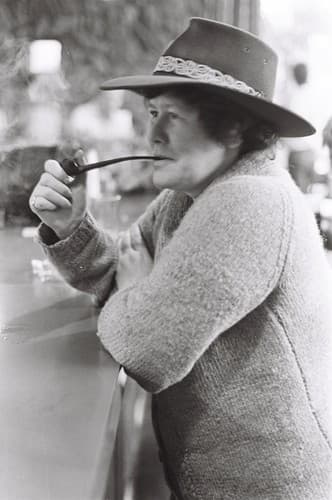
Keri Ann Ruhi Hulme was a New Zealand novelist, poet and short-story writer. She also wrote under the pen name Kai Tainui. Her novel The Bone People won the Booker Prize in 1985; she was the first New Zealander to win the award, and also the first writer to win the prize for a debut novel. Hulme's writing explores themes of isolation, postcolonial and multicultural identity, and Maori, Celtic, and Norse mythology.







