“There are things in this world that defy explanation, forces that operate beyond our understanding. To deny them is to deny the very essence of what it means to be human.”
— A character reflects on the existence of ancient, inexplicable phenomena.

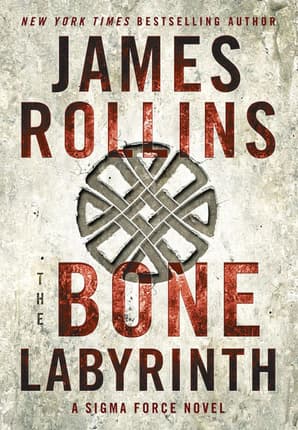
James Rollins (2015)
Genre
Thriller / Historical Fiction / Mystery / Science Fiction
Reading Time
11-12 hours
Key Themes
See below
Sign in to track this book
Neanderthal bones and cave art send Sigma Force on a global hunt, uncovering a 50,000-year-old conflict between early humans and monstrous shadows, while a modern genetic threat endangers humanity.
In Croatia, archaeologist Dr. Lena Crandall finds a hidden Catholic chapel with Neanderthal bones and cave paintings showing a battle between Neanderthals and shadowy figures. Unknown attackers then brutally assault her team. At the same time, in Atlanta, Georgia, a primate research facility run by Dr. Kenjiro Tamashii is attacked by an organized, violent force. Dr. Tamashii's genetically enhanced chimpanzee, Lucy, is targeted, and the facility is destroyed. Both events seem linked by a mysterious enemy and an interest in ancient human ancestors and advanced primate research, drawing Sigma Force's attention.
Sigma Force, led by Commander Gray Pierce, investigates the attacks. They quickly realize the Croatian chapel and Atlanta lab incidents are connected. Dr. Lena Crandall, a survivor, provides key information about unique genetic markers in the Neanderthal bones. Meanwhile, Dr. Tamashii, also a survivor, reveals his research into a genetic sequence tied to human intelligence and evolution. Sigma's investigation uncovers evidence pointing to a shadowy group trying to control these ancient genetic secrets, starting a global search for answers.
Sigma Force's investigation leads them to the Vatican, where they find a secret archive of ancient texts and artifacts about a forgotten part of human history. They learn about the 'Order of the Dragon,' an ancient society that has guarded secrets about human evolution and extraterrestrial influence for thousands of years. Father Vigor, a Vatican scholar and old ally, offers important insights into the historical context of the Neanderthal findings and the genetic discoveries. The Order of the Dragon, it seems, has been both protecting and, in some groups, manipulating these secrets, creating a complex network of alliances and betrayals.
Following clues from the Neanderthal bones and ancient texts, Gray Pierce and his team travel to Ecuador, deep in the Amazon rainforest. They discover a vast, ancient tunnel system, rumored to be part of the lost continent of Atlantis. Inside these tunnels, they find advanced ancient technology and more evidence of a highly developed civilization that existed before recorded history. These discoveries suggest that humanity's origins and technological advancements are more complex and perhaps influenced by outside forces than previously thought, challenging common archaeological and scientific ideas. The tunnels also connect to the shadowy figures in the Croatian cave paintings.
Deep inside the Ecuadorian tunnels, Sigma Force discovers a hidden necropolis, a large burial ground with remains of various hominid species, including unusual ones. These remains show genetic abnormalities that suggest a non-Earth origin or influence on early human evolution. Dr. Lena Crandall's expertise helps analyze these ancient bones, revealing a powerful genetic marker. The necropolis provides clear evidence of the 'First Ancestors,' a species older than modern humans with extraordinary abilities, hinting at a link between human intelligence and an ancient, possibly extraterrestrial, genetic line.
As Sigma investigates further, they uncover the true nature of the shadowy figures from the cave paintings and the force behind the attacks: an ancient, intelligent extraterrestrial entity. This entity, called 'The Hive,' has been dormant for thousands of years, influencing human evolution through genetic manipulation. It wants to reawaken and regain control over Earth, seeing humanity as a failed experiment or a tool for its survival. The genetic marker in the Neanderthal bones and the necropolis is key to its revival and control, posing a threat to all humanity. The Hive communicates through advanced psionic abilities, manipulating people and events.
The extraterrestrial entity's influence is widespread, and Seichan, Commander Gray Pierce's former lover and colleague, is found to have been manipulated by The Hive. Her betrayal creates a major problem for the team, as important information is leaked, and their efforts are sabotaged. Sigma Force must now fight not only The Hive's physical forms but also its psychological warfare. The race against time speeds up as the entity gets closer to fully awakening, threatening to unleash a catastrophic event that would reshape life on Earth according to its alien plan.
Further investigation leads Sigma Force to a hidden research facility in Antarctica. There, they discover an ancient, possibly Atlantean, city preserved under the ice, with advanced technology and artifacts that confirm the extraterrestrial connection. Importantly, they find evidence linking these ancient discoveries to lunar artifacts and past human space missions. It becomes clear that the moon played a role in The Hive's initial arrival or establishment on Earth, providing a key piece of the puzzle about its origins and long-term plans. The Antarctic site holds the key to either defeating or fully unleashing the alien threat.
The story's climax sees Sigma Force confronting The Hive at its main activation site, an ancient, advanced chamber within the Antarctic city. The entity, now almost at full power, unleashes its might, appearing as a collective intelligence that can control minds and manipulate matter. In a desperate battle, Sigma Force members, including Gray Pierce, Lena Crandall, and Dr. Tamashii, must combine their skills and knowledge to fight the alien threat. The confrontation requires great sacrifice, with several characters making ultimate choices to protect humanity, even as the world faces major change.
While Sigma Force manages to prevent The Hive's complete control, the victory comes at a high cost. The discoveries about humanity's origins, the existence of an ancient alien intelligence, and the true abilities of human DNA are too significant to keep secret. The world is changed, dealing with new scientific ideas, philosophical questions, and the undeniable truth of extraterrestrial influence on Earth. Sigma Force itself is shaken, its members scarred by the battle and the betrayals. The ending suggests that while this threat is gone, humanity has entered a new, uncertain time, forever altered by the bone labyrinth's secrets.
The Protagonist
Gray starts as a focused operative but evolves into a leader willing to make profound personal sacrifices for the greater good, even when facing betrayal from those he trusts.
The Supporting
Lena transforms from an academic observer into an active participant in a global conflict, forced to confront the implications of her own discoveries.
The Antagonist/Supporting
Seichan struggles with her own identity and loyalties, ultimately succumbing to and then fighting against the alien influence that seeks to control her.
The Supporting
Tamashii moves from a focused, somewhat isolated scientist to a vital member of a team fighting for humanity's future, confronting the ethical implications of his research.
The Supporting
Vigor continues to serve as a steadfast source of knowledge and moral guidance, his faith tested by the revelations of ancient alien influence.
The Supporting
Monk remains a constant and reliable force, his loyalty and skills proving essential in the face of escalating threats.
The Antagonist
The Hive awakens from dormancy, attempts to fulfill its ancient agenda of control, and is ultimately thwarted, though its influence leaves a lasting mark.
The Supporting
Lucy is a passive participant in the larger conflict but serves as a living key to understanding the genetic links between humans and the ancient alien entity.
The book questions established theories of human evolution, suggesting that humanity's intelligence and development were not only from Earth but influenced by an ancient, extraterrestrial intelligence. This idea is explored through the discovery of the Neanderthal woman with unusual genetic markers, the ancient necropolis containing diverse hominid remains with alien DNA, and the advanced abilities of Dr. Tamashii's chimpanzee, Lucy. It makes readers consider a broader, more complex story for humanity's place in the universe.
“What if our very intelligence, the spark that defines us, wasn't our own? What if it was a gift... or a curse?”
Genetic engineering and manipulation are central to the plot, showing both their potential benefits and dangers. Dr. Tamashii's work with Lucy demonstrates the promise of enhancing intelligence, but also raises ethical questions about playing God. The antagonist, The Hive, uses genetic manipulation on a large scale, influencing human evolution for thousands of years and seeking to re-engineer humanity for its own goals. This theme makes characters and readers face the responsibilities that come with using such powerful scientific tools, especially when ancient secrets are uncovered.
“We're not just playing with genes; we're playing with the very blueprint of existence.”
The story explores the tension and unexpected meeting between religious beliefs and scientific discovery. Father Vigor, a Vatican scholar, has ancient knowledge that complements modern scientific findings, suggesting that faith may hold truths that science is just starting to uncover. The discovery of a hidden Catholic chapel with Neanderthal bones, along with the Vatican's secret archives, shows how ancient religious institutions have kept knowledge that challenges common scientific ideas, often trying to connect spiritual beliefs with the physical world.
“History is not just about what happened, but about what was forgotten, what was hidden. And sometimes, the Church remembers more than science allows.”
The book shows that the past holds not just historical lessons but ongoing threats. The discovery of the Atlantean city in Antarctica and the vast tunnel systems in Ecuador reveal advanced, forgotten civilizations whose technology and knowledge, if misused, could lead to disaster. The main antagonist, The Hive, is an ancient entity that has been dormant, its secrets buried for thousands of years, only to be revived by modern inquiry. This theme highlights that some knowledge is best left alone, as its rediscovery can unleash forces beyond human understanding and control.
“Some secrets are buried for a reason, Gray. Not to be forgotten, but to be contained.”
Betrayal is a repeated idea, especially through the character of Seichan, whose loyalties often change due to outside manipulation and her own complex past. This theme shows the psychological warfare waged by The Hive, which uses personal relationships and weaknesses to achieve its goals. It forces characters like Gray Pierce to question whom they can trust, even within their own team, adding personal drama and higher stakes to the global conflict. The betrayal illustrates the widespread and harmful nature of the antagonist's influence.
“The greatest enemy is not always the one you see, but the one who wears a familiar face.”
The initial discovery that drives the entire plot forward.
The Neanderthal bones found in Croatia, specifically the unique genetic markers they contain, serve as the primary MacGuffin. This discovery immediately triggers the interest of various factions, including Sigma Force and the shadowy antagonists. It acts as the central puzzle piece that connects ancient history with modern science, leading the characters on a global quest to understand its origins and implications. Without this initial, intriguing find, the larger conspiracy and the threat of The Hive would never be uncovered, making it the catalyst for all subsequent events and revelations.
Historical documents and religious texts that provide crucial clues and foreshadow events.
Throughout the story, ancient prophecies, religious texts (particularly those found in the Vatican's secret archives), and cave paintings serve as vital plot devices. These documents provide historical context, reveal the existence of the Order of the Dragon, and foreshadow the awakening of The Hive. They act as a roadmap for Sigma Force, guiding their investigations from Croatia to Ecuador and Antarctica. By deciphering these ancient clues, the characters slowly piece together the true nature of the threat, bridging the gap between historical mystery and immediate danger.
A foundational mythos that redefines humanity's origins and introduces an alien element.
The concept of the 'First Ancestors' and the overarching extraterrestrial influence functions as a crucial plot device, fundamentally altering the understanding of human history within the narrative. This device introduces a science fiction element, explaining the advanced intelligence and genetic anomalies found in ancient hominids and providing a clear origin for The Hive. It serves to raise the stakes, transforming a historical mystery into an existential threat, and justifies the advanced technology and psionic abilities encountered, making the conflict truly global and cosmic in scope.
A legendary lost civilization providing advanced technology and ancient secrets.
The recurring motif of Atlantis, manifested through the discovery of ancient tunnels in Ecuador and a hidden city in Antarctica, serves as a powerful plot device. It provides a source for highly advanced, inexplicable technology and ancient knowledge that predates modern civilization. This connection explains how an ancient extraterrestrial entity could have established a foothold on Earth and influenced early human development. Atlantis acts as a bridge between myth and science, offering plausible (within the narrative's context) explanations for the extraordinary discoveries and the antagonist's capabilities.
“There are things in this world that defy explanation, forces that operate beyond our understanding. To deny them is to deny the very essence of what it means to be human.”
— A character reflects on the existence of ancient, inexplicable phenomena.
“History is not a straight line, but a labyrinth. And sometimes, the only way forward is to go back.”
— A key realization about the nature of the historical mystery they are trying to solve.
“The past is never truly dead. It merely sleeps, waiting for the right moment to awaken and reclaim its due.”
— Reflecting on ancient secrets and their potential impact on the present.
“Faith is a powerful weapon, but it can also be a blindfold.”
— Discussing the role of belief and its potential to both guide and mislead.
“Sometimes, the greatest monsters are not the ones with fangs and claws, but those who wear the masks of righteousness.”
— A character's cynical observation about human evil disguised as good.
“The truth is rarely simple, and often, it's far more terrifying than any lie.”
— As a shocking revelation comes to light, challenging previous assumptions.
“Evolution isn't just about survival of the fittest. It's about adaptation. And sometimes, the greatest adaptation is to change what it means to be human.”
— A discussion on the scientific implications of the discoveries made.
“Fear is a primal instinct, but courage is a choice. And in the face of the unknown, that choice is everything.”
— A character steels themselves for a dangerous encounter.
“Every secret has a price. And the older the secret, the higher the cost.”
— Reflecting on the dangers and sacrifices involved in uncovering ancient truths.
“The universe is full of wonders, both beautiful and terrifying. To ignore one is to diminish the other.”
— A moment of awe and terror during a scientific exploration.
“Sometimes, the only way to save humanity is to question everything we believe about it.”
— A profound realization about the necessity of re-evaluating fundamental human concepts.
“Knowledge is power, but unchecked power can lead to madness.”
— A warning about the misuse of scientific or ancient knowledge.
“The line between miracle and monster is often drawn by our own understanding, or lack thereof.”
— Contemplating the subjective nature of what is considered divine or horrific.
Ready to see how well you understood this book? Take our interactive quiz with 10 questions.

Biography coming soon.







