“The dead don’t stay buried in the Bone Houses.”
— Introducing the central supernatural element of the village.

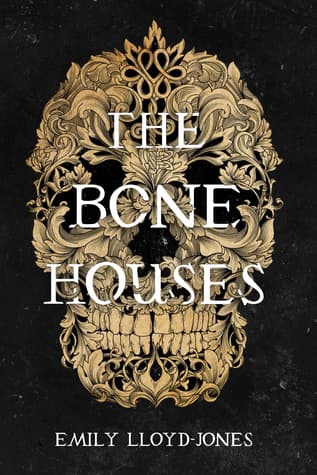
Emily Lloyd-Jones, Lloyd Jones (2019)
Genre
Fantasy / Historical Fiction / Young Adult
Reading Time
350 min
Key Themes
See below
Sign in to track this book
In a village with reanimated corpses, a gravedigger and a mapmaker travel into mountains to confront a fae curse and find out about their pasts.
Aderyn ('Ryn') and her younger siblings, Elion and Ceridwen, live a difficult life in the remote mountain village of Colbren. Their parents died years ago, leaving Ryn, the oldest, to manage their family's graveyard and care for her siblings. The graveyard is unusual; it has 'bone houses' – reanimated skeletons that walk the grounds. While usually harmless, they are a constant, strange presence. Ryn, a skilled gravedigger, has a practical, almost kind, relationship with these skeletons, often shooing them back into their plots. Their presence is a constant reminder of the old curse believed to haunt the valley, a curse that has isolated Colbren from the outside world and reduced its population. The family struggles financially, earning little from burials.
Life in Colbren changes when Ellis, a quiet and mysterious apprentice mapmaker, arrives. He is the first outsider to visit in years, sent by his master to map the forgotten valley. His presence seems to cause a big increase in bone house activity. Before, the bone houses were calm, but now they attack villagers and try to enter homes, including Ryn's. One evening, a very aggressive bone house attacks Ryn and Ellis, forcing them to fight for their lives. This new behavior suggests that Ellis somehow connects to the curse, or his arrival has woken up something in the valley's magic. Ryn, suspicious but interested, finds herself drawn to the mysterious young man.
The increasing bone house attacks bring terror and sadness to Colbren. The villagers, who usually accept their fate, now desperately want a solution. They ask Ryn, knowing her unique connection to the graveyard, to find a way to stop the curse. Ryn knows the danger but cannot refuse her community. She believes the answer is deeper in the mountains, perhaps with the 'Faerie King' or some old magic. Ellis, who feels responsible for the recent increase in activity and has his own secrets, offers to go with her. Ryn is hesitant to trust him fully at first, but she accepts his offer, seeing that his skills and strange connection to the land might be important.
Ryn and Ellis begin their journey into the mountains around Colbren. The land is harsh and difficult, and the path has many dangers, both natural and supernatural. They meet more aggressive bone houses, which seem to be drawn to Ellis, confirming Ryn's idea that he attracts them. During their travels, Ellis shares parts of his past, hinting at a traumatic event and a connection to a powerful, lost fae item. Ryn, in turn, shares more about her family's history and the deep sadness she feels from her parents' deaths. Their shared vulnerability and reliance on each other form a bond between them as they travel through the empty land, increasingly aware they are going into the curse's center.
Deep in the mountains, Ryn and Ellis find an old, overgrown stone circle that feels full of old magic. The air here is thick with whispers, and the ground feels alive. It is a place of power, long forgotten by Colbren's villagers. As they look around, Ellis recognizes symbols carved into the stones, confirming his knowledge of old ways. They find clues that suggest the curse is not just a random problem but a result of a broken agreement or powerful magic gone wrong. The bone houses here are different, more numerous and more aware, almost guarding the circle's secret. Ryn realizes that the curse is much more complex and personal than she thought, deeply connected to the land itself.
At the stone circle, Ellis finally tells the truth about who he is and his connection to the bone houses. He confesses that he is a bone house himself, a reanimated corpse, and the item he seeks is his own heart, which was stolen from him. This explains why the bone houses are drawn to him – they know him as one of them, and his stolen heart is the reason for their unrest. He explains that a powerful fae, called the 'Goat-Man,' is responsible for his condition and the widespread curse. The Goat-Man, in his sadness and anger over a lost love, has been collecting hearts to bring his beloved back to life, accidentally creating the bone houses. Ryn is shocked but also understands Ellis's suffering and his desperate quest.
Knowing Ellis's true nature and the Goat-Man's role, Ryn and Ellis continue, following the fae creature to his hidden home. They find a desolate, sad place, filled with reminders of the Goat-Man's past and signs of his dark magic. The lair has a collection of stolen hearts, each with a faint, strange light, and surrounded by more aggressive bone houses, clearly controlled by the Goat-Man. Ryn feels a deep sadness for the fae, understanding that his actions come from deep, unending grief. However, she knows they must confront him to get Ellis's heart back and possibly break the curse on Colbren.
Ryn confronts the Goat-Man, an old fae creature full of grief. He explains the full curse: he has been collecting hearts, not only to revive his lost love, but also to punish humans for taking over his lands and for his beloved's death. He explains that his magic has mixed the dead with the living, making the bone houses a physical sign of his sorrow and anger. Ryn, understanding his pain, tries to talk to him, appealing to his lost humanity. She learns that the only way to stop the bone houses is to return all the stolen hearts to their owners, including Ellis's. This would mean an end to the Goat-Man's search for his own love.
In a key moment, Ryn realizes that just returning Ellis's heart will not be enough to remove the whole curse from Colbren. To truly free the valley, all the stolen hearts must go back. This needs a big sacrifice, as the Goat-Man's magic is deeply set. Ryn, using her connection to the dead and her understanding of the land's magic, makes a difficult choice. She uses her own life force, driven by her love for her family and community, to help break the Goat-Man's hold on the stolen hearts. The magic moves through the valley, returning the hearts to their resting places and calming the bone houses. The curse begins to fade, but the cost to Ryn is great, leaving her very weak.
With the curse broken, the bone houses in Colbren return to a peaceful state. The villagers, though still careful, feel a sense of relief and hope they have not known in decades. Ryn, having recovered from her sacrifice, sees life and death in a new way. Ellis, now with his heart back and fully human, decides to stay in Colbren. He helps Ryn and her siblings rebuild their lives and reconnect the village with the outside world. The valley, once isolated by fear, slowly begins to heal. Ryn and Ellis, joined by their shared experience and growing affection, start a new chapter, facing the future of a changed Colbren together, forever changed by their journey into the bone houses' mystery.
The Protagonist
Ryn transforms from a stoic protector of her family and village into a courageous leader who makes a profound personal sacrifice to save her community.
The Supporting/Protagonist
Ellis progresses from a solitary, secretive figure seeking his lost heart to a trusting companion who finds belonging and humanity through his bond with Ryn.
The Antagonist
The Goat-Man remains largely unchanged in his grief and purpose, serving as a powerful force that must be understood and appeased rather than simply defeated.
The Supporting
Elion remains a steadfast and supportive family member, representing the stability Ryn fights to protect.
The Supporting
Ceridwen remains a symbol of innocence and the future, inspiring Ryn's protective instincts.
The Supporting
Rhys's character arc mirrors the villagers' journey from despair to hope.
The Mentioned
Their legacy subtly guides Ryn's actions, even in their absence.
The Mentioned
Remains a distant, guiding force for Ellis's initial journey.
The novel explores grief. Ryn carries the weight of her parents' death, which shapes her protective nature. The village of Colbren lives under a curse from the Goat-Man's centuries-old grief over his lost love. Ellis, too, comes from loss, literally missing his heart and his past. The bone houses themselves are physical signs of unaddressed grief, restless. The story shows that while grief can destroy, it also motivates love and sacrifice, as seen in Ryn's choice to save her community.
“Grief was a thing with teeth, and it could chew you up and spit you out, or it could make you strong enough to bite back.”
Ryn's identity is tied to her family, her work as a gravedigger, and her connection to the cursed land of Colbren. She struggles with the isolation this identity brings but protects it strongly. Ellis's journey is a search for his true identity and humanity, as he deals with being a reanimated corpse looking for his heart. His struggle to belong is central to his character. The novel asks what it means to be human and where one belongs, suggesting that belonging comes from connection and acceptance, even in strange situations.
“He was a bone house, but he was also Ellis. And that was enough for her.”
The story blurs the lines between life and death. The bone houses are not just monsters but the reanimated remains of loved ones, a constant, strange presence in Colbren. Ryn, as a gravedigger, lives closely with the dead, developing a unique understanding and respect for them. The curse is a magical mix of life force and death, fueled by the Goat-Man's wish to bring back the dead. The story suggests that death is not always an end, and life is deeply affected by those who have passed, showing a repeating rather than straight line relationship between the two.
“The dead didn't stay dead in Colbren. They just… walked. And sometimes, they needed a little help finding their way back.”
Sacrifice is a repeated theme, especially in Ryn's choice to risk her life to break the curse and save her village. Her act is selfless, driven by love for her family and community. The Goat-Man's actions, though destructive, come from a desperate attempt to 'redeem' his lost love. Ellis's journey also involves seeking redemption for his cursed existence, hoping to get his humanity back. The novel suggests that true redemption often needs personal sacrifice and a willingness to face one's past and pain.
“Some things were worth giving up everything for. Some people were worth saving.”
The novel questions what a 'monster' is. The bone houses, at first scary, are often shown as more sad than evil, driven by instinct or the Goat-Man's magic. Ellis, a bone house himself, shows more humanity than many living characters, being kind, loyal, and wanting his lost heart. The Goat-Man, while causing suffering, is shown to be a creature driven by great grief, making him a sad figure rather than purely evil. The story explores the idea that true monstrosity often lies in the inability to feel for others or let go of destructive pain, no matter one's physical form.
“It wasn't the dead that were truly monstrous. It was what grief could do to the living.”
Reanimated skeletal corpses, central to the curse and the setting.
The bone houses are the eponymous plot device, serving as both a consistent environmental element and an escalating threat. Initially, they are a quirky, slightly eerie part of Colbren's landscape, managed by Ryn. Their sudden increase in aggression, triggered by Ellis's arrival, drives the plot forward, forcing Ryn to seek a solution. They symbolize the lingering grief and unresolved past of the valley, and their true nature—as victims of the Goat-Man's curse and Ellis's kin—is a key revelation. They are not merely monsters but a physical manifestation of the central conflict.
Ellis's missing organ, a literal and symbolic core of the mystery.
Ellis's stolen heart is a crucial plot device, representing his lost humanity and driving his personal quest. Its absence makes him a bone house and connects him directly to the Goat-Man's curse, explaining why the other bone houses are drawn to him. Symbolically, the heart represents love, life, and the core of one's being. Its recovery is essential for Ellis's redemption and for understanding the full scope of the Goat-Man's magic. The physical presence of stolen hearts in the Goat-Man's lair underscores the morbid nature of the curse.
The isolated, magically charged setting that harbors the curse.
The Colbren valley and the surrounding mountains act as a character in themselves, a powerful and isolated setting steeped in ancient magic and fae history. The valley's remoteness has preserved the curse but also fostered a unique community. The mountains become a journey into the unknown, a literal and metaphorical descent into the heart of the curse. The ancient stone circle and the Goat-Man's lair are specific locations within this setting that reveal crucial lore and advance the plot. The land itself is alive with magic, influencing characters and events.
The supernatural affliction causing the bone houses, rooted in ancient fae magic and grief.
The fae curse is the overarching magical plot device that sets the entire story in motion. It's not just a generic curse but a specific magical affliction born from the Goat-Man's profound grief and fae power. Its mechanics—reanimating the dead by taking hearts—are central to the conflict. Understanding its origin and nature is key to breaking it. The curse isolates Colbren, shapes its culture, and provides the existential threat that Ryn and Ellis must overcome. It highlights the dangers of unchecked sorrow and powerful, ancient magic.
“The dead don’t stay buried in the Bone Houses.”
— Introducing the central supernatural element of the village.
“There are some things you just don't question, not in a place like this.”
— Ryn's early resigned attitude towards the strange occurrences in her village.
“She had always known the dead. They were part of her life, part of the landscape.”
— Ryn reflecting on her lifelong familiarity with the walking dead.
“Sometimes, the only way to find your way home is to walk away from it for a while.”
— Ryn contemplating her journey away from the Bone Houses.
“The world was bigger than her small village, bigger than the dead that walked.”
— Ryn's growing realization as she ventures beyond her familiar surroundings.
“Stories were powerful things. They could make you believe, and they could make you fear.”
— Ryn considering the impact of tales and legends.
“He carried a forest in his eyes, ancient and deep.”
— Ryn's observation of Ellis, hinting at his mysterious past.
“Grief was a heavy thing, but it could also be a quiet one, a constant companion.”
— Ryn's internal thoughts on the nature of loss.
“The truth was rarely simple, and often, it was much stranger than fiction.”
— Ryn grappling with the unfolding mysteries.
“You don't fight the dead with swords, you fight them with stories.”
— A key thematic line about the power of narrative against ancient magic.
“Hope was a dangerous thing, but a necessary one.”
— Ryn's evolving perspective on finding solutions in dire circumstances.
“Sometimes, the monster isn't the one with the claws and teeth.”
— A realization about the true source of evil or danger.
“The past wasn't something you could outrun, only something you could learn from.”
— Ryn's understanding of history and its impact.
“A good map doesn't just show you where you are, it shows you where you could be.”
— Ryn reflecting on the importance of guidance and possibility.
“Love, like a well-told story, could bridge even the widest chasms.”
— Ryn's ultimate understanding of connection and healing.
Ready to see how well you understood this book? Take our interactive quiz with 10 questions.
Biography coming soon.
Biography coming soon.







