“The Boggart was old, older than the oldest tree in the wood, older than the oldest stone in the Broch, older than the loch itself. He had always been there.”
— Introducing the ancient and timeless nature of the Boggart.

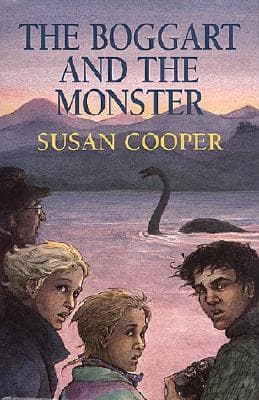
Susan Cooper (1997)
Genre
Fantasy / Children's / Young Adult
Reading Time
240 min
Key Themes
See below
Sign in to track this book
A mischievous Scottish boggart, displaced from his ancient castle, journeys to Loch Ness, where he finds his long-lost, shape-shifting cousin trapped as the legendary monster.
Two years after selling Castle Keep, Emily and Jessup Volnik return to Scotland for a visit. Their great-uncle's ancient family home is now owned by Mr. Maconochie, an Edinburgh lawyer. The children are pleased to find the Boggart, a mischievous shape-shifting spirit, still lives within the castle walls. The Boggart, who enjoys pranks, has been distracting Mr. Maconochie with his inexplicable antics, making the lawyer question his sanity. Emily, older now, is more skeptical, but Jessup, with his firm belief, quickly re-establishes their connection with the ancient creature, to the Boggart's delight and Mr. Maconochie's continued confusion.
The Boggart's pranks on Mr. Maconochie grow, from moving objects to creating strange noises, pushing the lawyer to believe in ghosts. Jessup, wanting more adventure and to share the Boggart's magic, suggests a camping trip to Loch Ness. Mr. Maconochie, desperate to escape the 'haunting' and clear his head, reluctantly agrees. Tommy Cameron, a local Scottish boy and friend of Emily and Jessup, joins them. Unknown to Mr. Maconochie, the Boggart, excited by new mischief, secretly goes with the group, eager to see the world beyond Castle Keep.
At Loch Ness, the Volniks, Tommy, and Mr. Maconochie find the area busy. A new, well-funded scientific expedition sets up advanced underwater equipment, including sonar and submersibles, to find the legendary Loch Ness Monster. The air is full of anticipation and skepticism. Jessup is especially excited, his imagination stirred by the possibility of seeing the famous creature. The Boggart, hidden from human eyes, is equally interested, sensing an ancient connection to the mysterious waters and their inhabitant.
On their first night camping by the loch, the Boggart, drawn by an ancient pull, leaves the human camp. He is fascinated by the deep, dark waters of Loch Ness. To his surprise and joy, he discovers Nessie, the Loch Ness Monster, is not just a legend but a boggart cousin. Nessie, however, has been trapped in one form—that of a prehistoric plesiosaur—for so long that she has forgotten her shape-shifting nature and boggart heritage. The Boggart is happy to find a relative, but also sad about Nessie's forgotten identity.
The Boggart uses his innate abilities to communicate with Nessie and help her remember her true self. He tries to remind her of the joy of shape-shifting and their ancient bonds. Nessie, slow to respond at first, shows faint signs of recognition, stirred by the Boggart's presence. She is a creature of great age and solitude, so awakening her dormant memories and abilities is slow. The Boggart spends his time in the loch, playfully interacting with Nessie, trying to jog her memory through shared ancient games and boggart tricks.
While the Boggart works to reawaken Nessie, the scientific expedition intensifies its search. Their equipment registers unexplained disturbances and large, moving objects in the loch. They get close to capturing images or clear sonar readings of Nessie, creating danger for the boggart cousins. The humans, especially the lead scientists, focus on proving the existence of a prehistoric creature, unaware of the magical, shape-shifting nature of the being they pursue. The Boggart must help Nessie and protect her from discovery.
Jessup, with his open heart and belief in magic, is the first of the children to sense the Boggart's presence and the events in the loch. He feels a connection to the ancient magic and knows there is more to the 'monster' than appears. While Emily stays more grounded, Jessup's intuition leads him to believe the Boggart is involved and that the Loch Ness Monster might not be what everyone expects. He tries to tell Emily and Tommy, who are skeptical but begin to consider his ideas.
The Boggart is in a difficult situation. He wants to help Nessie regain her boggart form and memories, but he also needs to protect her from the intrusive scientific expedition. The humans' technology poses a real threat, as capturing Nessie would expose her and potentially trap her forever in her monster form. The Boggart uses his shape-shifting abilities and mischievous nature to create diversions and interfere with the equipment, trying to buy Nessie more time and keep her hidden from the scientists.
The scientific expedition nearly captures Nessie with their nets and submersibles. Nessie, still largely unaware of her true power, is in danger. In a desperate act, the Boggart uses all his strength and ancient magic to create a massive diversion, appearing as colossal, fleeting illusions that draw the scientists' attention away from Nessie. This act, risking his own exposure, confuses the human team, giving Nessie a chance to escape and further stirring her latent boggart memories.
Fueled by the Boggart's act and the danger, Nessie experiences a profound awakening. Ancient memories return, and she recalls her true identity as a shape-shifting boggart. With a surge of dormant power, she sheds her monstrous form, transforming into a magnificent, fluid boggart shape. This transformation allows her to evade the scientific equipment completely, disappearing from their sight and baffling the expedition team, who are left with inconclusive evidence. The Boggart is overjoyed; his mission is complete.
Having regained her true boggart nature, Nessie thanks the Boggart. She is now free to explore her ancient powers and the vastness of the loch, no longer confined by one form. As the Volniks, Tommy, and Mr. Maconochie prepare to leave Loch Ness, the scientific expedition is baffled, having failed to capture or prove the monster's existence. The Boggart, having helped his cousin, returns with the humans, his mischievous spirit refreshed. The children, especially Jessup, hold a secret understanding of the magic they witnessed.
Back at Castle Keep, life returns to normal, though with a renewed sense of wonder for the Volnik children. Mr. Maconochie remains unaware of the Boggart's true nature but continues to be bothered by his harmless yet maddening pranks, his sanity always questioned. The Boggart, however, is changed by his experience. He is still the mischievous spirit of the castle, but he has a new understanding of connection, family, and remembering who you truly are. His bond with Jessup deepens, and he remains the unseen heart of Castle Keep, guarding its ancient magic.
The Protagonist
The Boggart grows from a purely mischievous entity to one driven by a profound sense of kinship and responsibility, learning the joy of helping another boggart reclaim their identity.
The Protagonist/Supporting
Jessup's belief in magic is affirmed and deepened, solidifying his role as a human who truly understands the ancient world.
The Supporting
Emily's initial skepticism gives way to a more profound acceptance and understanding of the magical world, though she retains her practical nature.
The Supporting
Mr. Maconochie remains largely oblivious to the Boggart's true nature, serving as a foil whose rational world is continually upended by magic.
The Supporting/Object of Quest
Nessie transforms from a forgotten, trapped entity into a reawakened, powerful boggart, reclaiming her true identity and freedom.
The Supporting
Tommy's exposure to the Boggart and Nessie broadens his understanding of the world, moving him from local lore to direct experience of magic.
The Mentioned
Dr. MacAlister's pursuit of scientific proof leads to tantalizing but ultimately inconclusive findings, leaving her quest unfulfilled.
This theme explores the tension between scientific inquiry and ancient magic. The scientific expedition at Loch Ness, with its sonar and submersibles, represents humanity's attempt to understand and control the natural world. In contrast, the Boggart and Nessie embody an older, intuitive magic that science cannot explain. The scientists miss Nessie's true boggart nature, pursuing a 'monster' while overlooking a deeper magical reality. This shows the limits of purely empirical approaches when faced with the supernatural, as the Boggart's actions and Nessie's transformation confound their equipment and theories.
““They were looking for a dinosaur, a prehistoric relic. They wouldn't know a boggart if it turned into a boat and sailed right past them.””
A central theme is Nessie's forgotten identity as a boggart and the Boggart's mission to help her remember. Nessie's long time in one shape has caused her to lose touch with her true nature, becoming a 'monster' to the world. The Boggart's efforts to awaken her memories emphasize the importance of self-knowledge and the dangers of forgetting one's heritage. This extends to ancient magic being forgotten in a modern world, and how people like Jessup, who believe in the old ways, are vital for its survival. The story suggests that true freedom comes from embracing who you truly are.
““She had forgotten. The saddest thing of all. Forgotten what it was to be herself.””
The novel contrasts characters who believe in magic with those who are skeptical. Jessup embodies unwavering belief, allowing him to connect with the Boggart and sense the magic at Loch Ness. Emily, initially more skeptical, slowly opens her mind. Mr. Maconochie, however, represents extreme skepticism, always rationalizing the Boggart's pranks and nearly driving himself mad. This theme suggests that an open mind and a willingness to believe are essential to experiencing the world's wonders, while rigid skepticism can blind one to extraordinary realities. The narrative champions imagination and faith in the unseen.
““It's not that I don't believe in anything, Jessup. It's just that I like to see things for myself.””
The Boggart's discovery of Nessie as a long-lost boggart cousin highlights the theme of family and kinship, extending beyond human bonds. The Boggart feels an immediate, deep connection and responsibility towards Nessie, driven by their shared ancient lineage. This sense of belonging motivates his journey and his efforts to help her. The Volnik family's bond, especially between Emily and Jessup, also emphasizes this theme, as they support each other through the strange events. The story suggests that connections, whether by blood or by shared ancient magic, are strong and lasting, providing purpose and strength.
““A Boggart. A cousin. After all this time, a real, living, breathing Boggart.””
Giving human characteristics to non-human entities.
The Boggart and Nessie are ancient, magical creatures, yet they exhibit distinct personalities, emotions, and motivations that are easily relatable to human experiences. The Boggart feels joy, mischief, sadness, and determination, while Nessie experiences fear, confusion, and eventually, the relief of remembrance. This device allows readers to empathize with the magical characters and understand their struggles and triumphs, making them more than just mythical beings. It also helps to bridge the gap between the fantastical elements of the story and the human characters' perspectives, making the Boggart's quest more engaging and emotionally resonant.
Hints or clues about future events.
Foreshadowing is subtly used throughout the narrative to build anticipation and tension. For instance, the Boggart's initial restlessness at Castle Keep and his deep interest in Jessup's tales of Loch Ness hint at a greater purpose or adventure awaiting him. The scientific expedition's advanced equipment and growing certainty of a 'monster' foreshadow the imminent danger Nessie will face. These clues prepare the reader for significant plot developments, such as the Boggart's discovery of Nessie and the climax of her reawakening, making the revelations feel earned and impactful rather than sudden.
When the audience knows more than the characters.
Dramatic irony is a prominent device, particularly concerning Mr. Maconochie and the scientific expedition. The audience, along with Jessup and the Boggart, knows that the 'haunting' at Castle Keep is the Boggart's doing, while Mr. Maconochie remains blissfully and comically unaware. Similarly, the readers know that the Loch Ness Monster is actually a boggart, while the scientists are diligently searching for a prehistoric animal. This creates humor, tension, and a sense of shared secret between the reader and the magical characters, highlighting the contrast between the mundane and supernatural worlds and emphasizing the scientists' tunnel vision.
An object or device that drives the plot.
While not a single object, the 'Loch Ness Monster' serves as a collective MacGuffin. For the scientists, the monster is the elusive proof of a prehistoric creature, the ultimate goal of their expedition. For the Boggart, the monster represents a lost boggart cousin to be found and reawakened. The pursuit of the 'monster' drives the characters to Loch Ness and propels the central conflict, even though its true nature is different for each party. The focus on the monster allows different characters to have different stakes and motivations, all revolving around this central, mysterious entity.
“The Boggart was old, older than the oldest tree in the wood, older than the oldest stone in the Broch, older than the loch itself. He had always been there.”
— Introducing the ancient and timeless nature of the Boggart.
“He was a trickster, a mischief-maker, a disarranger of the comfortable and the orderly. And sometimes, he was a little more.”
— Describing the Boggart's primary characteristics and hinting at deeper powers.
“There are things in the world that don't belong to any one time or place, but to all of them, always.”
— Mr. Macaulay explaining the nature of beings like the Boggart to the Volkovs.
“The past isn't gone, it's just waiting to be found again, like a hidden room in an old house.”
— A reflection on the enduring presence of history and tradition.
“Sometimes, the biggest monsters are the ones we can't see, the ones inside our own heads.”
— A philosophical thought on fear and perception, especially in relation to the Loch Ness Monster.
“Home isn't just a place, it's a feeling, a connection to something deeper than bricks and mortar.”
— The Volkov family's evolving understanding of 'home' as they adapt to Scotland.
“Magic isn't about waving wands; it's about seeing the world with different eyes, and knowing that anything is possible.”
— Jessie's developing understanding of magic and the supernatural.
“He was a piece of the wild, untamed, and utterly himself, no matter where he was.”
— Reflecting on the Boggart's unchanging nature despite being in a new environment.
“The world is full of wonders, if you only take the time to look for them.”
— A general theme of the book, encouraging observation and openness to the extraordinary.
“Some things are meant to stay hidden, and some things are meant to be found. The trick is knowing the difference.”
— Discussing the mysteries of the loch and the Boggart's existence.
“He didn't understand human feelings, not really, but he understood the shape of them, the way they moved through people like currents in a stream.”
— The Boggart's unique perspective on human emotions.
“Sometimes, the only way to solve a problem is to let it solve itself, with a little help from the unexpected.”
— A philosophical observation on the unpredictable nature of solutions.
“The loch had its own secrets, its own life, and it didn't much care for being explained.”
— Emphasizing the untameable and mysterious nature of Loch Ness.
Ready to see how well you understood this book? Take our interactive quiz with 10 questions.

Biography coming soon.







