“"I have had a long talk with him, and I tell you, he is a man to be dreaded. He has a power about him that I cannot understand."”
— Fettes reflecting on Macfarlane's unsettling presence and past.

Genre
Historical Fiction / Mystery
Reading Time
25 min
Key Themes
See below
Sign in to track this book
In 19th-century Edinburgh, two medical students, Fettes and Macfarlane, descend into depravity, trading their souls for bodies, as their professor's shadow and the specter of damnation close in.
The story begins with gentlemen around a fire at a country inn. Among them are Mr. Fettes and Dr. Macfarlane. When they recognize each other, a clear tension comes between them, especially from Macfarlane. Fettes, at first hesitant, approaches Macfarlane, whose face shows fear and disgust. Their shared past is hinted at, involving dark secrets and a professional relationship that ended badly. The other gentlemen notice this strange interaction, sensing a deep history that has unexpectedly reappeared, casting a shadow over the otherwise friendly inn.
The story then goes back in time, showing Fettes and Macfarlane as young medical students in Edinburgh, learning from the anatomist Mr. K. Mr. K, a smart but morally questionable professor, needed a constant supply of fresh cadavers for his classes. Fettes, a poor student, was tasked with receiving the bodies, asking no questions about where they came from. He first thought they were from legal sources but slowly grew suspicious. Macfarlane, a richer and more ambitious student, was already involved in the illegal trade, often acting as a go-between and showing a cynical attitude about their grim work. Their shared involvement in this dark underworld created a bond but also set the stage for future conflict and moral decay.
One night, a body is brought to the dissecting room, and Fettes immediately knows it is Jane Galbraith, a young woman he had known. Her sudden appearance on the dissecting table shocks him, as he had seen her alive just days before. He confronts Macfarlane, demanding to know how she died and who supplied her. Macfarlane, at first dismissive, admits the body came from Gray, a known grave-robber. This news breaks Fettes's remaining beliefs about the ethical sourcing of their cadavers, forcing him to face the grim reality of their involvement in body-snatching. The event marks a turning point, increasing Fettes's moral distress and showing Macfarlane's growing lack of feeling.
Fettes and Macfarlane meet Gray, the body-snatcher, at a tavern to talk about Jane Galbraith's body. Gray, a friendly but threatening figure, taunts Macfarlane, hinting at his part in the girl's death and suggesting Macfarlane knew her personally. The argument quickly gets worse, fueled by alcohol and old resentments. Macfarlane, angry at Gray's suggestions and perhaps fearing exposure, hits Gray with a heavy stick, killing him instantly. Fettes watches the murder in horror, now directly involved in a worse crime than just grave-robbing. They must dispose of Gray's body, going deeper into their criminal acts and making their shared, terrible secret stronger.
After Gray's murder, Fettes and Macfarlane face the problem of disposing of the body. They decide to take it to the dissecting room, planning to pass it off as another cadaver for Mr. K's lessons. Under cover of darkness, they put Gray's body into a sack and load it onto a cart, treating their victim with the same detached professionalism they used for their other illegal bodies. The journey is full of tension and fear of being caught. As they go through the dark streets of Edinburgh, the weight of their crime presses on Fettes, while Macfarlane stays calm, showing his growing lack of sensitivity to their grim work. Dissecting their own victim shows the ultimate degradation of their medical profession.
When Fettes and Macfarlane bring Gray's body to the dissecting room, they present it to Mr. K. The professor, with his sharp anatomical eye, immediately recognizes Gray, despite attempts to hide the body. He acknowledges the man with a chillingly casual remark, showing he knows Gray's identity and his job as a body-snatcher. However, Mr. K pretends not to know the details of Gray's death, implicitly approving the students' actions and ensuring a continued supply of bodies for his classes. His complicity further corrupts the moral setting of the medical school, showing how the pursuit of scientific knowledge can override ethical considerations, and cementing the dangerous secret shared by the three men.
After Gray's murder and dissection, Fettes feels consumed by guilt and fear. The events weigh heavily on him, disturbing his sleep and haunting him when awake. He becomes withdrawn and agitated, the moral horror of their actions eroding his mental health. Macfarlane, in contrast, seems unaffected, staying calm and focusing on his medical studies. His ambition and practical nature seem to protect him from the emotional cost of their shared secret. This difference in their reactions shows the different paths their moral compasses have taken, with Fettes increasingly burdened by the past, while Macfarlane seems to have suppressed his conscience completely for his career.
Some time later, needing a fresh cadaver for Mr. K's lectures, Fettes and Macfarlane go on a grave-robbing trip. They travel to a remote churchyard, their tools hidden in their cart. The night is dark and stormy, adding to the ominous mood. Fettes, still haunted by their past deeds, is unwilling and scared, but Macfarlane's commanding presence and practical determination push them forward. They successfully dig up a recently buried body, carefully reburying the empty coffin to avoid being caught. This act, while routine for them, further involves Fettes in the illegal trade, showing his continued obedience to Macfarlane and Mr. K's demands, despite his strong moral doubts.
With the new cadaver in their cart, Fettes and Macfarlane start their journey back to Edinburgh. The night remains dark and stormy, and the remote country roads are dangerous. As they drive on a desolate stretch, their horse suddenly stops, startled by something unseen on the road. Fettes and Macfarlane get off to investigate, their nerves already frayed by their illegal cargo and the bad weather. The tension grows as they search the road ahead, a sense of dread in the air. This unexpected stop heightens the suspense, hinting at a coming revelation or a supernatural encounter that will challenge their composure.
When Fettes and Macfarlane finally reach their destination and prepare to unload the cadaver, a horrifying discovery awaits. Opening the sack, they see not the body they had dug up, but the distinct face of Gray, the man Macfarlane had murdered. The shock is deep and terrifying. The body, though changed by its journey and the weather, is clearly Gray. This impossible transformation shatters their composure, driving both men to the edge of madness. The supernatural element suggests divine punishment or a hallucination from their guilt, solidifying the idea that their past crimes have returned to haunt them in a grotesque, inescapable way, leading directly to their estrangement at the inn.
The Protagonist
Fettes devolves from an innocent, if naive, student into a guilt-ridden accomplice, haunted by his past actions and unable to escape their psychological toll.
The Antagonist/Co-protagonist
Macfarlane progresses from a cynical student to a cold-blooded murderer, outwardly successful but inwardly tormented by the indelible mark of his past crimes.
The Supporting
Mr. K remains a static character, representing the institutional demand that fuels the body-snatching trade, his moral ambiguity unchanged.
The Supporting/Victim
Gray's arc is brief but impactful, serving as a catalyst for the story's central crime and later as a supernatural symbol of the protagonists' guilt.
The Mentioned/Victim
Jane Galbraith's character serves as a plot device to awaken Fettes's conscience and expose the true nature of the body-snatching operation.
The story shows how being involved in illegal acts destroys one's moral sense. Fettes, initially innocent, is slowly corrupted by his connection with Macfarlane and Mr. K, ending in his part in murder. His guilt appears as deep psychological distress, haunting him for years. Macfarlane, more ambitious and cruel, suppresses his conscience, but the final, supernatural event suggests even he cannot escape the results of his actions. Seeing Jane Galbraith's body and then murdering Gray are key moments that pull the characters into deeper moral decay, showing the slippery slope of unethical choices.
“For as we have said, he was a man of a shrewd natural piety, and was heartily revolted by the cynical indifference, the brutal jocularity, of his associates.”
Stevenson criticizes unchecked ambition in the medical profession that led to unethical practices like body-snatching. Mr. K, a brilliant anatomist, puts scientific progress over ethical sourcing, creating a demand that fuels the illegal trade. Macfarlane's ruthless ambition drives him to commit increasingly terrible acts, including murder, to secure his professional future. The story questions the morality of achieving professional success through morally wrong means, showing the dark side of pursuing knowledge when not limited by ethics. The need for fresh cadavers, vital for medical learning, blinds characters to the human cost.
“He was a man of the highest scientific attainments, and his lectures were a marvel of erudition and precision; but he was also a man of unbending will and a singular, almost inhuman, indifference to the means by which his ends were attained.”
The story ends with a supernatural event: the cadaver becoming Gray's body. This event is a powerful symbol of punishment for Fettes and Macfarlane's crimes, especially Gray's murder. It suggests their actions have disturbed a natural or divine order, and their guilt cannot be escaped, even through excuses or suppression. The supernatural element raises the horror beyond mere crime, implying a moral reckoning that goes beyond earthly justice. It is a sign of their deepest fears and the inescapable psychological burden of their deeds, emphasizing that some sins cannot stay buried.
“They had indeed a body in the cart; but it was Gray's body.”
The story touches on class differences and their role in the body-snatching trade. Fettes, being poor, is more easily drawn into the illegal work out of financial need, while Macfarlane, from a wealthier background, is driven more by ambition. The victims of body-snatching are often the poor and forgotten, whose graves are less likely to be guarded. Gray, the body-snatcher, works in the lower parts of society, using the desperation of others. This underlying social inequality shows how the medical establishment, driven by the needs of its privileged students and professors, unknowingly preys on the vulnerable, further highlighting the moral decay in the system.
“Fettes was a poor student, and for the sake of the weekly guinea he was willing to close his eyes to a great deal.”
Hints at future events and the dark past of the characters.
Stevenson uses foreshadowing from the very beginning. The tension between Fettes and Macfarlane at the inn immediately signals a shared, dark history. Macfarlane's fear and disgust when seeing Fettes, and Fettes's reluctance to approach him, strongly suggest a terrible secret. This technique builds suspense and prepares the reader for the grim revelations of their past, making the eventual unfolding of the body-snatching and murder feel inevitable rather than sudden. The ominous atmosphere of the inn and the characters' reactions subtly prepare the reader for the horrific truth.
The story of Fettes and Macfarlane's past is told within a present-day encounter.
The story employs a frame narrative, beginning and ending with Fettes and Macfarlane's chance reunion at a country inn. The bulk of the tale is a flashback, recounting their time as medical students. This structure allows the narrator to first establish the lingering, unresolved tension between the characters in the present, then delve into the past to explain its origins. The return to the present at the end provides a sense of closure, showing the enduring psychological impact of their crimes and the impossibility of escaping their shared history, even years later. It emphasizes that the past continues to haunt them.
The reader is aware of the characters' guilt before their full story is revealed.
Dramatic irony is present from the opening scene. The reader quickly understands that Fettes and Macfarlane share a terrible secret, long before the details of the body-snatching and murder are explicitly revealed. The other gentlemen at the inn are oblivious to the true nature of the tension between the two doctors, making the reader privy to a deeper, more sinister truth. This device heightens the sense of dread and anticipation, as the reader waits for the hidden horrors of their past to be fully exposed, adding a layer of tragic understanding to their present-day interaction.
While the main narrator is objective, the characters' perceptions of events are colored by guilt and fear.
While the overarching narrator is largely objective, there's an implied unreliability in how Fettes and Macfarlane themselves interpret the supernatural event. The reappearance of Gray's body could be a genuine supernatural occurrence or a shared hallucination brought on by extreme guilt and psychological torment. The story leaves this ambiguity open, allowing the reader to ponder whether the horror is external or purely internal. This ambiguity enhances the psychological horror, as the characters' minds are shown to be breaking under the weight of their crimes, blurring the lines between reality and their tormented consciences.
“"I have had a long talk with him, and I tell you, he is a man to be dreaded. He has a power about him that I cannot understand."”
— Fettes reflecting on Macfarlane's unsettling presence and past.
“"It was a pit, sir, a pit! and I was in it with a dead man."”
— Fettes describing the grim reality of his past profession to the two doctors.
“"When a man has been in the body-snatching trade, he is not easily shocked."”
— Fettes's cynical self-assessment of his hardened nature.
“"Death, after all, is but a name, and a body but a thing."”
— Macfarlane's chillingly pragmatic view on the human remains they traffic.
“"There are some things that a man can never forget, and that is one of them."”
— Fettes haunted by a particular memory from his body-snatching days.
“"It was a business, you see, a necessary business, though a dirty one."”
— Fettes rationalizing the grisly work of providing cadavers for dissection.
“"The lamp burned dimly; the figures were indistinct; the air was heavy with the smell of drugs and corruption."”
— Atmospheric description of the dissecting room where Fettes worked.
“"He was a man, I tell you, to inspire terror. He had a look in his eye that would make a brave man quail."”
— Fettes emphasizing the formidable and sinister nature of Macfarlane.
“"We are all of us, Mr. Fettes, in the hands of destiny."”
— The cynical pronouncement of the 'Professor' to Fettes, reflecting on their shared predicament.
“"He knew that he had done an evil thing; and yet he was not sorry."”
— A description of Macfarlane's lack of remorse for his actions.
“"The very thought of it, sir, makes my blood run cold."”
— Fettes expressing his visceral reaction to a particularly grim memory.
“"There are more things in heaven and earth, Horatio, than are dreamt of in your philosophy."”
— A literary allusion used by the narrator to underscore the unsettling nature of the tale, though not a direct quote from a character.
“"He had seen too much, and too little, for his peace of mind."”
— A description of Fettes's tormented mental state due to his experiences.
“"The dead are not always so quiet as we could wish."”
— A chilling observation hinting at the unsettling climax of the story.
Ready to see how well you understood this book? Take our interactive quiz with 10 questions.
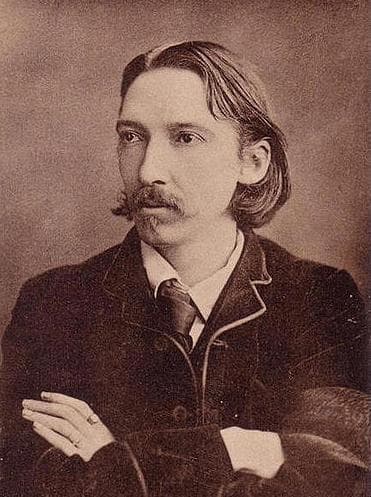
Robert Louis Stevenson was a Scottish novelist, essayist, poet and travel writer. He is best known for works such as Treasure Island, Strange Case of Dr Jekyll and Mr Hyde, Kidnapped and A Child's Garden of Verses.







