“Time is a storm in which we are all lost.”
— Lauren reflects on the nature of time after her husband's death.

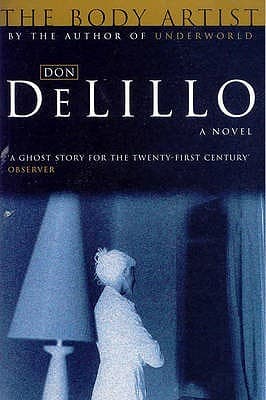
Don DeLillo (2001)
Genre
Literary Fiction / Creativity
Reading Time
90 min
Key Themes
See below
Sign in to track this book
A body artist in a secluded coastal home deals with the memory of her dead film-director husband, blurring the lines between grief, performance, and the haunting persistence of memory.
The novella begins with Lauren Hartke, a performance artist, and her older, thrice-married film director husband, Rey Robles, at breakfast in their rented, isolated New England coastal house. Their conversation is a stream of consciousness, touching on everyday observations, Rey's past marriages, the nature of time, and watching a woman sleep. Rey talks about a disturbing dream of a figure watching him. The dialogue shows their deep, almost symbiotic connection, marked by playful intellectual intimacy and a shared sense of their unique existence, separate from the conventional world. The scene sets up their unusual dynamic and the isolated setting.
After their morning together, Rey Robles leaves for New York City, supposedly to visit his daughter and handle business. Lauren stays in the rented house, continuing her solitary routine. The story then shifts, informing the reader that Rey has died. The details are few but imply suicide, leaving Lauren in shock and isolation. His death is a sudden event, changing Lauren's life and the story's tone, plunging her into deep, silent grief in the now empty house.
After Rey's death, Lauren stays in the house, experiencing time in a disorienting, fluid way. Days blend into nights, and past memories mix with the present. She revisits places they shared, like the bed and the breakfast table, trying to reconstruct Rey's presence through memory and sensory details. Her grief is personal and internal, showing as a deep emptiness. She struggles to accept his sudden absence with the vividness of their shared past, feeling lost in a world where the ordinary has become extraordinary and painful.
As Lauren deals with her grief, she starts to sense an unexplained presence in the house. This is not a typical ghost, but a subtle, almost imperceptible shift in the atmosphere. She hears faint sounds, notices objects slightly out of place, and feels an undeniable awareness of another being. At first, she dismisses these occurrences as products of her sorrow and isolation, but their persistence suggests something more tangible. This growing awareness marks the beginning of the story's supernatural element, challenging her perceptions of reality.
One day, Lauren enters her bedroom and finds a man sitting on the bed. He is small, thin, and childlike, speaking in a disjointed, non-linear stream of consciousness. He seems to be a manifestation of memory, repeating phrases and observations that Rey and Lauren had exchanged, especially from their breakfast conversation. The man, whom Lauren calls 'Mr. Tuttle' or 'Mr. Vede' (from a Russian word meaning 'he knows'), is an uncanny echo of Rey's past and Lauren's memories, but separate. His presence is both disturbing and strangely comforting, filling the void left by Rey.
Lauren tries to understand who Mr. Vede is and where he came from. He speaks in fragmented sentences, often repeating Rey's exact words, or describing events from Rey's past, sometimes from his childhood. He seems to exist outside of conventional time and space, a living embodiment of memory and consciousness. Lauren thinks he might be a manifestation of Rey's past self, or a temporal echo. His presence affects her deeply, drawing her into a deeper exploration of memory, identity, and the boundaries between life and death. She watches him, fascinated by his unusual existence.
Despite his enigmatic nature, Lauren begins to share the house with Mr. Vede. She gives him food, and they live in a strange, silent cohabitation. She observes him constantly, trying to understand his words and the logic of his existence. Their interactions are minimal, mostly Lauren listening to his fragmented speech, which often mirrors her own thoughts or recalls their shared past with Rey. This period is marked by introspection for Lauren, as Mr. Vede becomes a catalyst for her processing of grief and her understanding of memory and consciousness.
Lauren, as a performance artist, begins to use Mr. Vede's presence and her grief in her art. She records his voice, studies his movements, and reflects on the ephemeral nature of memory and identity. Her art becomes a direct response to her experience, a way of showing her inner world and dealing with the questions raised by Rey's death and Mr. Vede's appearance. The house becomes her studio, and her life, her art, blurring the lines between the two as she explores the body as a vessel for memory and time.
A friend, likely from her artistic community, visits Lauren, interrupting her isolated existence with Mr. Vede. During the visit, Mr. Vede is nowhere to be found, suggesting his presence is linked to Lauren's solitary state or her mind. After her friend leaves, Lauren searches for him, but Mr. Vede has vanished as mysteriously as he appeared. This disappearance leaves Lauren alone again, but with a changed perspective. The encounter with Mr. Vede has altered her understanding of reality, memory, and the self, preparing her for a new phase of her art and life.
Lauren creates a new performance piece, directly inspired by her experiences with Rey's death and Mr. Vede. Her art explores time, memory, and the human body as a repository for these experiences. She focuses on the physical manifestation of memory, how the body holds and expresses the past. Her performance is a solitary, internal act, a blending of her physical self with the echoes of others, showing that we are all made of the voices and experiences of those who came before us. It is the culmination of her journey through grief and discovery.
The Protagonist
Lauren transforms from a grieving widow into an artist who integrates profound loss and the supernatural into a deeper understanding of time, memory, and performance.
The Supporting/Catalyst
Rey's physical presence is brief, but his death and the echoes of his life profoundly shape Lauren's arc and the thematic exploration of the novel.
The Antagonist/Supernatural Presence
Mr. Vede's arc is less about personal development and more about his function as a device; he appears, acts as a catalyst for Lauren's transformation, and then vanishes.
The novel explores the nature of grief, especially the disorienting impact of sudden, unexpected loss. Lauren's experience after Rey's death is not just sadness, but a complete disruption of her perception of time and reality. She revisits shared spaces, trying to bring back his presence, and finds herself lost in a world where the familiar has become alien. This theme is central to the entire narrative, driving Lauren's introspection and her eventual artistic response. The emptiness of the house after Rey's departure (plot_summary section 3) shows this emptiness.
“She felt the house around her, a body, an entity, alive with his absence.”
DeLillo looks at the fluid, non-linear nature of time and how memory shapes our perception of reality. Lauren's experience of time after Rey's death is fractured, with past and present mixing. Mr. Vede, who speaks in echoes of Rey's past and seems to exist outside linear time, embodies this theme (plot_summary section 6). The novel suggests that memory is not a static record but a living entity that can show up in unexpected ways, blurring the lines between what is real and what is remembered. The breakfast scene itself explores time and consciousness.
“Time is a thing you make. It's a structure. It's a thing you build.”
As a performance artist, Lauren uses her body and her life experiences as the canvas for her art. The novel explores how art can process trauma, understand complex philosophical concepts, and create meaning from chaos. Her grief and Mr. Vede's appearance directly inform her artistic practice (plot_summary section 8), turning her personal tragedy into an exploration of identity and existence. Her final performance piece is the culmination of her journey, making her body a vessel for memory and the echoes of others.
“She was learning to be the body and the artist, to be the art itself.”
Mr. Vede, who seems to channel Rey's memories and thoughts, raises questions about the nature of individual consciousness and where it resides. Is consciousness only a product of the brain, or can it exist independently, perhaps as an echo in time? The novel suggests that our identities are not singular but are made of layers of past experiences, shared connections, and the voices of those who have influenced us. Mr. Vede's existence challenges the traditional boundaries of self and other, life and death, making Lauren question what defines a person.
“He was everyone's forgotten self, the self that drifts in the stream of time.”
Dialogue that mimics unfiltered thought, revealing character and theme.
The initial breakfast conversation between Lauren and Rey is a prime example. Their dialogue is meandering, philosophical, and jumps between topics, reflecting their intimate connection and intellectual nature. This device allows DeLillo to explore themes of time, memory, and the nature of consciousness through their unfiltered thoughts, establishing their unique world before Rey's death. It also serves to immediately immerse the reader in their complex relationship and the book's distinctive tone.
Lauren's perception of reality is influenced by grief, blurring objective truth.
While not overtly unreliable, Lauren's deep grief and isolation after Rey's death significantly color her perception of events. The appearance of Mr. Vede could be interpreted as a supernatural phenomenon, a psychological manifestation of her sorrow, or a combination of both. The narrative maintains an ambiguity, allowing the reader to question the objective reality of Mr. Vede's existence and forcing them to confront the subjective nature of truth, particularly when filtered through intense emotional states. This device deepens the mystery and encourages reader engagement with the themes.
A remote house on the coast amplifies themes of grief and introspection.
The rented house on the New England coast serves as more than just a backdrop; it's a character in itself. Its isolation amplifies Lauren's grief and introspection after Rey's death, creating a contained world where the extraordinary can manifest without external interference. The house becomes a symbolic space for memory, a vessel for the past, and a stage for Lauren's internal and external transformations. It fosters the intimacy between Lauren and Rey, and later, the uncanny cohabitation with Mr. Vede.
Mr. Vede acts as a non-traditional ghost, embodying memory and consciousness.
Mr. Vede functions as a modern, literary interpretation of a ghost. He is not a spectral apparition in the traditional sense, but a physical presence that embodies the echoes of Rey's past and Lauren's memories. He challenges conventional notions of the afterlife and haunting, suggesting that 'ghosts' can be manifestations of consciousness, memory, and the profound impact of those we've lost. This device allows DeLillo to explore philosophical questions about existence and identity without resorting to genre clichés.
“Time is a storm in which we are all lost.”
— Lauren reflects on the nature of time after her husband's death.
“The past is a ghost, the future a dream, and all we ever have is now.”
— A recurring thought for Lauren as she tries to live in the present.
“She wanted to be a body, not a mind. She wanted to be a thing, not a thought.”
— Lauren's desire to transcend intellectualization through performance art.
“Memory is a form of art. The mind is a canvas.”
— Lauren considering how she reconstructs and interprets her past.
“There was a truth in the silence, a truth that words could only obscure.”
— Lauren's experience with the enigmatic visitor, Mr. Tuttle.
“She felt the weight of her own name, a thing that had once belonged to someone else.”
— Lauren grappling with her identity after her husband's suicide.
“The world was full of people who knew how to live and people who didn't. She was one of the latter.”
— Lauren's feelings of disorientation and alienation.
“Art was a way of making sense of the senseless.”
— Lauren's motivation for her performance art.
“He lived in her memory, a constant, vivid presence.”
— Lauren's continued internal dialogue with her deceased husband.
“The house was a body, breathing, listening, remembering.”
— Lauren's perception of her home as a living entity imbued with memories.
“She was learning to be alone, to inhabit the silence, to find a rhythm in the emptiness.”
— Lauren's journey of adaptation and self-discovery after loss.
“The smallest gestures carried the most profound meanings.”
— Lauren observing the subtle actions and expressions of others, especially Mr. Tuttle.
“Language was a net thrown over the world, trying to catch what could not be held.”
— Lauren's reflection on the limitations of words to capture reality or experience.
Ready to see how well you understood this book? Take our interactive quiz with 10 questions.
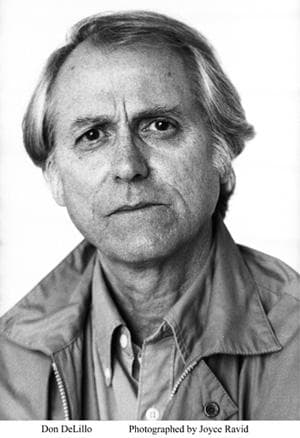
Donald Richard DeLillo is an American novelist, short story writer, playwright, screenwriter and essayist. His works have covered subjects as diverse as television, nuclear war, the complexities of language, art, mathematics, politics, economics, and baseball.







