BookBrief
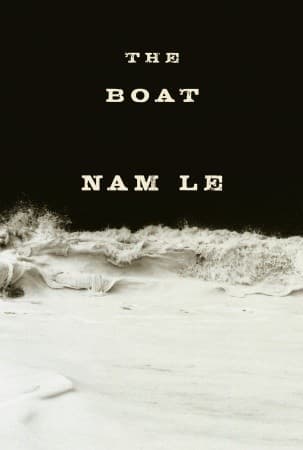
The Boat cover
Archivist's Choice

The Boat

Nam Le (2008)

Genre

Literary Fiction / Historical Fiction

Reading Time

272 min

Key Themes

See below

Track Your Reading

Sign in to track this book

Nam Le's "The Boat" explores displacement and human connection through a range of voices and personal stories, from a Colombian hitman to a Vietnamese refugee.

Synopsis

Nam Le's "The Boat" is a collection of seven short stories, each looking at human experiences across different cultures and times. In "Love and Honor and Pity and Pride and Compassion and Sacrifice," a Vietnamese-Australian writer deals with his father's past and the ethics of using personal history for art. "Cartagena" puts the reader into the brutal world of a fourteen-year-old Colombian hitman facing a difficult assignment. "Meeting Elise" shows an aging New York painter thinking about meeting his estranged daughter. "Hiroshima" follows a Japanese girl's memories of the atomic bomb and her life afterward. "Tehran Calling" portrays an Australian lawyer in a moral dilemma during political unrest in Iran. "Halflead Bay" explores childhood friendship and loss in rural Australia. The collection ends with the title story, "The Boat," which describes the journey of Vietnamese refugees on a crowded trawler, focusing on a young woman's bond with a mother and child and the hard choices they face to survive. Each story stands alone, but together they show human strength, sacrifice, and the search for identity and belonging.
Reading time
272 min
Difficulty
Medium
Pacing
Variable
Mood
Reflective, Poignant, Intense, Melancholy, Thought-provoking
✓ Read this if...
You appreciate literary short stories with diverse settings and characters, exploring complex themes of identity, displacement, and the human condition.
✗ Skip this if...
You prefer continuous narratives or light, easy reads without challenging subject matter.

Plot Summary

Love and Honor and Pity and Pride and Compassion and Sacrifice

Nam, a Vietnamese-Australian writer in Iowa City, has writer's block and faces pressure from friends and his agent to write about his Vietnamese heritage, specifically his father's experiences during the Vietnam War. He resists, feeling it is wrong and not true to him. His estranged father visits, and their strained relationship is clear. Nam deals with his father's quiet nature and the unspoken history between them. Through memories and current interactions, Nam starts to understand the sacrifices his father made, not just during the war but also in providing for his family and adapting to a new culture. The story ends with Nam trying to make peace with his father and accept his heritage, even as he struggles to write about it.

Cartagena

Petty, a fourteen-year-old hitman in Medellín, Colombia, lives a life of violence and constant danger. He works for a drug lord, Jorge, and is very loyal to his crew, especially his friend, Pato. Petty gets an assignment to kill a rival gang member. He struggles with the moral questions and the brutality of his task, questioning his own ability to be violent. The story shows the harsh realities of street life, the widespread corruption, and the desperate reasons that lead young men into such roles. Petty's inner conflict grows as he faces the moment of truth, forcing him to confront his own humanity amid the violence around him, finally making a choice that shows his character.

Meeting Elise

Henry, an aging painter in New York City, is dealing with his body's decline and his art fading. He is preparing to meet his daughter, Elise, a gifted pianist, before her Carnegie Hall debut. Their relationship is complicated, marked by Henry's past neglect due to his art and Elise's desire for her father's approval. As Henry moves through the city, he thinks about his life, his art, his failed relationships, and his regrets. He remembers moments of artistic inspiration and personal failure. The thought of seeing Elise brings a mix of pride, worry, and a longing for reconciliation, showing the sacrifices made for art and the lasting power of family bonds.

Hiroshima

Mayu, a young girl in modern-day Hiroshima, carries the weight of the atomic bomb's legacy and its effect on her family. Her grandmother, a bomb survivor, has deep physical and emotional scars, which show in her quietness and her refusal to talk about her experiences. Mayu feels a strong duty to remember and honor the past, but also struggles to connect it with her own current life. The story explores the quiet suffering of survivors and the trauma passed down through generations. Mayu tries to understand her grandmother's silence and the weight of history, seeking a way to connect with her and find peace amid the lingering pain of the past, finally finding comfort in a shared moment of understanding.

Tehran Calling

Sarah, an Australian woman, travels to Tehran to visit her friend, Parisa, an Iranian poet who faces increasing political oppression. Sarah knows the dangers and the restrictive environment in Iran but feels she must support Parisa. The story shows the tension and fear under the repressive government, where surveillance is constant and disagreement is met with harsh punishment. Sarah observes the small acts of rebellion and the strength of the Iranian people. She sees the sacrifices Parisa makes for her art and her beliefs, and the effect of censorship on creative expression. Sarah deals with her own privilege and the helplessness she feels in the face of such unfairness, leading to a sad farewell.

Halflead Bay

Stephen, a young boy in the isolated Australian fishing village of Halflead Bay, is struggling with his mother's recent death. His father, a gruff fisherman, withdraws into his grief, leaving Stephen feeling alone. The village has local stories, especially the legend of a huge squid, the 'kraken,' said to live in the deep waters. Stephen becomes interested in this myth, seeing it as a way to understand life and death. He forms a bond with an old fisherman who shares sea stories. The story explores grief, the power of storytelling, and the search for meaning in loss, ending with Stephen's personal encounter with the vastness of the ocean.

The Boat

Mai, a young Vietnamese woman, is among hundreds of refugees packed onto a damaged fishing trawler fleeing the Vietnam War. The journey across the South China Sea is full of danger: hunger, thirst, illness, and the constant threat of pirates and storms. Mai forms a bond with a mother, Mrs. Chiem, and her young son, Truong, who also need to survive. As conditions on the boat worsen, supplies run out, and hope fades, Mai must make an impossible, morally hard decision to help others survive. The story is a depiction of human strength, desperation, and the sacrifices made for freedom and a new life, leaving a lasting mark on Mai's conscience.

The Boat: The Storm

As the refugee boat continues its dangerous journey, it runs into a fierce storm that threatens to sink the vessel and kill everyone on board. Conditions become even worse, with huge waves, heavy rain, and the constant fear of being swept into the sea. Mai, along with Mrs. Chiem and other survivors, struggles to keep themselves and their loved ones alive amid the chaos. The storm acts as a metaphor for the overwhelming forces of nature and the political unrest that drove them from their homes. It tests their physical endurance and their will to survive, showing deep human despair and the strong hope for rescue, even as many are lost.

The Boat: The Aftermath

After the devastating storm, the refugee boat is badly damaged, and many lives are gone. The remaining survivors, including Mai and Mrs. Chiem, are left to deal with their grief, their injuries, and the grim reality of their dwindling supplies. Hope begins to fade as days turn into weeks with no sign of rescue. The bonds between the survivors are tested, and despair threatens to take over. Mai continues to care for Truong, the young boy, offering what little comfort she can. The story shows the psychological toll of long suffering and the desperate measures people take to hold onto life, even when things look impossible, as they drift further into the unknown, facing starvation.

The Boat: Rescue and Reflection

After what seems like a very long time, a rescue ship finally appears, bringing salvation to the weak and traumatized refugees on 'The Boat.' Mai, Mrs. Chiem, and the other survivors are brought to safety, but the physical and emotional scars of their ordeal run deep. The story ends with Mai thinking about the hard journey, the impossible choices she made, and the lives lost. The rescue marks the end of their physical suffering but the beginning of a long process of healing and accepting the deep trauma they went through. The experience changes Mai's view of life, humanity, and the true cost of survival forever, leaving her with a lasting sense of both loss and strength.

Principal Figures

Nam Le

The Protagonist

Nam moves from resistance and cultural alienation to a deeper understanding and acceptance of his heritage and his father's sacrifices.

Nam's Father

The Supporting

Remains largely stoic, but his unspoken history is gradually revealed, allowing for a subtle, unspoken reconciliation with his son.

Petty

The Protagonist

Petty confronts the moral implications of his violent life, making a choice that reveals his underlying humanity.

Henry

The Protagonist

Henry confronts his past and seeks to mend his relationship with his daughter, finding a measure of peace.

Mai

The Protagonist

Mai endures extreme suffering and makes a harrowing moral choice, emerging as a survivor forever marked by her ordeal.

Mrs. Chiem

The Supporting

Struggles for her son's survival, forming a desperate alliance with Mai.

Mayu

The Protagonist

Mayu learns to understand and accept her family's traumatic past, finding a way to connect with her stoic grandmother.

Sarah

The Protagonist

Sarah gains a deeper understanding of political oppression and the courage of those who resist, reinforcing her empathy.

Themes & Insights

Identity and Heritage

Many stories explore the struggle to define oneself in relation to one's background and family history. In 'Love and Honor...', Nam deals with his Vietnamese heritage and the pressure to write about it, at first resisting but later accepting his father's sacrifices. 'Hiroshima' shows Mayu's struggle to connect her modern Japanese identity with the deep, traumatic legacy of the atomic bomb carried by her grandmother. This theme shows how personal identity is shaped by origin, memory, and stories passed down through generations, often without words.

What was it about the Vietnamese, about their stories, that made them so available, so ripe for the plucking?

Nam Le, 'Love and Honor and Pity and Pride and Compassion and Sacrifice'

Trauma and Resilience

The collection examines the lasting impact of trauma—war, violence, displacement—and the human ability to recover. 'The Boat' shows the physical and psychological toll of the refugee journey, highlighting Mai's enduring spirit amid immense suffering. Nam's father in 'Love and Honor...' embodies the quiet strength of a war survivor, his trauma showing in his stoicism. 'Hiroshima' explores trauma across generations, as Mayu tries to understand her grandmother's quiet suffering. These stories show how people cope with great difficulty, finding strength even in deep despair.

A human life, she knew now, was nothing more than a flicker in the vast, indifferent darkness.

Narrator, 'The Boat'

The Power and Limits of Storytelling

Storytelling itself is a recurring theme. Nam Le, the character, struggles with the ethics of using personal and cultural trauma for literature in 'Love and Honor...'. This story questions the commercialization of suffering and the writer's responsibility. On the other hand, 'Halflead Bay' shows how local myths and tales, like that of the kraken, provide meaning and comfort in the face of loss for young Stephen. The collection as a whole shows the power of stories to connect, to heal, and to preserve memory, while also recognizing the difficulties and ethical issues in representing complex human experiences.

It was as if by telling the story, she could somehow make sense of it, or at least make it bearable.

Narrator, 'The Boat'

Sacrifice and Moral Choices

Many characters face impossible choices that demand great personal sacrifice. In 'The Boat,' Mai faces a hard moral dilemma to help others survive, a choice that will always affect her. Petty in 'Cartagena' must decide whether to commit a terrible act, testing his loyalty and his developing morality. Henry in 'Meeting Elise' thinks about the sacrifices he made for his art, often at the expense of his family. These stories explore the heavy weight of such decisions, showing deep human compassion and desperation in extreme situations, and the lasting effects of these choices on the individual.

There was no good choice, only degrees of terrible.

Narrator, 'The Boat'

The Universality of Human Experience

Despite the different settings and specific cultural contexts, the collection highlights common human experiences: love, loss, fear, hope, and the search for meaning. From Medellín's urban violence to Hiroshima's quiet grief, from an artist's studio in New York to a refugee boat in the South China Sea, the stories connect on a basic level. The emotional struggles of Nam, Petty, Henry, Mayu, and Mai resonate across boundaries, showing that beneath cultural differences lie shared human emotions and problems. This theme shows the book's ability to create empathy for many different lives.

The details were different, the language was different, but the ache, the fundamental human ache, was the same.

Narrator, 'Love and Honor and Pity and Pride and Compassion and Sacrifice'

Plot Devices & Literary Techniques

Framing Narrative (Metafiction)

The collection's first story directly addresses the act of writing and the author's own background.

The opening story, 'Love and Honor and Pity and Pride and Compassion and Sacrifice,' features a character named Nam Le, a Vietnamese-Australian writer, who explicitly grapples with the pressure to write about his heritage. This metafictional device immediately establishes a self-awareness about the act of storytelling and the author's relationship to his material. It sets a tone that questions authenticity and the ethics of representation, inviting the reader to consider the stories that follow through a lens of critical inquiry regarding authorship and cultural appropriation.

Shifting Perspectives and Settings

Each story features a different protagonist, setting, and narrative voice.

Nam Le's collection is characterized by its remarkable versatility, with each story offering a completely new perspective, geographical location, and narrative style. This device allows the author to explore a vast range of human experiences—from the slums of Colombia to an Australian fishing village, from New York City to a refugee boat. The constant shift challenges the reader to adapt to new worlds and empathize with diverse characters, showcasing the universality of human emotions while highlighting the specificities of different cultural and political contexts.

Symbolic Journeys

Physical journeys often mirror characters' internal transformations.

Many stories feature literal journeys that serve as powerful metaphors for the characters' internal struggles and transformations. The most prominent is the harrowing sea voyage in 'The Boat,' which is not only a physical quest for freedom but also a profound journey of moral decision-making and survival for Mai. Similarly, Sarah's trip to Tehran in 'Tehran Calling' is a journey into a politically oppressive world that deepens her understanding and empathy. These physical movements externalize the characters' emotional and psychological odysseys.

Intergenerational Trauma

The lasting psychological impact of past events on subsequent generations.

This device is prominently featured in 'Hiroshima' and 'Love and Honor...'. In 'Hiroshima,' Mayu grapples with the unspoken trauma of her grandmother, an hibakusha, and how the atomic bomb's legacy continues to affect their family and city. In 'Love and Honor...,' Nam struggles with his father's past as a Vietnamese refugee and war survivor, feeling the weight of that history even though he didn't directly experience it. This device explores how historical events cast long shadows, shaping the identities and emotional landscapes of those who follow.

Critical analysis

Notable Quotes

When you’re a kid, you think your parents are an extension of yourself. It takes a long time to realize they’re not.

From the story 'Love and Honor and Pity and Pride and Compassion and Sacrifice'. The narrator reflects on his relationship with his father.

The past is never dead. It’s not even past.

A quote often attributed to Faulkner, used thematically throughout the collection, particularly in stories dealing with history and memory.

You can’t just write about what you know. You have to write about what you don’t know, and make it yours.

From 'Love and Honor and Pity and Pride and Compassion and Sacrifice'. The narrator, a writer, discusses his craft.

Every family has its own particular brand of silence.

From 'The Boat'. The narrator observes the quiet tension among the refugees.

There was a certain kind of suffering that made you feel like you were the only person in the world.

From 'The Boat'. Describing the isolation felt by a character amidst shared hardship.

We were all just trying to survive, in our own way.

From 'The Boat'. A general reflection on the struggles of the characters.

He understood then that sometimes, the only way to hold onto something was to let it go.

From 'Auckland'. A character grappling with loss and acceptance.

Memory, he thought, was a kind of fiction.

From 'Tehran Calling'. A character reflecting on the subjective nature of memory.

The things we don't say are often the heaviest.

From 'Hiroshima'. A character considering unspoken truths and burdens.

Home was not a place, but a feeling. And that feeling could be lost.

From 'The Boat'. The refugees' longing for a lost homeland.

He had learned that courage wasn't the absence of fear, but the triumph over it.

From 'Auckland'. A character facing a difficult situation.

The past was a country you could never truly leave, no matter how far you traveled.

From 'The Boat'. A character's realization about the indelible mark of their origins.

There was a fragility to life, like a thin sheet of ice over a deep, dark lake.

From 'The Boat'. A vivid metaphor describing the precariousness of the refugees' existence.

Sometimes, the only way to move forward was to look back.

From 'Love and Honor and Pity and Pride and Compassion and Sacrifice'. The narrator's journey of understanding his past.

Quiz

Test Your Knowledge

Ready to see how well you understood this book? Take our interactive quiz with 10 questions.

10
Questions
~5
Minutes
?
Best Score

Key Questions (FAQ)

The central conflict revolves around the young Vietnamese-Australian writer, Nam, struggling with the expectation to write about his father's refugee experience for commercial success, while simultaneously grappling with his own artistic integrity and the complex, often unspoken, relationship with his father. He resists exploiting his father's trauma, even as he feels the pull of its literary potential.

About the author







