BookBrief
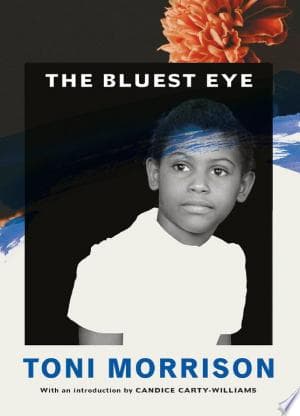
The Bluest Eye cover
Archivist's Choice

The Bluest Eye

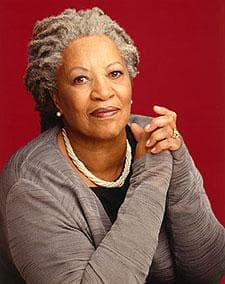
Toni Morrison (2014)

Genre

Literary Fiction / Historical Fiction

Reading Time

12 Minutes

Key Themes

See below

Track Your Reading

Sign in to track this book

In a 1940s Ohio town, a young Black girl's desperate yearning for blue eyes reveals the devastating, internalized racism of a society that equates whiteness with worth.

Synopsis

Set in Lorain, Ohio, in the aftermath of the Great Depression, "The Bluest Eye" tells the tragic story of Pecola Breedlove, a young Black girl who yearns for the beauty standards perpetuated by white American society. Believing that blue eyes and blonde hair will make her beautiful, loved, and visible, she prays for them constantly. The narrative is primarily told through the eyes of Claudia MacTeer, a childhood friend who, along with her sister Frieda, offers a contrasting perspective on beauty and self-worth. As Pecola endures profound neglect, abuse, and poverty within her own family and community, her desperate wish for blue eyes becomes a symbol of her longing for acceptance and escape from her painful reality. The novel explores the devastating impact of internalized racism and the destructive power of societal beauty ideals on a vulnerable young girl, culminating in a heartbreaking descent into madness as her dreams clash with the harsh realities of her existence.
Difficulty
Medium
Pacing
Slow
Mood
Somber, thought-provoking, melancholic, critical

Plot Summary

Autumn: The Marigolds Don't Bloom

The novel opens with an epigraph that mimics a children's primer but has a dark twist, immediately setting a subversive tone. Claudia MacTeer, one of the narrators, begins by recounting the autumn of 1941, focusing on the failure of marigolds in their garden. She connects this failure to the tragic events surrounding Pecola Breedlove. Claudia describes the Breedloves as a family living in poverty and ugliness. She describes Pecola's arrival to live with the MacTeers after her father, Cholly, tries to burn down their house. This period shows Pecola's quiet, almost invisible nature, and the MacTeer sisters' complicated feelings toward her, including their own internalized racism and cruelty.

Winter: Pecola's Arrival and the MacTeers

After Cholly Breedlove's violent outburst, Pecola goes to live with the MacTeer family. Claudia and Frieda, the MacTeer sisters, initially resent Pecola's presence, especially having to share their bed. They see Pecola's deep belief in her own ugliness, a belief the world around her reinforces. While the MacTeers offer a more stable and loving home than Pecola has known, they are not free from the societal pressures and racial prejudices that define beauty. They see Pecola's wish for blue eyes and blond hair, a desire that comes from her self-hatred and the constant exposure to white beauty standards in media and society.

Spring: Geraldine and Louis

Pecola, looking for comfort and a sense of belonging, wanders into the more affluent, 'respectable' Black neighborhood. She meets Geraldine, a light-skinned Black woman who keeps her home and appearance perfect, showing a strict adherence to middle-class white ideals. Geraldine's son, Louis, is a spoiled and cruel boy. When Pecola comes to their house for a drink, Louis's cat gets sick, and Geraldine immediately blames Pecola, calling her 'nasty' and sending her away. This event further confirms Pecola's view of herself as dirty and undesirable, especially compared to the perceived purity and beauty of light-skinned Black people.

Summer: Soaphead Church and the Blue Eyes

Driven by her wish for blue eyes, Pecola visits Soaphead Church, a self-proclaimed 'conjurer' or 'spiritualist' who is actually a disillusioned, perverse mulatto man. Pecola believes he can grant her wish. Soaphead, troubled by Pecola's innocence and suffering, struggles with how to respond. He eventually creates a cruel 'miracle': he tells Pecola to kill a stray dog, believing that if she succeeds, she will gain blue eyes. He rationalizes this as a way to give her false hope, an illusion that might temporarily ease her pain, though it ultimately contributes to her mental decline.

The History of Cholly Breedlove

Morrison provides a detailed flashback into Cholly Breedlove's life, showing a history of abandonment, poverty, and humiliation. Cholly was abandoned as an infant, raised by his great-aunt, and had a traumatic sexual initiation when white hunters caught him with a girl. This public shaming and the hunters' cruelty leave a lasting mark on him, leading to deep anger and self-loathing. His marriage to Pauline is full of conflict and bitterness, as both carry their own wounds and societal pressures, leading to a cycle of abuse.

The History of Pauline Breedlove

Pauline Breedlove's backstory also shows a life shaped by loneliness, a clubfoot, and an early wish for beauty and acceptance. Moving north from the South, she finds comfort and belonging in the escapism of movies, internalizing their white beauty standards. She prefers white people and light-skinned Black people, while despising her own dark skin and Pecola's perceived ugliness. Her marriage to Cholly worsens, and she finds a sense of order and control in her job as a domestic servant for a white family, where she gives affection to the white child while neglecting her own.

The Rape of Pecola

In a horrific turn of events, Cholly Breedlove, drunk and overwhelmed by tenderness, rage, and his own unresolved trauma, rapes Pecola. This act is a culmination of his damaged mind and the societal pressures that have stripped him of his dignity. Pecola, already vulnerable and lacking self-worth, is further shattered by this violation. The rape results in Pecola's pregnancy, which isolates her further and pushes her deeper into her fragile mental state.

The MacTeers' Response and the Community's Judgment

Claudia and Frieda discover Pecola's pregnancy and are disturbed. Frieda tries to protect Pecola by telling their mother, who then confronts Cholly. The community's reaction to Pecola's pregnancy is negative and judgmental. Instead of offering support, they condemn Pecola, seeing her as an embodiment of their own fears and prejudices. The townspeople focus on the 'sin' and 'ugliness' of the situation, further ostracizing Pecola and reinforcing her belief that she is bad and deserves her fate. The MacTeer sisters, though young, feel the weight of this societal judgment.

The Baby's Death and Pecola's Descent

Pecola gives birth prematurely to a stillborn baby. The baby's death, along with the trauma of the rape and the relentless societal condemnation, pushes Pecola into irreversible madness. She begins to believe that she has been granted blue eyes, having imaginary conversations with an equally imaginary friend who confirms her newfound beauty. This delusion becomes her only coping mechanism, allowing her to escape the unbearable reality of her life. Her descent into insanity is a tragic consequence of the systematic destruction of her self-worth.

The Marigolds and the Blame

Claudia, now an adult, reflects on Pecola's fate, connecting it back to the marigolds that failed to bloom in the autumn of 1941. She and Frieda had planted the seeds, believing that if they grew, Pecola's baby would live. Their failure becomes a symbol of the community's collective failure to nurture and protect Pecola. Claudia realizes that Pecola's tragedy was not just due to her family's dysfunction but also the influence of a society that devalued Blackness and idealized white beauty. She concludes that the town, through its complicity and its adherence to destructive beauty standards, played a significant role in Pecola's destruction.

Principal Figures

Pecola Breedlove

The Protagonist

Pecola begins as a quiet, almost invisible child filled with self-loathing, and through a series of traumatic events, she completely withdraws into a delusion of possessing blue eyes, a final escape from an unbearable reality.

Claudia MacTeer

The Narrator/Supporting

Claudia starts as a resistant child who intuitively rejects white beauty standards and grows into an adult who understands and articulates the systemic nature of Pecola's destruction.

Frieda MacTeer

The Narrator/Supporting

Frieda evolves from a child who admires conventional beauty to one who prioritizes protection and justice for Pecola, demonstrating a developing moral compass.

Cholly Breedlove

The Antagonist

Cholly's life is a downward spiral from an abandoned child to a deeply damaged and abusive man, unable to break the cycle of trauma he perpetuates.

Pauline Breedlove

The Supporting/Antagonist

Pauline's arc shows a woman who attempts to escape her perceived ugliness through fantasy and assimilation, but ultimately becomes a perpetuator of the very neglect and self-hatred that destroys her daughter.

Soaphead Church

The Supporting

Soaphead Church remains largely static in his perverse intellectualism, but his interaction with Pecola reveals his capacity for both twisted manipulation and a strange, detached pity.

China, Poland, and Miss Marie (The Whores)

The Supporting

These characters remain consistent in their roles, providing a brief, unexpected sanctuary for Pecola without undergoing significant personal change.

Geraldine

The Supporting

Geraldine remains a static character, serving as an embodiment of internalized racism and class prejudice within the Black community.

Themes & Insights

The Destructive Power of White Beauty Standards

This is the central theme, showing how the idealization of white beauty (blue eyes, blond hair) psychologically devastates Black individuals, especially young Black girls. Pecola's wish for blue eyes is a direct result of a society that equates beauty with whiteness, leading to her self-hatred and madness. The novel argues that this standard is a tool of oppression that strips Black individuals of their self-worth and identity.

Quiet as it was, Pecola was not there. She was away, running in the fields, a winged horse, a winged girl, a winged dream. She was away with the blue eyes.

Narrator

Internalized Racism and Self-Hatred

The novel explores how external racism becomes internalized self-hatred within the Black community. Pecola's belief in her own ugliness, Pauline's preference for white children, and Geraldine's disdain for darker-skinned Black people all show this theme. Characters adopt the prejudices that oppress them, continuing a cycle of psychological violence. This theme highlights how racism not only comes from outside but is also absorbed and acted on by its victims.

Adults, older girls, shops, magazines, newspapers, movies, television, radio, had agreed that a black girl was not only not pretty but was ugly. Black ebonics. Ugly. Ugly. Ugly.

Narrator

The Nature of Ugliness and Beauty

Morrison challenges common ideas of beauty and ugliness, suggesting that true ugliness is not physical appearance but the societal forces that dehumanize and destroy individuals. Pecola is deemed 'ugly' by society, but the novel reveals the true ugliness in her father's cruelty, her mother's neglect, the community's judgment, and the racism that creates her self-hatred. The 'bluest eye' becomes a symbol of a twisted, unattainable ideal that leads to devastation.

Along with the idea of romantic love, she had acquired an education in the power of beauty. She had learned that adults regarded her as a nuisance not because she was bigger than they, but because she was ugly.

Narrator (about Pecola)

The Cycle of Trauma and Abuse

The novel shows how trauma and abuse pass down through generations. Cholly's violent acts come from his own history of abandonment and humiliation. Pauline's neglect comes from her own experiences of loneliness and the internalization of destructive ideals. Pecola, as a result, is a victim of this intergenerational cycle, suffering physical and psychological abuse that breaks her. The novel suggests that without intervention and a redefinition of values, these cycles are hard to break.

He was a man in love with his own pain, which he knew would never leave him. The pain was more familiar than anything else.

Narrator (about Cholly Breedlove)

Community and Complicity

While individual characters contribute to Pecola's downfall, the novel also implicates the broader community in her destruction. The townspeople's gossip, judgment, and failure to offer support or protection to Pecola show a collective complicity. Their adherence to societal norms, even destructive ones, prevents them from seeing Pecola's suffering or intervening. Claudia's adult narration places blame on the community for allowing Pecola to be destroyed, highlighting the responsibility of bystanders.

And Pecola. We had only to look at her to know she was ugly. It was as though all of us knew at once what we were waiting for. We had been waiting for someone to blame.

Claudia MacTeer

Plot Devices & Literary Techniques

Multiple Narrators

Claudia MacTeer's adult and childhood perspectives, interwoven with omniscient narration.

The novel employs multiple narrative voices. Claudia MacTeer narrates primarily from her adult perspective, reflecting on the past with wisdom and sorrow, while also providing glimpses of her childhood thoughts and experiences. This dual perspective offers both immediate, visceral reactions to events and a broader, analytical understanding of their significance. Additionally, an omniscient narrator provides crucial backstory for characters like Cholly and Pauline, offering context and psychological depth that Claudia, as a child, could not have known. This narrative structure allows for a comprehensive and multi-layered exploration of the characters and themes, preventing a simplistic interpretation of blame.

The Dick and Jane Primer

Subversion of a classic children's reader to highlight racial disparities.

Morrison uses the iconic 'Dick and Jane' primer, a symbol of idealized white American childhood, as an epigraph for each section of the novel. However, she gradually strips away punctuation and spacing, making the text increasingly distorted and nonsensical. This device immediately establishes a contrast between the idyllic, white-centric world presented in the primer and the harsh reality of Pecola's life. The breakdown of the primer's text mirrors the breakdown of Pecola's world and sanity, highlighting how the dominant cultural narrative excludes and harms those who don't fit its mold, rendering their experiences 'unreadable' or distorted.

Symbolism of Blue Eyes

The ultimate symbol of white beauty and Pecola's unattainable desire.

Blue eyes serve as the central and most potent symbol in the novel. For Pecola, they represent not just physical beauty, but also love, acceptance, and visibility – everything she believes she lacks. They are the ultimate signifier of whiteness and thus, of worth in a racist society. Her desperate longing for blue eyes drives her actions and ultimately leads to her delusion and madness. The 'bluest eye' is a tragic symbol of an impossible ideal, a destructive fantasy that consumes Pecola, illustrating the devastating psychological impact of internalized racism and societal pressures.

Symbolism of Marigolds

A natural motif representing growth, life, and the community's failure.

The marigolds, introduced in the opening and revisited at the end, serve as a significant symbolic motif. Claudia and Frieda plant them with the belief that if they bloom, Pecola's baby will live. Their failure to grow becomes a symbol of the community's collective inability to nurture and protect Pecola. The marigolds represent life, growth, and the possibility of hope, but their barrenness reflects the barrenness of compassion and understanding in the society that surrounds Pecola. They underscore the idea that Pecola's tragedy is not solely individual but a communal failure to foster life and beauty where it is most needed.

Critical analysis

Notable Quotes

Quiz

Test Your Knowledge

Ready to see how well you understood this book? Take our interactive quiz with 10 questions.

10
Questions
~5
Minutes
?
Best Score

Key Questions (FAQ)

'The Bluest Eye' tells the story of Pecola Breedlove, a young Black girl growing up in Ohio in the 1940s. She desperately wishes for blue eyes, believing that this will make her beautiful and loved in a society that equates beauty with whiteness.

About the author

Toni Morrison

Chloe Anthony Wofford Morrison, known as Toni Morrison, was an American novelist. Her first novel, The Bluest Eye, was published in 1970. The critically acclaimed Song of Solomon (1977) brought her national attention and won the National Book Critics Circle Award. In 1988, Morrison won the Pulitzer Prize for Beloved (1987); she was awarded the Nobel Prize in Literature in 1993.