“The blue helmet is a symbol of hope, but it's also a target.”
— Reflecting on the dual nature of UN peacekeeping missions.

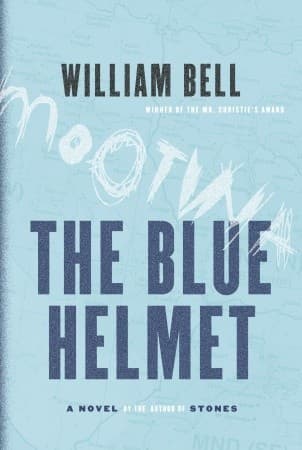
William Bell (2006)
Genre
Young Adult
Reading Time
180 min
Key Themes
See below
Sign in to track this book
After a botched gang initiation exiles him to a new town, a hardened teen finds unexpected solace and confronts the true cost of violence among the quirky patrons of his aunt's cafe.
Lee, a troubled teenager, wants to join the Tarantulas, the dominant gang in his neighborhood. His initiation task is to rob an auto supply store. With other gang members, Lee breaks into the store, but the robbery goes wrong when police arrive. Lee is caught and arrested. This incident follows a period of neglect after his mother's death from cancer and his father's emotional withdrawal and constant work. After the arrest, Lee's father, Mr. Chung, sends Lee to live with his Aunt Reena in New Toronto, hoping the change will keep him from gang life and trouble.
In New Toronto, Lee immediately notices the difference from his old life. His Aunt Reena lives above her eclectic business, Reena's Unique Café, which has diverse and unusual customers. Lee finds Reena overly cheerful and meddling. He gets a small, unfamiliar room and is told to help in the café. Lee feels deep resentment and alienation. He misses his old friends, despite their negative influence, and sees his new surroundings as a punishment. He resists Reena's attempts to connect, staying sullen and withdrawn, and secretly plans to escape back to his old life.
As Lee works in the café, he meets its regular patrons, a collection of eccentric and often marginalized people. Among them are Mr. Kim, a quiet, elderly Korean man who often reads, and Mr. Sid, a loud, one-legged war veteran who tells elaborate stories. Lee first thinks they are strange, but their presence and Reena's gentle encouragement gradually soften him. He starts to watch their interactions and finds himself drawn into their conversations, especially Mr. Sid's vivid tales, which make Lee curious about lives beyond his own.
One day, Lee sees Mr. Kim carrying a blue helmet. Reena explains it is a United Nations peacekeeper helmet, and Mr. Kim served in the Korean War. This interests Lee, as it connects to war stories he has heard from Mr. Sid. Mr. Kim, usually quiet, slowly begins to tell Lee about his experiences as a peacekeeper. He explains that the blue helmet symbolizes peace and protection, a contrast to the violence Lee associates with his gang past. This understanding of Mr. Kim's history begins to change Lee's ideas of strength and masculinity.
Despite their age difference and backgrounds, Lee and Mr. Kim become friends. Lee spends more time with Mr. Kim, listening to his quiet stories and watching his calm manner. Mr. Kim seems to understand Lee's struggles. One moment happens when Lee tells Mr. Kim about his mother's death and his feelings of abandonment. Mr. Kim, who has also experienced loss, responds with empathy, creating a safe space for Lee to express his grief. This shared vulnerability deepens their connection and helps Lee feel less alone.
As their friendship grows, Mr. Kim's health declines. He becomes frail and confused, suffering from what seems to be dementia. Lee, who once only cared about himself, now worries about Mr. Kim. He starts taking on more responsibility at the café and looking after Mr. Kim, making sure he eats and is comfortable. This change in Lee's behavior shows his maturation, as he moves beyond self-centeredness to show compassion and care for another person, reflecting his new environment's positive influence.
One evening, a group of young men, like Lee's old gang, harass Mr. Kim outside the café, trying to steal his blue helmet. Lee sees the attack and, despite his past involvement in violence, rushes to Mr. Kim's defense. He confronts the attackers, using his street smarts to protect his friend without using the extreme violence he once used. This incident is an important moment for Lee. He realizes his former life was empty and sees the difference between destructive gang violence and the protective, peaceful strength symbolized by Mr. Kim's blue helmet and his own actions.
Soon after the attack, Mr. Kim's health worsens, and he dies. Lee is saddened by his friend's death, feeling a deep loss that echoes his unresolved grief for his mother. However, this time, Lee has a support system in Aunt Reena and the café regulars. He attends Mr. Kim's funeral, where he thinks about the impact Mr. Kim had on his life. The blue helmet, now a symbol of their bond and Mr. Kim's quiet strength, reminds Lee of the lessons he learned about peace, responsibility, and human connection.
Lee's father, Mr. Chung, visits New Toronto to check on Lee. Expecting to find the same rebellious son, he is surprised by Lee's transformation. Lee is more mature, responsible, and engaged in his new life. He talks openly with his father about his experiences, his friendship with Mr. Kim, and his desire to stay in New Toronto with Aunt Reena. This conversation marks a turning point in their strained relationship, as Lee's father finally sees the positive changes in his son. Lee expresses his commitment to a peaceful, productive life, choosing to stay in New Toronto and continue working at the café, embracing his new family and community.
With Mr. Kim's passing and his father's understanding, Lee fully embraces his new life in New Toronto. He continues to work at Reena's Unique Café, no longer seeing it as a punishment but as a place of belonging and purpose. He interacts with the regulars, contributing to the café's atmosphere. The blue helmet, passed down to him by Mr. Kim, is a constant reminder of the lessons he learned and the values he now holds. Lee has found a new identity, rooted in community, compassion, and peace, far from the destructive path he was once on. He looks forward to a future where he can contribute positively to the world around him.
The Protagonist
Lee transforms from a rebellious, lost teenager involved in gang violence to a mature, empathetic young man who finds purpose and peace in a supportive community.
The Supporting
Reena remains a constant, nurturing force, her unwavering kindness facilitating Lee's transformation.
The Supporting
Mr. Kim serves as a catalyst for Lee's growth, his gentle wisdom and the symbolism of his past guiding Lee towards a path of peace before his eventual passing.
The Supporting
Mr. Sid remains a consistent, vibrant part of the café's community, his stories offering a different perspective on life's adventures and challenges.
The Supporting
Mr. Chung moves from emotional detachment and frustration to a place of understanding and reconciliation with his son.
The Antagonist/Mentioned
The Tarantulas serve as the initial negative influence that Lee eventually rejects, their presence representing the old life he leaves behind.
The Mentioned
Her memory serves as a foundational element of Lee's emotional landscape, and his eventual processing of her loss is key to his healing.
Lee's journey is about discovering who he is outside of the gang identity he sought. He first defines himself by the Tarantulas and his resentment, but in New Toronto, he learns to value empathy, community, and responsibility. His interactions with Mr. Kim and the café regulars, and his actions defending Mr. Kim, make him re-evaluate his values and form a new, more peaceful identity. He moves from being a 'gang member' to a compassionate individual who finds his place through genuine connection.
“He didn't want to be a Tarantula anymore. He just wanted to be Lee.”
The book contrasts the destructive, empty violence of gang life with the quiet strength and protective nature of peace. Lee first thinks strength is aggression and dominance, as seen in the Tarantulas. However, through Mr. Kim's stories of being a UN peacekeeper and the blue helmet, Lee learns about a different kind of strength—one that involves protection, empathy, and preventing harm. His act of defending Mr. Kim without extreme violence is an important moment, showing his changed understanding.
“The blue helmet wasn't about fighting. It was about stopping the fighting, about helping people.”
Lee's first family relationships are broken; his mother is gone, and his father is emotionally absent. He seeks a sense of 'family' in the Tarantulas, but finds it to be a destructive illusion. In New Toronto, he finds a true sense of family and community with Aunt Reena and the diverse patrons of her café. This new community offers him support, guidance, and a sense of belonging he wanted, showing that family can be found in unexpected places and is built on mutual care and respect, not just blood ties.
“Reena's Unique Café was more than just a place to eat; it was a home for lost souls, and now, for Lee too.”
Lee's anger and rebellion come from his unresolved grief over his mother's death. His father's inability to cope with his own grief further isolates Lee. Moving to New Toronto and befriending Mr. Kim allows Lee to confront and process his sorrow. Mr. Kim, who also experienced loss, provides a safe place for Lee to express his pain. Lee's grief over Mr. Kim's death, though painful, is experienced in a supportive environment, allowing for healthier emotional processing and contributing to his overall healing and maturation.
“Sometimes, the biggest battles are fought inside, in the quiet places of the heart.”
A powerful symbol of peace, protection, and a different kind of strength.
The blue helmet, belonging to Mr. Kim, is the central symbolic object in the novel. Initially, it's just an old helmet, but as Lee learns of Mr. Kim's past as a UN peacekeeper, it transforms into a symbol of quiet courage, selflessness, and the pursuit of peace over violence. It directly contrasts with the aggressive symbols of gang life. It represents the alternative path Lee can take and the values he ultimately embraces. Its passing to Lee after Mr. Kim's death solidifies its role as a legacy and a guide for Lee's future choices.
A sanctuary and a microcosm of diverse, accepting community.
The café serves as both a physical setting and a symbolic space. It is Lee's new home, but more importantly, it's a sanctuary for a diverse group of individuals who find acceptance and community there. It acts as a crucible for Lee's transformation, exposing him to different life stories, fostering human connection, and providing a stable, nurturing environment. The café's 'uniqueness' reflects the value of individuality and the strength found in collective support, contrasting sharply with the conformity and destructive nature of gang affiliation.
Highlighting contrasting paths and definitions of strength.
The Tarantulas, representing aggressive, destructive, and selfish power, serve as a foil to Mr. Kim, who embodies quiet strength, peaceful service, and empathy. This contrast is crucial for Lee's development, as he is initially drawn to the Tarantulas' version of power. Through his relationship with Mr. Kim and the symbolism of the blue helmet, Lee learns to distinguish between true strength and destructive aggression, ultimately choosing the path represented by Mr. Kim. This literary device clearly illustrates the moral and emotional choices Lee must make.
Lee's forced relocation initiates a profound internal transformation.
Lee's physical journey from his old neighborhood to New Toronto directly mirrors his emotional and psychological journey. The change of scenery forces him out of his comfort zone and away from negative influences, creating the necessary space for introspection and growth. His initial resistance to his new surroundings gradually gives way to acceptance and eventually, active engagement and belonging. This dual journey highlights how external circumstances can catalyze internal change, leading to self-discovery and a new direction in life.
“The blue helmet is a symbol of hope, but it's also a target.”
— Reflecting on the dual nature of UN peacekeeping missions.
“Sometimes the hardest battles are the ones you fight within yourself.”
— A character grappling with personal trauma and moral dilemmas.
“In war, there are no winners, only survivors.”
— Observing the aftermath of a violent conflict.
“You don't have to be a hero to make a difference.”
— Encouraging small acts of kindness in a chaotic environment.
“The world is a complicated place, and sometimes the good guys wear blue.”
— Discussing the role of UN peacekeepers in global politics.
“Fear is a constant companion in a war zone, but so is courage.”
— Describing the emotional state of soldiers and civilians.
“Every life lost is a story untold.”
— Mourning the casualties of conflict.
“Peace is not just the absence of war; it's the presence of justice.”
— Philosophizing about the true meaning of peace.
“In the silence between gunshots, you can hear the heartbeat of a nation.”
— Capturing a moment of calm in a war-torn area.
“We are all connected by our shared humanity, even in the darkest times.”
— A message of unity amidst division and violence.
“The weight of a blue helmet is more than just physical; it's the weight of responsibility.”
— Reflecting on the burdens carried by peacekeepers.
“Sometimes, the bravest thing you can do is to walk away.”
— Advising on choosing peace over escalation.
“History is written by the victors, but it's felt by the survivors.”
— Commenting on the lasting impact of conflict on ordinary people.
“In the eyes of a child, you can see the future of the world.”
— Observing the innocence and potential in young victims of war.
Ready to see how well you understood this book? Take our interactive quiz with 10 questions.