“Poor girl, what a life you've had. It's a wonder you're not a raving maniac.”
— Dr. Trent's blunt assessment of Valancy's life.

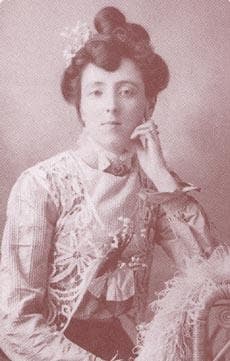
L.M. Montgomery (1926)
Genre
Historical Fiction / Young Adult / Romance
Reading Time
270 min
Key Themes
See below
Sign in to track this book
A spinster trapped by her demanding family finds liberation and unexpected love after a life-altering diagnosis propels her to chase the fantastical 'Blue Castle' of her dreams.
Valancy Stirling, known to her family as 'Doss,' is a 29-year-old unmarried woman living in the oppressive household of her mother, Mrs. Frederick Stirling, and her Aunt Isabel in the fictional town of Deerwood, Ontario. Her life is controlled by her large, wealthy, and highly conventional Stirling family, who constantly remind her of her perceived failings, particularly her lack of beauty and a husband. Valancy finds solace only in her secret daydreams of a 'Blue Castle' – a place of beauty and freedom – and in the forbidden nature books of John Foster, which she keeps hidden. She is considered a meek and insignificant member of the family, often overlooked and criticized, leading her to internalize a sense of worthlessness.
One day, Valancy experiences a severe chest pain and visits Dr. Trent, a new doctor in town. To her astonishment, Dr. Trent informs her that she has a serious heart condition and has only about a year to live. This news, instead of crushing her, frees Valancy. Realizing she has nothing left to lose, she decides to live the remaining time on her own terms. She immediately begins to defy her family's expectations, speaking her mind, wearing clothes she likes, and refusing to participate in the tedious family rituals she despises. Her family is bewildered and attributes her sudden change to mental instability, even considering having her institutionalized.
Among Valancy's acts of rebellion is her decision to visit Cissy Gay, a young woman from a poorer background who is dying of tuberculosis and neglected by her own family and the Stirlings. Valancy, moved by Cissy's situation, offers to care for her in her final days. This decision shocks her family even further, as Cissy is considered 'common.' Valancy moves out of the Stirling mansion and into Cissy's small, dilapidated cottage. Here, for the first time, Valancy experiences genuine independence and the satisfaction of being useful and kind. She finds a sense of peace and purpose in nursing Cissy, despite the humble surroundings.
While caring for Cissy, Valancy encounters Barney Snaith, the local 'bad boy' and outcast, who lives alone on a secluded island and is rumored to be a drunkard and a ne'er-do-well. Barney visits Cissy and Valancy, bringing them gifts and offering help. One evening, Barney proposes a marriage of convenience to Valancy, explaining that he needs a housekeeper and she needs a place to live after Cissy's death. Valancy, having nothing to lose and finding Barney surprisingly kind and unconventional, accepts. They marry quietly, keeping the union a secret from her family, who would undoubtedly be horrified by her choice.
After Cissy's death, Valancy moves to Barney's isolated cabin on the island in Lake Mistawis. To her delight, she finds the cabin charming and the island a haven of natural beauty, far removed from the stifling world of Deerwood. Barney, despite his public reputation, proves to be a thoughtful, intelligent, and respectful companion. They establish a comfortable routine, with Valancy managing the household and finding joy in her freedom and the picturesque surroundings. She begins to fall in love with Barney, appreciating his quiet strength and their shared love for nature and unconventional living. However, she remains uncertain of his true feelings for her.
Eventually, the Stirling family discovers Valancy's marriage to Barney Snaith. They are utterly scandalized and outraged, seeing it as the ultimate disgrace. Her mother, aunts, and cousins descend upon the island, attempting to 'rescue' Valancy and convince her to annul the marriage. Valancy, however, stands firm, asserting her happiness and independence. Her newfound confidence and defiance shock her family, who are unable to comprehend her choices. They leave in a huff, convinced Valancy has lost her mind, but Valancy remains unfazed, choosing her own happiness over their approval.
One day, Valancy discovers a letter addressed to 'John Foster' among Barney's belongings. She realizes that Barney Snaith is John Foster, the nature writer whose books she admired and whose identity had been a mystery. She also finds a copy of their marriage agreement, which states that Barney would pay her a substantial sum of money if she stayed with him for a year. Feeling betrayed and believing that Barney married her out of pity or as a charitable act, Valancy confronts him. Hurt and humiliated, she decides to leave the island and return to her family, believing their marriage was a sham.
Valancy returns to her mother's house in Deerwood, but her experience on the island has fundamentally changed her. She is no longer the meek 'Doss' of old. Despite her family's attempts to reassert control and make her conform, Valancy maintains her independent spirit, speaking her mind and refusing to be silenced. She finds the stifling atmosphere unbearable but refuses to let it break her. Her family, still bewildered by her transformation, finds her even more incomprehensible than before, but Valancy holds onto the self-respect she gained.
While back in Deerwood, Valancy encounters Dr. Trent again. He apologizes, explaining that the lab results for her heart condition were mixed up with another patient's. Valancy is not dying; she is perfectly healthy. This news is a shock, but also a relief. The revelation means she has a long life ahead of her, and the freedom she had found was not just for a year but for a lifetime. The initial despair of the misdiagnosis had ironically been the catalyst for her liberation, allowing her to break free from her oppressive life.
Soon after, Barney Snaith comes to Deerwood to find Valancy. He explains that he had originally offered the marriage of convenience because he genuinely admired her spirit and wanted to help her escape her family, and the financial clause was merely a way to ensure she wouldn't feel trapped or indebted. He confesses that he had fallen deeply in love with her on the island and had been heartbroken when she left. Valancy, now understanding the full truth and realizing her own deep love for him, accepts his apology and his declaration. They reconcile, looking forward to a future together, free from the constraints of society and full of genuine affection.
The Protagonist
Valancy transforms from a timid, repressed 'old maid' into a self-assured, independent woman who finds love and true happiness on her own terms.
The Love Interest / Supporting
Barney reveals his true identity and intentions, moving from an enigmatic figure to Valancy's loving and devoted husband.
The Antagonist / Supporting
Remains largely unchanged, representing the static, oppressive forces Valancy rebels against.
The Antagonist / Supporting
Remains a static character, serving as a symbol of the societal pressures Valancy escapes.
The Supporting
His initial mistake inadvertently sets Valancy's journey in motion, and his later correction confirms her future.
The Supporting
Her illness and death serve as a catalyst for Valancy's initial escape from her family.
The Supporting
His death and inheritance serve as a minor catalyst for Valancy's independence, though less impactful than the diagnosis.
The Supporting
Remains a static character, representing the societal ideal Valancy rejects.
The novel explores Valancy's journey from a repressed, undervalued individual to a self-assured woman who embraces her true identity. Her terminal diagnosis acts as a catalyst, freeing her from societal expectations and allowing her to shed the 'Doss' persona imposed by her family. Through her rebellion, her care for Cissy, and her life with Barney, Valancy discovers her own strength, desires, and the kind of life that genuinely fulfills her. She learns to define herself, rather than be defined by others.
“It was as if she had been born again, into a world where she could be herself, without fear of criticism or ridicule.”
A central theme is the stark contrast between the stifling conformity demanded by the Stirling family and the freedom Valancy craves and ultimately achieves. The Stirling household represents rigid social norms, judgment, and emotional repression, where individual expression is crushed. Valancy's rebellion, from speaking her mind to marrying an outcast and living on an island, symbolizes her escape from these chains. Her 'Blue Castle' daydreams are a metaphor for this desired freedom, which she eventually finds in her unconventional life with Barney, away from the judgmental eyes of society.
“She was free, free, free. She would never again be afraid of them. She would never again be 'Doss'.”
The book challenges traditional notions of love and marriage, showing how Valancy finds genuine affection and partnership in an unconventional relationship. Her marriage to Barney Snaith, an outcast and rumored 'bad boy,' is initially one of convenience but blossoms into deep, authentic love. Their shared appreciation for nature, quiet understanding, and mutual respect form the foundation of their bond, contrasting sharply with the superficial, status-driven marriages expected by the Stirling family. Their relationship proves that love can be found outside societal norms and expectations.
“She had found her Blue Castle... and it was not a castle, but a little cabin on an island, and her prince was a man with a bad name.”
Valancy's vivid imagination, particularly her 'Blue Castle' daydreams, is a coping mechanism and a predictor of her desired reality. Her love for nature, fostered by the forbidden books of John Foster (Barney Snaith), is another escape from her drab existence. The island, with its beauty and solitude, becomes the physical manifestation of her 'Blue Castle' and a sanctuary where she can truly be herself. Nature provides her with solace, inspiration, and a deep connection to her authentic self, away from the artificiality of society.
“The Blue Castle was her refuge, her secret garden, where she could be what she really was.”
Valancy's journey shows the power of courage in the face of adversity and societal pressure. Her terminal diagnosis, though false, empowers her to rebel against her oppressive family and societal expectations. She finds the courage to speak her mind, leave her home, care for Cissy, and marry Barney, all acts deemed scandalous by her family. Her rebellion is not born of spite, but of a newfound conviction to live authentically, demonstrating that true courage is choosing one's own path despite fear and judgment.
“It was a wonderful sensation, that of being afraid of no one. It was worth dying for.”
A medical error that acts as the primary catalyst for Valancy's transformation.
Dr. Trent's incorrect diagnosis of Valancy's terminal heart condition serves as the pivotal inciting incident in the novel. This seemingly devastating news paradoxically liberates Valancy from the fear of her family's judgment and social expectations. Believing she has nothing to lose and only a year to live, she sheds her timid persona and begins to live authentically, speaking her mind, making independent choices, and pursuing happiness. The eventual revelation that the diagnosis was a mistake allows her to embrace her new, free life with the knowledge that it will endure.
Valancy's imaginary sanctuary, symbolizing her deepest desires for beauty, freedom, and love.
The 'Blue Castle' is Valancy's vivid mental construct, a fantastical place where all her dreams come true and she is free to be her true self. It functions as a powerful symbol of her repressed desires for beauty, independence, and romantic fulfillment. Initially, it is a purely internal escape, but as the plot progresses, elements of her 'Blue Castle' manifest in her real life: the beauty of Barney's island, her freedom from the Stirlings, and her genuine love with Barney. It represents the idealized life she yearns for, which she eventually finds in an unexpected, real-world form.
Forbidden nature books that provide Valancy with an intellectual and spiritual escape, and connect her to Barney.
The nature books written by the mysterious 'John Foster' are Valancy's secret literary pleasure, providing her with an escape from her dreary life and resonating with her inner love for beauty and the natural world. These books symbolize her hidden intellectual and spiritual life, forbidden by her conventional family. The revelation that Barney Snaith is John Foster creates a profound connection between them, demonstrating their shared values and understanding before their relationship fully develops, and solidifying their intellectual and emotional bond.
A secluded setting that serves as a physical manifestation of Valancy's 'Blue Castle' and a sanctuary for her new life.
Barney Snaith's cabin on the isolated island in Lake Mistawis is more than just a dwelling; it functions as a physical representation of Valancy's 'Blue Castle' and a sanctuary for her newfound freedom. Removed from the judgmental eyes of Deerwood society and the suffocating influence of the Stirling family, the island provides a space where Valancy can truly be herself. Its natural beauty, simplicity, and solitude allow her to flourish, fostering her independence and her burgeoning love for Barney. It is a haven where she can live authentically and without pretense.
A collective antagonist representing societal repression and conventionalism.
The entire Stirling family, particularly Valancy's mother and Aunt Isabel, functions as a collective antagonist. They embody the rigid social conventions, judgmental attitudes, and emotional repression that Valancy must escape to find happiness. Their constant criticism, obsession with appearances, and inability to understand Valancy's true nature create the suffocating environment from which she rebels. They serve as a foil to Valancy's desire for authenticity and freedom, highlighting the oppressive forces she overcomes.
“Poor girl, what a life you've had. It's a wonder you're not a raving maniac.”
— Dr. Trent's blunt assessment of Valancy's life.
“I'm going to have a year of living, for the first time in my life. I'm going to do what I like, and say what I like, and think what I like.”
— Valancy's declaration of independence after her diagnosis.
“It was as if she had been born anew, a free soul, with power to choose her own way, and not be driven by the whims of others.”
— Valancy's feeling of liberation after defying her family.
“The only way to get rid of a temptation is to yield to it. Resist it, and your soul grows sick with longing for the things it has forbidden to itself.”
— Valancy reflecting on her past suppressed desires.
“She had always known that her Blue Castle was a castle in the air, but she had never known that it could be built on earth.”
— Valancy realizing her dreams could become reality.
“I'd rather be a living atom in the world than a dead star in the firmament.”
— Valancy's embrace of life and experience over a passive existence.
“It's a strange thing, but a man's heart can be won by kindness as much as by beauty.”
— Valancy's observation about Barney Snaith.
“She felt as if she had come home, not to a place, but to a person.”
— Valancy's feeling of belonging with Barney Snaith.
“Don't be afraid to be yourself. It's the only way to be happy.”
— Valancy's new philosophy for life.
“There are some things in life you have to do yourself. You can't expect other people to do them for you.”
— Valancy's realization about taking control of her own destiny.
“She had found her own soul, and it was a soul that loved laughter and beauty and freedom.”
— Valancy's discovery of her true self.
“Life is a good thing, a very good thing, if you know how to live it.”
— Valancy's newfound appreciation for life.
“The greatest prison people live in is the fear of what other people think.”
— Valancy's liberation from societal expectations.
“She had thought that love was a beautiful, ethereal thing, but she found it was a very practical thing as well.”
— Valancy's understanding of the realities of love.
Ready to see how well you understood this book? Take our interactive quiz with 10 questions.
Biography coming soon.







