“We are all in the same boat, in a stormy sea, and we owe each other a terrible loyalty.”
— A reflection on human solidarity in the face of suffering and life's challenges.

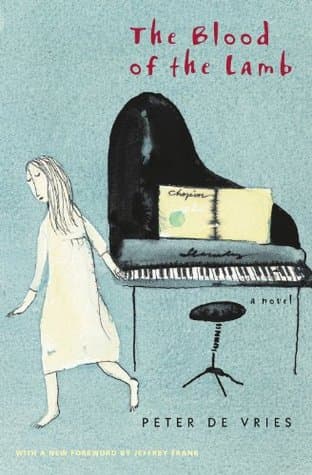
Peter De Vries (1961)
Genre
Literary Fiction / Spirituality / Young Adult
Reading Time
300 min
Key Themes
See below
Sign in to track this book
A man’s faith and family crumble through a series of losses, ending in his daughter’s death, forcing him to confront suffering and divine indifference.
Don Wanderhop begins his story by describing his childhood in a Dutch Calvinist family in Chicago during the 1930s. He shows the strict religious environment, where sin and divine judgment felt ever-present. His father, a milkman, embodies the family’s deep faith, while his mother struggles with the rules. Don’s early life involves tension between his strict upbringing and his growing awareness of the outside world. He shares stories of his brother, Louie, who, despite his own faith, introduces Don to small rebellions against their strict rules, subtly challenging Don’s understanding of sin and salvation. This period sets up the spiritual foundation from which Don will later move away.
A key event in Don’s youth is the death of his older brother, Louie, from a sudden illness. Louie’s death shatters Don’s innocent belief in a kind God. He struggles with the injustice of a loving God taking someone so young and good, especially within the predestination framework taught by his church. This tragedy plants the first significant seeds of doubt in Don’s Calvinist faith. He begins to question the random nature of suffering and God’s seeming indifference, a struggle that will shape much of his adult life. Losing Louie is a deep trauma that starts Don’s intellectual and spiritual rebellion against his upbringing.
As Don grows up, he moves away from his Calvinist background, embracing an intellectual and academic life. He attends college, where he encounters philosophy, literature, and secular thought, which further weaken his religious beliefs. Don develops a sharp wit and a sarcastic view of the world, often using humor as a defense and a way to criticize perceived absurdities. He becomes a writer and editor, working in intellectual circles largely separate from traditional religious belief. Despite his outward skepticism, his Calvinist upbringing and its questions about suffering and meaning continue to resonate within him, creating a complex inner world.
Don meets and marries Carol, a woman who, though not as strictly religious as his family, has a quiet, more intuitive spirituality. Carol represents a softer, more accepting approach to life’s mysteries, contrasting with Don’s intellectual skepticism and his lingering resentment toward his childhood faith. Their relationship has deep affection but also subtle tension from their different worldviews. Carol’s gentle nature and capacity for simple joy balance Don’s often cynical outlook. Their marriage brings a period of relative stability and happiness, even as Don continues to struggle with existential questions and shadows from his past.
Don and Carol celebrate their daughter, Sharon’s, birth. Sharon’s arrival brings great joy and a new dimension to Don’s life. He adores his daughter, finding a deep, unconditional love that temporarily overshadows his philosophical struggles. Sharon is a smart, spirited child, full of life and curiosity. Her presence grounds Don in the present, offering purpose and beauty beyond his intellectual worries. The family enjoys a period of domestic happiness, with Sharon at the center of their world, representing innocence and hope against Don’s internal conflicts.
The family’s happiness ends when Sharon is diagnosed with a severe, degenerative illness, later found to be leukemia. The news devastates Don and Carol, leading to hospital visits, treatments, and the painful realization of their daughter’s worsening condition. Don, who had long stopped traditional prayer, faces the ultimate test of his worldview. His intellectual defenses begin to crumble against such raw, unexplained suffering. The diagnosis forces him to revisit his relationship with faith, not from conviction, but from a desperate hope for a miracle for his daughter.
As Sharon’s illness gets worse, Don falls into deep despair. He rages against the injustice, questioning existence and the idea of a loving God. His intellectual wit turns bitter, and his humor becomes a shield against unbearable pain. He reads widely, exploring philosophy and theology, desperately seeking an explanation or framework to make sense of his daughter’s suffering. He revisits his Calvinist upbringing, not to embrace it, but to rage against its doctrines of predestination and arbitrary suffering. Don’s search for meaning becomes a frantic, agonizing quest for any shred of hope or understanding.
In contrast to Don’s turmoil, Carol faces Sharon’s illness with quiet, dignified grief and a resilient, though fragile, acceptance. While she too suffers greatly, her spirituality, less rigid than Don’s upbringing, allows her to find moments of peace and connection. She focuses on caring for Sharon, cherishing every moment, and finding comfort in simple acts of love and tenderness. Her approach shows a different way of confronting tragedy, one rooted in maternal love and a more intuitive, less analytical understanding of the world. Carol’s strength and her ability to find beauty amidst pain contrast with Don’s intellectual anguish.
Sharon’s condition worsens, leading to her death. Don describes her final agonizing days in vivid, heartbreaking detail, showing the unbearable pain of watching his child die. Her death is the final blow, shattering Don’s world and leaving him with a vast, empty space. The scene of her passing is shown with stark realism and deep emotional weight. Don and Carol are left to navigate their grief, each in their own way. Sharon’s death is the novel’s central tragedy, the 'blood of the lamb' sacrificed, forcing Don to confront the ultimate questions of faith, suffering, and the meaning of life without easy answers.
After Sharon’s death, Don is consumed by grief, rage, and a desperate search for meaning. He engages in internal monologues and talks to the reader, struggling with theological and philosophical questions. He rails against God, fate, and existence’s absurdity, yet simultaneously longs for some transcendence or understanding. He explores various paths, from a brief thought of a monastery to a deep engagement with humanistic thought, but finds no clear answers. His journey shows the human need to make sense of suffering, even when sense is absent, and to find a way to live on despite unbearable loss.
Following Sharon’s death, Don continues his inner struggle with faith and doubt. He thinks about life’s irony and absurdity, finding dark humor in the contrast between deep tragedy and the mundane. He revisits his Calvinist past, not to reclaim it, but to understand its lasting effect on his mind and his view of suffering. He acknowledges the human need for belief, even as he cannot fully accept it. His thoughts show an honest, intellectual rigor, as he grapples with the unanswerable questions his daughter’s death brought, finding a complex, nuanced stance that accepts both pain and life’s enduring, if fragile, beauty.
The Protagonist
Don transforms from a cynical intellectual into a man utterly broken by grief, yet he ultimately finds a way to articulate his pain and continue his search for meaning, even without definitive answers.
The Supporting
Carol maintains her gentle strength and intuitive faith, enduring immense grief with grace and providing a source of stability amidst chaos.
The Supporting
Sharon's brief life is marked by her joyful spirit, which is cruelly cut short by illness, becoming the 'lamb' whose sacrifice profoundly impacts her father.
The Supporting
Louie's arc is brief but impactful, serving as an early catalyst for Don's questioning of faith through his untimely death.
The Supporting
Remains a static symbol of unwavering Calvinist faith, a foundational influence against which Don rebels.
The Supporting
Remains a static figure, representing the softer, domestic side of Don's religious upbringing.
Loss and grief are central to the novel. Don’s life has several losses: his brother Louie, his faith, his wife, and his daughter Sharon. The novel explores the psychological and emotional impact of these losses, especially the agonizing grief over Sharon’s death. Don’s journey through despair, rage, and a desperate search for meaning after Sharon’s illness and death forms the core of the story, showing how grief can destroy and transform. It highlights the human struggle to cope with the unexplainable pain of losing a loved one.
“How can a man be a man without a child?”
This theme is key to Don’s character. Raised in strict Dutch Calvinism, Don gradually sheds his religious beliefs as an adult, embracing intellectual skepticism. However, life’s tragedies, especially Sharon’s illness, force him to confront his abandoned faith, not to reclaim it, but to grapple with the existential questions it once tried to answer. The novel explores the tension between the comfort and cruelty of religious dogma, the intellectual appeal of atheism, and the human desire for transcendence when facing suffering. Don’s struggle is not about finding God, but about understanding the human condition in a world where God might be absent or indifferent.
“I had lost the faith, but I had not lost the habit of faith.”
De Vries directly addresses the seemingly random and unjust nature of suffering, particularly that of innocent children. Sharon’s illness and death show life’s inherent absurdity, challenging any idea of a kind, just God or a rational universe. Don’s rage targets the unfairness, the lack of clear meaning or purpose behind such deep pain. The novel suggests that while humans desperately seek meaning in suffering, often there is none, and the only response is to endure and to rage against the injustice.
“The lamb, the blood of the lamb. It was Sharon. It was always Sharon.”
Despite its tragic subject, the novel includes De Vries’s characteristic wit and dark humor. Humor serves many purposes: as a defense for Don against overwhelming pain, a way to criticize societal and religious absurdities, and a way to highlight life’s incongruities. Even in deep despair, Don finds moments for sarcastic observation, showing human resilience and how humor can exist with, or even come from, deep grief. It shows the author’s belief that even in tragedy, there are elements of the comic.
“The trouble with God is that he's a lot like a man.”
The intense, unconditional love of a parent for their child is a strong underlying theme. Don’s love for Sharon is his purest and deepest connection, making her loss utterly devastating. The novel explores the depths of this love, the joy it brings, and the unimaginable pain when that love is threatened or broken. Both Don and Carol’s actions throughout Sharon’s illness are driven by this boundless devotion, showing the unique bond between parent and child and the willingness to sacrifice everything for their well-being.
“The child is the very center of the universe, and when that center collapses, so does everything else.”
Don Wanderhop narrates the story directly to the reader, creating intimacy and immediacy.
The novel is told in the first person by Don Wanderhop, who frequently breaks the fourth wall to address the reader directly. This device creates a deeply intimate and personal tone, drawing the reader into Don's internal struggles and grief. It allows for a more immediate sharing of his thoughts, philosophical musings, and emotional turmoil, making the reader a confidante in his journey. This direct address enhances the autobiographical feel of the novel and emphasizes the universal nature of his questions about suffering and faith.
The plot closely mirrors tragic events from the author's own life.
The novel is heavily imbued with autobiographical elements, most notably the death of Don's daughter, which directly parallels Peter De Vries's own experience of losing his daughter to leukemia. This device lends immense emotional weight and authenticity to the narrative. The real-life foundation of the tragedy makes Don's grief, philosophical struggles, and raw anger feel deeply genuine and provides a powerful, unflinching exploration of personal suffering. It blurs the line between fiction and memoir, inviting a deeper empathy from the reader.
The use of ironic and paradoxical situations and statements to highlight life's absurdities.
De Vries frequently employs irony and paradox, often through Don's internal monologue and dialogue. This device highlights the absurdities of life, particularly in the face of profound suffering. For instance, Don's intellectual skepticism often clashes with his desperate, almost prayer-like pleas for his daughter's recovery, or his Calvinist upbringing's emphasis on a loving God is juxtaposed with the arbitrary cruelty of fate. This literary technique underscores the complex, often contradictory nature of human experience and belief, especially when confronted with tragedy.
Frequent references to biblical stories and Calvinist theology.
The novel is rich with religious allusions, particularly to biblical narratives and the doctrines of Calvinism, such as predestination and original sin. These allusions serve to frame Don's internal conflict, as he constantly grapples with the faith he abandoned. The title itself, 'The Blood of the Lamb,' is a direct biblical reference, transforming Sharon into a sacrificial figure and highlighting the profound, almost theological, nature of her suffering in Don's mind. These references provide a constant backdrop against which Don's personal tragedy unfolds and is interpreted.
“We are all in the same boat, in a stormy sea, and we owe each other a terrible loyalty.”
— A reflection on human solidarity in the face of suffering and life's challenges.
“The world is a hell of a place, but it's all we've got.”
— A pragmatic and somewhat cynical acceptance of life's imperfections.
“Faith is not a matter of the intellect, but of the will.”
— Exploring the nature of faith beyond mere rational understanding.
“God is not so much a Person as He is a Process.”
— A theological musing on the dynamic and evolving nature of the divine.
“The trouble with life is that it's so daily.”
— A humorous observation on the mundane and repetitive aspects of existence.
“To be human is to be a question.”
— Reflecting on the inherent questioning and searching nature of humanity.
“Sorrow is a kind of spiritual metabolism.”
— Suggesting that grief and pain are essential for spiritual growth and processing.
“We live in an age of faith, all right, but it's faith in the lack of faith.”
— A commentary on modern skepticism and the absence of traditional belief systems.
“Humor is a prelude to faith and laughter a confession of it.”
— Connecting humor and laughter to deeper spiritual understanding and acceptance.
“The final wisdom is to know that one knows nothing.”
— An echo of Socratic wisdom, emphasizing humility in knowledge.
“Grief is a private country, but it needs a passport.”
— Illustrating the personal nature of grief while acknowledging the need for external validation or expression.
“The greatest tragedy is not death, but life without meaning.”
— Pondering the importance of purpose and significance in human existence.
“To believe in God is to know that the best is yet to be.”
— A hopeful perspective on faith and the future, despite present difficulties.
Ready to see how well you understood this book? Take our interactive quiz with 10 questions.

Biography coming soon.







