“Children are not a consolation, they are a responsibility.”
— Iris reflects on her role as a mother and the societal expectations placed upon women.

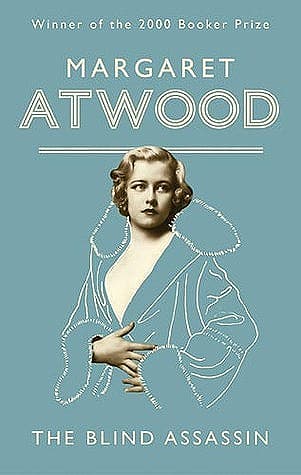
Margaret Atwood (2000)
Genre
Literary Fiction / Historical Fiction / Mystery / Science Fiction
Reading Time
15-20 hours
Key Themes
See below
Sign in to track this book
Decades after her sister's mysterious death, an older woman uncovers a complex story of forbidden love, family secrets, and a science fiction novel-within-a-novel, revealing a truth more shocking than any fiction.
The novel begins with Iris Chase Griffen saying, 'Ten days after the war ended, my sister drove a car off the bridge.' This is Laura Chase, Iris's younger sister, who died in 1945. Her death was officially ruled an accident. Now in her eighties, Iris lives alone, frail and mostly ignored by her granddaughter, Sabrina. Haunted by memories and wanting to tell the truth before she dies, Iris starts writing her memoirs. She aims to reveal the truth about Laura's life and the reasons for her tragic end. She describes her childhood in Port Ticonderoga, Ontario, focusing on her relationship with Laura and their privileged but isolated upbringing.
Iris recounts her early life with Laura at Avilion, their family's decaying estate in Port Ticonderoga. Their mother died young, leaving them with their emotionally distant father, Richard Chase, who owns a button factory. The girls are mostly left to themselves, forming a close bond. Their childhood includes an early awareness of social class and their family's declining wealth. They see poverty in the town and the contrast with their sheltered life. This gives Iris a sense of duty, while Laura remains more imaginative and sensitive, often escaping into her thoughts.
As the Great Depression worsens, the Chase family's button factory faces financial trouble. Richard Chase, desperate to save his legacy and provide for his daughters, arranges Iris's marriage to Richard Griffen, a wealthy and powerful industrialist from Toronto, much older than Iris. This decision is presented to Iris as a duty, a sacrifice for the family. Iris, though worried and aware of Griffen's bad reputation, agrees, understanding her family's dire financial situation. This arranged marriage changes everything, ending Iris's childhood innocence and putting her into a world of adult compromises and political dealings.
Iris's marriage to Richard Griffen has no affection and is marked by his controlling behavior and many affairs, especially with his mistress, Alex Thomas. Iris is expected to fulfill her social duties as Mrs. Griffen but is otherwise isolated. She has a daughter, Aimee, but finds little comfort in her new life. Laura often visits, giving Iris her only real companionship. During these visits, Laura sees the oppressive atmosphere of the Griffen household and her sister's unhappiness, which deepens her own unease and rebellion against social expectations.
Throughout Iris's story, long parts from Laura Chase's controversial published novel, 'The Blind Assassin', appear. This embedded novel is a science fiction romance, telling of the secret affair between a wealthy, unnamed young woman and a socialist writer, Alex Thomas. Their meetings are passionate and secret, often in cheap hotels. During their encounters, the man tells the woman an elaborate, fantastical story about a planet called Zycron, where blind, mute children are used to operate dangerous machines, and a 'blind assassin' is a figure of myth and rebellion. The embedded novel's themes of forbidden love, social injustice, and escape reflect the larger story.
Laura's increasingly strange behavior and her outspoken, unconventional views make her a problem in conservative Griffen social circles. After a public incident, Richard Griffen uses his influence to have Laura institutionalized, supposedly for her own good, but mainly to protect his family's reputation. After her release, Laura is sent to live in a remote cottage, effectively exiled from Toronto society. This isolation, arranged by Richard and his sister, Winifred, is presented as a humane solution, but it further alienates Laura and deepens her sense of entrapment and despair, contributing to her eventual tragic end.
As World War II intensifies, the Griffen Button Factory switches to wartime production, making buttons for military uniforms. The factory sees a surge in profits, further strengthening Richard Griffen's power. However, labor disputes arise, leading to a violent strike. Iris, now more aware of social injustices, sees the harsh realities faced by the factory workers. The strike is brutally put down, showing the class divisions and the ruthless tactics used by industrialists like Richard Griffen to maintain control and profit, even at the cost of human lives.
In 1947, Richard Griffen's body is found in a sailboat, an apparent accident. His death leaves Iris a widow and free from the oppressive marriage. However, the circumstances of his death remain unclear, adding another layer of mystery to the family's history. Iris inherits a significant fortune, but also the burden of her husband's legacy and the unresolved tensions within the Griffen family. His death, while giving Iris some freedom, also leaves her responsible for managing the family's affairs and facing the truths she has long hidden.
Aimee, Iris's daughter, grows up burdened by the dysfunctional family and her parents' cold relationship. She struggles with mental instability, making poor choices in relationships and eventually being institutionalized. Iris tries to help her, but Aimee's condition worsens, and she dies in an asylum. Aimee's tragic life reflects the generational trauma and the destructive impact of the secrets and suppressions within the Chase and Griffen families. Her story shows the devastating results of a life without real love and emotional support.
As Iris continues her memoirs, she slowly reveals the true identity of Alex Thomas, the socialist writer from Laura's novel. Alex was a real person, a charismatic and intelligent activist whom both Iris and Laura met. He became Laura's lover; their forbidden affair mirrored the one in 'The Blind Assassin'. Iris eventually reveals that she, too, had a brief, passionate encounter with Alex, driven by a desperate need for connection and rebellion against her sterile marriage. This revelation complicates the narrative, suggesting a deeper, more intertwined relationship between the sisters and Alex than initially apparent.
The most shocking revelation comes near the end of Iris's memoirs: she, Iris, is the true author of the novel 'The Blind Assassin'. Laura, heartbroken and overwhelmed by her life, had only written the first sentence. Iris, after Laura's death, carefully completed the manuscript, basing the story on Laura's affair with Alex Thomas, but adding her own experiences and imagination. She published it under Laura's name as a tribute and a way to give Laura a voice she never had, while also hiding her own involvement and the scandalous truths it contained.
Iris describes the passionate and doomed affair between Laura and Alex Thomas. She explains that Richard Griffen discovered their relationship, which led to Alex's brutal beating and disappearance, arranged by Richard's men. Laura, devastated and pregnant with Alex's child, was forced to have an abortion and was then institutionalized. Iris clarifies that Laura's death was a suicide, an act of despair and defiance, driven by the loss of Alex and the child, and the crushing weight of her life. The car crash was a deliberate act, a final escape from her suffering.
Having revealed the full, painful truth of her and Laura's lives, Iris finishes her memoirs. She reflects on her choices, sacrifices, and deceptions. Her story is an attempt at both confession and justification, a way to reclaim her and Laura's stories from the official, sanitized versions. She leaves the manuscript for her granddaughter, Sabrina, hoping that the next generation will understand the complexities of their family history and the hidden struggles of the women within it. Iris finds some peace in finally telling her story, even as she faces her own death.
The Protagonist
From a seemingly conventional, dutiful wife, Iris transforms into a truth-teller, revealing her own agency and the suppressed passions that shaped her life and Laura's.
The Central Figure/Catalyst
Laura's arc is largely presented through Iris's memories, depicting her descent from a sensitive child to a tragically broken woman, ultimately finding a form of agency in her final act.
The Antagonist
Richard remains a static, oppressive force throughout the narrative, his power and ruthlessness driving much of the sisters' suffering.
The Supporting/Catalyst
Alex's arc is tragic, moving from a hopeful, rebellious idealist to a victim of political violence, ultimately becoming a symbol of lost love and freedom for the sisters.
The Supporting/Victim
Aimee's arc is one of decline, illustrating the devastating impact of her upbringing and the inability of those around her to truly help.
The Supporting/Antagonist
Winifred remains a static character, representing the unyielding social conservatism and control that the protagonists fight against.
The Supporting
Richard's arc is one of decline, from a factory owner to a man forced to make a painful sacrifice for his family, ultimately fading into the background.
The Mentioned
Sabrina has no significant arc within the narrative; she serves as a symbolic recipient of Iris's legacy.
The novel explores how stories are built, changed, and used to both show and hide truth. Iris's memoir rewrites history, correcting the official stories about Laura's death and the family's past. The embedded novel, 'The Blind Assassin,' further complicates this, as its authorship and meaning are constantly reinterpreted. This theme highlights how subjective memory is and how people need to create stories to understand life, even if those stories are partly made up or protect deeper, more painful truths. This is clear in Iris's careful crafting of her story, ending with the revelation that she, not Laura, wrote the controversial novel, showing her ultimate control over the family's legacy.
“A life is a story. I know that. A life is also a story about a story.”
The novel clearly shows the strict social classes and widespread gender oppression in early 20th-century Canada. Iris and Laura, despite their privileged background, are limited by their gender; their lives are dictated by men like Richard Griffen and the expectations of society. Iris's arranged marriage is an example of women being treated as goods to ensure financial stability. The exploitation of factory workers by Richard Griffen further highlights class differences. Both sisters struggle for control in a world that tries to control their bodies, minds, and voices, leading to rebellion, despair, and tragic outcomes.
“The women were not supposed to have any political opinions, or any opinions at all, come to that.”
Memory is not just a timeline of events but a complex, often painful process of dealing with past traumas. Iris's memoirs are a journey through her own hidden memories and her family's collective trauma. The secrets about Laura's death, Alex Thomas's fate, and the true author of 'The Blind Assassin' affect Aimee's mental health and Sabrina's distant relationship with Iris. The novel suggests that unresolved trauma, when ignored, continues to affect generations, appearing as various forms of suffering. Iris's writing is an attempt to break this cycle by facing the past directly.
“The past is a dissolve, a stain, a smudge, a blur, a faded photograph, an echo. But it is still there.”
At its core, the novel tells a story of deep love and devastating betrayal. The strong bond between Iris and Laura is central, marked by both deep affection and unspoken rivalries. The forbidden love between Laura and Alex Thomas causes much of the tragedy, leading to sacrifice and loss. Iris's own brief affair with Alex is an act of desperate longing and rebellion. Betrayals, both personal and systemic, fill the story: Richard Griffen's betrayal of his marriage vows and trust, society's betrayal of its vulnerable members, and the ultimate sacrifices made by the sisters for each other and for a sense of freedom. Each act of love is shadowed by the potential for deep hurt and loss.
“Love is a trap. When it's not a lie.”
Creating art, especially writing, works as both an escape from harsh realities and a form of resistance against oppression. For Laura, her early attempts at writing and her imaginative world offer comfort from her difficult life. For Iris, writing her memoirs and finishing 'The Blind Assassin' becomes her ultimate form of agency and rebellion. The embedded science fiction story, with its fantastical elements and themes of exploitation, offers a symbolic escape from the mundane and cruel world, while also subtly criticizing it. Art allows the characters to process trauma, express forbidden desires, and ultimately, leave a lasting legacy that challenges conventional truths.
“A word, a phrase, a sentence, a paragraph, a page. Then a chapter, then a book. Then a life.”
Iris Chase Griffen's memoir frames the entire story, including the embedded novel.
The novel employs a complex frame narrative, with the elderly Iris Chase Griffen's memoirs serving as the overarching structure. Within this frame, excerpts from Laura Chase's posthumously published novel, 'The Blind Assassin,' are interspersed. This layered approach allows Atwood to control the flow of information, gradually revealing truths and recontextualizing events. The frame narrative emphasizes Iris's subjective perspective, making the reader question the reliability of the narrator until the final revelations. It also highlights the act of storytelling itself as a central theme, as Iris meticulously crafts her narrative to reveal the 'real' story.
Laura Chase's science fiction novel, 'The Blind Assassin,' provides a parallel and symbolic story.
The embedded novel, 'The Blind Assassin,' is a crucial plot device. Initially presented as Laura's work, it is a science fiction romance detailing a forbidden affair between an unnamed woman and a socialist writer, interspersed with a fantastical tale about Zycron. This embedded narrative serves multiple functions: it creates mystery around its authorship and meaning, offers symbolic commentary on the main plot's themes of class, gender, and forbidden love, and provides a space for characters to express emotions and ideas that cannot be openly articulated in their 'real' lives. The eventual revelation of Iris's authorship dramatically shifts its significance.
Iris Chase Griffen selectively reveals information, manipulating the reader's perception of events.
Iris Chase Griffen acts as an unreliable narrator. While she presents herself as striving for truth, she strategically withholds crucial information, particularly about her own involvement in 'The Blind Assassin' and her relationship with Alex Thomas. This deliberate ambiguity forces the reader to constantly re-evaluate previously presented facts and character motivations. Her unreliability is not malicious but rather a reflection of her own need to process and control her traumatic past, and to protect herself and Laura. The gradual unveiling of her deceptions is a core element of the novel's suspense and its ultimate impact.
Historical newspaper articles and official reports provide context and contrast with personal narratives.
Interspersed throughout Iris's memoir are various epistolary elements, primarily newspaper clippings, inquest reports, and brief excerpts from other historical documents. These serve to ground the narrative in specific historical periods (the 1930s and 40s) and provide an 'objective' counterpoint to Iris's subjective recollections. They highlight the public's perception of events, often contrasting sharply with the private, hidden truths Iris eventually reveals. These official accounts often misinterpret or simplify complex situations, underscoring the novel's theme of manipulated narratives and the difficulty of discerning truth from public record.
“Children are not a consolation, they are a responsibility.”
— Iris reflects on her role as a mother and the societal expectations placed upon women.
“The past is a mirror, it reflects your own face.”
— Iris muses on the nature of memory and how personal perception shapes historical narrative.
“All stories are ghost stories.”
— A recurring theme, highlighting how narratives, especially about the past, are haunted by what's lost or unspoken.
“You don't get over things. You just incorporate them. It's like a house. You don't demolish a house every time something goes wrong. You just make repairs.”
— Iris's pragmatic view on coping with trauma and the enduring nature of one's past.
“When you're in the middle of a story, it isn't a story at all. It's just a muddle. A mess. Only afterward, when you've survived it, does it begin to have the shape of a story.”
— Iris's reflection on the difficulty of understanding events while living through them versus in retrospect.
“Better to be a repented sinner than a good-for-nothing saint.”
— A character expressing a preference for active, even flawed, living over passive perfection.
“Love, like a carefully tended garden, can go to seed if you don't keep an eye on it.”
— A metaphorical description of the effort required to maintain relationships.
“The dead are not long gone. They are with us, in the air, in the words, in the things we touch.”
— Emphasizing the lingering presence of the deceased and their influence on the living.
“Every life has a turning point, a moment when a door opens or closes, when the path changes.”
— Iris contemplating the pivotal moments that alter the course of a person's life.
“We are all of us, in some way, the inventions of others.”
— Highlighting how personal identity is shaped by the perceptions and narratives of those around us.
“There's no point in being grown-up if you can't be childish sometimes.”
— A lighthearted but insightful comment on the freedom that comes with maturity.
“Memory is a fascinating thing, a cruel thing, a thing that will not leave you alone.”
— Iris's complex relationship with her own memories, which are both vital and tormenting.
“Fiction is about what it means to be a human being, it's about life and death, love and loss.”
— A meta-commentary on the purpose and power of storytelling within the novel itself.
“The future is a blank page, but the past is a palimpsest.”
— Contrasting the unknown future with a past that is written over but never truly erased.
Ready to see how well you understood this book? Take our interactive quiz with 10 questions.
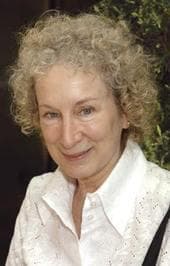
Margaret Eleanor Atwood is a Canadian poet, novelist, literary critic, essayist, teacher, environmental activist, and inventor. Since 1961, she has published eighteen books of poetry, eighteen novels, eleven books of non-fiction, nine collections of short fiction, eight children's books, two graphic novels, and a number of small press editions of both poetry and fiction. Atwood has won numerous awards and honors for her writing, including two Booker Prizes, the Arthur C. Clarke Award, the Governor General's Award, the Franz Kafka Prize, Princess of Asturias Awards, and the National Book Critics and PEN Center USA Lifetime Achievement Awards. A number of her works have been adapted for film and television.







