“The world is not as solid as you think it is. It's more like a dream, a painting, a story.”
— Reflecting on the nature of reality and perception through art.

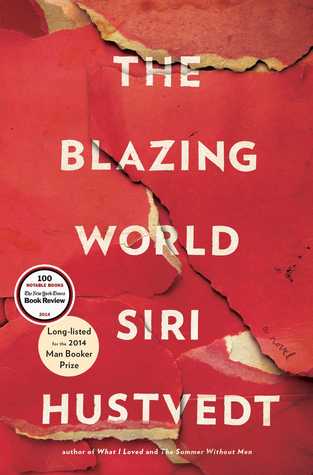
Siri Hustvedt (2014)
Genre
Literary Fiction / Creativity
Reading Time
600 min
Key Themes
See below
Sign in to track this book
After years of artistic invisibility, a female artist stages a provocative experiment, creating three male alter egos to expose the art world's biases, only to become entangled in a dangerous psychological game with a celebrated artist that ends in his bizarre death.
Professor I.V. Hess, an art historian and editor, introduces Harriet Burden, a controversial and largely unrecognized artist who died in 2007. Hess explains that this book compiles Burden's notebooks, interviews, and documents to explain her artistic experiment, 'The Blazing World.' Burden, frustrated by gender bias in the art world, created three male artist personas to present her work. Hess describes the project as an exploration of identity, perception, and how art is validated, setting up the complex story. The introduction establishes the book's structure, where the reader will piece together Burden's story from many, often conflicting, views.
Harriet Burden's first male persona is Anton Tish, a reclusive artist making grotesque sculptures from found objects, often using organic materials. Burden's notebooks detail her careful creation of Tish's background and art style, designed to be 'masculine' and confrontational. Tish's exhibition, 'The Suffocation Rooms,' receives critical acclaim, praised for its raw power and intellectual depth – recognition Burden herself never got. Various commentators, including critics and gallerists, discuss Tish's work, often projecting their own biases onto the 'artist.' Burden observes, documenting the difference in reception between her own work and Tish's, confirming her idea about gendered perception in art.
Harriet's second persona is Phineas Q. Eldridge, a conceptual artist whose work is rooted in philosophy, language, and semiotics. Eldridge's exhibition, 'The Museum of Modern Enigmas,' features installations that challenge viewers to engage with complex ideas, often through text and abstract forms. Unlike Tish, Eldridge is an intellectual, a detached observer. Again, the art world embraces Eldridge, attributing deep meaning and innovation to his creations, which are, in fact, Harriet's. Burden's notebooks show her frustration and amusement as critics analyze Eldridge's 'mind,' often missing the subtle critiques in the art. This experiment further confirms Burden's belief that the perceived gender of the artist greatly influences how art is interpreted and valued.
The third and most performative persona is Bruno Kleinfeld, an enigmatic and charismatic artist whose work focuses on the male gaze and the vulnerability of the female body, often through performance and photography. Kleinfeld's exhibition, 'The Mirror of Ligeia,' features unsettling, often erotic, self-portraits of a fictional female model, implicitly critiquing objectification in art history. This persona allows Harriet to explore themes of desire and power dynamics more directly. Burden's journals document her complex emotional connection to this persona, as well as the reactions of critics who are captivated by Kleinfeld's 'daring' and 'provocative' approach. Kleinfeld's success further shows the art world's readiness to embrace controversial themes when presented through a male artist.
After the success of all three male personas, Harriet Burden decides to unmask herself. She publicly reveals that Anton Tish, Phineas Q. Eldridge, and Bruno Kleinfeld were all her creations, part of her experiment, 'The Blazing World.' The art world reacts with shock, outrage, and reluctant admiration. Many critics feel tricked, some dismiss her work, while others, particularly women, see her as a genius. Burden's notebooks capture her satisfaction at exposing the biases, but also her disappointment that many still refuse to acknowledge her initial point. The unmasking becomes a moment that forces a re-evaluation of her work and the structures of artistic judgment.
After her unmasking, Harriet Burden's life changes when she becomes involved with the artist, Rune. Rune, initially skeptical of her experiment, becomes fascinated by Harriet and her intellect. Their relationship quickly becomes an intense intellectual and emotional partnership, blurring the lines between collaboration, rivalry, and obsession. Harriet's journals detail their shared artistic vision, particularly a project involving a 'mirror house' or 'mirror box' concept. However, a darker side appears as Rune's personality becomes increasingly manipulative and possessive. The collaboration becomes a psychological battleground, with Harriet struggling to maintain her artistic independence and personal boundaries against Rune's domineering influence.
The result of Harriet and Rune's collaboration is an exhibition credited only to Rune, featuring installations that resemble Harriet's themes and aesthetic, particularly her 'mirror box' concept. This exhibition, often called 'The Fourth Man' or 'The Mirror Box,' causes new controversy. While some critics praise Rune's genius, others, especially those aware of Harriet's earlier work and her relationship with Rune, suspect intellectual theft. Harriet's notebooks express her deep betrayal and anger, as she believes Rune has taken her ideas and presented them as his own, further erasing her artistic contributions even after her unmasking. This event echoes the gender bias she tried to expose.
The already strained relationship between Harriet Burden and Rune takes a tragic and strange turn with Rune's sudden death. The circumstances of his death are unusual and immediately raise questions, though no cause is publicly established. Harriet's accounts, often fragmented and emotional, hint at a final, intense confrontation or a psychological game pushed to its limits. Rune's death casts a long shadow over Harriet, fueling speculation and suspicion. Some whisper that she was responsible, directly or indirectly, while others see her as a victim of Rune's manipulative nature. This event complicates the story, adding mystery and potential criminality to Harriet's complex legacy.
Years after Harriet Burden's death, the debate about her work, her experiment, and her relationship with Rune continues. Professor Hess includes interviews and essays from various people – critics, friends, family members, and medical professionals – each offering their own interpretation of Harriet's motives, her sanity, and the truth behind Rune's death. Some defend Harriet as a brilliant, misunderstood artist who bravely exposed systemic biases. Others dismiss her as narcissistic, delusional, or even dangerous. The conflicting accounts show how subjective truth and memory are, especially when filtered through personal agendas and societal prejudices. The novel leaves many questions unanswered, making the reader grapple with the ambiguities.
Throughout the book, Harriet Burden's personal notebooks provide the most intimate insights into her mind. These entries are philosophical meditations on art, identity, gender, perception, and the nature of reality. Harriet grapples with questions of authorship, the male gaze, the body, and the subjective experience of consciousness. Her writings show her intellectual skill, vulnerability, anger, and deep sense of isolation as an artist. These sections are important for understanding her motivations behind 'The Blazing World' experiment and her internal struggles, offering a contrast to the external opinions and interpretations presented by others.
The Protagonist
Harriet evolves from a frustrated, overlooked artist to a subversive provocateur who exposes systemic bias, then to a woman deeply entangled in a dangerous psychological game, ultimately leaving a contested legacy.
The Supporting
Hess begins as an academic chronicler and evolves into a complex interpreter, struggling to reconcile conflicting truths about Harriet Burden.
The Antagonist/Supporting
Rune's character remains largely static in his manipulative brilliance, serving as a catalyst for Harriet's greatest artistic and personal challenges.
The Supporting
Maisie grapples with her complex feelings about her mother, moving from resentment to a deeper understanding and acceptance of Harriet's legacy.
The Supporting
Felix remains a loyal and consistent supporter of Harriet, his arc reflecting the steadfastness of true friendship in the face of artistic controversy.
The Mentioned
As a persona, Tish serves to validate Harriet's initial hypothesis about gender bias in the art world.
The Mentioned
As a persona, Eldridge further solidifies Harriet's argument about the gendered reception of art, particularly intellectual and conceptual work.
The Supporting
Kleinfeld, as a persona, allows Harriet to explore the male gaze and female vulnerability, becoming a conduit for her more personal and unsettling artistic expressions.
The Mentioned
Osvaldo's influence, though posthumous, acts as a catalyst for Harriet's artistic rebellion, as his absence frees her to pursue her controversial experiment.
The novel's central theme, explored through Harriet Burden's 'Blazing World' experiment, is gender bias in the art world. Harriet shows how an artist's perceived gender greatly influences how their work is received, interpreted, and valued. Her three male personas—Anton Tish, Phineas Q. Eldridge, and Bruno Kleinfeld—receive critical acclaim and intellectual validation that Harriet, despite creating the same works, never did. This theme is clear in the contrasting reviews of the 'male' exhibitions versus the initial dismissal of Harriet's own art, and the backlash and re-evaluation after her unmasking. The novel argues that the 'male gaze' affects not only visual representation but also the structures of artistic judgment.
“What is seen and what is invisible in a work of art depends on the sex of the beholder.”
The novel questions the nature of identity, both personal and artistic. Harriet's creation of three male personas makes one consider whether art is an extension of the artist's true self or a performance. The conflicting accounts from various characters about Harriet herself—is she a genius, a madwoman, a manipulator, a victim?—further complicate the idea of a single, authentic identity. The blending of Harriet and her personas, especially with Bruno Kleinfeld, and her complex involvement with Rune, challenge the idea of individual authorship and a fixed self. The book suggests that identity is fluid, constructed, and heavily influenced by external perception.
“I was not one man, but three. And I was not a man at all.”
Siri Hustvedt explores how individual and collective perception shapes reality, especially in art. The novel presents a story with many voices, where multiple, often contradictory, viewpoints on Harriet, her art, and Rune's death are offered. The reader must piece together a 'truth' that remains unclear, showing how unreliable memory and testimony are. The success of Harriet's male personas demonstrates how a simple change in attribution can drastically alter perception. The 'mirror box' concept, central to Harriet and Rune's collaboration, symbolizes the reflective and often distorting nature of perception, where what we see is often a projection of ourselves.
“There are no facts, only interpretations. And some interpretations are more powerful than others.”
The novel exposes the power dynamics in the art world and in personal relationships. Harriet's experiment challenges the patriarchal power structures that dictate artistic recognition. Her struggle against being 'invisible' as a female artist, and her eventual unmasking, highlight the power of attribution and reputation. The intense, often toxic, relationship between Harriet and Rune exemplifies power struggles, as Rune tries to control and even take Harriet's intellectual and emotional space. The novel shows how power, whether institutional or personal, can silence, distort, and erase individual voices.
“He didn't want a collaborator. He wanted a mirror that would reflect him back as a god.”
Harriet Burden's 'Blazing World' project is a psychological experiment, not just an artistic one. She carefully designs her personas and observes the reactions of the art world, treating it as a study of gender bias and perception. Her notebooks are filled with analyses of how critics and viewers respond to her 'male' works versus her 'female' works. This theme extends to her relationship with Rune, which becomes a dangerous psychological game, pushing her to her mental and emotional limits. The novel suggests that art can be a powerful tool for exploring human psychology and societal constructs.
“My experiment was not just about art; it was about the mind, about how we see and fail to see.”
The story is told through multiple, often conflicting, voices and documents.
The novel's structure is a collection of texts, including Harriet Burden's notebooks, interviews, essays, and critical reviews, compiled by Professor I.V. Hess. This polyphonic approach means there is no single, omniscient narrator, but rather a mosaic of perspectives. This device serves to highlight the subjective nature of truth and memory, forcing the reader to actively interpret and synthesize information. It also mirrors the theme of fragmented identity, as Harriet's character is pieced together from various, often contradictory, accounts, creating a complex and ambiguous portrait that resists easy categorization.
The novel self-consciously draws attention to its own fictionality and construction.
The entire premise of 'The Blazing World' is metafictional: a fictional scholar (I.V. Hess) compiles a fictional artist's (Harriet Burden's) fictional writings and interviews about her fictional art experiment. This device blurs the lines between reality and fiction, prompting the reader to question the authenticity of the narrative and the very act of storytelling. It also allows Hustvedt to comment on the mechanisms of literary and artistic creation, criticism, and the construction of posthumous legacies. The novel frequently references real-world philosophers and artists, further grounding its fictional world in intellectual discourse.
Characters' accounts are colored by their biases, agendas, and limited perspectives.
While Professor Hess attempts objectivity, every voice in the novel—Harriet herself, her daughter Maisie, Felix Lord, various critics, and even Rune—offers an inherently subjective and often self-serving account. Harriet's notebooks, while intimate, are filtered through her own emotional states and artistic agenda. Other characters' recollections are shaped by their relationships with Harriet, their professional standing, or their personal biases. This device creates ambiguity around key events, particularly Rune's death, and challenges the reader to discern 'truth' from a cacophony of subjective interpretations, reinforcing the novel's themes of perception and the construction of reality.
Harriet's artistic endeavor is framed as a scientific or psychological study.
Harriet Burden's 'Blazing World' project is explicitly presented as an experiment, complete with a hypothesis (gender bias in the art world), methodology (creating male personas), and observed results (disparate critical reception). Her notebooks often read like scientific observations, documenting reactions and analyzing data. This motif elevates art beyond mere aesthetics, positioning it as a tool for intellectual inquiry and social critique. It also underscores Harriet's intellectual rigor and her desire to prove her point with empirical evidence, even if the 'evidence' is subjective artistic reception, making her a unique figure in the art world.
“The world is not as solid as you think it is. It's more like a dream, a painting, a story.”
— Reflecting on the nature of reality and perception through art.
“Art is a way of understanding the world, not just reflecting it.”
— Exploring the active role of art in shaping understanding.
“Every act of creation is also an act of destruction.”
— Discussing the transformative and often disruptive nature of artistic creation.
“To be seen is to be judged, and to be judged is to be diminished.”
— Harriet Burden's thoughts on the gaze and its impact on artists, especially women.
“The meaning of a work of art is not in the work itself, but in the eye of the beholder.”
— Pondering the subjective interpretation of art.
“Memory is not a camera; it’s a storyteller.”
— Considering the reconstructive and narrative nature of memory.
“The self is a fiction, but a necessary one.”
— Philosophical musings on identity and self-construction.
“We are all made of stories, and we tell ourselves stories to live.”
— Emphasizing the fundamental role of storytelling in human existence.
“The greatest freedom is the freedom to be nobody.”
— A reflection on anonymity and liberation from societal expectations.
“To be an artist is to live with doubt, to wrestle with it every day.”
— Describing the inherent struggle and uncertainty in the artistic process.
“The world is full of ghosts, the ghosts of our own making.”
— Considering how past experiences and projections haunt our present.
“The space between people is where all the interesting things happen.”
— Highlighting the importance of relationships and interactions.
“Madness is often just a different way of seeing.”
— Challenging conventional notions of sanity and perception.
“The body remembers what the mind forgets.”
— Exploring the deep connection between physical and psychological memory.
Ready to see how well you understood this book? Take our interactive quiz with 10 questions.
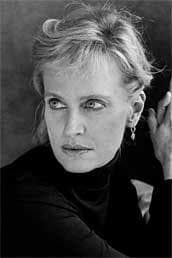
Siri Hustvedt is an American novelist and essayist. Hustvedt is the author of a book of poetry, seven novels, two books of essays, and several works of non-fiction. Her books include The Blindfold (1992), The Enchantment of Lily Dahl (1996), What I Loved (2003), for which she is best known, A Plea for Eros (2006), The Sorrows of an American (2008), The Shaking Woman or A History of My Nerves (2010), The Summer Without Men (2011), Living, Thinking, Looking (2012), The Blazing World (2014), and Memories of the Future (2019). What I Loved and The Summer Without Men were international bestsellers. Her work has been translated into over thirty languages.







