“Say one thing for Logen Ninefingers, say he's a survivor.”
— Logen's internal monologue, reflecting on his harsh life and reputation.

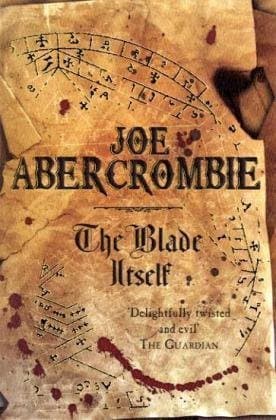
Joe Abercrombie (2001)
Genre
Fantasy
Reading Time
17 hours
Key Themes
See below
Sign in to track this book
In a world where heroes are villains and villains are heroes, a crippled torturer, a selfish nobleman, and a barbarian with a bloody past are unwillingly thrust together by a mysterious wizard as an ancient war threatens to consume them all.
The story starts with Logen Ninefingers, a Northman warrior, ambushed by Shanka—primitive, monstrous humanoids—after falling into a river. He barely escapes, losing his friends Rudd Threetrees and Tul Duru. Logen, known for his violent past and the 'Bloody-Nine' name, regrets his luck and the constant violence. He decides to go south, away from the North's endless feuds, hoping for a new life or a break. His journey is dangerous; he uses his brutal instincts to survive the wilderness and avoid Shanka and other hostile groups.
In the Union capital of Adua, Captain Jezal dan Luthar, a handsome but arrogant nobleman, is introduced. He cares most about winning the 'Contest' fencing competition and getting a good social position. He trains with his fencing master, Major West, and gambles with his friends, including Prince Ladisla. Jezal is self-absorbed and looks down on common people, thinking his noble birth means he deserves success and praise. He dislikes his father and sees military service as a way to glory, not a duty, often avoiding his responsibilities.
Former war hero Sand dan Glokta, now a crippled Inquisitor for the Union, is introduced during his work. Tortured and maimed as a Gurkish prisoner, Glokta now inflicts similar pain to get confessions for the Closed Council. His current target is the merchant Seff, suspected of treason. Through interrogation, Glokta learns of a wider conspiracy with the powerful Valint and Balk, a banking and trading firm. Glokta's thoughts show his cynical, self-hating nature and his sharp mind, which he uses to handle Adua's dangerous politics, always aware of his own uncertain place.
Logen, after a hard journey, meets the wizard Bayaz, First of the Magi, in the wilderness. Bayaz, with his silent apprentice Malacus Quai, is an old and powerful figure, though he looks like an old man. He quickly shows his authority, healing Logen's wounds and saying he will travel to Adua. Bayaz says he has an important mission and needs Logen's skills. They travel to the Union capital, with Logen reluctantly agreeing to go with the wizard, feeling his life is about to get more complicated.
Jezal, despite his arrogance and lack of true effort, wins the fencing Contest, surprising himself and the crowd. His win raises his social status and brings him closer to Major West's sister, Ardee. However, the celebration in Adua is overshadowed by the growing conflict in the North with Bethod's armies, the self-proclaimed King of the Northmen. Major West, now Colonel, is sent to the front, and Jezal is expected to follow. His dreams of an easy life are broken by the reality of war, making him face the responsibilities he has avoided.
Glokta continues his investigation into the conspiracy around Valint and Balk. He questions Brother Longfoot, a member of the Guild of Spicers, and starts to understand the extent of the corruption. His questions lead him to doubt the motives of Arch Lector Sult, his boss, and other powerful people on the Closed Council. Glokta realizes the conspiracy is bigger than simple treason and involves the highest levels of Union society, possibly threatening the government. He uses his sharp mind and network of informers, including his torturers Frost and Vitari, to handle the dangerous political currents, always aware he could become a target.
Arriving in Adua, Bayaz quickly makes his presence known, meeting with the Closed Council. He states his purpose: to get the Seed, a powerful artifact, to fight the rising Gurkish Empire and the plans of Khalul, another old Magi. To do this, he gathers a group: Logen Ninefingers for his warrior skills, Jezal dan Luthar for reasons not yet clear, and Longfoot as a guide. They will go on a dangerous journey to the 'Edge of the World' to find the artifact. Bayaz's old power and mysterious nature are clear as he manipulates events and people for his plan.
The group—Bayaz, Logen, Jezal, Longfoot, and Quai—starts their journey from Adua, going east. The first parts have internal conflict, especially between the rough Logen and the proper Jezal, whose pampered nature clashes with the realities of travel. Bayaz often steps in, using his authority and influence to keep the group together. They face dangers and challenges, making them rely on each other despite their differences. The journey is long and hard, slowly removing Jezal's grand ideas and making Logen face his past as they go into unknown and dangerous lands.
Meanwhile, in the North, Colonel West, now leading the Union forces, prepares for the war against Bethod. He struggles with Prince Ladisla's incompetence and the realities of military command. West's character develops as he deals with his duty, his loyalty to his men, and his growing disappointment with the Union's leaders. The harsh conditions, the brutal Northman warfare, and the constant threat of desertion and internal conflict weigh on him. He finds an unexpected friend in Ardee West, who has followed him north, showing the personal costs of the war.
Back in Adua, Glokta continues his dangerous game, looking deeper into the Valint and Balk conspiracy. He finds that the firm is far more powerful and hidden than he first thought, seemingly untouchable and with influence everywhere in the Union. He suspects that Sult himself might be involved or at least aware. Glokta's investigation gets more dangerous, as he realizes he is a pawn in a larger game, possibly run by forces beyond the Closed Council. He uses his wits and his ability to cause fear to survive, always questioning who truly holds power in Adua.
Ardee West, Major West's sister, is in a difficult spot after Jezal leaves. She handles Adua's social rules and the expectations for women. Her sharp mind and independent spirit often clash with society's norms. She develops a complex relationship with Glokta, who first sees her as a way to get information but later finds himself drawn to her intelligence and strength. Ardee later goes north to be with her brother, seeing the realities of war firsthand and further changing her views of the world and her place in it.
The Protagonist
Logen begins by trying to flee his violent past but is inevitably drawn back into conflict, ultimately accepting his nature as a warrior.
The Protagonist
Jezal transitions from a spoiled, self-centered fop to a more jaded and slightly more mature individual, forced to confront the harsh realities of the world.
The Protagonist
Glokta moves from merely fulfilling his duties to actively investigating and attempting to understand the true power dynamics within the Union, becoming a more dangerous and calculating player.
The Supporting
Bayaz arrives in Adua and immediately sets his grand plan into motion, revealing his ancient power and manipulative nature.
The Supporting
West is promoted and sent to lead the Union forces in the North, facing the harsh realities of war and the burden of leadership.
The Supporting
Ardee navigates personal entanglements and societal pressures, eventually finding herself amidst the harsh realities of the Northern war.
The Supporting
Quai remains a mysterious figure, serving Bayaz faithfully throughout the quest.
The Supporting
Longfoot is conscripted by Bayaz to guide the fellowship to the Edge of the World, reluctantly enduring the hardships of the journey.
The Antagonist
Sult continues to consolidate his power within the Closed Council, proving to be a formidable and dangerous political adversary for Glokta.
The Antagonist
Bethod leads his armies in an invasion of the Union, establishing himself as a major antagonist in the North.
The book shows the realities of war and the constant presence of violence. From Logen's fight for survival to the war in the North, Abercrombie shows the pain, suffering, and moral decay that come with battle. Characters like Logen and Glokta are shaped by their violent pasts, and even the seemingly protected Jezal faces its harshness. This theme shows that violence creates more violence, and there are rarely clear heroes or villains, just survivors and victims.
“Once you've got a task to do, it's better to do it than live with the fear of it.”
Abercrombie blurs the lines between good and evil, hero and villain. Each viewpoint character, despite their flaws, has a voice that lets the reader understand their reasons, no matter how dark. Logen is a killer but also wants peace; Glokta tortures but was also tortured and sees injustice; Jezal is selfish but can grow. The Union, seemingly the 'good' side, has corruption, while the Northmen, often called savages, fight for their own justice. This theme challenges common fantasy ideas by showing a world where morality is rarely simple.
“There are no good men. There are only good decisions.”
Many characters and situations in the book are not what they seem. Jezal, the dashing nobleman, is a coward; Glokta, the terrifying Inquisitor, is in constant pain; Bayaz, the wise old wizard, is a ruthless manipulator. Adua, the grand capital, hides deep corruption. This theme explores how appearances can deceive and how characters, and even societies, show a front to the world that hides their true, often darker, intentions or realities. It makes characters and readers look past the surface to understand the real nature of power, ambition, and self.
“It's a strange thing, but sometimes it's the very people who have been hurt the most who are the most hurt by others.”
The past greatly affects the present for almost every character. Logen is haunted by the 'Bloody-Nine' and his past violence. Glokta's torture by the Gurkish permanently shapes his body and mind, driving his current cruelty and cynicism. Bayaz's actions come from old feuds and long-held grudges. This theme shows how past traumas, decisions, and reputations define a character's identity and limit their choices, making escape from one's history almost impossible and often leading to old cycles continuing.
“You can never have too many knives.”
The pursuit and use of power are central to the story. From the political plans of the Closed Council and Arch Lector Sult to the old, almost divine power of Bayaz and Khalul, the book shows how power corrupts and influences people and groups. Glokta's investigations show the deep corruption in the Union, driven by greed and ambition. Bayaz's manipulation of others for his grand plan shows how even 'good' intentions can be overshadowed by ruthless control. The theme suggests that power, no matter its source, often leads to moral compromise and control.
“A man must have his reasons.”
Alternating chapters from different character viewpoints to provide a broad and nuanced story.
The novel employs a multiple perspective narrative, switching between the viewpoints of Logen Ninefingers, Jezal dan Luthar, and Sand dan Glokta, with occasional chapters from other characters like Colonel West. This device allows Abercrombie to present a complex and morally ambiguous world, showing events from various angles and allowing the reader to empathize with characters who might otherwise be seen as villains. It deepens the characterizations and provides a comprehensive view of the political and geographical landscape, while also building suspense as different plotlines converge.
Logen's secondary, berserker personality, representing his violent past.
The 'Bloody-Nine' is a distinct, almost separate, personality that Logen Ninefingers embodies during moments of extreme violence or rage. It acts as a plot device to represent Logen's struggle with his violent past and his attempts to become a 'better man.' When the Bloody-Nine emerges, Logen loses control, becoming an unstoppable, brutal killing machine. This persona is a manifestation of his internal conflict and a constant reminder of the darkness within him, often appearing at crucial moments to ensure his survival, but always at a moral cost.
A shadowy, corrupt governing body representing the Union's political machinations.
The Closed Council serves as a central political plot device, representing the corrupt and manipulative power structures within the Union. It is the body that Inquisitor Glokta reports to and investigates, and its members are often the source of intrigue and conspiracy. The Council's internal power struggles, backroom deals, and self-serving agendas drive much of Glokta's storyline, highlighting the theme of political corruption and the arbitrary nature of justice in the Union. It is the visible face of the Union's flawed government, often acting against the best interests of its people.
A powerful, ancient artifact sought by Bayaz for his grand design.
The Seed is a mythical, powerful artifact that Bayaz believes is crucial to combating the threat of Khalul and the Gurkish Empire. It acts as the primary MacGuffin that drives Bayaz's quest and brings together the disparate characters of Logen, Jezal, Quai, and Longfoot. Its nature and true capabilities are largely unknown in this first book, but its immense significance is stressed by Bayaz, making it a powerful motivator for the characters and a source of mystery and anticipation for future installments.
Extensive use of character's inner thoughts to reveal their true nature and motivations.
Abercrombie heavily utilizes internal monologue, particularly for Glokta, Logen, and Jezal, to provide deep insight into their minds. Glokta's cynical, self-deprecating, and often darkly humorous thoughts reveal his intelligence and pain, contrasting with his outward stoicism. Logen's constant refrain of 'You have to be realistic about these things' and 'Say one thing for Logen Ninefingers, say he's a survivor' gives insight into his pragmatic worldview. Jezal's shallow, self-serving thoughts highlight his initial arrogance. This device allows for complex characterization and reinforces the theme of moral ambiguity by letting readers experience the world through their flawed perspectives.
“Say one thing for Logen Ninefingers, say he's a survivor.”
— Logen's internal monologue, reflecting on his harsh life and reputation.
“You can never have too many knives.”
— Bayaz, the First of the Magi, speaking to Logen about preparedness.
“Once you've got a task to do, it's better to do it than live with the fear of it.”
— Jezal dan Luthar, wrestling with his duty and fear of the upcoming Contest.
“The dead can't be hurt. The dead can't be betrayed. The dead can't be disappointed.”
— Logen contemplating the grim reality of death and loss.
“It's a strange thing, but sometimes the most dangerous men are those who have nothing left to lose.”
— Glokta reflecting on the desperation that drives people.
“The world is full of people who are trying to make a living, and the best way to make a living is to make other people's lives worse.”
— Glokta's cynical view of society and the nature of power.
“No man is an island, but some men are an archipelago.”
— Bayaz describing the complex and isolated nature of some individuals.
“You have to be realistic about these things.”
— Logen's common refrain when facing grim choices or explaining harsh realities.
“Power is a knife. You can use it to cut bread, or you can use it to cut throats.”
— Bayaz explaining the dual nature of power.
“The trick is to keep breathing. No matter what.”
— Glokta's internal struggle and determination to survive despite his pain.
“It's always the quiet ones you have to watch out for.”
— Logen's observation about seemingly harmless individuals.
“A man must have a code.”
— Logen's internal justification for his actions, however violent.
“Sometimes, the only way to save a life is to take one.”
— Logen's grim logic for necessary violence.
“The greatest trick the Devil ever pulled was convincing the world he didn't exist. The greatest trick the Magi ever pulled was convincing the world they did.”
— Glokta's cynical musing on the nature of belief and manipulation.
Ready to see how well you understood this book? Take our interactive quiz with 10 questions.

Biography coming soon.







