“There is no happiness for people at the expense of other people.”
— Cornelius van Baerle reflects on morality and justice.

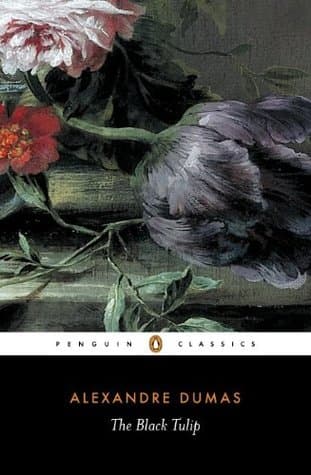
Alexandre Dumas (2017)
Genre
Historical Fiction / Romance
Reading Time
450 min
Key Themes
See below
Sign in to track this book
In 17th-century Holland, a tulip grower, wrongly imprisoned during political unrest, finds comfort and a chance to grow the black tulip with his jailer's daughter, as he deals with jealousy and obsession.
In 1672, the 'Year of Disaster' in Holland, the rich tulip-grower Cornelius van Baerle lives in Dordrecht, focused on floriculture. He wants to grow the black tulip, which offers a prize of 100,000 guilders from the Haarlem Horticultural Society. His godfather, Cornelius de Witt, and his brother, Johan de Witt, are involved in a political storm. The Orange party, led by William of Orange, is getting stronger, threatening the de Witts. Isaac Boxtel, van Baerle's jealous neighbor and rival, spies on Cornelius, envious of his gardening skills and resources, especially his pursuit of the black tulip.
The political trouble ends tragically when Johan de Witt is killed by a mob in The Hague. His brother, Cornelius de Witt, imprisoned on false treason charges and tortured, is released but also killed by the same mob. Before his death, Cornelius de Witt gives secret papers to his godson, Cornelius van Baerle, telling him to burn them without reading. Van Baerle, more interested in tulips than politics, delays. This, along with Boxtel's report to authorities, leads to van Baerle's arrest for treason, based on the letters he was supposed to destroy.
Cornelius van Baerle is tried and, despite saying he is innocent and not political, is sentenced to death for treason. Just before his execution, William of Orange changes his sentence to life imprisonment. This decision might have been influenced by the de Witts' papers or a wish to seem merciful. He is sent to Loevestein fortress. There, he meets Rosa, the kind daughter of Gryphus, the harsh jailer. Rosa is not educated but is smart and soon feels sympathy for the refined prisoner, who seems out of place in the grim prison.
Before his arrest, Cornelius had secured three tulip bulbs, the result of years of breeding, which he believes will produce the black tulip. In prison, he realizes his work is at risk. He carefully hides the bulbs. He eventually tells Rosa his secret, explaining his scientific effort and his dream. Rosa, interested by his passion and the idea of such a beautiful flower, agrees to help him. She becomes his helper, promising to plant and care for the bulbs secretly in the prison grounds, away from her father and the guards.
Isaac Boxtel, still jealous and aware of Cornelius's efforts, moves to Loevestein, living in a house near the prison. From his window, he uses mirrors to spy on Cornelius and Rosa, determined to steal the black tulip if it blooms. Meanwhile, Cornelius starts teaching Rosa to read and write, using the Bible. This exchange brings them closer. Rosa learns quickly, finding joy in words and ideas, a contrast to her previous uneducated life.
Rosa plants the first bulb. They watch for growth. The first bulb produces a beautiful tulip, but it is dark purple, not black. The second bulb is planted with hope, but it also does not yield the black color. Despite these failures, their shared secret and purpose strengthen their connection. Their daily interactions, the secret gardening, and the quiet lessons bring about a deep love that goes beyond the prison walls and their different social positions. They find comfort and hope in each other in their bleak surroundings.
With only one bulb left, Cornelius and Rosa put all their hopes on it. This time, the plant that grows shows promise, its stem and bud having an unusual, deep color that suggests it might be the black tulip. Boxtel, watching through his mirrors, becomes frantic. He sends a letter to Gryphus, falsely accusing Rosa of talking to Cornelius, hoping to separate them and get the tulip. Gryphus, always suspicious and cruel, takes the budding plant, to the despair of Cornelius and Rosa, and locks it in a cupboard.
Desperate, Rosa confronts her father, Gryphus, and despite his anger, she gets the black tulip from the cupboard. Knowing the Haarlem Horticultural Society's deadline for the prize is near, and fearing Boxtel will try to steal or destroy it, Rosa makes a decision. She decides to travel to Haarlem herself, alone, to present the black tulip and claim the prize in Cornelius's name. It is a dangerous trip for a young, uneducated woman, but her love for Cornelius and her determination to see his dream come true drive her.
Rosa arrives in Haarlem just in time for the exhibition. With the black tulip protected, she presents it to the surprised and happy members of the Horticultural Society. The black tulip is magnificent. However, just as the prize is about to be given, Isaac Boxtel appears, claiming the tulip as his own, having followed Rosa. He tries to discredit Rosa and steal the glory. His frantic claims, along with Rosa's clear story and Cornelius's research (which Rosa had learned to read), show Boxtel as a fraud. In his anger, Boxtel has a fatal stroke.
News of the black tulip and its story reaches William of Orange. Interested by the story and wanting to correct the wrong done to Cornelius, William orders Cornelius's release from Loevestein. He also sees the love between Cornelius and Rosa. At a public ceremony, William of Orange gives the 100,000 guilder prize to Cornelius van Baerle and publicly approves the marriage of Cornelius and Rosa. The lovers are free to marry, and the prize money ensures their future happiness, allowing them to live a life devoted to their love and their shared interest in tulips.
The Protagonist
From an apolitical, sheltered tulip-grower, he transforms into a resilient prisoner who finds love and ultimately justice, without losing his core passion.
The Protagonist/Love Interest
From an uneducated, confined jailer's daughter, she blossoms into an educated, courageous woman who actively shapes her destiny and that of her beloved.
The Antagonist
His character arc is one of escalating envy and villainy, leading to his self-destruction.
The Supporting
He remains largely static, a representation of the oppressive environment.
The Supporting
He serves as a catalyst for the resolution, demonstrating a blend of political pragmatism and justice.
The Supporting/Mentioned
His death is a foundational plot point, not a character arc.
The Supporting/Mentioned
His tragic death is a pivotal event that sets Cornelius's journey in motion.
The Mentioned
They serve as a static goal-post for the protagonists.
The novel explores obsession through Cornelius van Baerle's pursuit of the black tulip. His dedication to floriculture continues through political trouble, imprisonment, and hardship, showing how passion can sustain someone in hard times. This obsession is compared to Boxtel's destructive jealousy, showing the difference between a creative passion and a negative one. The 100,000 guilder prize means not just money, but recognition of this passion.
“'To have discovered the black tulip, to have seen it for a moment...then to lose it, to lose it forever!'”
The romantic relationship between Cornelius and Rosa is the emotional center of the novel. Their love grows in a prison cell and becomes a source of strength. Rosa's love changes her from an uneducated jailer's daughter into a brave, educated woman, while her devotion gives Cornelius hope and purpose in prison. Their shared goal of growing the black tulip means their lasting affection and their ability to overcome trouble together.
“'He had a beautiful soul, and she had a beautiful heart; they were worthy of each other.'”
The novel is set against a background of political injustice, with the de Witt brothers killed and Cornelius van Baerle wrongly imprisoned for treason. This shows how power can be arbitrary and how people are vulnerable to political desires and mob rule. However, the story ends with justice through William of Orange, who, learning the truth, corrects the wrong done to Cornelius. The black tulip, when shown, means not just botanical success but also the win of truth and innocence over lies and political schemes.
“'Injustice, like crime, is always followed by its punishment.'”
The difference between Cornelius, an educated gentleman, and Rosa, an uneducated jailer's daughter, shows the theme of social class. However, the novel shows that true worth is not about social standing. Cornelius teaching Rosa to read and write shows how education can change someone, improving her mind and allowing her to help save him. Rosa's quick learning and intelligence prove that character and ability are not limited by birth, and her journey from not reading to reading means her personal growth.
“'What a strange position! a prisoner teaching his jailer's daughter to read!'”
A central MacGuffin and symbol of purity, ambition, and hope.
The elusive black tulip serves as the primary MacGuffin, driving the plot and motivating Cornelius's actions. It represents the pinnacle of floricultural achievement and a substantial prize. Beyond its plot function, it symbolizes purity and singularity, an ideal pursued by an innocent man. It also embodies hope in the darkest of times, as its cultivation becomes a shared secret and a beacon for Cornelius and Rosa's future, ultimately becoming a symbol of justice and their union.
A catalyst for Cornelius's arrest and a means of revealing truth.
The packet of secret political papers entrusted to Cornelius by his godfather, Cornelius de Witt, acts as a crucial plot device. His failure to immediately burn them, combined with Boxtel's denunciation, directly leads to his false imprisonment. Later, Rosa's ability to read these documents (after Cornelius teaches her) helps to clarify the political machinations and establish Cornelius's innocence, serving as a means of both initial injustice and eventual exoneration.
A visual representation of Boxtel's envy and a source of dramatic tension.
Isaac Boxtel's elaborate system of mirrors, which he uses to spy on Cornelius's garden in Dordrecht and later on Rosa and Cornelius in Loevestein, is a key plot device. It physically embodies his obsessive jealousy and villainy, allowing him to track Cornelius's progress with the black tulip. This visual spying creates dramatic tension and propels Boxtel's desperate actions, highlighting his inability to achieve success through his own merit.
A setting that both confines and fosters love and growth.
The fortress of Loevestein is more than just a setting; it's a symbolic plot device. Initially representing confinement, injustice, and despair for Cornelius, it paradoxically becomes the crucible where his love for Rosa blossoms. The isolation of the prison forces Cornelius and Rosa to rely solely on each other, fostering their intellectual and romantic bond. It is within its walls that the black tulip is nurtured, symbolizing how hope and beauty can emerge from the bleakest environments.
“There is no happiness for people at the expense of other people.”
— Cornelius van Baerle reflects on morality and justice.
“To cultivate a flower is a silent and delicious employment which fills up the vacant hours without ennui, and gives to the mind the satisfaction of having done something useful.”
— Describing Cornelius's passion for gardening and tulip cultivation.
“Hope is the last thing that dies in man.”
— Cornelius maintains optimism despite imprisonment.
“Love is the only thing that doubles our strength, because it gives us the strength of two.”
— Rosa's devotion to Cornelius during his trials.
“A prison is a grave for the living.”
— Describing the harsh conditions of Cornelius's imprisonment.
“The black tulip will be the eighth wonder of the world.”
— Cornelius's ambitious goal to breed a unique tulip.
“Envy is a more terrible thing than hunger, for hunger passes, but envy remains.”
— Highlighting the destructive nature of envy, as seen in Boxtel.
“One must have patience; time brings everything to those who know how to wait.”
— Cornelius advises patience in achieving his tulip goal.
“The greatest crimes are committed not from necessity, but from superfluity.”
— Commentary on greed and excess driving evil actions.
“A true friend is the greatest of all blessings.”
— Reflecting on the value of friendship, such as between Cornelius and his godfather.
“Beauty is a flower, but fame is a tree.”
— Comparing fleeting beauty to lasting legacy, like the tulip's fame.
“In politics, as in religion, there are martyrs.”
— Referring to the political turmoil in the Netherlands affecting characters.
“The heart has its reasons which reason knows nothing of.”
— Rosa's love defies logic and societal barriers.
“To see is to believe, but to feel is to know.”
— Emphasizing emotional truth over mere observation.
Ready to see how well you understood this book? Take our interactive quiz with 10 questions.
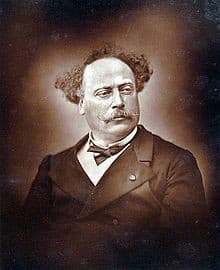
Alexandre Dumas, also known as Alexandre Dumas père, was a French novelist and playwright.







