“The past is a story we tell ourselves, and we can choose to tell it differently.”
— A reflection on history and personal narrative.

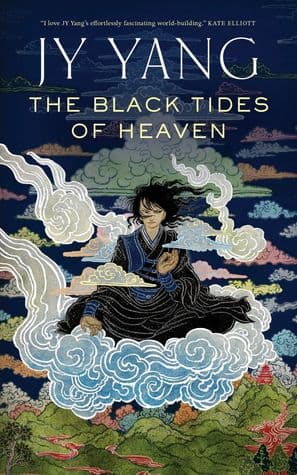
J.Y. Yang (2017)
Genre
Fantasy / Science Fiction
Reading Time
2-3 hours
Key Themes
See below
Sign in to track this book
In a world where gender is chosen and power comes from mystical 'tensors' or revolutionary 'machinists,' a twin monk who sees fate's strings must choose between loyalty to his prophetic sister and joining a rebellion against their mother's oppressive rule.
Mokoya and Akeha, the Protector's twin children, are sent to the Grand Monastery at a young age, a common practice for children of the ruling class. Unlike most children who choose their gender after puberty, the twins are raised gender-neutral, referred to as 'they.' Mokoya soon shows a powerful, though uncontrolled, gift for prophetic visions, often falling into trances and speaking of future events. Akeha, in contrast, develops a sharp mind and an ability to see the subtle manipulations and power dynamics around them. While Mokoya struggles with the burden of prophecy, Akeha quietly watches the Protectorate's political actions, especially those involving their mother, the Protector.
As the twins grow up, Mokoya's visions become more vivid and disturbing, often showing disasters and suffering. The Grand Abbot carefully manages these prophecies, using them to advise the Protectorate, though their full meaning is often hidden. Akeha, aware of these visions and the political maneuvering, becomes deeply concerned by the Protectorate's indifference to its citizens and its harsh suppression of the growing Machinist movement. They begin to question their mother's rule and society's rigid structure, feeling a growing sense of injustice.
Akeha, through observation and secret investigations, learns more about the Machinists—a group supporting technological advancement and fair resource distribution. This group often clashes with the Tensorate's traditional, magic-based power structure. Akeha sees the Protectorate's brutal repression of Machinist communities, deepening their disgust with their mother's rule. Akeha starts to view the Machinists not as rebels, but as a legitimate force for progress and justice. This growing sympathy creates a split between Akeha and the expectations placed on them as a Protector's child.
Driven by conscience and a desire for a different future, Akeha decides to leave the Tensorate and join the Machinist rebels. This is a painful choice, as it means leaving their beloved twin, Mokoya, behind. Mokoya, bound by their prophetic gift and role within the Monastery, cannot join Akeha. The separation is a deep emotional blow to both, breaking the strong bond they have shared since birth. Akeha's departure marks a significant turning point, committing them to a life of danger and resistance against their own family.
Joining the Machinists, Akeha finds new purpose and belonging among those fighting for change. They learn practical skills, participate in acts of sabotage against the Tensorate, and offer strategic insights to the rebellion. Akeha also forms important relationships within the rebel ranks, notably with Wen, a practical and skilled Machinist leader, and with the charismatic and principled Batcha. These relationships provide Akeha with support and community, helping them navigate the challenges and moral complexities of their new life, though Mokoya's absence remains a constant pain.
The war between the Protectorate and the Machinists grows, marked by skirmishes, spying, and political moves. Akeha uses their knowledge of the Tensorate's inner workings to help the rebels, often putting them in direct opposition to their mother's forces. They see firsthand the brutality of the conflict and the human cost of the Protectorate's harsh policies. Akeha's actions come from a deep belief that they are fighting for a fairer world, even as they deal with the personal cost of their choices and the potential harm to their family.
While Akeha is involved in the rebellion, Mokoya stays within the Grand Monastery. Their prophetic gift becomes both more powerful and more difficult. They receive fragmented visions of the war, often seeing glimpses of Akeha's dangerous activities and people's suffering. Mokoya feels increasingly isolated, unable to act directly and torn between loyalty to the Monastery and deep love for Akeha. The Grand Abbot continues to use Mokoya's prophecies for the Protectorate's benefit, further highlighting Mokoya's lack of control and their growing internal conflict.
During an intense phase of the conflict, a major event brings Akeha and Mokoya close, though not necessarily in direct contact. This closeness reawakens their deep twin bond, creating a powerful emotional connection. Mokoya experiences a surge of visions related to Akeha's current situation, while Akeha feels an unexplained pull towards their twin. This moment shows the lasting connection they share, even across the vast ideological and physical divide between them.
Throughout the story, the Protector, Mokoya and Akeha's mother, is shown as a calculating and ruthless leader, driven to maintain the Tensorate's power at all costs. Her past actions and current strategies show a willingness to manipulate her own children and sacrifice many lives for her political goals. Akeha's understanding of their mother's true nature strengthens their resolve to fight against her rule. Mokoya, though more sheltered, also begins to understand their mother's coldness and how their own gift has been used, adding to their internal struggle.
The immediate story of *The Black Tides of Heaven* ends with a resolution to a specific phase of the conflict, though not necessarily the end of the war. Akeha has become a committed rebel, making significant sacrifices for their cause. Mokoya continues to struggle with their visions and their limited role within the Monastery, their future tied to the ongoing political struggles. The book leaves open questions about the rebellion's ultimate fate, the Tensorate, and whether the twins can truly reunite or reconcile. It emphasizes the long-term impact of their choices.
The Protagonist
Akeha transforms from a sheltered, observant child of privilege into a committed and capable leader within the Machinist rebellion, actively shaping the future they envision.
The Protagonist
Mokoya grapples with the burden of their prophetic gift and their limited agency, slowly beginning to question the established order and their role within it.
The Antagonist
Her character remains largely static, serving as the embodiment of the oppressive state that the protagonists challenge.
The Supporting
The Grand Abbot maintains their role as an institutional figure, their actions largely dictated by the preservation of the Tensorate's power structure.
The Supporting
Wen remains a steadfast and reliable figure, a practical anchor for Akeha within the rebellion.
The Supporting
Batcha continues to be a driving force and moral compass for the Machinist movement.
The Mentioned
The Twins' Father remains a background figure, with no significant personal development.
The novel explores how individuals, especially Akeha, form their identity through their choices, particularly regarding gender and political alignment. In a society where gender is chosen at puberty, the twins' early life is gender-neutral, highlighting identity's fluidity. Akeha's decision to leave the Tensorate and join the Machinists is a powerful act of self-determination, defining who they are beyond their birthright. This theme appears when Akeha chooses to support a cause that directly opposes their mother, showing their agency in shaping their own moral and political identity, separate from family and societal expectations.
““You can choose who you are, Akeha. You always can.””
This theme is central to Mokoya's character. Their prophetic visions often show a predetermined future, yet the story subtly questions if these visions are absolute or if individual choices can change them. Mokoya struggles with knowing what will happen but being unable to act, creating a sense of powerlessness. Akeha's active rebellion, in contrast, champions free will and the ability to create a different future. The tension between Mokoya's visions and Akeha's actions illustrates the debate about destiny versus human agency, and whether knowing the future truly dictates its unfolding.
““Knowing what is to come does not mean you can change it. Only that you must bear witness.””
The conflict between the Tensorate and the Machinists forms the core of this theme. The Tensorate represents a rigid, magic-based oligarchy that oppresses common people and stops technological advancement. The Machinists advocate for progress, equality, and a fairer society. Akeha's defection embodies the struggle against tyranny and the fight for social justice. The novel explores the motivations, sacrifices, and moral complexities in challenging an established, powerful regime. Scenes showing the brutal suppression of Machinist communities by the Protectorate emphasize the rebellion's necessity and urgency.
““There is a sickness at the heart of the Protectorate. And I cannot stand by and watch it fester.””
The book explores different forms of power: the traditional, magic-based 'tensor' power of the Protectorate, Mokoya's prophetic power, and the Machinists' emerging, technology-based power. It examines how power is gained, kept, and misused. The Protector's ruthless use of political power, the Grand Abbot's manipulation of spiritual power through Mokoya, and the Machinists' pursuit of technological power for social change all show the many sides of influence and control. The story questions whether power inherently corrupts or if it can be used for good, contrasting the Protector's tyranny with the Machinists' ideals.
““Power is not a gift, but a burden. And it demands a heavy price from those who wield it.””
The deep, almost psychic connection between Mokoya and Akeha.
The profound bond between Mokoya and Akeha serves as a crucial emotional anchor and narrative device. Even when physically separated by vast distances and ideological divides, they retain an intuitive understanding of each other's emotional states and, at times, a faint awareness of each other's experiences. This connection highlights the personal cost of their choices and provides a constant reminder of their shared past. It also acts as a narrative shortcut, allowing for moments of emotional resonance between them without direct communication, underscoring the enduring theme of family amidst conflict.
Mokoya's ability to see the future, often in fragmented and disturbing ways.
Mokoya's prophetic visions are a primary plot driver, introducing elements of destiny and foreboding. These visions often foreshadow major events, create suspense, and provide glimpses into the broader political landscape and the suffering of the people. However, their fragmented nature and the Grand Abbot's selective interpretation ensure that they do not simply reveal the plot, but rather add layers of complexity and moral dilemma. They serve to highlight the theme of free will versus fate, as characters must decide how to react to or defy what is foreseen.
A societal norm where individuals choose their gender after puberty.
This unique cultural aspect of the Tensorate society, where children are raised gender-neutral and choose their gender later, acts as a significant world-building element and a subtle plot device. It emphasizes themes of identity and self-determination, mirroring Akeha's larger choice to define their own path. While not a direct plot mover, it shapes character development and societal norms, allowing for a more expansive exploration of personal identity beyond traditional binary constraints. It also distinguishes the world from typical fantasy settings, reflecting a more progressive approach to selfhood.
“The past is a story we tell ourselves, and we can choose to tell it differently.”
— A reflection on history and personal narrative.
“There are always other choices. You just have to be brave enough to make them.”
— A character encouraging another about difficult decisions.
“Love isn't about being perfect. It's about being honest, and trying to be better.”
— A discussion about the nature of love and relationships.
“To be truly free, one must first understand the chains that bind them.”
— A philosophical observation on freedom and societal constraints.
“Sometimes, the strongest thing you can do is ask for help.”
— A character overcoming pride to seek assistance.
“The future is not fixed. It is made, moment by moment, by the choices we make.”
— A character contemplating the impact of their actions.
“Even the smallest spark can ignite the greatest change.”
— A hopeful statement about the potential for revolution.
“Knowledge is a weapon, and like any weapon, it can be used for good or ill.”
— A mentor discussing the power and responsibility of learning.
“Grief is not a weakness. It is a testament to the love you felt.”
— A character comforting another who is mourning.
“To understand someone, you must first listen to their story, not just hear it.”
— An emphasis on empathy and active listening.
“The greatest battles are often fought within ourselves.”
— A character reflecting on internal struggles.
“There is a difference between surviving and living. Choose to live.”
— An exhortation to embrace life fully despite hardship.
“Sometimes the safest path is the one you forge yourself.”
— A character deciding to defy expectations and create their own way.
Ready to see how well you understood this book? Take our interactive quiz with 10 questions.
Biography coming soon.







