“Everybody counts or nobody counts. That's been my motto.”
— Harry Bosch's personal motto, reflecting his belief in justice for all victims.

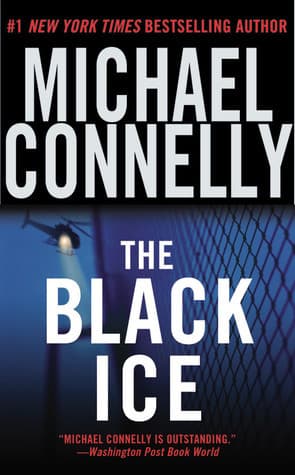
Michael Connelly (1993)
Genre
Thriller / Mystery
Reading Time
9-10 hours
Key Themes
See below
Sign in to track this book
When a detective's apparent suicide unravels into a series of murders from Hollywood to Mexico, Harry Bosch must navigate a deadly game where the truth is as elusive as 'black ice'.
LAPD Detective Harry Bosch arrives at the scene of Narcotics Detective Cal Moore's death in a cheap motel room on Christmas Day. Moore has a fatal gunshot wound, a .38 revolver in his hand, and a suicide note. The official ruling is suicide, but Bosch immediately notices inconsistencies. The note's handwriting looks wrong, and Moore's reputation as a dedicated officer makes suicide seem unlikely, especially given his recent involvement in a high-profile drug case. Bosch's partner, Jerry Edgar, helps with the initial investigation, and they find Moore had been working a side investigation into 'Black Ice,' a designer drug, and a potential leak within the department. This makes Bosch suspect Moore's death is more complicated than it appears.
Ignoring the official suicide ruling, Bosch meticulously reconstructs Cal Moore's final days. He learns Moore spent an unusual amount of time in Tijuana, Mexico, and was obsessed with 'Black Ice,' a synthetic drug flooding the Los Angeles market. Bosch interviews Moore's estranged wife, Eleanor Wish, a former FBI agent now in Las Vegas, who says Moore was secretive and under immense pressure. Bosch also finds Moore had been meeting with a confidential informant, Juana, a young woman who worked at a clinic in Tijuana. These leads suggest Moore was pursuing a dangerous investigation beyond his official duties, challenging the suicide narrative.
Following the trail to Tijuana, Bosch crosses the border to investigate Moore's activities there. He learns Moore was deeply involved in a clandestine investigation. Bosch seeks out Juana, Moore's informant, at her clinic. However, he finds her brutally murdered, her death staged to look like a drug overdose. This confirms Bosch's fears that Moore's death was not a suicide and that he was silenced because of what he knew. Juana's murder further connects Moore's investigation to dangerous criminals operating across the border, raising the stakes for Bosch and putting him in harm's way.
As Bosch puts the puzzle together, he discovers 'Black Ice' is not just a street drug but a sophisticated synthetic compound. His investigation leads him to Western Pharmaceuticals, a company with a legitimate facility in Tijuana. Bosch suspects the company's resources are being used to make 'Black Ice' illegally. He finds evidence of a complex distribution network involving corrupt officials and powerful figures. This realization elevates the case from a drug bust to a far-reaching conspiracy, implicating influential individuals and making the investigation perilous for Bosch.
Bosch's pursuit of the truth puts him against the drug cartel making and distributing 'Black Ice.' He faces intimidation and direct threats, showing he is getting too close to their operations. His life is in danger multiple times, emphasizing the ruthlessness of his adversaries. The cartel's reach seems to extend into law enforcement, complicating Bosch's investigation and making him question who to trust. These encounters highlight the extreme danger of his mission and the personal risks he is taking.
Through diligent detective work and connecting evidence, Bosch suspects a fellow LAPD officer is involved in the 'Black Ice' operation. He focuses on Detective Rodolfo 'Rudy' Tafero, a seemingly respected officer in the Narcotics Division. Bosch uncovers Tafero's suspicious financial activities and unusual connections to the Tijuana drug trade. Tafero's involvement is a critical breakthrough, explaining the leaks and the cartel's ability to stay ahead. This discovery confirms Bosch's initial intuition that Cal Moore was investigating corruption within his own department, leading to his murder.
Bosch confronts Rudy Tafero, cornering him with evidence of his corruption. The confrontation quickly escalates into a violent shootout. Bosch, using his combat experience, subdues Tafero after a fierce struggle. During the confrontation, Tafero reveals details about the broader conspiracy, confirming Cal Moore was murdered to prevent him from exposing the 'Black Ice' operation and the corrupt network supporting it. This climactic encounter provides crucial answers but leaves Bosch shaken by the close call and the betrayal within his own ranks.
After the confrontation with Tafero, Bosch uncovers the true mastermind behind the 'Black Ice' operation: Dr. Shizuo Ikeda, a chemist at Western Pharmaceuticals. Ikeda, driven by greed and a twisted scientific ambition, used the company's resources to synthesize and distribute 'Black Ice,' leveraging his expertise and connections to build a criminal enterprise. He also ordered Cal Moore's death and Juana's murder to protect his operation. This revelation exposes the depth of the conspiracy and the calculated nature of the crimes, showing the villain's cold intelligence.
Bosch tracks Dr. Ikeda to a remote location where 'Black Ice' is produced. He confronts Ikeda in a tense standoff, where the chemist, believing himself superior, tries to justify his actions and escape justice. Bosch, using his observational skills and psychological tactics, outwits Ikeda. The confrontation ends with Ikeda's arrest, dismantling the 'Black Ice' operation and ending the murders. This final act of justice brings closure to Cal Moore's death and highlights Bosch's commitment to the truth, regardless of the personal cost.
After the 'Black Ice' case, Bosch deals with the investigation's lingering effects. He reflects on the corruption he uncovered, the betrayal of fellow officers, and the toll the case took on him. The official report confirms Cal Moore's murder and clears his name, providing some solace to his estranged wife, Eleanor Wish. Bosch, a solitary figure, continues to wrestle with justice's complexities and his profession's moral ambiguities. The case reinforces his belief in the 'primal police rule' – looking for the glue that holds facts together – and strengthens his resolve to seek truth, even when it's uncomfortable.
The Protagonist
Bosch begins as a cynical detective disillusioned by corruption and ends with his resolve strengthened, reaffirming his personal code of justice.
The Victim/Catalyst
Moore's character is explored retrospectively; he is revealed as a man driven to expose corruption, leading to his tragic murder.
The Supporting
Edgar remains a steadfast and supportive partner, providing a stable presence amidst Bosch's tumultuous investigation.
The Supporting
Eleanor moves from a place of grief and confusion about her ex-husband's death to a clearer understanding and acceptance of his heroic, albeit tragic, actions.
The Antagonist
Tafero is revealed as a corrupt officer and ultimately brought to justice by Bosch, exposing the internal rot he represents.
The Antagonist
Ikeda is exposed as the cold, calculating mastermind and brought down by Bosch, shattering his illusion of invincibility.
The Mentioned/Victim
Juana's character is developed through her tragic death, which confirms the danger of Moore's investigation and fuels Bosch's pursuit of justice.
The novel explores corruption, not just in the criminal underworld but within justice institutions. Cal Moore's murder results from his investigation into a corrupt network including an LAPD detective, Rudy Tafero, and a pharmaceutical chemist, Dr. Ikeda. This betrayal from within the police force deeply affects Bosch. It makes him question who he can trust and highlights greed's insidious nature that can infect even guarded institutions. The pervasive nature of this corruption, across borders, underscores justice's fragility when power and money are involved, as Bosch realizes Moore was killed to cover up Tafero's involvement.
““Don’t look for the facts, but the glue that holds them together.””
At its core, 'The Black Ice' is about pursuing truth and justice against overwhelming odds. Harry Bosch is driven by a need to uncover the real story behind Cal Moore's death, rejecting the easy answer of suicide. His dedication to speaking for the dead, even when it risks his life, is central to his character. This theme shows through Bosch's meticulous investigation, his willingness to cross international borders, and his defiance of departmental orders. His pursuit is not just about solving a crime but about restoring honor to Moore's name and exposing the darkness that led to his death, even when the truth is painful and complex, as seen in his unwavering focus on Moore's last days.
““Everybody counts or nobody counts.””
The novel explores evil, showing it doesn't always reside in the stereotypical criminal. Dr. Shizuo Ikeda, a brilliant and seemingly respectable chemist, embodies a cold, calculated evil driven by intellect and greed. His ability to rationalize making and distributing a deadly drug, and the murders to protect his enterprise, highlights a chilling depravity. Rudy Tafero, a corrupt police officer, further complicates this theme, showing how evil can infiltrate and corrupt institutions from within. This theme suggests evil can wear many masks, making it harder to detect and combat.
““The darkness was always there, lurking, waiting for the light to falter.””
Harry Bosch is a solitary character who operates by a personal moral code, often at odds with the LAPD's bureaucracy. His willingness to defy orders and pursue the truth independently shows this theme. He often finds himself isolated, relying only on his instincts and resilience. This solitude is not just physical but emotional, as he grapples with past traumas and his work's moral ambiguities. His personal code, which prioritizes justice over protocol, is both his greatest strength and a source of constant conflict with his superiors, as seen in his refusal to accept the suicide ruling for Moore.
““There was no solace in numbers, only in the truth.””
An initial, misleading conclusion designed to divert the investigation.
The initial ruling of Cal Moore's death as a suicide serves as a major red herring. It is meticulously staged with a gun and a suicide note, creating a plausible but ultimately false narrative. This device immediately establishes a sense of mystery and defiance, as Harry Bosch instinctively rejects the official story. It forces Bosch to dig deeper, questioning appearances and challenging authority, thereby propelling the plot forward and revealing the deeper conspiracy that the perpetrators intended to hide. The red herring highlights Bosch's unique detective intuition and his refusal to accept easy answers.
A posthumous investigation that drives the current plot.
Cal Moore's secret investigation into 'Black Ice' and police corruption, conducted before his death, acts as the unseen catalyst for the entire story. Bosch is essentially picking up a trail that Moore laid, piecing together fragments of Moore's covert work. This device allows for a layered narrative, where past events directly influence the present investigation. Moore's posthumous presence guides Bosch, providing clues through his actions and discoveries, and adds a sense of urgency as Bosch realizes he is following in dangerous footsteps.
The setting shifts between Los Angeles and Tijuana, complicating the investigation.
The plot device of a cross-border investigation, primarily between Los Angeles and Tijuana, significantly complicates the case and introduces jurisdictional challenges. This geographical divide not only creates logistical hurdles for Bosch but also highlights the international scope of the 'Black Ice' drug operation and the difficulty of enforcing justice across different legal systems. It allows for the introduction of diverse characters and criminal elements, expanding the world of the story and increasing the stakes and dangers Bosch faces.
The betrayal of trust within law enforcement.
The revelation of internal police corruption, specifically through Detective Rudy Tafero, serves as a powerful plot device. It raises the stakes significantly, as Bosch must contend not only with external criminals but also with betrayal from within his own department. This device creates a sense of paranoia and isolation for Bosch, forcing him to be even more cautious and distrustful. It underscores the theme of integrity versus compromise and adds a layer of personal conflict for Bosch, who deeply believes in the sanctity of his badge. This corruption is the reason Moore was killed and what the criminals are desperate to keep hidden.
“Everybody counts or nobody counts. That's been my motto.”
— Harry Bosch's personal motto, reflecting his belief in justice for all victims.
“The past is a monster. It will eat you alive if you let it.”
— Bosch reflecting on the lingering effects of past events and trauma.
“The truth was a slippery thing, always just out of reach.”
— Bosch's frustration while investigating a complex and deceptive case.
“There were no clean kills in life, only varying shades of messy.”
— Bosch contemplating the moral ambiguities of police work and violence.
“He knew the city, its dark corners and hidden sins, like the back of his hand.”
— Describing Bosch's intimate knowledge of Los Angeles and its criminal underworld.
“Sometimes you had to break a few rules to get to the truth.”
— Bosch's justification for his unconventional and often rule-bending investigative methods.
“He was a man who lived in the shadows, comfortable with the darkness.”
— A description of Harry Bosch's solitary nature and his comfort in the grittier aspects of his job.
“The dead whispered secrets to those who listened closely enough.”
— Bosch's approach to examining crime scenes, trying to understand the victims' stories.
“Every case was a puzzle, and he lived for the moment it all clicked into place.”
— Bosch's passion for detective work and the intellectual challenge of solving crimes.
“Fear was a cold companion, but it could also sharpen the senses.”
— Bosch's experience with fear during dangerous situations, using it to his advantage.
“The city was a labyrinth, full of dead ends and false turns.”
— Bosch navigating the complex and often misleading paths of his investigation through Los Angeles.
“He didn't believe in coincidences, only patterns waiting to be discovered.”
— Bosch's analytical mind looking for connections in seemingly random events.
“Sometimes the greatest evil wore the most respectable disguise.”
— Bosch's realization that the perpetrators of crime often come from unexpected places.
“The job was his life, and his life was the job. There was no separating them.”
— Highlighting Bosch's complete dedication to his work as a detective, often at the expense of personal life.
Ready to see how well you understood this book? Take our interactive quiz with 10 questions.
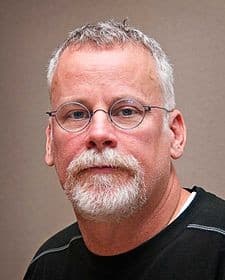
Biography coming soon.







