“She was the queen of the night, and she was going to be my queen, too.”
— Dwight Bleichert's early obsession with Elizabeth Short.

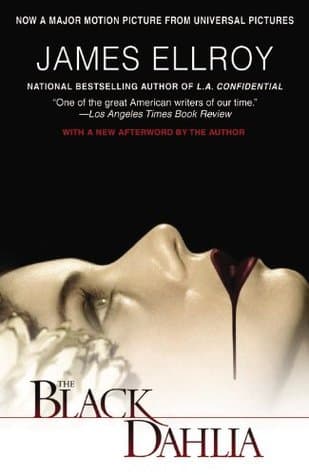
James Ellroy (1987)
Genre
Thriller / Historical Fiction / Mystery
Reading Time
700 min
Key Themes
See below
Sign in to track this book
In postwar Hollywood, two detectives hunt the killer of the Black Dahlia. The case mirrors the darkness in themselves and the city they protect.
On January 15, 1947, a woman's body is found in a vacant lot in Leimert Park, Los Angeles. The victim is Elizabeth Short, a 22-year-old actress known as 'The Black Dahlia.' LAPD detectives Dwight 'Bucky' Bleichert and Leland 'Lee' Blanchard, called 'Mr. Fire' and 'Mr. Ice' from their boxing past, are assigned to the Warrants Squad but get involved in the murder investigation. The crime's nature and Short's mysterious past draw public attention and create pressure on the police to find her killer.
Bucky and Lee, already connected by boxing and their love for Kay Lake, find their lives increasingly taken over by the Dahlia case. Bucky starts to project his own dark fantasies and past problems onto Elizabeth Short, becoming obsessed with her image and life. He looks into her background, interviewing people she knew and trying to reconstruct her last days, finding a pattern of moving around, small-time hustling, and wanting fame. Lee also becomes consumed by the case, which affects his unstable mental state and relationship with Kay.
The official LAPD investigation into the Black Dahlia murder has false leads, media coverage, and internal politics. Bucky, unhappy with the official process, starts his own investigation. He explores the seedy parts of Hollywood and Los Angeles, meeting morally unclear characters like prostitutes, small-time criminals, and corrupt officials. He finds evidence of Elizabeth Short's links to various people and parties, suggesting a more complex and dangerous life than first thought. This independent search separates Bucky from official police efforts and deepens his personal involvement.
Lee Blanchard, showing signs of severe psychological distress from the Dahlia case and his past, suddenly disappears. His disappearance becomes another problem for the LAPD and a personal pain for Bucky and Kay. While looking for Lee, Bucky continues to uncover details of Elizabeth Short's life, finding more connections between her and the same dark groups Lee was investigating. He finds that Lee also had a disturbing obsession with the Dahlia, leading Bucky to think Lee's disappearance might be linked to the murder or its perpetrators, possibly even meaning Lee's involvement or death.
Bucky's investigation leads him to the wealthy Sprague family, specifically Emmet Sprague, a real estate developer, and his daughters, Madeleine and Lorna. He finds that Elizabeth Short had a sexual relationship with Emmet Sprague and was involved with his family's secrets. Madeleine Sprague, a beautiful socialite, looks like Elizabeth Short, which bothers Bucky and increases his obsession. As Bucky looks deeper, he finds a history of incest, mental illness, and depravity in the Sprague family, showing a possible reason for Short's murder tied to their desire to protect their reputation and secrets.
Madeleine Sprague, in several manipulative meetings, tells Bucky that she killed Elizabeth Short during a fit of jealousy and mental instability. This was caused by her incestuous relationship with her father, Emmet Sprague, and her mother's role in the family's problems. She says she disfigured Short to copy a traumatic event from her own childhood. Bucky, despite her confession, senses a deeper deception. He thinks Madeleine is covering for someone else or is part of a larger plan, and that the Dahlia case's true horror goes beyond her guilt. He continues to search for the full truth.
Bucky eventually finds out about Lee Blanchard's past: Lee had molested Kay Lake when she was a child. Kay, traumatized, went to live with her sister, but Lee, feeling guilty and with a twisted love, dedicated his life to protecting her and making amends, even marrying her. This news destroys Bucky's view of his best friend and his relationship with Kay. He realizes that Lee's obsession with Elizabeth Short was partly a projection of his guilt and an attempt to find redemption by saving another 'damaged' woman, which led him to self-destruction and his death.
Bucky's investigation leads him to the real killer: Ramona Sprague, Madeleine and Lorna's mother. Ramona, driven by mental illness, sadism, and a desire to protect the family's incestuous secrets, murdered Elizabeth Short. She disfigured Short's body, recreating a traumatic event from her own past where her face was cut by a pimp. Ramona reveals that Madeleine's confession was a lie to protect her mother, and Emmet Sprague helped cover up the crime. Bucky confronts Ramona, who admits to the murder and her motives, confirming the Sprague family's pathology.
In a violent fight, Ramona Sprague is killed. Bucky, having found the full truth, deals with the aftermath. The police, wanting to close the case, accept a false story, and the disturbing details of the Sprague family's involvement are mostly hidden. Bucky's life is changed by his time in the Black Dahlia's world. He is left with the trauma of the case, the loss of Lee, his friendship's broken illusion, and the knowledge of Kay's childhood abuse. He leaves Los Angeles, forever marked by the darkness he found, unable to fully escape the Dahlia's shadow.
The Protagonist
Bucky transforms from a relatively straightforward cop into a haunted, morally compromised individual, irrevocably changed by the darkness he uncovers.
The Supporting
Lee descends into madness and self-destruction, ultimately dying due to his past sins and present obsessions.
The Supporting
Kay struggles with her traumatic past and her divided loyalties, ultimately seeking to rebuild her life after profound loss.
The Central Figure (Posthumous)
Her story is revealed posthumously, evolving from a simple victim to a complex figure entangled in a web of depravity.
The Supporting
Madeleine initially appears as a femme fatale, her true nature as a victim and complicit enabler slowly revealed.
The Supporting
His character's true depravity is gradually exposed, revealing him as a facilitator of evil.
The Antagonist
Initially a peripheral figure, she is revealed as the grotesque mastermind behind the murder.
The Mentioned
Her character remains largely static, serving as a background detail to the family's dysfunction.
The Supporting
Loew remains a static figure of political corruption, prioritizing his career over justice.
The novel explores how Bucky and Lee project their psychological issues, past traumas, and dark fantasies onto Elizabeth Short. Short becomes a canvas for their desires and guilt. Bucky's fascination, his attempts to 'know' her through her belongings and imagined life, and Lee's quest to save a 'damaged' woman, show how their internal worlds combine with the tragedy. This theme highlights how finding truth can mix with personal problems.
“She was a cipher, a blank slate onto which we could all project our desires and our fears. We loved her, we hated her, we wanted to save her, we wanted to kill her. She was the perfect victim.”
Ellroy shows how wealth and power in post-war Los Angeles enable and hide moral decay. The Sprague family, with their money and influence, can commit horrific acts, including incest and murder, and then cover it up. Characters like Emmet Sprague and Ellis Loew show how the justice system and media can be used to protect the elite. This theme reveals the hypocrisy beneath Hollywood's glamorous facade, where money can buy freedom from punishment and silence.
“Money talks, and in this town, it screams. It screams out the truth, and then it screams out a lie, and the lie wins every time.”
Trauma, both personal and passed down through generations, is a theme. Kay Lake's childhood abuse by Lee, Lee's guilt and self-destructive actions, Bucky's projection of his past, and the psychological damage in the Sprague family (especially Ramona's history and Madeleine's incestuous relationship with her father) all show how past wounds affect current actions. The novel suggests that trauma is cyclical and often leads to more violence and abuse, making true healing difficult.
“The past is a festering wound, and sometimes, it bleeds all over the present.”
The novel contrasts Hollywood's idealized image of dreams and opportunity with its dark, seedy side. Elizabeth Short, an aspiring actress, represents the broken American Dream, her search for fame ending in murder. The Sprague family's glamorous appearance hides incest and madness. Ellroy removes the romanticism, showing a world of prostitution, corruption, and desperate ambition, where innocence is exploited and dreams are crushed. This shows the true cost of chasing an illusion.
“Hollywood was a dream factory, but it also manufactured nightmares. And sometimes, the nightmares were real.”
Bucky Bleichert's subjective, cynical, and often unreliable voice.
The entire novel is narrated by Dwight 'Bucky' Bleichert in a hard-boiled, cynical, and highly subjective first-person voice. This device immerses the reader directly into Bucky's increasingly disturbed psyche, reflecting his obsession, paranoia, and moral ambiguity. The narration is characterized by short, clipped sentences, a detached yet emotionally charged tone, and frequent use of internal monologue, blurring the lines between objective reality and Bucky's warped perceptions. This style is quintessential noir, emphasizing the protagonist's descent into a morally corrupt world.
Characters mirroring each other, blurring identities and motives.
The novel heavily utilizes the motif of doppelgängers and doubles. Elizabeth Short's striking resemblance to Madeleine Sprague is central to the plot, creating a disturbing psychological link for Bucky. Bucky and Lee themselves are presented as 'Mr. Ice' and 'Mr. Fire,' two sides of the same coin, sharing a boxing past, a lover, and an obsessive pursuit of the Dahlia. This device highlights themes of identity, projection, and the interchangeability of victims and perpetrators, suggesting a deeper, interconnected web of pathology where individuals reflect and amplify each other's darkness.
Graphic descriptions of violence and disfigurement to emphasize brutality and psychological impact.
Ellroy employs extremely graphic and visceral descriptions of Elizabeth Short's mutilated body and other acts of violence. This grotesque imagery serves not merely for shock value but to underscore the profound depravity of the crime and its psychological impact on the investigators, particularly Bucky. The detailed descriptions of dismemberment and torture force the reader to confront the raw horror, mirroring Bucky's own morbid fascination and descent into the dark recesses of human cruelty. It's a key element of the novel's dark, unflinching tone.
A seductive, dangerous woman who leads the protagonist into peril.
Madeleine Sprague embodies the classic femme fatale archetype. She is beautiful, alluring, and sexually manipulative, drawing Bucky into her orbit with promises of information and intimacy, all while serving her own hidden agenda. Her resemblance to Elizabeth Short further blurs the lines between desire and danger for Bucky. She uses her charm and intelligence to misdirect the investigation and protect her family's secrets, representing the seductive yet ultimately destructive power of women in the noir landscape, leading the protagonist deeper into a web of deceit and peril.
“She was the queen of the night, and she was going to be my queen, too.”
— Dwight Bleichert's early obsession with Elizabeth Short.
“Some men are born to be policemen, some men are born to be criminals. I was born to be both.”
— Bleichert reflecting on his dual nature and the blurred lines of his morality.
“The city was a whore, and I was her pimp. I knew all her secrets, and she knew all of mine.”
— Bleichert's cynical view of Los Angeles and his relationship with its underbelly.
“Death was a woman, and she was beautiful. She had to be, for so many men to follow her.”
— Bleichert's morbid fascination with the allure of death, particularly in relation to Elizabeth Short.
“Lies were like a second skin in this town. Everybody wore them, and nobody knew who they really were underneath.”
— A commentary on the pervasive deception and hidden identities in Hollywood.
“He was a man who lived on the edge of a scream, and he was always about to fall off.”
— Describing Bobby De Witt's volatile and unstable personality.
“The past was a beast, and it was always hungry. It never forgot, and it never forgave.”
— Bleichert's struggle with his own past and the long-reaching consequences of events.
“We were all just shadows in the City of Angels, trying to find a little light before the darkness swallowed us whole.”
— A poignant reflection on the transient and often tragic nature of life in Los Angeles.
“Justice was a word the politicians used. Revenge was what people really wanted.”
— Bleichert's cynical view on the legal system and human nature.
“The truth was a monster, and it was always hiding in plain sight.”
— The difficulty and horror of uncovering the truth behind the Dahlia murder.
“Every beautiful thing had a dark secret, and every dark secret had a price.”
— A recurring theme about the hidden costs and corruptions beneath glamorous surfaces.
“Sometimes you had to become the monster to fight the monsters.”
— Bleichert's internal struggle and the moral compromises he makes in his investigation.
“She was the dream that died, and I was the one who had to bury her.”
— Bleichert's ultimate role in bringing a grim closure to Elizabeth Short's story.
“The past is a putrid thing, and it clings to you like a shroud.”
— A powerful image describing the inescapable and contaminating nature of the past.
Ready to see how well you understood this book? Take our interactive quiz with 10 questions.

Lee Earle "James" Ellroy is an American crime fiction writer and essayist. Ellroy has become known for a telegrammatic prose style in his most recent work, wherein he frequently omits connecting words and uses only short, staccato sentences, and in particular for the novels The Black Dahlia (1987) and L.A. Confidential (1990).







