“The world was a museum of the past, and we were its curators.”
— A reflection on history and memory, particularly prominent when Galip is observing Istanbul.

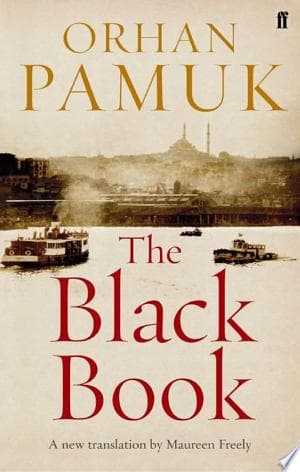
Orhan Pamuk (2006)
Genre
Literary Fiction / Mystery
Reading Time
12-15 hours
Key Themes
See below
Sign in to track this book
In Istanbul, a lawyer's search for his missing wife leads him to assume the identity of a newspaper columnist, blurring reality and history.
Galip, a lawyer in Istanbul, wakes to find his wife, Rüya, gone. He first thinks she's just out, but as hours pass, he grows worried. He checks her usual places, calls friends, and visits family, including his cousin Celâl Salik, a famous columnist. No one has seen her. Rüya left no note, just an empty space. Galip's life, centered on Rüya and his respect for Celâl's columns, starts to fall apart as he deals with her sudden absence.
As Galip's search for Rüya fails, he thinks more and more about his cousin, Celâl Salik. Rüya read Celâl's columns, and Galip himself always admired Celâl's view of Istanbul. Galip starts to see strange links between Celâl's old columns and his own life, as if Celâl is writing about him. He rereads Celâl's articles, looking for clues, sure that Celâl knows something about Rüya or is involved in her leaving. This obsession leads Galip to copy Celâl's habits, visit places Celâl writes about, and even use his mannerisms to understand his cousin.
Galip's search leads him to an old apartment building where Celâl Salik supposedly has a secret place. Posing as a friend, Galip gets in and finds a well-kept apartment belonging to a blind man, who is also missing. This apartment, full of odd items, books, and newspaper clippings, seems to hold the essence of Celâl's life and work. Galip spends days there, lost in Celâl's world, trying to connect the blind man, Celâl, and Rüya. The apartment becomes both a refuge and a trap for Galip, where his identity further merges with Celâl's.
Driven to understand Celâl and maybe find Rüya through him, Galip decides to impersonate his cousin. He starts writing Celâl's newspaper column, copying his style and voice with great accuracy. The editor, at first doubtful, eventually accepts it, and the columns continue under Celâl's name. Galip moves into Celâl's apartment, follows his routines, and talks to people who knew Celâl, further blurring his own identity. This change is not just a disguise but a deep mental shift, as Galip deals with becoming the person he believes holds the answer to his lost wife.
As Celâl, Galip meets various people from his cousin's past. Each meeting adds to the mystery of Celâl Salik. He meets former lovers, unhappy colleagues, and loyal fans, all offering different views of the columnist. These encounters are often unsettling, as Galip tries to keep up the act while learning about Celâl's complex nature and secret life. He learns about Celâl's thoughts, his politics, and his often-lonely life, realizing that Celâl himself was a master of disguise. These interactions make Galip question not only Celâl's true self but also his own.
Through his imitation of Celâl and his deep study of his cousin's writings, Galip finds mentions of a mysterious 'Master.' This person, often hinted at in Celâl's more obscure columns, seems to have greatly influenced Celâl's ideas. Galip also remembers Rüya's interest in certain mystical texts and symbols, suggesting she too might have been drawn to this 'Master' or similar ideas. This discovery adds a new layer to his search, changing it from a simple hunt for a missing person to a quest for a deeper, hidden truth about identity, belief, and reality in Istanbul.
Galip's journey through Istanbul's streets, markets, and hidden spots mirrors his inner search. The city itself becomes a character, a complex place full of past and present echoes, much like Celâl's columns. As Galip travels, he sees the city through Celâl's eyes, experiencing the familiar in a new way. Istanbul's historical layers, with its Ottoman grandeur and modern complexities, reflect the layers of identity Galip uncovers, both his own and Celâl's. The city's sadness, its mix of East and West, becomes important to Galip's understanding of his situation and the elusive nature of truth.
As Galip goes deeper into Celâl's writings and his adopted role, he starts to understand Celâl's complex views on life, identity, and the writer's role. Celâl, it seems, was not just a columnist but a man focused on personal authenticity and the roles people play. Galip begins to suspect that Celâl's disappearance, like Rüya's, might not be a simple abduction but a deliberate act of self-erasure or change, a philosophical statement itself. This realization complicates Galip's search, moving his focus from finding someone to understanding what it means to truly disappear.
While living as Celâl, Galip uncovers a forgotten childhood memory involving himself, Rüya, and Celâl. This memory, perhaps a game, a shared story, or a secret place, gives a crucial, though unclear, clue. It suggests a deeper, older connection between Rüya and Celâl than Galip had known, hinting at a long-standing understanding or secret predating their adulthood. This memory forces Galip to rethink his marriage and his relationship with his cousin, adding a layer of personal betrayal to his ongoing quest.
The newspaper editor, at first impressed by the continued columns, eventually grows suspicious of Galip's odd behavior and changes in the column's style. A confrontation happens, where Galip must explain his reasons and the strange facts of Celâl's disappearance. This moment of truth is important, as Galip must explain his obsession and the ideas behind his impersonation. The editor, representing the practical world, struggles to grasp Galip's deeper search, showing the gap between Galip's inner world and outer reality. The meeting makes Galip think about the rightness of his actions.
Galip's search for the 'Master' leads him to an older, reclusive man in traditional Istanbul. This man, a former teacher to Celâl, greatly influenced Celâl's views and his interest in identity and disappearance. The Master tells old stories and shares philosophical ideas, especially from Sufi tradition about 'passing through' or 'shedding' one's identity. He speaks in puzzles, guiding Galip towards a more spiritual understanding of his quest, suggesting that both Celâl and Rüya might be changing themselves rather than just being physically absent.
Through his journey and talks with the Master, Galip starts to understand that Rüya's disappearance might not be a tragedy but a deliberate choice. She, like Celâl, was interested in identity and escaping one's set self. Galip begins to see her absence as an act of self-discovery or self-ending, a search for a more real life beyond their shared one. This realization is both sad and freeing, making Galip face the intellectual depth and independence of his wife, which he may have undervalued.
As his impersonation ends, Galip writes a final, personal column under Celâl's name. This column brings together his search for Rüya, his time as Celâl, his philosophical thoughts, and his new understanding of Istanbul. It reflects on identity, memory, love, and loss, showing the deep change he has gone through. The column is both a goodbye to Celâl's role and a sign of Galip's own changing self, a public statement of what he has learned, even if others cannot fully grasp his experience.
After his journey, Galip returns to his apartment, to what remains of his old life. Rüya's fate is unclear; she is never truly found or returned. Galip, however, is changed. He has lived another man's life, seen the world differently, and faced deep questions of self. The search has taken his old innocence and given him a sad wisdom. He is left with the lingering presence of Rüya and Celâl, forever affected by their absence and the complex web of identity he uncovered. His quest ends not with an answer, but with a deeper understanding of the human experience.
The Protagonist
Galip transforms from a naive, conventional man into a philosophical seeker who understands the fluidity of identity, even as he loses his own sense of self.
The Catalyst/Mystery
Rüya's character arc is largely implied; she moves from being a beloved wife to a symbol of philosophical disappearance and the elusive nature of identity.
The Antagonist/Mentor/Symbol
Celâl's arc is seen through Galip's eyes, evolving from a admired public figure to a philosophical reclusive who orchestrates his own disappearance.
The Supporting
The Editor remains largely static, serving as a foil to Galip's philosophical journey, representing the external world's perspective.
The Supporting/Mentor
The Master remains a static source of wisdom, providing philosophical context and guidance to Galip.
The Supporting/Symbolic
The Blind Man's presence is primarily symbolic and his 'arc' is tied to the unraveling of Celâl's secrets.
The Mentioned
Alâeddin's role is primarily to evoke nostalgia and a sense of lost innocence; he does not have a developed arc.
The novel explores how identity changes and is hard to grasp. Galip's search for Rüya leads him to become his cousin, Celâl Salik, blurring who he is and who he pretends to be. This change is not just a disguise but a deep mental shift, questioning if identity is fixed or made up. Celâl himself often changed who he was, and Rüya's disappearance suggests her own search for a different self. The characters want to escape their lives and become someone else, showing a deeper human desire.
““Perhaps my life was nothing but a long preparation for this moment: to become Celâl.””
Galip's search for Rüya changes from a simple missing persons case to a search for meaning, truth, and understanding. He looks into Celâl's writings, Istanbul's history, and old philosophies, seeking answers not just about Rüya but about life itself. Truth remains hard to find, often hidden by stories, interpretations, and personal experiences. The novel suggests that the search itself, the act of questioning and exploring, is more important than any final answer, mirroring the human condition.
““What is true and what is not? Perhaps there is no truth, only stories.””
Istanbul is more than just a place; it is a living character in the novel, a mix of history, culture, and memory. Galip's journey through its streets, old alleys, and modern roads reflects his inner search. The city's layers—Ottoman, Byzantine, and modern—mirror the layers of identity and meaning Galip tries to uncover. Celâl's columns are tied to Istanbul's spirit, and Galip's adoption of Celâl's role means adopting his way of seeing the city, making it a mirror for his own changes.
““Istanbul was a city of secrets, a city of veiled women, veiled words, veiled meanings.””
At its core, the novel explores love and loss, and how far someone might go to get back what is lost. Galip's love for Rüya starts his journey, but his obsession quickly grows to include Celâl and the mysteries he represents. His love has a sense of ownership and a desire for full understanding, leading him to live Celâl's life. The novel looks at the destructive yet changing power of obsession, showing how it can both undo and redefine a person.
““My love for Rüya was so vast, so encompassing, it contained everything: my life, my city, my future.””
The Black Book constantly thinks about storytelling, authorship, and the power of narrative. Celâl Salik is a columnist, a professional storyteller, and Galip literally takes over his writing voice. The novel questions who truly owns a story, how stories shape our view of reality, and the unclear line between fiction and truth. It examines the writer's role in making meaning and the reader's role in understanding it, suggesting that life itself is a big, unfolding story where characters can be written, rewritten, or even disappear.
““Every story is a story about stories.””
The story is told from Galip's subjective and increasingly deluded perspective.
Galip serves as the primary narrator, but as he immerses himself in Celâl's identity, his perception of reality becomes increasingly blurred. He experiences hallucinations, vivid dreams, and philosophical musings that intertwine with his search for Rüya. This narrative choice makes the reader question the veracity of events, forcing them to piece together what is 'real' versus what is Galip's internal projection or philosophical interpretation. The unreliable narration enhances the novel's themes of identity and the subjective nature of truth.
The novel incorporates Celâl's columns and constantly references its own nature as a story.
The novel is rich in intertextuality, particularly through the inclusion of Celâl Salik's fictional newspaper columns, which often comment on the events of the main narrative or offer philosophical insights relevant to Galip's journey. This metafictional element draws attention to the act of storytelling itself, blurring the lines between the 'story' of Galip's search and the 'stories' Celâl writes. It allows the novel to comment on its own construction, raising questions about authorship, interpretation, and the way narratives shape our understanding of life and identity.
Galip's assumption of Celâl's identity creates a profound sense of duality and mirroring.
The doppelgänger motif is central to the novel, with Galip literally becoming Celâl Salik. This isn't just a disguise but a deep psychological merging of identities. Galip not only dresses like Celâl and lives in his apartment but also adopts his thoughts, mannerisms, and even his memories. This motif explores the idea of a 'double' self, the hidden aspects of one's personality, and the desire to escape or transform one's identity by assuming another's. It highlights the profound connection and rivalry between the two cousins.
The plot's meandering, non-linear progression mirrors Istanbul's complexity and Galip's internal state.
The narrative structure of 'The Black Book' is often labyrinthine, mirroring the winding streets of Istanbul and Galip's confused mental state. The plot does not follow a straightforward linear progression but instead circles back on itself, dives into philosophical digressions, incorporates historical anecdotes, and integrates Celâl's columns. This non-linear, fragmented approach reflects Galip's obsessive, non-rational search and the elusive nature of the truth he seeks, making the reader experience the same sense of disorientation and discovery as the protagonist.
“The world was a museum of the past, and we were its curators.”
— A reflection on history and memory, particularly prominent when Galip is observing Istanbul.
“Perhaps I wanted to be someone else, or perhaps I wanted to find myself.”
— Galip's internal struggle with identity, often in relation to Celal and Rüya.
“To read a book is to be someone else for a while.”
— A contemplation on the transformative power of literature, central to Galip's experiences.
“Every object in Istanbul was a fragment of a forgotten story.”
— Galip's perception of the city, where every detail holds historical and narrative weight.
“The city was a great black book, and I was trying to read its secrets.”
— A metaphorical description of Istanbul as a text to be deciphered, reflecting the novel's title.
“We are all characters in stories we don't fully understand.”
— A philosophical musing on human existence and the narratives that shape lives.
“To forget is also a kind of remembering, a way of keeping the past at bay.”
— A nuanced take on memory and forgetting, suggesting an active role in shaping one's past.
“The greatest mystery was not who Celal was, but who I was when I tried to be him.”
— Galip's realization during his attempts to embody Celal's persona.
“Istanbul was a city of mirrors, reflecting not only itself but also the souls of those who walked its streets.”
— Another vivid description of Istanbul, emphasizing its reflective quality on its inhabitants.
“Perhaps all stories are just different ways of telling the same secret.”
— A meta-narrative reflection on the nature of storytelling and universal truths.
“Every secret contains another secret, just as every story contains another story.”
— A reiteration of the nested nature of secrets and narratives, a core theme.
“The true Istanbul was not in its buildings or its history, but in the dreams of its people.”
— A profound insight into the essence of Istanbul, moving beyond the physical to the psychological.
“We are all searching for a lost paradise, a forgotten self.”
— A universal yearning expressed by Galip, relating to themes of nostalgia and identity.
“The most beautiful stories are those that are never fully told.”
— A reflection on the power of ambiguity and the imagination in storytelling.
Ready to see how well you understood this book? Take our interactive quiz with 10 questions.
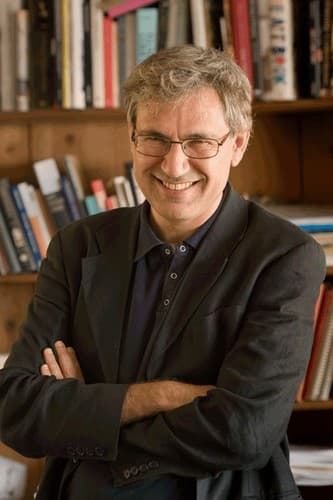
Ferit Orhan Pamuk is a Turkish novelist, screenwriter, academic, and recipient of the 2006 Nobel Prize in Literature. One of Turkey's most prominent novelists, he has sold over 13 million books in 63 languages, making him the country's best-selling writer.







