BookBrief
The Big Sleep cover
Archivist's Choice

The Big Sleep

Raymond Chandler (2020)

Genre

Thriller / Mystery

Reading Time

221 min

Key Themes

See below

Track Your Reading

Sign in to track this book

In Los Angeles, detective Philip Marlowe navigates a world of dangerous women and deadly secrets, uncovering blackmail and murder to find that some truths are best left buried.

Synopsis

Philip Marlowe, a private investigator, is hired by the ailing General Sternwood to handle a blackmail attempt against his younger daughter, Carmen. Marlowe soon learns Carmen's older sister, Vivian, is also caught in a web of lies and danger, particularly concerning her husband Rusty Regan's disappearance and the actions of gangster Eddie Mars. As Marlowe investigates, he meets dangerous people like pornographer Arthur Geiger, crook Joe Brody, and Agnes Lowzier. Murders increase, bodies vanish, and blackmail plots unfold, all pointing to a larger conspiracy around the Sternwood family's secrets and Eddie Mars's influence. Marlowe must navigate a complex plot of betrayals, illicit affairs, and violent encounters to find the truth behind Regan's disappearance and the crimes, confronting the killer and the city's dark side, even as some mysteries remain hidden in 'the big sleep.'
Reading time
221 min
Difficulty
Medium
Pacing
Moderate
Mood
Gritty, Cynical, Suspenseful, Atmospheric, Dark
✓ Read this if...
You enjoy classic hardboiled detective fiction with complex plots, cynical narrators, and a gritty Los Angeles setting.
✗ Skip this if...
You prefer straightforward mysteries with clear resolutions or dislike morally ambiguous characters and violence.

Plot Summary

The Sternwood Summons

Private detective Philip Marlowe arrives at the Sternwood mansion in Los Angeles, a grand but aging estate. He meets General Sternwood, a rich, wheelchair-bound man who hires him to investigate a blackmail scheme against his youngest daughter, Carmen. The blackmailer is Arthur Geiger, a rare book dealer. During their talk, Marlowe also meets Vivian Sternwood Regan, the General's older, more refined daughter, who seems to know more than she says. The General mentions his concern about Rusty Regan, Vivian's husband and his favorite son-in-law, who disappeared months ago.

Geiger's Bookstore and a Murder

Marlowe begins his investigation by watching Arthur Geiger's rare book shop, which he soon realizes is a front for an illegal pornography ring. He follows one of Geiger's employees, Carol Lundgren, to Geiger's house. Later that night, Marlowe returns to Geiger's house and sees Carmen Sternwood go inside. Soon after, he hears gunshots and screams. Marlowe breaks in to find Geiger dead, shot, and Carmen drugged and naked, standing over the body. Before the police arrive, Marlowe helps Carmen escape and takes a camera from the scene, suspecting a blackmail photo scheme.

The Missing Body and the Blackmail Photos

Marlowe returns to Geiger's house the next morning, but the body is gone. He meets Captain Ohls of the Missing Persons Bureau, who is investigating Rusty Regan's disappearance, and Bernie Ohls, a district attorney investigator. Marlowe searches Geiger's house and finds a hidden safe with the blackmail negatives involving Carmen. He takes them. Soon after, Lundgren, Geiger's lover, appears, upset about Geiger's death. Marlowe realizes that Lundgren likely moved the body and seeks revenge for Geiger's murder, which he wrongly blames on Marlowe.

Joe Brody and Agnes Lowzier

Marlowe traces the blackmail photos to Joe Brody, a small-time criminal who had worked with Geiger. He confronts Brody, who is now trying to blackmail Vivian Sternwood Regan with the same photos of Carmen. Vivian is at Brody's apartment when Marlowe arrives. During their tense conversation, Agnes Lowzier, Geiger's former cashier and Brody's current girlfriend, enters. She is a tough, cynical woman who knows a lot about the criminal underworld. Marlowe gets the photos from Brody, but the situation remains tense, with several people wanting the evidence.

The Death of Joe Brody

As Marlowe leaves Brody's apartment, he notices a car following him. He returns to Brody's building and finds Brody dead in the hallway, shot. Marlowe hides and soon sees Carol Lundgren running away. Marlowe catches Lundgren, who admits to killing Brody, believing Brody had killed Geiger. Marlowe, understanding Lundgren's grief-driven reason and knowing Brody was not Geiger's killer, does not turn him over to the police immediately. Instead, he helps Lundgren disappear, seeing the complex nature of justice in this corrupt world.

Eddie Mars and the Gambling Den

Marlowe's investigation leads him to Eddie Mars, a well-known gambler and owner of The Cypress Club casino. Mars's wife, Mona Mars, had supposedly run off with Rusty Regan, Vivian's missing husband. Marlowe visits The Cypress Club, where he observes Mars and his operations. He also encounters Vivian, who is a regular at the club and seems to have a complicated relationship with Mars. Marlowe suspects Mars is involved in more than just gambling and that the disappearance of Mona and Regan is part of a larger plan, possibly connected to the blackmail and murders.

Carmen's Attempted Murder

Marlowe receives a call from Carmen Sternwood, who asks him to come to her room. When he arrives, she is very agitated. She propositions Marlowe, and when he rejects her, she pulls a small gun and tries to shoot him. Marlowe disarms her, realizing how unstable she is and how violent she can be. This event shows Carmen's dangerous and unpredictable nature, suggesting she might be capable of more serious crimes, and complicates Marlowe's efforts to protect the Sternwood family.

The Oil Well and the Missing Car

Following a hunch and some clues, Marlowe drives to the Sternwood oil fields, a remote part of the family's property. He finds an abandoned car submerged in an oil sump. Inside the car, he discovers a skeleton, confirming his suspicions about Rusty Regan's fate. The car belongs to Owen Taylor, the Sternwood's chauffeur who had also disappeared around the same time as Rusty Regan. This discovery solves the long-standing mystery of Regan's disappearance and links it directly to the Sternwood estate.

The Truth About Rusty Regan

Marlowe confronts Vivian with the evidence from the oil well. Under pressure, Vivian finally confesses the truth about Rusty Regan's death. She reveals that Carmen, in one of her psychotic rages, had shot and killed Rusty Regan because he rejected her. Vivian, to protect her sister and the family name, and with Eddie Mars's help, had covered up the murder, putting Regan's body in the oil sump and framing Owen Taylor for the disappearance, making it look as if Taylor had run off with Mona Mars.

The Final Confrontation with Eddie Mars

Marlowe confronts Eddie Mars, who tries to bribe him into silence. Mars, a master manipulator, had used the disappearance of Mona Mars and Rusty Regan to extort money from Vivian and to control her. Marlowe refuses to be bought. Mars's men try to kill Marlowe, leading to a tense shootout at a remote garage where Marlowe is ambushed. Marlowe outsmarts and outshoots his attackers, escaping with his life, but several of Mars's thugs are killed. This final encounter confirms Mars as the main antagonist behind much of the book's chaos.

The Loose Ends and the Big Sleep

With the truth about Rusty Regan's death out and Eddie Mars's operation broken up, Marlowe finishes the remaining tasks. He ensures that Carmen is institutionalized for her own safety and the safety of others. Vivian is left to deal with the aftermath of her family's dark secrets. Marlowe thinks about the widespread corruption he has found and the morally unclear nature of justice. He considers the meaning of 'the big sleep,' a term for death, understanding that many characters in the story have found their own version of it, literally or figuratively, in Los Angeles.


Principal Figures

Philip Marlowe

The Protagonist

Marlowe remains largely consistent in his moral code, but the case deepens his understanding of human depravity and the futility of absolute justice.

General Sternwood

The Supporting

The General's arc is one of decline, as the sordid truths of his family are exposed, leading to his quiet despair.

Vivian Sternwood Regan

The Supporting

Vivian initially tries to control the narrative and protect her secrets, but is forced to confront the truth about her sister and her own complicity.

Carmen Sternwood

The Supporting

Carmen's erratic behavior escalates throughout the novel, revealing her as the primary agent of violence within the family, leading to her eventual institutionalization.

Eddie Mars

The Antagonist

Mars's power and manipulation are gradually exposed and challenged by Marlowe, leading to his ultimate downfall.

Arthur Geiger

The Supporting

Geiger's arc is brief, serving as an initial victim whose death unravels a larger conspiracy.

Rusty Regan

The Mentioned

Regan's arc is entirely posthumous; his disappearance and eventual discovery drive the plot's central mystery.

Joe Brody

The Supporting

Brody's ambition leads to his quick demise, serving as a stepping stone in Marlowe's investigation.

Agnes Lowzier

The Supporting

Agnes navigates the criminal landscape, always seeking opportunities, and survives by her wits.

Carol Lundgren

The Supporting

Lundgren's grief-fueled quest for revenge leads him to commit murder, but he ultimately escapes formal justice through Marlowe's intervention.

Mona Mars

The Mentioned

Mona's 'disappearance' is revealed to be a deliberate fabrication, exposing the depths of Eddie Mars's manipulation.

Themes & Insights

Corruption and Decay

The novel shows a Los Angeles full of moral decay, from the highest parts of society to the lowest. The Sternwood mansion, once grand, is now falling apart, reflecting the moral rot within the family. General Sternwood, a symbol of old money, is dying, while his daughters, Vivian and Carmen, are involved in blackmail, murder, and crime. This decay is not just among the rich; the police are often ineffective or involved, and the criminal underworld, led by Eddie Mars, acts without punishment. Marlowe constantly meets characters whose lives are ruined by greed, lust, and violence.

What did it matter where you lay once you were dead? In a dirty sump or in a marble tower on top of a high hill? You were dead, you were sleeping the big sleep, you were not waiting for anything, not listening for anything.

Philip Marlowe (narrator)

The Illusory Nature of Appearances

Chandler expertly uses misdirection and hidden reasons to show that nothing is as it appears. Arthur Geiger's respectable rare book shop is a front for pornography. Vivian Sternwood's sophisticated manner hides a history of gambling and a willingness to cover up murder. Even the Sternwood family's great wealth cannot protect them from scandal and violence; in fact, it often attracts it. Marlowe constantly has to uncover layers of lies and false appearances to find the true nature of events and characters, highlighting how unreliable first impressions are.

She was wearing a quilted chintz housecoat that was as black as the night and as shiny as a piano. Her hair was black and heavy and she had a lot of it. Her eyes were black and shiny and she had a lot of them. She was not beautiful, but she was something else. She was a siren, a temptress, a dark and dangerous woman.

Philip Marlowe (describing Vivian Sternwood Regan)

Moral Ambiguity and Personal Code

In a world where traditional morals have disappeared, Marlowe acts according to his own strict, if cynical, personal code. He often bends or breaks the law (e.g., hiding Carmen, letting Lundgren escape) not for personal gain, but because he sees a greater, though unusual, justice. The novel questions typical ideas of good and evil, showing that 'good' people can commit terrible acts out of love or loyalty, and 'bad' people can have understandable, even sympathetic, reasons. Marlowe's choices highlight how hard it is to maintain integrity in a corrupt environment.

I was wearing my powder-blue suit, with dark blue shirt, tie and display handkerchief, black brogues, and a midnight-blue overcoat. I was, in other words, a man who had nothing, and was going nowhere, and was doing it in style.

Philip Marlowe (narrator)

The Destructive Power of Desire

Uncontrolled desires for money, sex, and power drive much of the destructive action in the novel. Carmen Sternwood's nymphomania and violent impulses lead to murder. Arthur Geiger's desire for profit drives his pornography ring and blackmail scheme. Eddie Mars's greed and control drive his manipulation and violence. Even Vivian's gambling addiction reflects a form of destructive desire. These desires create a chain reaction of blackmail, murder, and cover-ups, showing how personal vices can destroy lives and families, leading to tragic results.

She had a way of looking at you that was almost too direct, as if she were trying to see through your clothes and into your soul. It was a look that could make you feel either very wanted or very much in danger.

Philip Marlowe (describing Carmen Sternwood)

Isolation and Loneliness

Despite constantly interacting with various characters, many figures in the novel, especially Marlowe, feel a deep sense of isolation. General Sternwood is physically isolated in his mansion, surrounded by his wealth but emotionally distant from his daughters. Marlowe, by profession, is an outsider, observing the moral decay around him but rarely forming close connections. Even characters like Carmen, despite being at the center of attention, are isolated by their mental illness. This theme highlights the emotional emptiness that often comes with pursuing wealth and power in a morally bankrupt society.

A man's house is his castle. Sometimes it's a dungeon. Sometimes it's a tomb.

Philip Marlowe (narrator)

Plot Devices & Literary Techniques

The Femme Fatale

Dangerous, alluring women who lead men into peril.

The novel features not one, but two prominent femme fatales: Vivian and Carmen Sternwood. Vivian is the classic, sophisticated version, using her intelligence and allure to manipulate situations and protect her family's secrets, often at Marlowe's expense. Carmen is a more unhinged, childlike version, whose unpredictable sexuality and violence draw men like Geiger and Regan into deadly traps. Both characters embody the allure and danger that women can pose in the hardboiled genre, driving much of the plot's mystery and conflict as Marlowe tries to navigate their volatile influence.

The Red Herring

Misleading clues or characters designed to divert the detective and the reader.

Chandler masterfully employs red herrings to complicate the plot and maintain suspense. The initial blackmail of Carmen by Arthur Geiger appears to be the central crime, but it quickly unravels into a much larger conspiracy. Rusty Regan's disappearance is initially presented as a missing persons case, with speculation about him running off with Mona Mars, only to be revealed as a murder cover-up. Characters like Joe Brody and Carol Lundgren also serve as red herrings, their actions and motives initially obscuring the true culprits and the full extent of the Sternwood family's secrets, constantly challenging Marlowe's deductions.

The Hardboiled Detective's Code

A personal moral compass guiding the protagonist in a corrupt world.

Marlowe operates under a distinct hardboiled code that sets him apart from the corrupt world he inhabits. While he often works outside the law, his actions are guided by a personal sense of justice, loyalty to his client (General Sternwood), and a desire to uncover the truth, even when it's ugly. This code compels him to protect Carmen despite her dangerous nature and to expose Eddie Mars, even at great personal risk. It provides a moral anchor in the novel's chaotic and morally ambiguous landscape, making him a unique figure of integrity amidst widespread corruption.

The Decaying Mansion

A physical setting that symbolizes the moral decay of its inhabitants.

The Sternwood mansion serves as a powerful symbol throughout the novel. Once a grand and imposing estate, it is now depicted as decaying, damp, and neglected, reflecting the moral and physical decline of General Sternwood and the corruption lurking within his wealthy family. The hothouse, with its oppressive heat and exotic, parasitic plants, specifically mirrors the hothouse atmosphere of the family's secrets and the destructive nature of Carmen. The mansion's decrepitude underscores the theme of old money's moral bankruptcy and the hidden darkness beneath a veneer of respectability.

Critical analysis

Notable Quotes

I was neat, clean, shaved and sober, and I didn't care who knew it. I was everything the well-dressed private detective ought to be. I was calling on business.

Philip Marlowe's self-introduction and professional demeanor at the beginning of the story.

She gave me a smile I could feel in my hip pocket.

Marlowe's observation of Carmen Sternwood's seductive and unsettling smile.

Such a lot of guns around town and so few brains.

Marlowe's cynical reflection on the prevalence of violence and lack of intelligence among criminals.

She smelled the way the Taj Mahal looks by moonlight.

Marlowe's vivid and evocative description of Vivian Sternwood's alluring scent.

Dead men are heavier than broken hearts.

Marlowe's grim realization about the harsh realities of his work, contrasting emotional pain with physical death.

You're not a detective. You're a house dick. I don't work for house dicks.

Marlowe's dismissive attitude towards a lesser, more compromised form of detective work.

There was a lot of coffee in the coffee and a lot of bed in the bed.

Marlowe's simple yet effective way of describing the quality and comfort he experiences.

I'm not a man who likes to be told what to do.

Marlowe's assertion of his independence and resistance to being controlled.

He was a big man, but not fat. He was built like a gorilla.

Marlowe's concise and impactful physical description of a formidable character.

I heard the soft click of a door, and then the soft click of a lock.

Marlowe's keen auditory awareness, indicating a subtle shift in the environment or a new development.

Gamblers, most of them, and some of them had women. All of them looked like they had been left out in the rain.

Marlowe's observation of the weary and disheveled patrons of a gambling den.

It was a nice, dry, clean little gun, not a toy at all.

Marlowe's precise and detached description of a weapon, highlighting its lethal purpose.

What did it matter where you lay once you were dead? In a dirty sump or on a marble slab, under a brass plate or a slab of rock? You were dead, you were sleeping the big sleep, you were not waiting for anything, not listening for anything.

Marlowe's philosophical rumination on death and its finality, reflecting on the meaninglessness of post-mortem circumstances.

I needed a drink, I needed a lot of life insurance, I needed a vacation, I needed a home in the country. What I had was a .38 and a client.

Marlowe's internal monologue contrasting his desires for a normal life with the harsh realities of his current situation.

Quiz

Test Your Knowledge

Ready to see how well you understood this book? Take our interactive quiz with 10 questions.

10
Questions
~5
Minutes
?
Best Score

Key Questions (FAQ)

Philip Marlowe is initially hired by the ailing General Sternwood to deal with Arthur Gwynn Geiger, a rare book dealer who is blackmailing his younger daughter, Carmen Sternwood. General Sternwood is primarily concerned with Geiger's hold over Carmen and wants him to be 'handled' quietly.

About the author

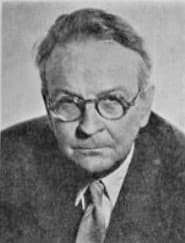
Raymond Chandler

Raymond Thornton Chandler was an American-British novelist and screenwriter. In 1932, at the age of forty-four, Chandler became a detective fiction writer after losing his job as an oil company executive during the Great Depression. His first short story, "Blackmailers Don't Shoot", was published in 1933 in Black Mask, a popular pulp magazine. His first novel, The Big Sleep, was published in 1939. In addition to his short stories, Chandler published seven novels during his lifetime. All but Playback have been made into motion pictures, some more than once. In the year before his death, he was elected president of the Mystery Writers of America.