“It was a dark and stormy night. Suddenly, a shot rang out!”
— The opening line of the novel, a classic noir trope.

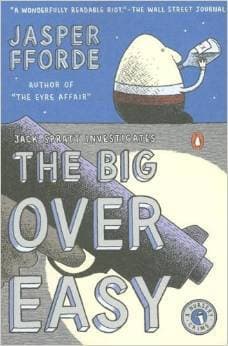
Genre
Fantasy / Mystery
Reading Time
9-10 hours
Key Themes
See below
Sign in to track this book
In a rainy Reading where nursery rhyme characters are real and crime is absurd, Detective Inspector Jack Spratt solves Humpty Dumpty's murder amidst a conspiracy of money laundering, beanstalk problems, and the arrival of the JellyMan.
The story begins in the overcast city of Reading, where Detective Inspector Jack Spratt of the Nursery Crime Division (NCD) is called to a gruesome death. Humpty Stuyvesant Van Dumpty III, a disgraced D-class nursery celebrity, ex-convict, and minor baronet, has fallen from a wall and shattered. The initial assessment suggests an accidental fall, but Spratt's intuition, from years of bizarre nursery-rhyme crimes, tells him otherwise. To complicate matters, Humpty's estranged wife, Felicity, is found dead at home, an apparent suicide, with a note confessing to pushing Humpty. The case is quickly closed by Spratt's superiors, who want to avoid another public relations disaster like the failed Three Little Pigs murder trial, but Spratt and his new assistant, Detective Sergeant Mary Mary, are not convinced.
Against the wishes of his superior, Chief Inspector Frieda M. N. P. 'Mavis' Peep, Spratt begins a quiet investigation into Humpty's death. Mary Mary, at first by-the-book, quickly shows a sharp mind and keen observation skills, becoming a valuable asset. They discover Humpty was involved in shady dealings, including money laundering and smuggling. They interview potential witnesses and associates, including the enigmatic Mr. Gold, a notorious fence, and Humpty's former business partners. The more they dig, the more inconsistencies emerge about both Humpty's fall and Felicity's suicide, suggesting a more elaborate plot. The official narrative, pushed by the department, begins to fall apart under their scrutiny.
Spratt and Mary look deeper into Humpty's past, finding his involvement in 'International Chiropody,' a business that, on closer inspection, seems to be a front for something more illicit. They learn Humpty had a vast network of contacts and was deeply involved in Reading's underworld. Their investigation leads them to question the 'chiropody' services, which often involved high-value transactions and unusual clients. They also uncover that Humpty was trying to distance himself from some of his more dangerous associates, hinting at a power struggle within his criminal enterprise. This part of the case points to a larger, more sophisticated criminal organization in Reading.
The investigation takes an even stranger turn when Spratt and Mary find a connection between Humpty's activities and the illegal growing and distribution of magical beanstalks. These beanstalks are not just agricultural curiosities; they are used to smuggle large amounts of gold bullion across international borders. Humpty, it seems, was a key player in this operation. The team learns the beanstalks are grown in secret locations and provide a direct, untraceable route for illicit goods. This discovery raises the crime's scope from a simple murder to a complex international conspiracy, making the NCD's involvement critical and dangerous.
As Spratt and Mary uncover the smuggling ring, they find another layer of the conspiracy: the illegal trafficking of Titans seeking asylum. These mythical giants, displaced from their homeland, are exploited and smuggled into Reading, often through the same beanstalk routes used for bullion. Humpty knew about, and possibly was involved in, this sensitive operation. The Titans in Reading create significant political and social tensions, and the NCD must be careful to avoid a diplomatic incident. The exploitation of these vulnerable beings adds a moral dimension to the already complex criminal enterprise, further motivating Spratt and Mary to find the truth.
Throughout their investigation, Spratt and Mary hear whispers of 'the JellyMan' coming to town. This enigmatic figure, whose identity and purpose remain a mystery, is a major player in the criminal underworld, feared by even the most hardened criminals. His impending arrival creates a sense of dread and urgency for the detectives, as they realize he is likely connected to Humpty's murder and the larger conspiracy. The JellyMan's reputation suggests a ruthless individual who will stop at nothing to protect his interests. His arrival signals that the stakes are about to get much higher for Spratt and Mary.
As Spratt and Mary get closer to the truth, they face increasing pressure from their superiors, particularly Chief Inspector Peep, who wants to keep the escalating scandal quiet. They realize there is a mole within the NCD, leaking information to criminals and sabotaging their efforts. This internal betrayal makes their work even more dangerous, forcing them to be cautious about who they trust. The detectives must navigate misinformation and misdirection, constantly questioning motives and allegiances within their own department. The stakes rise as they realize the corruption extends beyond the criminal underworld.
Through diligent detective work and connecting clues, Spratt and Mary finally unmask the true mastermind behind Humpty's murder, the gold smuggling, and the Titan trafficking. The revelation is shocking, exposing a figure previously thought beyond suspicion. The confrontation is tense and dangerous, as the mastermind, revealed to be the seemingly innocuous Miss Havisham (now a powerful criminal overlord), tries to silence Spratt and Mary. The climax involves a perilous chase and a battle of wits, where Spratt's unconventional methods and Mary's sharp mind are tested against a formidable adversary who has infiltrated the highest levels of society.
In a climactic sequence, Spratt and Mary expose Miss Havisham's vast criminal enterprise and bring her and her key accomplices, including the JellyMan, to justice. Humpty's murder is solved, revealing a complex web of betrayal and greed. While the immediate case is closed, the larger implications of the Titan situation, the continued existence of illegal beanstalks, and the widespread corruption within Reading's institutions leave questions. The NCD gains respect, but the precarious balance between the 'real' world and the nursery rhyme world remains fragile. Spratt and Mary, having proven their worth, prepare for the next bizarre case Reading will inevitably throw their way.
With Miss Havisham and the JellyMan apprehended, Reading breathes a tentative sigh of relief, though the city remains overcast. The NCD receives a rare commendation, boosting its profile within the police department. Spratt and Mary reflect on the extraordinary events, acknowledging the strange nature of their work. While the major criminal network is dismantled, the novel hints at other nefarious elements and the constant struggle to maintain order in a world where nursery rhymes are literal and often deadly. The story ends with Spratt and Mary's partnership solidified, ready for the next challenge, knowing that in Reading, the bizarre is always just around the corner.
The Protagonist
Spratt begins as a disillusioned detective haunted by past failures, but through the Humpty Dumpty case, he regains some of his confidence and solidifies his partnership with Mary Mary.
The Protagonist/Supporting
Mary evolves from a cautious, by-the-book officer into a confident, resourceful detective, finding her place within the eccentric NCD.
The Victim
As a deceased character, Humpty's 'arc' is revealed retrospectively, showing his fall from grace and entanglement in criminal activities.
The Antagonist/Supporting
Peep remains largely static, representing the institutional resistance Spratt faces, but she occasionally shows grudging respect for his results.
The Antagonist
Miss Havisham's arc is one of revelation, transforming from a background character to the central antagonist, showcasing her profound and unexpected villainy.
The Antagonist/Supporting
The JellyMan functions primarily as a force of nature, an embodiment of the criminal threat, whose actions drive suspense until his eventual confrontation and capture.
The Supporting
Mr. Gold remains a consistent figure, a source of information and a representation of the grey morality in Reading's underworld.
The Mentioned/Supporting
Felicity's 'arc' is a tragic one, serving as a pawn in the larger criminal scheme and a victim of the cover-up.
The Mentioned
The Pigs' 'arc' is historical, representing a past failure that shapes the NCD's current political landscape.
The novel explores disillusionment by showing a world where beloved nursery rhyme characters are gritty, flawed, and often criminal. Their magical innocence is stripped away, revealing a cynical reality where Humpty Dumpty is a disgraced baronet involved in money laundering, and Miss Havisham is a criminal mastermind. This subversion of expectations creates a sense of pervasive disillusionment, mirroring Spratt's jaded perspective on his job and the world. The constant overcast weather in Reading further emphasizes this gloomy, unromanticized reality, contrasting with the cheerful imagery usually associated with nursery rhymes.
“"Reading was a city of perpetual overcast, where even the sun seemed to have given up on the idea of a happy ending."”
Corruption, both in the criminal underworld and the police department, is a central theme. The NCD's superiors, particularly Chief Inspector Peep, care more about public image and avoiding scandal than true justice, often hindering Spratt's investigation. A mole within the department highlights this corruption. This theme examines how systemic pressures and personal ambition can compromise integrity, making the pursuit of truth difficult and dangerous. The cover-up surrounding Humpty's death and the previous failure of the Three Little Pigs case exemplify how bureaucratic self-preservation can overshadow the call for justice.
“"The truth, Spratt had learned, was often a secondary consideration when public perception was at stake."”
The theme of identity is explored through characters who have either fallen from grace or reinvented themselves. Humpty Dumpty, once a celebrity, is now a disgraced criminal, his public persona shattered. Miss Havisham's transformation from a jilted bride into a ruthless criminal mastermind is an example of reinvention, showing how past traumas or literary archetypes can be twisted into something new and dangerous. This theme questions the nature of identity, suggesting that even familiar figures can hide complex and often dark realities beneath their well-known facades, challenging the reader's preconceived notions.
“"It was a strange thing, Spratt mused, how the past could define you, or how you could choose to redefine it entirely."”
The novel constantly probes the nature of justice in a world that is absurd and often unfair. Spratt's relentless pursuit of truth, despite bureaucratic obstacles and the moral ambiguity of his informants like Mr. Gold, highlights a personal commitment to justice that goes beyond legal technicalities. The NCD's past failure to convict the Three Little Pigs, despite strong evidence, shows how elusive justice is and how it can be swayed by public opinion or clever legal maneuvering. The ending, while resolving the immediate case, leaves questions about broader injustices, such as the plight of the Titan asylum seekers, suggesting that true justice is a continuous and complex struggle.
“"Justice, in Reading, was less a blindfolded lady with scales and more a squinting man with a very large magnifying glass and a headache."”
Familiar nursery rhyme elements are twisted into gritty, realistic, or criminal contexts.
This is the foundational device of the novel. Classic nursery rhyme characters and scenarios are taken literally but placed in a dark, cynical, and often criminal modern setting. Humpty Dumpty is not just an egg, but a disgraced baronet and criminal. Mary Mary is a detective. The Three Little Pigs are unconvicted murderers. This device creates immediate humor through incongruity, but also allows Fforde to explore deeper themes of disillusionment and the loss of innocence. It constantly challenges reader expectations, making the familiar strange and the strange familiar, and underpins the unique tone of the 'Nursery Crime' genre.
Misleading clues and false suspects are used to divert the investigation.
The novel employs multiple red herrings to complicate the murder mystery. The most prominent is the apparent suicide of Felicity Van Dumpty, Humpty's estranged wife, complete with a confession note, which is designed to quickly close the case. Other potential suspects and seemingly incriminating evidence are introduced throughout the investigation, leading Spratt and Mary down various false trails. This device serves to heighten suspense, maintain the mystery, and provide a showcase for Spratt and Mary's deductive skills as they sift through the misinformation to find the true culprit.
The blending of modern and fantastical elements creates a unique, often absurd, setting.
The world of Reading is a meticulously crafted blend of gritty realism (police bureaucracy, urban decay) and fantastical elements (magical beanstalks, sentient eggs, Titans). This device creates a unique and immersive setting where the absurd is commonplace. For instance, international chiropody is a front for smuggling, and Titans seek asylum. This blend allows Fforde to comment on contemporary issues (immigration, crime) through a fantastical lens, while also enhancing the novel's comedic and genre-bending qualities. The consistent, logical application of these illogical elements makes the world believable within its own framework.
The official police narrative is presented as flawed, forcing the protagonists to seek the truth independently.
This device highlights the conflict between the bureaucratic desire for order and the pursuit of truth. From the outset, Chief Inspector Peep and the NCD's superiors are eager to accept the convenient narrative of Humpty's accidental death and Felicity's suicide. They actively try to shut down Spratt's investigation and are quick to dismiss evidence that contradicts their preferred story. This forces Spratt and Mary to operate semi-officially, trusting their instincts over departmental directives. It underscores the theme of corruption and bureaucracy, making the protagonists' quest for justice a more challenging and morally charged endeavor against institutional inertia.
“It was a dark and stormy night. Suddenly, a shot rang out!”
— The opening line of the novel, a classic noir trope.
“The truth is a very subjective commodity. What is true for one person may be utter fabrication for another.”
— DI Jack Spratt's philosophical musings on the nature of truth in investigations.
“The world was not a stage, but a series of interconnected, highly unstable theatrical productions.”
— A reflection on the theatrical and often absurd nature of the world Spratt investigates.
“There are two kinds of people in the world: those who divide people into two kinds, and those who don't.”
— A humorous observation by Spratt, highlighting a logical paradox.
“Nothing is ever truly lost, just misplaced or re-shelved in a more obscure section of the universe.”
— Spratt's thoughts on the permanence of objects and information.
“Every secret has a shelf life, and some are past their sell-by date.”
— Spratt contemplating the inevitable revelation of secrets.
“The past is a foreign country; they do things differently there. Especially if they're still alive.”
— A twist on a famous quote, applied to the ongoing impact of past events.
“Logic is a fine thing, but sometimes it just gets in the way of a really good story.”
— Spratt's pragmatic approach to solving cases, valuing narrative over strict logic.
“It's not that I'm cynical; it's just that I've seen too many happy endings turn out to be prequels.”
— Spratt's jaded perspective on the nature of 'endings' in crime.
“The greatest trick the devil ever pulled was convincing the world he didn't exist, but the second greatest was convincing people that all clues were relevant.”
— Spratt's take on red herrings and the art of misdirection in detective work.
“You can't spell 'mystery' without 'my' and 'story.'”
— A playful linguistic observation about the personal nature of mysteries.
“Life, like a good book, should have a beginning, a middle, and an end. But not necessarily in that order.”
— A reflection on non-linear narratives and the unpredictable nature of life.
“The average person thinks 200 thoughts a minute. A detective, however, thinks 200 possible motives a minute.”
— Highlighting the unique mental processes of a detective.
Ready to see how well you understood this book? Take our interactive quiz with 10 questions.
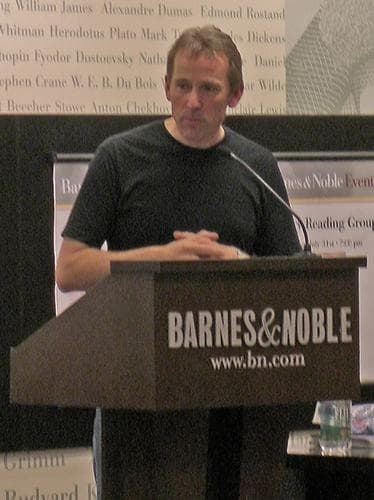
Biography coming soon.







