“All right, we are two nations.”
— Reflecting on the Sacco and Vanzetti case, highlighting the deep class divisions in America.

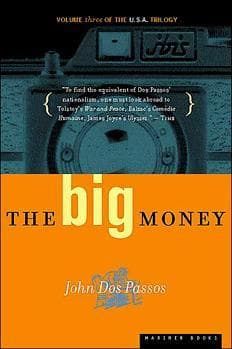
John Dos Passos (1936)
Genre
Literary Fiction / Historical Fiction
Reading Time
10-12 hours
Key Themes
See below
Sign in to track this book
In 1920s America, a diverse group of lives—from factory workers to Hollywood stars—climb and fall, all heading towards the 1929 stock market crash.
Charley Anderson, a skilled but restless mechanic, returns from World War I as a hero but feels lost in a changing America. He struggles to adjust to civilian life, bothered by his war experiences and a general lack of purpose. He moves through various jobs, unable to settle, and sees the growing industrial power of the 1920s firsthand. Dos Passos introduces Charley's working-class background and his initial hope, which slowly fades due to industrial capitalism and the era's widespread commercialism. He gets involved in early labor movements, seeing workers' exploitation and struggles in a system focused on mass production and profit.
Margo Dowling, a beautiful and driven young woman, arrives in Hollywood set on becoming famous. She quickly learns about the superficiality and moral compromises needed to succeed in the film industry. Margo uses her charm and beauty to rise socially and professionally, moving through a world of powerful producers, demanding directors, and competing actresses. Her journey involves a series of self-serving relationships and a constant struggle to keep her independence and honesty amid the pressures of fame. Dos Passos highlights Hollywood's artificiality and commercialism, reflecting the broader themes of American materialism and the pursuit of 'the big money.'
Richard Savage, a Harvard-educated intellectual with socialist leanings, gets pulled into corporate public relations and political maneuvering. Initially hopeful, he is slowly drawn to the power and influence that come with working for rich industrialists and politicians. Savage's journey shows the struggle of many intellectuals of the era who tried to balance their progressive ideas with the realities of capitalism. He becomes good at shaping public opinion and creating stories that serve his powerful employers' interests, showing the moral compromises in chasing 'the big money' and political influence in the 1920s.
Gwyneth, a sensitive and thoughtful woman from a wealthy family, deals with the emptiness and superficiality of her privileged life. She observes the excesses and moral decline of the Jazz Age critically, feeling more and more separate from her social class's values. Gwyneth's personal struggles, including failed relationships and her search for meaning, mirror the wider societal anxieties and growing disappointment that underlie the novel. Her story contrasts with other characters' relentless pursuit of wealth and fame, offering a more introspective and critical view of the era's materialism.
Charley Anderson, increasingly frustrated by worker exploitation, becomes a dedicated labor organizer. He sees firsthand the harsh tactics corporations use to suppress unions and control their workforce. Charley's involvement in strikes and protests exposes him to violence, poverty, and the constant threat of unemployment. His idealism, though tempered by experience, still drives him to fight for better conditions and fair treatment for his fellow workers. This section shows the class struggles of the 1920s, the early labor movement, and the often-violent conflicts between capital and labor, highlighting the stark inequalities of the 'big money' era.
Margo Dowling's star rises in Hollywood, giving her the financial success and social standing she wanted. However, her rise comes with a growing sense of emptiness and the realization that fame is temporary. She experiences the film industry's changing nature, the constant pressure to maintain an image, and the loneliness that often comes with being famous. Her relationships become more about transactions, and she struggles with personal betrayals and her surroundings' superficiality. Margo's story shows the cost of 'the big money' in terms of personal honesty and real human connection, illustrating how even success can lead to a kind of trap.
Richard Savage continues his work in public relations, becoming a key person in shaping political discussion and corporate image. He works on major political campaigns, writing speeches and manipulating media stories to sway public opinion. His early socialist ideas are now almost completely replaced by his professional ambition and the demands of his powerful employers. Savage becomes a cynical observer of politics, understanding its methods of control and persuasion. This section explores the rise of modern propaganda and the blurring lines between journalism, advertising, and political messages in the pursuit of 'the big money' and influence.
Throughout the novel, Dos Passos includes biographical sketches, like a notable one on Charles A. Lindbergh and his historic solo transatlantic flight. Lindbergh's achievement is a strong symbol of individual heroism, technological progress, and American exceptionalism. His story, however, also contrasts with the widespread materialism and moral decay shown through the fictional characters. While Lindbergh represents a pure kind of ambition and skill, his narrative is placed next to the more cynical and compromised pursuits of 'the big money' by others, highlighting the complex and often contradictory spirit of the age.
Charley Anderson's firm commitment to labor organizing eventually leads to his personal ruin. He faces constant opposition from corporations and their allies, experiencing arrests, blacklisting, and the breakdown of his personal life. His relationships suffer, and he becomes more isolated. The dreams of a fairer society that once motivated him are slowly crushed by capital's overwhelming power. Charley's story ends tragically, symbolizing the defeat of individual hope and the harsh realities faced by those who challenged the dominant economic order in the era of 'the big money.'
The story builds to the inevitable climax of the 1929 stock market crash, which destroys the idea of endless wealth that defined the decade. The crash has deep and immediate effects on all characters, though in different ways. Fortunes are lost, careers are ruined, and the feeling of invincibility from the era is replaced by widespread despair and uncertainty. Dos Passos uses this event to show the instability and moral bankruptcy of a society driven only by the pursuit of 'the big money,' leaving America and its citizens with an uncertain future.
The Protagonist
From a hopeful, if disillusioned, veteran, Charley evolves into a committed but ultimately tragic labor activist, his idealism crushed by the might of corporate power.
The Protagonist
Margo rises from obscurity to Hollywood notoriety, only to find that fame and wealth bring their own forms of emptiness and disillusionment.
The Protagonist
Richard transforms from an idealistic intellectual into a cynical, effective propagandist, sacrificing his principles for career advancement and power.
The Supporting
Gwyneth's arc is one of increasing disillusionment with her social class and a search for authentic connection in a superficial world.
The Supporting
Moorehouse continues to consolidate his power and influence in the world of public relations, remaining largely untroubled by moral qualms.
The Supporting
Doris experiences a brief period of romantic intensity before continuing her struggle for economic stability.
The Supporting
Jerry Burnham maintains his position of power and influence in Hollywood, largely unaffected by the personal dramas around him.
The Mentioned
Lindbergh's arc is historical, culminating in his celebrated transatlantic flight, a moment of national pride and individual triumph.
The main theme of 'The Big Money' is how wealth corrupts and the constant chase for money in 1920s America. Characters like Margo Dowling and Richard Savage give up personal honesty and real human connection for financial success and social standing. Margo's rise in Hollywood, built on self-serving relationships, and Richard's abandoning socialist ideals for corporate power show how 'the big money' twists values. Even the seemingly pure ambition of figures like Lindbergh becomes a commodity, suggesting that no part of American life is safe from the era's widespread commercialism. The novel argues that this uncontrolled materialism ultimately leads to widespread disappointment and societal instability, ending with the 1929 crash.
“Money talks, and it's the only language they understand.”
The novel explores the widespread disappointment many Americans felt after World War I and throughout the 'Roaring Twenties.' Charley Anderson returns from war a hero but feels lost and without purpose, his early hope worn down by the harsh realities of industrial capitalism and labor exploitation. Richard Savage's journey from socialist intellectual to corporate propagandist clearly shows the abandonment of progressive ideals for personal gain. Gwyneth's quiet despair and critical view of her privileged class further highlight the emptiness beneath the era's surface glitter. This theme suggests a deep loss of moral direction and a questioning of the American Dream itself.
“All the bright promises of a brave new world had turned to dust.”
Dos Passos carefully details the growing power of mass media, advertising, and public relations in shaping American thought. J. Ward Moorehouse and Richard Savage are key to this theme, showing how stories are created and manipulated to serve corporate and political interests. The constant flow of commercial messages and carefully built public images (like those in Hollywood) creates an artificial reality that hides real problems. This theme highlights the increasing sophistication of propaganda techniques and their role in creating agreement and desire, making it hard for individuals to tell truth from carefully designed illusions, especially when chasing 'the big money.'
“He learned how to make people believe what they wanted to believe, and what they were told to believe.”
The clear conflict between the working class and powerful industrialists is a repeated and important theme. Charley Anderson's story especially focuses on this struggle, showing the harsh realities of labor organizing, strikes, and the violent suppression of workers' rights. The novel exposes the exploitation inherent in the industrial boom of the 1920s, where corporate profits often came at the cost of fair wages and safe working conditions. This theme emphasizes America's deep class divisions and capital's overwhelming power to crush individual and collective efforts for social justice, ultimately leading to tragic outcomes for characters like Charley.
“The bosses had the money, the law, and the guns. The workers had nothing but their bodies to put on the line.”
Montages of actual headlines, songs, and historical events.
The 'Newsreel' sections are a distinctive stylistic device used by Dos Passos. These are rapid-fire montages of actual newspaper headlines, popular song lyrics, political slogans, and snippets of historical events from the 1920s. They serve to ground the fictional narratives in the specific historical and cultural context of the era, creating a sense of immediacy and authenticity. The Newsreels also provide social commentary, juxtaposing the superficial glamour and consumerism with underlying political tensions and economic realities, reflecting the fragmented and overwhelming nature of information in the modern age.
Stream-of-consciousness passages representing the author's subjective impressions.
The 'Camera Eye' sections are highly subjective, stream-of-consciousness passages written in the first person. These poetic, impressionistic fragments delve into the author's (or an authorial persona's) personal memories, observations, and emotional responses to the events and atmosphere of the 1920s. They provide a lyrical and often melancholic counterpoint to the more objective 'Newsreels' and the third-person narratives of the characters. The Camera Eye offers a glimpse into the inner world of the observer, capturing the sensory details, anxieties, and philosophical ponderings that underpin the larger social commentary of the novel.
Brief, non-fictional accounts of prominent historical figures.
Dos Passos intersperses the fictional narratives with concise, non-fictional biographies of prominent historical figures from the era, such as Charles A. Lindbergh, Henry Ford, and Thorstein Veblen. These biographies serve multiple purposes: they provide historical context, illustrate the diverse forces shaping American society, and offer symbolic counterpoints or parallels to the fictional characters' experiences. For instance, Lindbergh's story of individual achievement contrasts with the compromised ambitions of the fictional protagonists, while Ford's biography highlights the rise of industrial capitalism. They broaden the scope of the novel beyond individual lives to encompass the collective American experience.
The use of several distinct character storylines that eventually intersect or parallel each other.
The novel employs a mosaic structure, following the lives of multiple protagonists (Charley Anderson, Margo Dowling, Richard Savage, and Gwyneth) whose storylines are initially separate but occasionally intersect or run in parallel. This technique allows Dos Passos to present a panoramic view of American society, showcasing different social classes, professions, and geographical locations (from factories to Hollywood). By shifting perspectives, the novel creates a sense of the vastness and complexity of the era, demonstrating how individual destinies are shaped by larger historical forces and how the pursuit of 'the big money' affects people from all walks of life.
“All right, we are two nations.”
— Reflecting on the Sacco and Vanzetti case, highlighting the deep class divisions in America.
“America was promises.”
— A recurring thought, contrasting the American dream with the harsh realities faced by many characters.
“The young man walks by himself.”
— Part of the 'Newsreel' and 'Camera Eye' sections, emphasizing individual isolation amidst societal change.
“The big money was rolling in.”
— Describing the economic boom of the 1920s, and the rapid accumulation of wealth.
“America was a big word, a word that would get bigger every day.”
— A reflection on the expanding influence and complexity of the United States.
“They had built the city and the city had swallowed them up.”
— Referring to the workers and immigrants who built the industrial centers, only to be consumed by their own creation.
“The past is a foreign country; they do things differently there.”
— A broader philosophical statement about the disconnect between generations and eras.
“The world was made of money and the men who made it.”
— A cynical view on the driving forces of society during the era of rapid industrial and financial growth.
“He wanted to know what made the wheels go round.”
— Characterizing a desire for understanding the underlying mechanisms of society and power.
“We are the disinherited.”
— Voicing the sentiment of those marginalized and left behind by the economic and social changes.
“The machine was running away with itself.”
— A metaphor for uncontrolled technological and industrial progress, and its consequences.
“History is a race between education and catastrophe.”
— A profound observation on the ongoing struggle between enlightenment and disaster.
“The clock ticks and the great names vanish.”
— Reflecting on the ephemeral nature of fame and the passage of time.
“They had wanted to remake the world.”
— Referring to the idealistic aspirations of various characters and social movements.
Ready to see how well you understood this book? Take our interactive quiz with 10 questions.
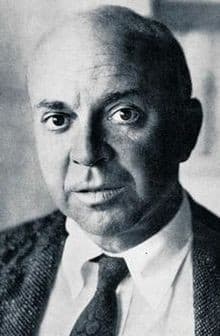
John Roderigo Dos Passos was an American novelist, most notable for his U.S.A. trilogy.