“The world is full of people who are determined to be unhappy, no matter how much good fortune they have.”
— Poirot observing human nature amidst a case.

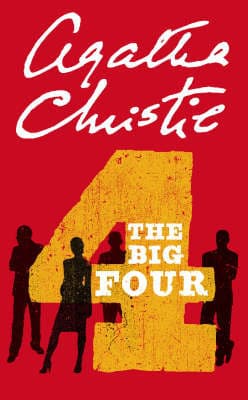
Agatha Christie (1927)
Genre
Thriller / Mystery
Reading Time
270 min
Key Themes
See below
Sign in to track this book
When a mysterious, dust-covered man collapses in his doorway, repeating the number four, Hercule Poirot is thrust into a dangerous global conspiracy to unmask a quartet of masterminds threatening world peace.
Hercule Poirot and Captain Hastings are discussing Poirot's retirement plans when a stranger, covered in dust and clearly in distress, suddenly appears. The man, later identified as a secret service agent named Mayerling, collapses and dies in Poirot's apartment. Before he dies, he gives fragmented warnings about 'The Big Four' and mentions 'Number Four', scribbling the numeral '4' repeatedly on paper. This strange incident immediately pulls Poirot out of his retirement, drawing him into a complex international conspiracy. He realizes the dying man's words point to a powerful, secret organization that poses a global threat. Hastings, always loyal, joins Poirot in this new adventure.
Poirot, with his careful methods, begins to investigate Mayerling's death. He finds that 'The Big Four' is a highly organized criminal group with global reach, made up of four individuals: a Chinese mastermind (Li Chang Yen), an American millionaire (Abe Ryland), a French scientist (Madame Olivier), and 'Number Four', a British destroyer. The first clues lead Poirot and Hastings to a house where Mayerling had been held captive, and they barely escape an explosion. They learn that Mayerling was tracking the organization and had found important information before he was killed. Poirot realizes this is not a typical murder case but a fight against a powerful, multi-national force aiming for world control.
The investigation becomes personal when Poirot hears that his estranged twin brother, Achille Poirot, has died strangely in Belgium. Poirot travels there with Hastings to identify the body. The 'death' of Achille is a clever trick by Hercule Poirot himself. Realizing the constant danger he is in from 'The Big Four', who have shown they can infiltrate and predict his moves, Poirot fakes his own death (using a decoy body) and takes on the identity of his 'brother' Achille. This allows him to continue his investigation secretly, free from the organization's direct attention, and to see how they react to his supposed death. Hastings is at first unaware of the deception.
As Achille, Poirot begins to gather more information. He meets the American millionaire, Abe Ryland (Number Two), a powerful financier with much political influence. Poirot observes Ryland's activities, especially his involvement in international conferences and his subtle manipulation of global markets. Later, he encounters the brilliant French scientist, Madame Olivier (Number Three), a known physicist. He suspects she is developing a dangerous new weapon or technology for 'The Big Four'. Poirot carefully handles these dangerous meetings, using his 'brother's' persona to get information without revealing who he really is, all while Hastings slowly starts to suspect the truth about 'Achille'.
Poirot's investigation shows the frightening extent of 'The Big Four's' goal: to start a large global war. They plan to make a lot of money from the resulting chaos and then become the ultimate power brokers, setting the terms of peace and establishing a new world order under their control. They are manipulating political figures, economic markets, and scientific developments to do this. Poirot understands that time is running out and that he must act quickly to stop this catastrophic plan. The risks are very high, as the fate of nations depends on his ability to break up this powerful group.
Throughout his investigation, Poirot tries to identify 'Number Four', the British member of the group. This person is the hardest to find and seems to be a master of disguise and infiltration, working within the highest levels of British society. Poirot suspects several important figures, including a high-ranking politician and a known actor, but each clue leads nowhere or is a clever distraction. The identity of Number Four is important, as this person carries out 'The Big Four's' plans in Britain and connects to the other members. The true identity of 'Number Four' remains a puzzle for Poirot, adding to the tension.
Poirot again meets Countess Vera Rossakoff, a dramatic Russian noblewoman and jewel thief he has encountered before. This time, she is not a criminal but a victim, forced into 'The Big Four' because of her skills and connections. Poirot, using his past relationship with her, manages to rescue her from the group. Grateful for her freedom, Countess Rossakoff gives Poirot valuable information about 'The Big Four's' operations, their hidden places, and some of their key agents. Her information helps Poirot put together the final parts of the puzzle and plan his counter-attack.
Following an important clue, Poirot, Hastings, and their allies track 'The Big Four' to a remote villa in Italy, where the group is holding a final meeting to finish their war plans. They get into the heavily guarded place, leading to a tense confrontation. Poirot, having finally figured out that 'Number Four' is a master of disguise named Claude Darrell, confronts the assembled members. A dramatic struggle happens, during which Poirot's quick thinking and strategic planning are tested. The villa is a central place for their global operations, holding important documents and equipment.
In a dramatic ending, Poirot and his team defeat 'The Big Four'. Li Chang Yen, the Chinese mastermind, dies during the fight. Abe Ryland (Number Two) and Madame Olivier (Number Three) are captured, and their plans for global control are stopped. 'Number Four', Claude Darrell, tries to escape but is caught or dies. The group's network is broken up, their weapons and resources are taken, and the immediate threat of a devastating world war is avoided. Poirot's careful planning, courage, and intelligence again save the day, strengthening his reputation as a world-class detective.
With 'The Big Four' defeated, Poirot and Hastings return to their normal lives, changed by the experience. Poirot thinks about the huge evil they faced and the cleverness of such a powerful criminal organization. Hastings, relieved but also excited by the adventure, admires Poirot's brilliance and ability to outsmart such powerful enemies. The world is safe, thanks to Hercule Poirot. The case shows the global threats that exist and the constant watch needed to keep peace. Poirot again considers retirement, but with a lasting sense of the darkness that exists.
The Protagonist
Poirot moves from considering retirement to actively engaging in a high-stakes global battle, proving his intellect and adaptability against an unprecedented threat.
The Supporting
Hastings is reluctantly drawn back into adventure, enduring danger and confusion, but ultimately affirming his unwavering loyalty to Poirot.
The Antagonist
Introduced as a shadowy, all-powerful figure, he is ultimately exposed and defeated by Poirot's ingenuity.
The Antagonist
From a seemingly legitimate businessman, he is unmasked as a key financier of a global conspiracy and is ultimately apprehended.
The Antagonist
Initially a respected figure in science, she is exposed as a dangerous inventor for a global criminal organization and is ultimately captured.
The Antagonist
The most elusive of the antagonists, he is ultimately unmasked by Poirot despite his mastery of disguise.
The Supporting
From being coerced by 'The Big Four', she is rescued by Poirot and becomes a crucial informant, aiding in the syndicate's downfall.
The Mentioned
His death serves as the inciting incident for Poirot's investigation into 'The Big Four'.
'The Big Four' looks at the terrifying idea of a secret, powerful organization wanting to control the world. This theme shows through the group's manipulation of international politics, finance, and science, as they try to start a global war for their own benefit. Poirot's investigation shows the wide reach of their influence, from high-ranking government officials to scientific research labs, showing how easily nations can be affected by such organized evil. The threat is not just a single crime but a systematic breaking down of global order, making the risks very high.
“''The Big Four,' said the dying man, 'it is a name of fear. A name of power. A name that spells doom for the world.'”
Deception is a common theme, especially with 'Number Four', a master of disguise, and in Poirot's own trick of faking his death and taking on the identity of 'Achille Poirot'. The novel constantly plays with how things appear versus how they really are, showing how individuals and organizations can hide their true intentions and identities. This theme challenges the reader and Poirot to look past the surface, to question what they see, and to find the truth hidden under layers of pretense. It shows how hard it is to unmask a truly clever enemy.
“'And so, my friend, the great Hercule Poirot will die. And a new, equally brilliant, but less conspicuous, figure will rise from the ashes.'”
The main conflict of the novel is a battle between Poirot's intelligence and the great power (financial, scientific, political) of 'The Big Four'. Poirot, with his 'little grey cells' and reliance on logic and deduction, is against an organization that seems to have endless resources and influence. This theme shows that real power is not just brute force or wealth, but the ability to think, observe, and outsmart. Poirot's win shows the victory of human intelligence and moral strength over corruption and great material power.
“'They have money, they have influence, they have science. But I, my friend, I have my little grey cells.'”
Captain Hastings's loyalty to Poirot is a central emotional part of the story. Despite his occasional frustrations and confusion, Hastings always supports Poirot, even when facing deadly danger or being confused by Poirot's tricks. This friendship adds a human element to the large, international intrigue. Their bond shows the importance of companionship and trust when facing great difficulty, contrasting with the ruthless individualism of 'The Big Four'.
“'Wherever you go, Poirot, I shall go. You know that, don't you?'”
Through Madame Olivier, the novel explores how scientific advancements can be turned into weapons and used for destruction. Her role in developing powerful, dangerous technologies for 'The Big Four' shows the ethical problems around scientific discovery. The theme suggests that without moral guidance, scientific progress can become a tool for tyranny and global destruction, instead of for the good of humanity. It is a warning about misusing intelligence and innovation.
“'Science, my friend, can be a beautiful thing. But in the wrong hands, it is the most terrible weapon of all.'”
A global criminal organization driving the central conflict.
This is the primary antagonist, a powerful and secretive international criminal organization comprising four distinct individuals. Its structure (Chinese brain, American money, French science, British 'destroyer') allows for a global reach and diverse methods of operation. This device creates a formidable, almost insurmountable foe for Poirot, elevating the stakes from a typical murder mystery to a battle for global peace. It provides a clear, overarching threat that ties together disparate plot threads and locations, giving the narrative a grand, epic scope.
Poirot's ingenious deception to operate undercover.
This is a clever narrative device used by Poirot to gain an advantage over 'The Big Four'. By faking his own death and assuming the identity of his fictional twin brother, Achille, Poirot is able to move freely, gather intelligence, and observe his enemies' reactions without their direct scrutiny. This device introduces an element of dramatic irony, as Hastings and others are initially deceived, and allows Poirot to explore different facets of his character, particularly his willingness to bend rules for justice. It also highlights the extreme lengths he must go to combat such a powerful enemy.
A recurring symbol representing the syndicate's core structure.
The number '4' is a central motif, scribbled by the dying Mayerling and constantly referenced. It symbolizes the four key members of the syndicate and their collective power. This simple numerical device acts as a persistent clue and a constant reminder of the formidable opposition Poirot faces. It unifies the disparate elements of the conspiracy, giving it a memorable and ominous identifier, and adds a layer of symbolic mystery to the villains' identity and organization.
A character whose changing identities drive suspense and misdirection.
The character of 'Number Four', Claude Darrell, as a master of disguise, serves as a crucial plot device for generating suspense and misdirection. His ability to assume multiple identities and infiltrate various social circles makes him incredibly elusive and difficult for Poirot to unmask. This device allows for red herrings and false leads, keeping the reader guessing about his true identity and adding a layer of psychological complexity to the antagonist. It also showcases Poirot's deductive skills as he must see through these elaborate facades.
“The world is full of people who are determined to be unhappy, no matter how much good fortune they have.”
— Poirot observing human nature amidst a case.
“It is the little things that are so important. The little things that one remembers, or that one forgets.”
— Poirot emphasizing the importance of details in an investigation.
“My friend, you have a penchant for the dramatic. It is a quality that can be both useful and dangerous.”
— Poirot speaking to Hastings about his adventurous spirit.
“The truth, my friend, is often far stranger than any fiction.”
— Poirot reflecting on the bizarre nature of the case.
“There are times when one must act quickly, without too much deliberation. Otherwise, the moment is lost.”
— Poirot discussing the necessity of swift action in a crisis.
“The human mind, Hastings, is a curious thing. It can be swayed by the most trivial of matters.”
— Poirot commenting on the susceptibility of people to influence.
“One must always be prepared for the unexpected. It is the first rule of survival.”
— Poirot advising caution and readiness in a dangerous situation.
“The greatest criminals are often those who appear the most respectable.”
— Poirot pondering the deceptive nature of appearances.
“Logic, my friend, is a beautiful thing. It is the key to unlocking many a mystery.”
— Poirot expressing his faith in logical deduction.
“It is not enough to observe; one must also interpret what one sees.”
— Poirot explaining the difference between mere observation and true understanding.
“Even the most carefully laid plans can go awry. That is the nature of life.”
— Poirot acknowledging the unpredictability of events.
“There is a vast difference between knowing something and proving it.”
— Poirot highlighting the challenge of legal proof versus personal conviction.
“The pursuit of evil is a tiring business, Hastings, but a necessary one.”
— Poirot reflecting on the demands of his work.
“My little grey cells, they are working overtime.”
— Poirot's classic phrase indicating he is deep in thought and deduction.
Ready to see how well you understood this book? Take our interactive quiz with 10 questions.
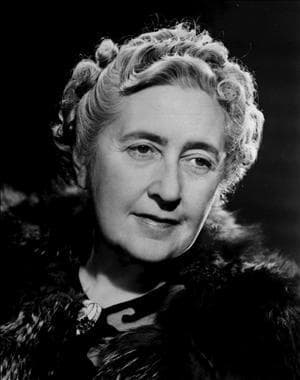
Dame Agatha Mary Clarissa Christie, Lady Mallowan, was an English writer known for her 66 detective novels and 14 short story collections, particularly those revolving around fictional detectives Hercule Poirot and Miss Marple. She also wrote the world's longest-running play, the murder mystery The Mousetrap, which has been performed in the West End since 1952. A writer during the "Golden Age of Detective Fiction", Christie has been called the "Queen of Crime". She also wrote six novels under the pseudonym Mary Westmacott. In 1971, she was made a Dame (DBE) by Queen Elizabeth II for her contributions to literature. Guinness World Records lists Christie as the best-selling fiction writer of all time, her novels having sold more than two billion copies.







