“That branch of history which might be called the everyday history of the people is, for the most part, neglected by writers, or touched upon only incidentally.”
— The narrator's reflection on the scope of historical writing.

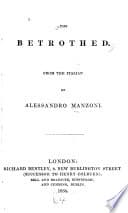
Alessandro Manzoni (1834)
Genre
Historical Fiction / Romance
Reading Time
12-15 hours
Key Themes
See below
Sign in to track this book
In 17th-century Lombardy, two humble silk weavers' love starts a desperate fight against a harsh lord, famine, and plague, linking their lives with the birth of modern Italy.
In a small Lombard village near Lake Como in 1628, Renzo Tramaglino, an honest silk weaver, and Lucia Mondella, a virtuous spinner, prepare for their wedding. On the morning of the ceremony, Father Abbondio, the timid priest, is stopped by two of Don Rodrigo's thugs. They warn him that Don Rodrigo, a local nobleman who fancies Lucia, forbids the marriage and threatens him if it goes forward. Terrified, Father Abbondio invents excuses to delay and cancel the wedding, leaving Renzo and Lucia heartbroken. Lucia's mother, Agnese, suspects something is wrong, and soon the truth about Don Rodrigo is known.
Distraught, Renzo, Lucia, and Agnese turn to Fra Cristoforo, a brave and good Capuchin friar known for his strong morals and willingness to fight injustice. Fra Cristoforo confronts Don Rodrigo, scolding him for his bad intentions, but Don Rodrigo remains unrepentant and dismisses the friar's pleas. Realizing Lucia's danger, Fra Cristoforo advises the three to leave the village and find refuge separately. He arranges for Lucia and Agnese to go to a convent in Monza under the care of the 'Nun of Monza,' while Renzo is sent to Milan, where he has relatives.
Renzo arrives in Milan during a famine and growing unrest. He quickly gets caught in the bread riots, a violent uprising by starving people against corrupt authorities and high bread prices. Naively, Renzo speaks out against the injustices, drawing unwanted attention. His passionate criticisms are misunderstood by a police spy, who identifies him as a riot leader. Renzo, drunk and confused by the chaos, is arrested. He narrowly escapes prison thanks to his quick thinking and the crowd's help.
After his escape from Milanese authorities, Renzo is a fugitive. He flees the city, pursued by police who have a warrant for his arrest based on false accusations from the riots. He travels dangerously through unfamiliar lands, fearing capture. With help from a kind ferryman, he crosses the Adda River into the Venetian Republic. He finds safety and work as a silk weaver in Bergamo, far from Milan and Don Rodrigo, but also far from Lucia.
Lucia and Agnese find safety in the Monza convent, protected by Sister Gertrude, the 'Nun of Monza.' However, Gertrude is a troubled woman, forced into monastic life and involved in an affair with Egidio, a local nobleman. Don Rodrigo, still wanting Lucia, gets Egidio to help. Egidio manipulates Gertrude into betraying Lucia. Gertrude, under Egidio's influence, lures Lucia out of the convent, where Don Rodrigo's thugs ambush and kidnap her. She is then taken to the Innominato, a powerful and feared bandit lord.
Lucia is held captive in the Innominato's castle. Despite her fear, she keeps her faith, praying and vowing chastity to the Virgin Mary if freed. Her innocence deeply affects the Innominato, who is already struggling with dread and weariness of his sinful life. A meeting with Cardinal Federigo Borromeo, a revered archbishop visiting a nearby village, further sparks a spiritual crisis in the Innominato. Moved by Lucia's situation and the Cardinal's words, the Innominato has a dramatic conversion, repenting his past crimes and deciding to live a good life.
After his conversion, the Innominato immediately arranges Lucia's release and safe passage to a new refuge. She goes to the home of Donna Prassede, a kind Milanese noblewoman, and her husband, Don Ferrante, who protect her. While safe, Lucia's vow of chastity, made in extreme danger, now prevents her marriage to Renzo. She feels bound by this sacred promise, believing breaking it would offend God, even though it was made under duress. This creates a new, spiritual barrier to her reunion with Renzo.
The story then describes the terrifying arrival and spread of the bubonic plague in Lombardy. Authorities' incompetence and denial initially stop effective measures, letting the disease devastate the population. Milan becomes a scene of death, with countless victims and 'monatti' collecting bodies. The Lazaretto, a large isolation hospital, houses the sick. This historical setting tests the characters, forcing them to face death, faith, and suffering, while also giving some a chance for redemption or selflessness.
Renzo, having recovered from a mild case of the plague and now immune, hears rumors that Lucia might be in Milan. Driven by a strong desire to find her, he bravely returns to the plague-ridden city, a dangerous and despairing place. He walks the desolate streets, a haunting place filled with death, fear, and desperate acts. His search is full of danger and emotional strain, as he sees the epidemic's horrors and its impact on society and people. He eventually learns that many sick people are in the Lazaretto.
Renzo enters the vast, chaotic Lazaretto, a place full of the dying and the dead. Amidst the suffering, he frantically searches for Lucia. He meets Fra Cristoforo, who is tirelessly helping the sick, offering comfort and spiritual guidance. Fra Cristoforo, now frail but firm, confirms that Lucia is in the Lazaretto, recovering from the plague. He also reveals that Don Rodrigo is dying there from the disease. Fra Cristoforo releases Lucia from her vow, explaining that vows made under duress are not binding and that God wants love and marriage.
Fra Cristoforo leads Renzo to Don Rodrigo's deathbed in the Lazaretto. Don Rodrigo is ravaged by the plague, a shadow of his arrogant self. Seeing his tormentor in this state, Renzo initially feels vengeance but is gently reminded by Fra Cristoforo about Christian forgiveness. Don Rodrigo dies soon after, a victim of the plague. Fra Cristoforo, having exhausted himself helping plague victims and reuniting Renzo and Lucia, also dies from the plague shortly after, completing his mission.
With the plague ending and obstacles removed, Renzo and Lucia, with Agnese, return to their village. The village has been devastated by the plague, but a sense of renewal begins. Father Abbondio, relieved Don Rodrigo is gone, finally performs their long-delayed wedding. They settle down, have children, and live a simple, happy life. The novel ends with Renzo reflecting on their experiences, realizing they learned patience, perseverance, and trust in divine help, even through great trials. They find happiness in their humble life and strong faith.
The Protagonist
Renzo transforms from an impulsive youth to a mature, patient man who learns the value of prudence and faith through immense suffering and separation.
The Protagonist
Lucia endures kidnapping, separation, and the plague, maintaining her faith and purity, ultimately finding strength and clarity in her religious devotion.
The Supporting
Having already undergone a profound conversion, Fra Cristoforo's arc is one of sustained selfless service and ultimate sacrifice, culminating in his death during the plague.
The Antagonist
Don Rodrigo's arc is one of escalating villainy, culminating in his ignominious death from the plague, a stark illustration of divine justice.
The Supporting
The Innominato undergoes the most dramatic transformation, moving from a feared, powerful criminal to a repentant, charitable man dedicated to good works, finding peace through faith.
The Supporting
As an already saintly figure, Cardinal Borromeo's arc is one of consistent benevolence and moral guidance, serving as an agent of divine providence.
The Supporting
Father Abbondio remains largely unchanged throughout the novel, consistently prioritizing his own comfort and safety, illustrating the difficulty of true moral transformation for some.
The Supporting
Agnese endures the separation from her daughter and the perils of the plague with resilience, ultimately reuniting with Lucia and finding peace.
The Supporting
Gertrude's arc is one of moral decline and complicity, culminating in her involvement in Lucia's kidnapping, a tragic testament to the consequences of unfulfilled desires and forced choices.
The novel explores how God's guidance and individual choices interact. Characters like Fra Cristoforo and Lucia trust in fate, and even the Innominato's conversion, seemingly sudden, is shown as divinely inspired. The suffering Renzo and Lucia endure, though caused by human malice, strengthens their faith and leads them to a deeper understanding of life. Manzoni suggests that even in chaos, a higher order is at work, guiding events toward a just end. He also shows that human actions, good or bad, have consequences. This is clear in Renzo's final thoughts on 'troubles that come from without and troubles that we bring upon ourselves.'
“One learns not to despair of God, and not to trust too much in men; or rather, to trust in God only, and to despair of men, unless God helps them.”
A main theme is the widespread injustice common people face from corrupt nobility and weak authorities. Don Rodrigo's power abuse, Renzo's wrongful arrest, and systemic failures that worsen famine and plague all show a lack of justice. However, the novel also shows that true justice, often divine, eventually wins. Don Rodrigo dies from the plague, and the Innominato, after his change, corrects his past wrongs. The characters' endurance against these injustices and their search for a just outcome highlight this theme, especially when Fra Cristoforo confronts Don Rodrigo, asserting a moral law above worldly power.
“There is a judge above you, Don Rodrigo, and a day of reckoning.”
Faith is a foundation for many characters, especially Lucia and Fra Cristoforo, who find strength and comfort in their belief in God's plan. Lucia's strong piety even inspires the Innominato's dramatic redemption, showing faith's power to change. The novel explores different types of faith: Lucia's quiet, lasting trust; Fra Cristoforo's active, charitable service; and the Innominato's sudden, deep conversion. Even Father Abbondio, despite his cowardice, is a man of the cloth, though flawed. The plague, while a disaster, also leads to spiritual reflection and selfless charity, reinforcing the idea of redemption through suffering and faith.
“God does not make mistakes; He knows what He is doing, and He will make everything clear in His own good time.”
At its heart, the novel is a love story about Renzo and Lucia's lasting love through huge challenges. Their wish to marry starts the plot, and their eventual union symbolizes love's triumph over malice and worldly interference. The theme goes beyond romantic love to include family love (Agnese's devotion to Lucia) and brotherly love (Fra Cristoforo's care for the couple). The sanctity of marriage, repeatedly threatened, is ultimately affirmed as a divinely approved bond, contrasting with Don Rodrigo's illicit desires and the Nun of Monza's tragic, forced celibacy.
“The heart of man is so made that it cannot love unless it feels it is loved back.”
Manzoni presents a balanced view of the Church. On one hand, it is a source of strong moral guidance and selfless action, seen in the heroic Fra Cristoforo and the saintly Cardinal Borromeo, who show true Christian charity and courage. On the other hand, the Church also has flaws and corruption, seen in the cowardly Father Abbondio and the tragic, morally compromised Nun of Monza, who was forced into a religious life. This dual view highlights human imperfections within a divine institution, acknowledging both its capacity for good and its vulnerability to worldly pressures and personal failings, especially with political interference.
“The poor man, who cannot give, has nothing but his patience, and his faith in God.”
The novel is set against the meticulously researched backdrop of 17th-century Lombardy.
Manzoni's choice of 17th-century Lombardy, under Spanish rule, is crucial. It provides a vivid, detailed, and historically accurate context of famine, plague, and political corruption. This setting isn't just a backdrop; it actively shapes the characters' fates and the plot's trajectory. The historical events, such as the bread riots and the plague, are woven into the narrative, creating obstacles and opportunities that feel authentic and add gravitas to the personal struggles of Renzo and Lucia. The specific social hierarchy, with its oppressive noblemen and timid clergy, directly fuels the central conflict.
A devastating historical epidemic that serves as a powerful catalyst for change and divine judgment.
The plague of 1630 is more than a historical event; it functions as a major plot device. It acts as a powerful equalizer, striking down both the innocent and the guilty (like Don Rodrigo), and forcing profound moral choices upon the survivors. It facilitates Renzo and Lucia's reunion in the Lazaretto, removes the primary antagonist (Don Rodrigo), and allows for Fra Cristoforo's final, selfless act. It also serves as a crucible for character development, testing faith and resilience, and emphasizing themes of mortality, redemption, and divine providence. The plague clears the path for the protagonists' eventual happiness, but only after immense suffering.
Lucia's promise to the Virgin Mary, made under duress, creates a spiritual obstacle to her marriage.
Lucia's vow of chastity, made while she is held captive by the Innominato, is a significant plot device. It introduces a new, internal conflict that prolongs the separation between Renzo and Lucia even after her physical freedom. This spiritual obstacle tests their faith, particularly Lucia's, and requires divine intervention (through Fra Cristoforo's interpretation of canon law) to be resolved. It highlights the theme of divine providence and the nature of vows, emphasizing that God's will is ultimately for love and life within marriage, rather than a vow made under extreme duress and fear.
A dramatic spiritual transformation that resolves a major plot conflict and demonstrates the power of redemption.
The Innominato's sudden and profound conversion is a pivotal plot device. It dramatically shifts the narrative, immediately resolving Lucia's immediate peril and transforming a formidable antagonist into a powerful ally. This event is not merely a convenient plot twist; it serves to underscore the novel's central themes of faith, redemption, and divine intervention. It demonstrates that even the most hardened sinner can find grace, and that God's plan can work through unexpected channels. His change of heart directly leads to Lucia's liberation and provides a safe haven for her, propelling the story forward towards its resolution.
“That branch of history which might be called the everyday history of the people is, for the most part, neglected by writers, or touched upon only incidentally.”
— The narrator's reflection on the scope of historical writing.
“The greatest evil of our time is not the wickedness of the wicked, but the indifference of the good.”
— Often attributed to the book's themes, reflecting on the passive acceptance of injustice.
“One day, when he was in the height of his power, he found himself, as it were, at the height of a precipice.”
— Referring to the powerful but ultimately precarious position of Don Rodrigo.
“A man who is determined to do evil is more dangerous than a wild beast.”
— Reflecting on the nature of human wickedness compared to natural dangers.
“Providence, which never fails to bring its designs to completion, even through the most crooked paths...”
— A recurring theme about divine intervention and ultimate justice.
“The people, always ready to take sides, and always more ready to take the side of the stronger, or of him who appears so.”
— Observation on mob mentality and the fickleness of public opinion.
“It is not the habit of the Church to do things in a hurry.”
— Commenting on the slow and deliberate pace of ecclesiastical proceedings, particularly regarding marriage.
“The thread of our life is in the hands of God; but we are free to tie knots in it, or to let it run smooth.”
— A reflection on free will within the framework of divine providence.
“All human wisdom and foresight are but a breath against the will of Heaven.”
— Emphasizing the ultimate supremacy of divine will over human plans.
“The world is like a forest, where one hears many voices, and few are those that speak truly.”
— A metaphor for the confusion and deception prevalent in human society.
“To be able to wait is the great secret of all success.”
— A pragmatic piece of advice, often demonstrated by the perseverance of the protagonists.
“The strongest reason for the common man to do a thing is that it is the custom.”
— Observations on the force of tradition and social norms in everyday life.
“And after all this, Renzo and Lucia concluded that troubles often come to those who seek them, but that even when they are not sought, they serve to teach us to do better.”
— The final reflection of Renzo and Lucia on their many tribulations and lessons learned.
“What does it matter if a little of the bread of life is given to those who are dying of hunger?”
— A question posed by a character (often Padre Cristoforo) in defense of helping the poor, reflecting on charity.
Ready to see how well you understood this book? Take our interactive quiz with 10 questions.
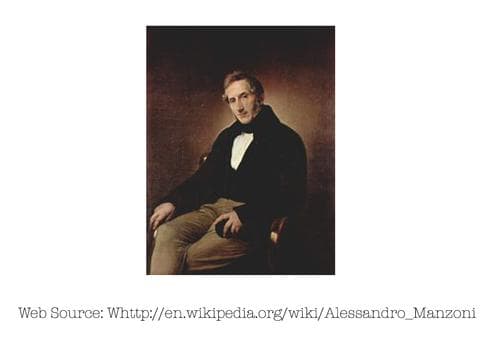
Alessandro Francesco Tommaso Antonio Manzoni was an Italian poet, novelist and philosopher. He is famous for the novel The Betrothed (1827), generally ranked among the masterpieces of world literature. The novel is also a symbol of the Italian Risorgimento, both for its patriotic message and because it was a fundamental milestone in the development of the modern, unified Italian language. Manzoni also contributed to the stabilization of the modern Italian language and helped to ensure linguistic unity throughout Italy. He was an influential proponent of Liberal Catholicism in Italy. His work and thinking has often been contrasted with that of his younger contemporary Giacomo Leopardi by critics.







