“They were the kind of kids who put all the eatable things on one plate and all the uneatable things on another, and then ate both.”
— Describing the Herdman children's unusual eating habits.

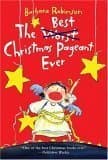
Barbara Robinson (1972)
Genre
Children's / Young Adult
Reading Time
90 min
Key Themes
See below
Sign in to track this book
Six notoriously unruly siblings, lured by snacks, hijack their town's annual Christmas pageant, transforming the traditional nativity story into a hilariously chaotic and unexpectedly heartfelt spectacle.
The story opens with Mrs. Bradley, the narrator's mother, reluctantly agreeing to direct the annual church Christmas pageant after Mrs. Armstrong, the usual director, breaks her leg. At the same time, the infamous Herdman children—Ralph, Imogene, Leroy, Claude, Ollie, and Gladys—who are known as the 'worst kids in the history of the world' for their mischief, appear at Sunday school. They are lured by the rumor of free snacks, specifically cookies. Their presence immediately causes an uproar, as the other children and adults are wary of their unpredictable behavior. The Herdmans have never been to church before, and their lack of familiarity with religious customs and stories is immediately apparent, setting the stage for future misunderstandings.
During the auditions for the Christmas pageant, the other children, particularly Alice Wendelken, are eager to secure the traditional lead roles. However, the Herdman children, with their aggressive presence, quickly take over. Ralph Herdman declares himself Joseph, and Imogene Herdman demands to be Mary. The younger Herdmans — Leroy, Claude, Ollie, and Gladys — similarly bully their way into the roles of the Wise Men and the Angel of the Lord. No one dares to challenge them, not even Mrs. Bradley, who finds herself unable to control the situation. The established order of the pageant is completely upended, leaving the other children shocked and Mrs. Bradley bewildered.
Rehearsals for the Christmas pageant begin, and it quickly becomes clear that the Herdman children have no prior knowledge of the Nativity story. They question every detail, from Mary's virgin birth to the purpose of the Wise Men's gifts. Imogene, as Mary, is particularly aggressive, demanding to know why she can't smoke or if she has to stay 'dumb.' The Herdmans' rough nature translates into their performances; Mary shoves Joseph, the Wise Men march menacingly, and Gladys, as the Angel, shouts her lines with fierce conviction. Mrs. Bradley struggles to maintain any traditional decorum, constantly having to explain basic biblical concepts and rein in the Herdmans' wild interpretations.
During one rehearsal, the Herdmans are particularly fixated on the gifts brought by the Wise Men: gold, frankincense, and myrrh. They don't understand what these items mean. When Mrs. Bradley explains that the Wise Men were bringing 'presents' for baby Jesus, the Herdmans decide that a ham would be a much more practical and appropriate gift, given their own family's struggles with food. This leads to a frantic search for a ham. Later, during the actual pageant, the Herdmans' desire for a ham leads to a near-disaster when they bring a real ham to the church, and the smoke from the shepherds' candles is mistaken for a fire, causing someone to call the fire department.
Alice Wendelken, who usually plays Mary and feels wronged by Imogene taking her role, becomes the chief complainer. She constantly reports every transgression and unconventional act performed by the Herdmans during rehearsals to Mrs. Bradley. Alice's detailed accounts of the Herdmans' smoking, fighting, and general mayhem increase Mrs. Bradley's growing doubts about the pageant. Mrs. Bradley begins to question her decision to direct and fears that the Herdman-led pageant will be a disaster, ruining the church's beloved annual tradition and embarrassing everyone involved. Her anxieties are clear as the pageant date approaches.
The night of the Christmas pageant arrives, and because of the rumors circulating about the Herdmans' involvement, the church is completely packed. Everyone in town, including those who rarely attend church, has come to witness what they anticipate will be either a spectacular failure or an unprecedented spectacle. Mrs. Bradley is a bundle of nerves, steeling herself for the worst. The atmosphere is tense with anticipation, a mix of curiosity, apprehension, and a morbid fascination to see how the 'worst kids' will perform the sacred Christmas story.
As the pageant unfolds, the audience and Mrs. Bradley are prepared for disaster. However, Imogene Herdman, despite her earlier rough demeanor, gives a surprisingly moving portrayal of Mary. When she sees the baby Jesus (a doll), her usual toughness melts away, and a look of wonder and tenderness crosses her face. She even sheds genuine tears, a completely unexpected display of emotion from the notorious Herdman girl. This moment captivates the audience, who are moved by her raw, unadorned sincerity, realizing that her interpretation, while unusual, holds a unique and powerful truth.
Gladys Herdman, as the Angel of the Lord, delivers her lines with an intense, almost ferocious conviction, proclaiming 'Shazam!' instead of 'Fear not!' in her own unique interpretation. Her powerful presence commands attention. The Wise Men, played by Leroy, Claude, and Ollie, march in, looking more like a menacing gang than reverent kings. Instead of the traditional gold, frankincense, and myrrh, they bring a large, smoked ham, which they present to baby Jesus. This unusual offering, born from their own understanding of value and necessity, becomes a surprisingly touching moment, showing their genuine, if misguided, attempt to honor the newborn.
During the final scenes, the smoke from the shepherds' candles, combined with the aroma of the ham, leads someone in the audience to mistakenly believe there's a fire. The fire department is called, and their sirens blare, briefly interrupting the pageant. Despite the chaos, the Herdmans remain unfazed, continuing their parts. The firemen quickly determine there's no actual fire, and the pageant resumes. This unexpected interlude, while initially alarming, only adds to the unique and memorable nature of this particular Christmas pageant, further cementing its place as an unforgettable event in the town's history.
Despite all the unusual elements, the Herdman-led Christmas pageant proves to be moving. The audience, initially skeptical, is deeply touched by the raw honesty and unexpected sincerity of the Herdmans' performance. Imogene's tears, Gladys's fierce angel, and the Wise Men's ham all contribute to a fresh, unvarnished interpretation of the Nativity story that resonates with true meaning. Mrs. Bradley, along with the entire congregation, realizes that the Herdmans, in their innocence and lack of preconceptions, have managed to strip away years of tradition to reveal the true heart of Christmas. It is unanimously declared the best Christmas pageant ever.
The Protagonist
She transforms from a worried, traditional director to someone who embraces the unique and profound beauty of an unconventional Christmas story.
The Supporting
She moves from cautious observation to a deeper understanding and appreciation of the Herdmans' unexpected contribution to the Christmas story.
The Major Character
She starts as a defiant, skeptical 'Mary' but is unexpectedly moved by the story, showing a surprising tenderness and vulnerability.
The Major Character
He maintains his tough exterior but participates earnestly in the pageant, contributing to its unique authenticity.
The Major Character
She channels her inherent ferocity into a surprisingly powerful and memorable portrayal of the Angel of the Lord.
The Supporting
They bring their characteristic Herdman energy to the roles of the Wise Men, making their parts uniquely memorable and sincere.
The Supporting
She remains critical and traditional, serving as a contrast to the transformative power of the Herdman's pageant.
The Mentioned
Her absence allows for the disruption of tradition, leading to a new, more authentic pageant.
The book explores how the traditional, sometimes stale, retelling of the Nativity story can be revitalized by fresh, unburdened perspectives. The Herdmans, with their lack of preconceptions and raw honesty, inadvertently strip away the superficial layers of tradition to reveal the core message of love, wonder, and the humble beginnings of Jesus. Imogene's genuine tears and the Wise Men's practical gift of a ham show that the spirit of Christmas is not found in perfect performances but in sincere understanding and heartfelt giving, however unusual it may seem. The pageant ultimately teaches the community that the true meaning is in compassion and authenticity.
“It was the best Christmas pageant we ever had. It was a messy, loud, untidy pageant, but it was the best.”
A central theme is the challenge of overcoming preconceived notions and judging people based on their reputation. The Herdman children are labeled 'the worst kids in the history of the world,' and everyone expects them to ruin the pageant. However, by giving them a chance, Mrs. Bradley and the community are forced to look past their mischievous exterior. Imogene's unexpected tenderness as Mary, and the Herdmans' genuine engagement with the story, reveal that they are more complex than their stereotypes suggest. The book champions empathy and the idea that everyone deserves a chance to surprise you, showing that goodness can be found in unexpected places.
“We had all been so busy congratulating ourselves on the good job we had done, we hadn't noticed that what was good was the Herdmans themselves.”
The book highlights the power of the Christmas story itself. For the Herdmans, who have never heard it before, the Nativity is not a rote performance but a new, vivid narrative. Their questions and unusual interpretations—like Mary needing to 'shove' Joseph or the Wise Men bringing a ham—show their active engagement and imagination. This fresh perspective forces the audience to re-examine the story through new eyes, making it more real and impactful than years of traditional pageants. The Herdmans' raw, unfiltered imagination breathes new life into a familiar tale, proving its lasting power.
“It wasn't a play anymore. It was real. You could feel the Herdmans — and the whole story — coming alive right there in front of you.”
The narrative explores how a community reacts to outsiders and how acceptance can lead to unexpected positive outcomes. Initially, the church community is resistant to the Herdmans' involvement, fearing disruption and embarrassment. However, through the course of the pageant, the Herdmans' genuine, if unorthodox, participation ultimately brings the community together in a shared experience of wonder and re-evaluation. The pageant becomes a moment where the entire town, including those who rarely attend church, witnesses something truly special, creating a sense of shared understanding and a grudging, then heartfelt, acceptance of the Herdmans.
“It was the first time in a long time that anybody had cried at our Christmas pageant.”
Provides a fresh, observational, and slightly naive perspective on events.
The story is narrated by Beth Bradley, a child, which allows for a direct, informal, and often humorous account of the events. Her perspective offers insights into both the children's reactions to the Herdmans and the adults' struggles. This narrative choice makes the story relatable to young readers and provides an authentic voice that captures the wonder and confusion of the pageant. Beth's evolving understanding of the Herdmans mirrors the audience's own journey of re-evaluation.
Used to highlight the absurdity of the situation and the contrast between expectation and reality.
Barbara Robinson masterfully uses irony and humor throughout the book. The central irony is that 'the worst kids in the history of the world' end up putting on 'the best Christmas pageant ever.' Humor arises from the Herdmans' literal interpretations of the Nativity story, their unconventional actions (like bringing a ham), and the adults' exasperated reactions. This comedic approach makes the serious themes of acceptance and the true meaning of Christmas more accessible and engaging, providing a lighthearted tone even amidst deeper messages.
Highlights contrasting perspectives on tradition and authenticity.
Alice Wendelken serves as a direct foil to the Herdman children. Alice represents tradition, order, and a somewhat self-righteous adherence to 'the way things should be.' The Herdmans, in contrast, represent chaos, spontaneity, and raw, unfiltered honesty. This contrast emphasizes the central conflict between rigid tradition and authentic experience. Alice's constant complaints and Mrs. Bradley's internal struggles are amplified by this dynamic, making the Herdmans' eventual triumph even more impactful.
Represents practical, heartfelt giving over traditional, often meaningless, offerings.
The ham brought by the Herdman Wise Men is a powerful symbol. It contrasts sharply with the traditional gifts of gold, frankincense, and myrrh, which the Herdmans don't understand. For the Herdmans, a ham is a valuable, practical gift for a poor family with a new baby—something tangible and necessary. This symbolizes their genuine, if unrefined, desire to give something meaningful, stripping away the ceremonial aspects of gift-giving to reveal the heart of generosity and compassion, reflecting their own family's struggles and values.
“They were the kind of kids who put all the eatable things on one plate and all the uneatable things on another, and then ate both.”
— Describing the Herdman children's unusual eating habits.
“The Herdmans, of course, were the worst kids in the history of the world.”
— The narrator's general introduction to the Herdman children.
“No, it's not. It's about Jesus. And I'm going to be Mary.”
— Imogene Herdman's defiant claim to the role of Mary.
“I guess that's what Christmas is all about, isn't it? Children.”
— Mrs. Armstrong's initial, somewhat sentimental view of the pageant.
“They didn't smell good, but they didn't smell bad either. They just smelled... Herdman.”
— The narrator's observation about the unique smell of the Herdman kids.
“What's a 'wise man'?”
— Leroy Herdman's genuine confusion about the biblical term.
“It was the best Christmas pageant ever, and it was all because of the Herdmans.”
— The narrator's ultimate conclusion about the pageant.
“They had never heard the Christmas story before. Not ever.”
— The realization that the Herdmans were completely unfamiliar with the nativity story.
“I told her that Jesus was born in a barn and she said, 'Did he have a blanket?'”
— Beth describing Imogene's practical and empathetic reaction to the Christmas story.
“We'd had a lot of Christmases, but this was the first one that was really like Christmas.”
— The narrator reflecting on the profound impact of the Herdman's pageant.
“It wasn't a baby doll at all. It was a ham.”
— The Herdmans' surprising choice for the baby Jesus, a ham from their Christmas basket.
“You know, the Herdmans are probably the only kids in the world who don't know about the Christmas story.”
— Mrs. Bradley's realization about the Herdmans' lack of religious upbringing.
“They looked like they were going to set fire to the whole church.”
— The initial apprehension and fear people felt when seeing the Herdmans in the pageant.
“It was just that the Herdmans... they were different.”
— A simple statement summarizing the unique nature of the Herdman children.
Ready to see how well you understood this book? Take our interactive quiz with 10 questions.
Dan Gemeinhart
4.5
Kate O'Hearn
4.4

Jeanne Birdsall
4.4

Jen Wang
4.4
Wendelin Van Draanen
4.3

John Marsden
4.3

Chris Van Allsburg
4.3
Jennifer A. Nielsen
4.2