“All art is the struggle to make things as they are not.”
— Michael Mead discussing art and its purpose.


Iris Murdoch (1958)
Genre
Literary Fiction / Spirituality / Philosophy
Reading Time
360 min
Key Themes
See below
Sign in to track this book
Outside an abbey, a lay community's spiritual quest turns chaotic when a rediscovered bell tolls for a returning wife, a confronted leader, and a wise Abbess, all facing salvation, human weakness, and the fight between good and evil.
Dora Greenfield, a young woman, arrives at Imber, a village next to Imber Abbey, a convent of enclosed nuns. She returns to her husband, Paul Greenfield, a stern art historian living with the lay religious Imber Court community. Dora had left Paul before, running off to London, and her return causes apprehension and resentment. She feels out of place among the community members, mostly academics and spiritual seekers, and struggles with Paul's strict expectations and the community's disciplined life. Her presence immediately disrupts the community's balance, especially for Paul, who sees her as a distraction.
The Imber Court community consists of individuals living together in an old manor house, seeking a spiritual life near the enclosed nuns of Imber Abbey. Led by Michael Mead, a former academic and spiritual man, the community includes Paul Greenfield, James Tayper Pace (a devout Christian and Michael's second-in-command), Toby Gashe (a young Oxford student), and Catherine Fawley (a novice nun soon to take her final vows). Their daily life includes prayer, study, and manual labor, aiming for asceticism and communal harmony. However, hidden tensions, unrequited desires, and unresolved personal histories threaten the community's fragile peace.
Catherine Fawley's twin brother, Nick Fawley, arrives unexpectedly at Imber Court. Nick is a troubled and manipulative young man, expelled from Oxford, with a complicated past with Michael Mead. His presence immediately creates tension, especially for Michael, who had a disastrous homosexual relationship with Nick years ago. Nick's arrival is a significant disruption; he brings cynicism and a desire to expose hypocrisies he sees within the community. He quickly begins to subtly manipulate the relationships around him, particularly those involving Michael and Toby, adding complexity to Imber Court's strained dynamics.
Driven by boredom and a desire for escape, Dora Greenfield, with the innocent Toby Gashe, explores the grounds. They discover a legend about a lost bell, said to have belonged to Imber Abbey, submerged in the lake between the abbey and Imber Court. Toby, with youthful enthusiasm, helps Dora search. To their surprise, they find the bell. This ancient, heavy bell is believed to be the legendary 'Imber Bell,' a symbol of faith and magic. Its rediscovery creates excitement within both the lay community and the abbey, raising questions about its meaning and proper place.
The discovery of the Imber Bell sparks a debate within the Imber Court community and between the community and the nuns. The bell holds great symbolic weight, representing tradition, spiritual power, and a direct link to the abbey's history. Paul Greenfield sees it as an archaeological artifact, while James Tayper Pace views it with deep religious reverence. The Abbess of Imber Abbey, a wise and practical leader, also has a claim to the bell, representing the enclosed order. The decision of where the bell should go and how it should be treated becomes a central point of disagreement, showing differing views of faith, history, and ownership among the characters.
Feeling stifled by Paul and the community, Dora Greenfield seeks comfort elsewhere. She often visits the nearby town and begins an affair with Noel Spens, a local man. This illicit relationship is Dora's attempt to assert her independence and find joy and affection outside her unhappy marriage and the austere community life. The affair is an act of rebellion against Paul's control and the expectations placed on her, highlighting her desire for freedom and her inability to conform to the rigid spiritual path her husband wants for her.
Nick Fawley, observing the innocent affection between Toby Gashe and Michael Mead, decides to exploit it for his own mischievous purposes. He subtly encourages Toby's feelings for Michael, knowing the potential for scandal. Nick then sets up a situation to expose Michael's past homosexual relationship with himself, fabricating a story and leaving suggestive evidence for Toby to find. This manipulation distresses Toby, who is confused and hurt, and throws Michael into shame and despair, threatening his leadership and spiritual standing. Nick's actions aim to cause maximum disruption and expose what he sees as hypocrisy.
Despite the ongoing personal dramas and tensions, the Imber Court community proceeds with its plan to install the Imber Bell in a new bell tower. The installation is meant to be a moment of unity and spiritual triumph. However, due to inexperience, poor planning, and underlying emotional turmoil, the attempt goes disastrously wrong. The bell falls, injuring several community members, especially Toby Gashe, who is seriously hurt. This accident is a brutal climax to the community's struggles, symbolizing the fragility of their hopes and the destructive results of their unaddressed personal failings, bringing their spiritual project to a catastrophic halt.
Overwhelmed by the community's turmoil, the scandal surrounding her brother Nick, and her own anxieties about taking her final vows, Catherine Fawley experiences a crisis of faith. She briefly flees the abbey, unable to face the commitment and the perceived corruption of the outside world. Her flight shows her deep anxieties and her struggle with the demands of monastic life. However, after reflection and intervention from the wise Abbess, Catherine returns to the abbey, reaffirming her commitment to her spiritual path, though with a deeper understanding of human imperfection and the complexities of faith.
After the bell accident and the exposure of various secrets, Dora Greenfield finally makes a clear decision about her life. She realizes she cannot continue to live with Paul and in the Imber Court community, finding the environment stifling and destructive to her sense of self. Despite Paul's attempts to control her and his intellectual dominance, Dora asserts her independence. She decides to leave Imber for good, choosing uncertainty and freedom over the constrained and unhappy existence she has endured. This decision marks her personal growth and her rejection of a life that does not allow her to flourish.
Following the scandal surrounding Nick Fawley and the disastrous bell installation, Michael Mead, the spiritual leader of Imber Court, recognizes that the community as it was conceived is no longer viable. Burdened by guilt and the collapse of his aspirations, he decides to leave. His departure signals the end of the Imber Court experiment in its current form. The remaining members must deal with the aftermath of the personal crises and the failure of their collective spiritual endeavor. The community disperses, its ideals shattered, and its members forced to confront their individual flaws and the complexities of human nature, leaving Imber Court's future uncertain.
Throughout the turmoils and personal dramas at Imber Court, the wise and serene Abbess of Imber Abbey remains a steady, observing presence. She offers counsel when asked and exercises discreet authority, understanding human nature's complexities and spiritual life's challenges. After the community's collapse, she reflects on the events, recognizing the inherent frailty and imperfection of human beings, even those striving for goodness. Her perspective offers a broader, more compassionate understanding of the characters' struggles, suggesting that true spirituality often coexists with human error and that grace can be found even amidst chaos and failure. She embodies a quiet wisdom that transcends the specific failures of the lay community.
The Protagonist
Dora evolves from a confused, dependent wife to an independent woman who chooses her own path, rejecting a life that stifles her.
The Supporting/Antagonist
Paul remains largely static, unable to reconcile his intellectual ideals with human messiness, ultimately losing Dora.
The Protagonist/Supporting
Michael's arc is one of exposure and resignation, as his attempts at spiritual leadership are undermined by his past and human frailty.
The Antagonist
Nick remains a destructive force, exposing truths but offering no personal growth or redemption.
The Supporting
Catherine experiences a crisis of faith but ultimately reaffirms her commitment to monastic life, understanding human imperfection more deeply.
The Supporting
Toby moves from innocent idealism to disillusionment and physical injury, losing his naivete.
The Supporting
James remains a consistent, if somewhat unyielding, voice of traditional piety throughout the novel.
The Supporting
The Abbess remains a constant, unwavering source of wisdom and spiritual guidance, offering perspective rather than undergoing personal change.
The novel explores the complex nature of goodness and evil, suggesting they are not always clear-cut. Characters like Michael Mead strive for goodness but are haunted by past 'sins,' while Nick Fawley embodies a more destructive force. The community tries to create a good, spiritual life but is undermined by pride, hypocrisy, and unaddressed human failings. Good intentions often lead to negative outcomes, as seen in the bell's disastrous installation or the manipulation of innocent Toby. The Abbess suggests that goodness is found not in perfection, but in wrestling with one's imperfections.
“Goodness is not a thing to be measured, but a state of being in the world.”
A central theme is the tension between humanity's desire for spiritual purity and the reality of human weakness, ego, and desire. The Imber Court community is founded on high spiritual ideals, but its members are flawed: Paul is arrogant, Michael is burdened by guilt and suppressed desires, and Dora is restless and worldly. Their attempts at asceticism and communal harmony are constantly undermined by personal jealousies, sexual desires, and the inability to truly overcome their individual imperfections. The bell's collapse symbolizes the failure of their human-driven spiritual project.
“We are all in the mud, but some of us are looking at the stars.”
The novel contrasts various forms of freedom and confinement. Dora Greenfield seeks freedom from her restrictive marriage to Paul and the stifling atmosphere of Imber Court. The enclosed nuns of Imber Abbey live a life of chosen confinement, which offers them a different kind of spiritual freedom. Nick Fawley's destructive freedom challenges the community's attempts at order. The physical setting, with the lake separating the abbey from the court, emphasizes these boundaries. Ultimately, Dora's journey is about breaking free from psychological and social confinement to find her authentic self, even if it means choosing an uncertain future.
“One must choose one's freedom, or one is not free at all.”
Many characters in 'The Bell' live under illusions or engage in self-deception. Paul Greenfield believes he can mold Dora into his ideal wife and intellectually dominate his environment. Michael Mead deceives himself about his past and his ability to lead a purely ascetic life. The entire Imber Court community, to some extent, maintains an illusion of spiritual harmony that is constantly being shattered by reality. Nick Fawley acts as a catalyst, exposing these illusions, though often for his own manipulative ends. The novel suggests that facing uncomfortable truths, rather than maintaining comforting falsehoods, is essential for genuine growth.
“We are all trying to be good, but we are also trying to be ourselves, and those two things are not always compatible.”
A rediscovered ancient bell, symbolizing spiritual aspiration and the weight of tradition.
The bell itself is a powerful symbol. Initially, it represents a legendary link to the abbey's past, a source of spiritual power and magic. Its discovery ignites hope and conflict. The community's attempt to install it, culminating in disaster, symbolizes the fragility and ultimate failure of their human-driven spiritual project. The bell's immense weight and the difficulty of moving it also represent the burden of tradition and the impossibility of forcing spiritual outcomes. It becomes a focal point for the characters' conflicting desires and beliefs, ultimately crushing their aspirations.
A microcosm for exploring the complexities of human nature and spiritual seeking.
The lay community at Imber Court functions as a carefully constructed microcosm, allowing Murdoch to bring together a diverse group of characters with shared spiritual aspirations but profound individual flaws. This enclosed setting intensifies the personal dramas and highlights the difficulty of achieving true communal harmony when individuals are burdened by ego, past traumas, and unfulfilled desires. The community's eventual disintegration serves as a commentary on the inherent challenges of creating an artificial 'good' society and the triumph of human frailty over idealistic structures.
A physical and symbolic barrier separating the sacred and secular worlds.
The lake physically separates Imber Abbey (the enclosed, sacred world of the nuns) from Imber Court (the lay community attempting a secular spiritual life). This geographical division is highly symbolic, representing the chasm between true spiritual dedication and the messy, compromised reality of human endeavor. The bell is found in the lake, literally bridging these two worlds, but its journey across the lake to the court ultimately ends in disaster, reinforcing the idea that the two worlds, while connected, cannot be easily merged or controlled by human will. It emphasizes boundaries and the difficulty of transcending them.
A source of detached wisdom and a moral compass for the struggling characters.
The Abbess, through her infrequent but significant interactions, serves as a moral and spiritual compass within the novel. Her calm, detached wisdom and deep understanding of human nature offer a stark contrast to the often-frantic struggles of the Imber Court members. She provides a perspective that transcends the immediate dramas, reminding characters (and the reader) of the larger spiritual context and the enduring nature of grace and forgiveness, even amidst human failure. Her counsel often guides characters like Catherine and Michael towards a more profound, less judgmental understanding of faith and self.
“All art is the struggle to make things as they are not.”
— Michael Mead discussing art and its purpose.
“The only thing one can do with a really bad conscience is to have it.”
— Dora Greenfield reflecting on her past actions and guilt.
“We are all of us in the soup.”
— Toby Gashe's simple observation about the shared human predicament.
“Goodness is not a thing. It is a direction.”
— Father Brendan discussing the nature of good and spiritual striving.
“Love is the extremely difficult realisation that something other than oneself is real.”
— Michael Mead's philosophical reflection on the nature of love.
“The religious life is a life of obedience.”
— The Abbess explaining a fundamental principle of monasticism.
“The world is a much more complicated place than we think.”
— Dora Greenfield's growing realization about life's complexities.
“One does not choose God. God chooses one.”
— Father Brendan on the concept of divine calling.
“To be good is to be a part of the world, not to try to escape from it.”
— Catherine Fawley's struggle with her vocation and engagement with life.
“What one thinks of as one's individuality is really just a prison.”
— Michael Mead's thought on the isolating nature of the self.
“The truth is a terrible weapon.”
— Nick Fawley's cynical view of honesty and its destructive potential.
“Happiness is a by-product, not a goal.”
— A general theme explored through the characters' pursuits and disappointments.
“All human beings are mad, but the mad ones are those who don't know it.”
— Dora's internal musings on the shared human condition of irrationality.
“There are no solutions, only choices.”
— A recurring underlying idea as characters grapple with their moral dilemmas.
Ready to see how well you understood this book? Take our interactive quiz with 10 questions.
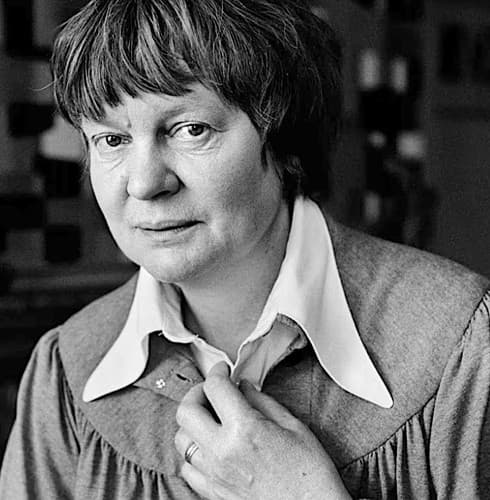
Dame Jean Iris Murdoch was an Irish and British novelist and philosopher. Murdoch is best known for her novels about good and evil, sexual relationships, morality, and the power of the unconscious. Her first published novel, Under the Net (1954), was selected in 1998 as one of Modern Library's 100 best English-language novels of the 20th century. Her 1978 novel The Sea, the Sea won the Booker Prize. In 1987, she was made a Dame by Queen Elizabeth II for services to literature. In 2008, The Times ranked Murdoch twelfth on a list of "The 50 greatest British writers since 1945".







