“Perhaps there are those who believe that we should go back to the old days when women weren't allowed to vote. I don't know about you, but I'm not going back.”
— Fleur Pillager's perspective on societal change and women's rights.

Genre
Literary Fiction / Historical Fiction
Reading Time
450 min
Key Themes
See below
Sign in to track this book
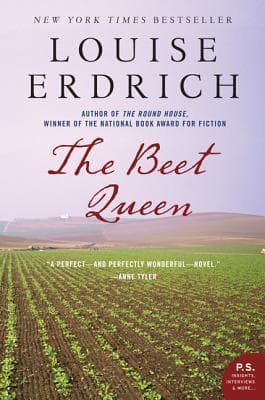
Orphaned siblings Mary and Karl arrive in 1930s North Dakota, beginning a forty-year story of family secrets, strange events, and the strong, often obsessive, ties that shape their unusual lives.
In 1932, ten-year-old Mary Adare and her younger brother Karl are left by their mother, Adelaide, at a carnival in Minnesota after she falls in love with a pilot. Adelaide flies off, promising to return but never does. The children, clever but desperate, hitch a ride on a boxcar, eventually reaching Argus, North Dakota, where their mother's sister, Fritzie, lives. They find Fritzie, a strict but practical woman, running a butcher shop with her husband, Pete. Their arrival greatly changes the quiet lives of Fritzie and Pete, who have no children, and brings a new, unpredictable element to the small town of Argus.
Mary, practical and strong, quickly adjusts to the butcher shop, finding a strange comfort in the order and the physical work. She develops a quiet strength and a deep, often unsaid, love for her brother. Karl, however, struggles more. He is more sensitive and artistic, often feeling out of place. Fritzie, though providing for them, is emotionally distant, and Pete is equally reserved. The children see the raw parts of life and death through the butchery, which shapes how they understand the world. Mary's early experiences establish her role as a caretaker and observer, while Karl's sensitivity makes him more open to the harshness around him.
Fritzie and Pete have a daughter, Sita, who is at first excited by her cousins' arrival. However, Sita quickly becomes very jealous, especially of Mary, whom she sees as plain but surprisingly strong and capable. Sita is beautiful, but also very insecure and manipulative. She becomes obsessed with Karl, who has a charm and beauty that captivates her. This obsession fuels her dislike of Mary, whom she sees as a problem. Sita's internal struggles and her need for attention and love appear in increasingly destructive behaviors, creating a tense dynamic among the cousins that lasts for decades.
As he grows into a teenager, Karl, restless and wanting a life beyond Argus, leaves town. He travels widely, seeing a different world, and is rumored to have various relationships and experiences. His absence leaves a gap for Mary and a lasting bitterness in Sita. When Karl eventually returns to Argus years later, he is a changed man, more worldly but also carrying hidden burdens. His return restarts the complex emotional dynamics within the family, especially between him, Mary, and Sita, and brings new problems to Mary's stable, though ordinary, life. His presence causes many of the later events in the story.
Mary, while Karl is away, continues her life in Argus, working at the butcher shop and becoming close friends with Celestine James, a half-Native American woman who works for the Kozkas. Mary is not conventionally beautiful or outwardly charming, but she has a deep inner strength and a unique way of seeing the world. She has an unusual but lasting relationship with a local man, and later, a deeper, unspoken bond with Celestine. Mary's life is marked by quiet acts of love and loyalty, and her ability to find meaning and purpose in the ordinary, even as she witnesses the extraordinary and often sad events around her. She becomes a steady support for those she loves.
Sita's beauty and her desperate need for love lead her to increasing unhappiness. Her obsession with Karl, combined with her deep insecurities, stops her from forming healthy relationships. She marries a rich man, but her marriage is unsatisfying, and she becomes more isolated and mentally unwell. Her jealousy of Mary grows, leading to a series of destructive acts and a tragic accident involving a bee swarm. Sita's story is one of wasted potential and the destructive power of envy, ultimately leading to deep loneliness and a sad end, showing a clear contrast to Mary's strong spirit.
One of the most important and mysterious events in Mary's life involves a swarm of bees. During a very cold winter, when the bees are in danger of freezing, Mary, guided by instinct, opens the beehive to let them escape into the warmth of the butcher shop. Against all odds, the bees survive, buzzing around the shop throughout the winter. Some see this event as a miracle, confirming Mary's special connection to nature and her often-unseen power. It highlights her quiet, almost magical presence and her ability to help life grow in unexpected ways, making her seem like an unusual, almost saintly, figure.
Karl's life is marked by choices and circumstances that lead him to a life of quiet despair. His charm and good looks often hide a deep insecurity and a struggle with who he is. He has a complicated, often difficult, relationship with Dot, Celestine's daughter, and a lasting, unspoken bond with Mary. Karl carries secrets and regrets from his travels and past romantic relationships. His character shows the theme of searching for belonging and identity, often in self-destructive ways, and his struggles highlight the strong effect of being abandoned and the longing for unconditional love that he never fully receives.
Dot Adare, Celestine's daughter, grows up in Argus, a lively and independent young woman. She is very loyal, especially to Karl, with whom she has a complex, passionate relationship. Dot eventually becomes a truck driver, showing a sense of freedom and rebellion. Her journey is about finding herself and seeking independence, often clashing with what her small town expects. In a surprising turn, Dot, who has a distinct and often rebellious personality, is crowned the 'Beet Queen' at the annual Argus festival, a title that brings both honor and a hint of irony, showing her unique place within the community.
Throughout their lives, the characters in Argus are always shaped by their past. Mary and Karl being abandoned, Sita's jealousy, and the choices made by Fritzie and Pete all have long-lasting effects. Unspoken desires, resentments, and loyalties continue to affect their current relationships. The story often returns to past events through memory and reflection, showing how deeply ingrained these experiences are. The characters, despite trying to move forward, are often pulled back by their history, highlighting the lasting impact of family ties and the sometimes unavoidable nature of one's origins.
Mary's life is marked by deep, often unreturned or unusual, loves. Her steady devotion to Karl, despite his flaws and absences, is a main part of the story. She also experiences deep loss, including the sad events surrounding Sita and the eventual decline of those around her. Despite these difficulties, Mary's spirit remains strong. She continues to observe, to care, and to find quiet meaning in her life. Her ability for lasting love and her resilience in the face of repeated loss define her character, showing her as a steady presence in a world often full of disorder and sadness.
As decades pass, the story introduces new generations, especially through Dot, who has children of her own. These younger characters inherit the complex legacy of their parents and grandparents, dealing with the same themes of identity, belonging, and love. The novel suggests a repeating pattern to certain family behaviors and emotional struggles, while also hinting at the chance to break free. The ending brings a sense of continuation, showing how the characters' lives, though marked by individual successes and tragedies, are woven into the fabric of Argus, with their stories continuing to unfold and influence those who follow.
The Protagonist
Mary evolves from a bewildered, abandoned child into a steadfast, resilient woman who anchors her chaotic family, finding a quiet strength and purpose despite repeated losses.
The Major Supporting Character
Karl journeys from a sensitive, abandoned boy to a charming but troubled man, perpetually searching for belonging and love, ultimately finding a bittersweet acceptance of his fate.
The Antagonist/Major Supporting Character
Sita's character devolves from a beautiful, jealous young woman into an isolated, mentally unstable figure consumed by envy, leading to her tragic end.
The Supporting Character
Celestine remains a steadfast and supportive friend to Mary, providing stability and quiet strength throughout the family's turbulent history.
The Supporting Character
Fritzie maintains her stoic, hardworking nature, providing a foundation for her family even as she struggles with emotional expression and the challenges of her children.
The Supporting Character
Pete remains a constant, quiet presence, embodying the steadfast nature of the working man in Argus.
The Supporting Character
Dot grows from a spirited child into an independent, strong-willed woman, finding her own identity and purpose while navigating complex family relationships, culminating in her symbolic coronation as the Beet Queen.
The Mentioned Character
Adelaide's arc is brief but pivotal; her abandonment of her children sets the entire narrative in motion, though she herself does not develop further in the story.
The novel begins with Mary and Karl being deeply abandoned by their mother, Adelaide. This early trauma shapes their lives, affecting their relationships, choices, and self-worth. Karl's restless travels and his struggle for belonging can be directly linked to this early experience, as can Mary's quiet strength and her deep loyalty to those she loves. The theme explores how people deal with such a primary wound, some becoming self-destructive, others finding strength and forming new, unusual families. The lasting effects of abandonment are felt across generations, affecting even those not directly abandoned, like Sita, who feels emotionally abandoned by her parents' focus on the orphans.
““We were like two small stones thrown into a pond, the ripples of our arrival spreading out to touch everyone in Argus.””
The book explores different kinds of love: the steady, almost maternal love Mary has for Karl; the passionate, often destructive obsession Sita has for Karl; the quiet, lasting friendship between Mary and Celestine; and the complex, sometimes difficult romantic relationships. Love is often unreturned, complicated, or shown in unusual ways. Sita's obsession with Karl, fueled by jealousy and insecurity, eventually leads to her sad end. Mary's love, though often unsaid, is a powerful, steadying force, showing that love can be quiet devotion and strong loyalty rather than grand gestures. The novel looks at how love can both support and destroy.
““Love was not a thing to be understood or explained, but a force that simply was, sometimes gentle, sometimes brutal, always true in its own way.””
Many characters, especially Mary, show great strength when facing hardship, loss, and the often-difficult realities of life in rural North Dakota. Mary's ability to adjust to the butcher shop, her steadiness, and her quiet strength show this theme. Even after repeated personal tragedies and emotional wounds, she continues to endure and find purpose. The theme also applies to the community of Argus itself, a small town that survives through tough economic times and personal dramas. Survival is not always about big wins, but about the quiet, daily acts of getting by, finding meaning, and keeping one's spirit.
““We learned early on that the world was a cold place, and if you didn't learn to keep your own fire going, you would freeze.””
The search for who you are and where you belong is central for many characters. Mary and Karl, as orphans, constantly struggle with where they belong and who they are without their original family. Karl's desire to travel is a sign of his search for a place and identity. Sita's desperate need for attention and her envy come from her own insecurities about her place in the family. Even Celestine, as a half-Native American woman, deals with identity issues in a mostly white community. The novel explores how one's origins, family, and community shape, or sometimes limit, the development of personal identity.
““We were always looking for a place to put ourselves, a place where we fit, but sometimes you just had to make your own space.””
Erdrich includes elements of the mystical and unusual into the seemingly ordinary lives of her characters. Mary's special connection to the bees, ending in their miraculous survival in the butcher shop, is a clear example. These moments suggest a deeper, unseen force at work in the world, hinting at magic or spiritual meaning in everyday events. This theme lifts the story beyond simple realism, filling it with a sense of wonder and suggesting that even in the most ordinary places, there are unexplainable occurrences and deep connections to nature that cannot be logically explained. It adds richness and depth to the characters' experiences.
““Sometimes the world showed you its true face, a face of such bewildering beauty and strangeness that you knew you were only a small part of something vast and unknowable.””
The story jumps between different time periods and character perspectives.
The novel does not follow a strict chronological order. Instead, it frequently shifts in time, moving back and forth between different decades, often triggered by a character's memory or a thematic connection. This non-linear structure allows Erdrich to reveal character motivations and the long-term consequences of past events gradually, building a rich, layered understanding of the characters' lives and the intricate web of their relationships. It also reflects the way memory works, emphasizing the enduring presence of the past in the present.
The story is told through the viewpoints of several main characters.
The narrative voice shifts between different characters, primarily Mary Adare, but also including Karl, Celestine, and others. This allows the reader to gain a multifaceted understanding of events and character motivations, as each character interprets and experiences the same events differently. For example, Sita's jealousy is understood through her own internal monologues, while Mary's quiet observations offer a contrasting viewpoint. This device creates a richer, more complex psychological landscape and prevents any single character's truth from dominating the narrative.
Bees symbolize community, resilience, and Mary's unique connection to life.
Bees are a recurring and potent symbol in the novel, particularly associated with Mary. They represent community, industry, and the fragile tenacity of life. Mary's intuitive act of saving the bees from freezing, allowing them to survive the winter in the butcher shop, is a pivotal moment that highlights her unique connection to the natural world and her nurturing spirit. The bees also symbolize the interconnectedness of life and the hidden magic within the mundane, serving as a quiet, miraculous counterpoint to the human dramas unfolding around them.
The butcher shop serves as a central setting and a symbol of life, death, and survival.
The Kozka butcher shop is more than just a setting; it functions as a microcosm of life in Argus and a symbol for the novel's themes. It is a place of hard work, sustenance, and the stark realities of life and death. The daily routines of butchering animals reflect the cycle of life and the necessity of survival. It's also a place where family dramas unfold, where secrets are kept, and where unexpected miracles (like the bees) occur. The butcher shop represents the grounded, visceral reality against which the characters' emotional and spiritual journeys play out.
“Perhaps there are those who believe that we should go back to the old days when women weren't allowed to vote. I don't know about you, but I'm not going back.”
— Fleur Pillager's perspective on societal change and women's rights.
“Love, too, is a form of eating, and is, in the end, much like it.”
— Celestine's reflection on the nature of love and consumption.
“The past is a country from which we are all exiles, and it is a place we can never fully return to, though we carry its dust in our pockets.”
— A general reflection on memory and the past.
“There are some people who come into your life and make you glad they did, even if they leave you with nothing but a hole.”
— Karl's musings on the impact of certain individuals.
“Sometimes the greatest love is a silent one, a love that watches from a distance, content to know the other is happy.”
— A character's observation on unexpressed affection.
“We are all haunted by the things we don't say, the chances we don't take, the lives we don't live.”
— A reflective statement on regret and unspoken desires.
“The land remembers what we forget, and it whispers to us in our dreams.”
— A recurring theme about the connection between land and memory.
“It was a time when women were still supposed to be beautiful and quiet, and men were supposed to be strong and silent. It was a time of many lies.”
— Reflecting on gender roles and societal expectations of the era.
“The world keeps turning, and we keep trying to catch up, but sometimes it feels like we're always a step behind.”
— A character's sense of being out of sync with life's progression.
“Grief is a house with many rooms, and we wander through them all, some more often than others, some we never leave.”
— A metaphorical description of the experience of grief.
“There's a kind of peace that comes from knowing you've done your best, even if your best wasn't good enough.”
— A character finding solace in effort despite outcome.
“Every family has its secrets, and ours was no different, only perhaps a little more tangled, a little more bitter.”
— Introducing the complex dynamics and hidden histories within a family.
“Sometimes the greatest kindness you can show someone is to let them go, even if it breaks your own heart.”
— A difficult decision made out of love and selflessness.
“The wind carries the stories of the dead, if you only listen close enough.”
— A spiritual connection to ancestors and past events through nature.
“You can't outrun your own blood, no matter how far you travel or how many names you change.”
— A character's realization about the inescapable ties of family and heritage.
Ready to see how well you understood this book? Take our interactive quiz with 10 questions.

Karen Louise Erdrich is an American author of novels, poetry, and children's books featuring Native American characters and settings. She is an enrolled member of the Turtle Mountain Band of Chippewa Indians, a federally recognized tribe of Ojibwe people.







