“The only power that can set us free is the power of truth.”
— The unnamed man's internal reflection on the state of society and the need for honesty.

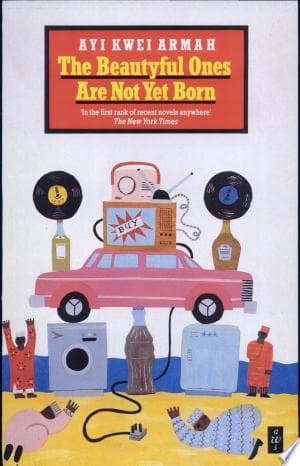
Ayi Kwei Armah (1988)
Genre
Literary Fiction / Historical Fiction
Reading Time
240 min
Key Themes
See below
Sign in to track this book
In newly independent Ghana, a railway clerk struggles to keep his integrity against his family's desires and a society that rewards corruption.
The novel opens with 'the man,' a railway clerk, on a bus ride home. He immediately notices the strong smell and visual signs of decay: broken seats, spitting passengers, and general dirt. This physical rot reflects the moral corruption he sees everywhere in Ghana after its independence. He sees a beautiful woman on the bus who seems untouched by the squalor, which contrasts with his own struggle to keep his integrity in a society that rewards dishonesty. He feels isolated because he refuses to take part in the widespread bribery and favoritism that has become normal, a choice that separates him from his peers and family.
At home, the man faces the expectations of his wife, Oyo, and her mother. They are disappointed by his lack of ambition and his inability to provide the comforts that other families, whose men are corrupt, enjoy. Oyo often compares him to Koomson, a former classmate who became a wealthy minister through illegal means. The man's small salary and his refusal to accept bribes mean their family lives in relative poverty. This causes constant tension and criticism. He feels stuck between his moral beliefs and his desire to provide for his family, who see his honesty as a weakness.
To escape his home life and the general squalor, the man visits his old friend, Teacher. Teacher, a recluse and intellectual, shares the man's disappointment with Ghana. They talk about corruption, the failed promises of independence, and how hard it is to stay honest in a society that seems to punish it. Teacher, through his own experiences, confirms the man's feelings of isolation and the pointlessness of resistance. He represents a kind of quiet despair, having stopped actively participating in a world he finds too corrupt. Teacher offers the man a temporary intellectual and emotional escape.
Koomson, now a prominent and wealthy minister, returns to his old neighborhood with his wife, Estella, and their children. Their arrival in a luxury car, their rich lifestyle, and their showy display of wealth are very different from the man's simple life. Oyo and her mother are especially impressed. They see Koomson as the success they want for the man. Koomson's family, especially Estella, are superficial and condescending. This shows the moral emptiness behind their material wealth. The man watches Koomson's change with disdain and a quiet understanding of the societal forces that created it.
Oyo wants financial stability and a better life. She tries to set up a business deal between Koomson and the man. The deal involves Koomson using his political influence to get a fishing boat for the man, which is a clear act of favoritism and corruption. The man is uncomfortable with the arrangement. He knows it means directly participating in the system he despises. Despite his internal resistance, he gets involved in the deal because of Oyo's strong efforts and Koomson's implied pressure. This forces him to confront how hard it is to keep his principles when those he loves are directly involved.
Suddenly, a military coup overthrows the corrupt government, including Koomson's ministry. News spreads quickly, and the atmosphere changes from stifling corruption to a brief, exciting sense of change. The man sees the initial reactions and feels a small hope that the cycle of decay might break. However, he remains skeptical, understanding that corruption is deeply rooted. The coup is a turning point, bringing a quick downfall for those who benefited from the previous government, including Koomson.
After the coup, Koomson is a hunted man. He seeks refuge with the man and Oyo. Without his power and wealth, Koomson is a pathetic figure, showing how empty his former status was. Despite strongly disapproving of Koomson's corruption, the man feels a complex sense of duty and pity. He reluctantly agrees to help Koomson escape the country by guiding him through a secret path to the sea, where he can board a waiting boat. This act of help forces the man to directly face the consequences of the corruption he has always resisted, making his moral purity less clear.
The escape route takes the man and Koomson through a dark, smelly, sewage-filled tunnel that leads to the sea. This physical journey symbolizes the moral degradation and filth in Ghanaian society. Koomson, once powerful, is reduced to crawling through human waste, a strong image of his fallen status. The man, though disgusted, endures the journey, his senses overwhelmed by the stench and slime. The sea, when they reach it, feels clean and vast for a moment. It is a sharp contrast to the confining, corrupt land they leave behind.
After Koomson gets on a boat and escapes, the man goes home. On his way, he sees the immediate changes from the new military government. He sees slogans on walls praising the coup and condemning corruption. Yet, he also notices the familiar faces of opportunists already siding with the new power. A police patrol, representing the new authority, passes by. The man thinks about how power and corruption are cyclical. He understands that while one group of 'beautyful ones' has been overthrown, the true 'beautyful ones'—those with real integrity—are still not yet born. The cycle of decay will likely continue.
The novel ends with the man thinking about the endless cycle of corruption, hope, and disappointment. He sees a bus, like the one he rode at the beginning, filled with the same types of people. This suggests that despite the coup, society's basic problems remain. He sees a young boy drawing a beautiful flower in the sand, but the tide washes it away. This symbolizes how beauty and hope are temporary when facing widespread decay. The man walks home, carrying his understanding. He knows that the 'beautyful ones'—those who can truly change society—are yet to appear, leaving the future uncertain but with a faint, lingering hope.
The Protagonist
He begins as a disillusioned observer, resists compromise, and while briefly pulled into aiding Koomson, he ultimately returns to his initial state of quiet, resigned integrity, having witnessed the cyclical nature of corruption.
The Supporting
She consistently pressures the man to abandon his principles for financial gain, remaining largely unchanged in her materialistic desires.
The Supporting
He remains a static character, a voice of resigned wisdom and shared disillusionment, reinforcing the man's internal struggles.
The Antagonist/Supporting
He rises to immense wealth and power through corruption, then experiences a dramatic and humiliating fall after the coup, reduced to a desperate, hunted man.
The Supporting
She remains a static symbol of materialistic superficiality throughout her appearances in the narrative.
The Supporting
She remains a static source of pressure and disappointment for the man, consistently advocating for material gain.
The Mentioned
As a symbol, it has no arc but provides a consistent metaphorical representation of hypocrisy.
The Supporting
He appears briefly as a static representation of petty corruption.
Corruption is the most important theme. It is shown as a moral and physical sickness in post-independence Ghana. Armah uses images of waste, bad smells, and physical decay (broken buses, overflowing latrines, decaying buildings) to show the moral decline of society. Characters like Koomson represent political corruption, and the daily struggles of the man's family show its economic effect. The novel suggests that independence just replaced colonial exploitation with local corruption, leading to deep disappointment with the idea of a new nation. The decay is not just in institutions but in every part of daily life, making honesty a lonely and difficult path.
“How could a man live in the midst of all this and not feel the need to shit? The only choice was the way in which one did one's shitting. And the man knew he was not made for the artist's life.”
This theme is central to the man's inner struggle. His strong commitment to honesty sets him apart from almost everyone else, including his own family. His refusal to take bribes or engage in favoritism, while morally good, leads to financial hardship and being an outcast. The novel shows the great pressure to compromise one's principles in a society where corruption is normal and rewarded. The man's struggle shows the personal cost of integrity and questions if it is possible to maintain it in a flawed system. His character is a rare person who tries to resist the moral decay.
“He knew that the only way to avoid the embrace of the national filth was to die.”
Armah strongly conveys the lost hopes and deep disappointment that followed Ghana's independence. The initial promise of a free and rich nation quickly turned into a new kind of exploitation by a local elite, shown by Koomson. The novel criticizes African leaders for failing to build a truly fair society. Instead, they repeated and even increased greed and corruption. The 'beautyful ones'—truly incorruptible leaders—have not yet appeared. This suggests a repeating pattern of corruption and a long wait for real progress. This theme is shown through the man's observations and Teacher's cynical thoughts.
“The only thing that has changed is that the men who were used to be called 'masters' are now called 'ministers'.”
The novel suggests that history repeats itself. One corrupt government is simply replaced by another, often with the same basic problems. The coup that overthrows Koomson's government brings a short period of hope, but the man's observations quickly show that the same opportunism and desire for illegal gain are already appearing under the new government. The ending, with the bus carrying new passengers and new slogans, reinforces this cyclical view. True, meaningful change, the novel implies, needs a basic shift in human nature and societal values. This is a slow and hard process, which is why 'the beautyful ones are not yet born.'
“The change was like the change in the dress of a harlot, or a prostitute, as some would say, whose real being has not been touched.”
The man's keen awareness of the decay and corruption around him helps him keep his integrity, but it is also a heavy burden. He cannot ignore the filth, the smell, or the moral compromises of others. This sharp awareness isolates him from his family and society, leading to a deep sense of alienation. His ability to see the truth makes him suffer more, as he lacks the happy ignorance or cynical acceptance of those around him. This theme explores the psychological cost of being an ethical person in a morally compromised world.
“He felt that the only way out was to be able to close his eyes and his nose and his ears, to be able to shut out the world.”
Physical decay as a metaphor for moral and societal corruption
Armah extensively uses vivid, visceral descriptions of physical filth, waste, and decay (e.g., overflowing latrines, broken buses, the 'chichidodo' excrement, the sewage tunnel) to symbolize the pervasive moral and political corruption in post-independence Ghana. This device creates a strong sensory experience for the reader, making the abstract concept of corruption tangible and repulsive. The physical environment mirrors the spiritual and ethical state of the nation, emphasizing the deep-seated nature of the problem and the man's constant battle against it.
An everyman figure representing the common individual's struggle
The protagonist is never named, referred to simply as 'the man.' This device serves to universalize his experience, making him an everyman figure who represents any individual struggling to maintain integrity in a corrupt society. His lack of a name emphasizes his alienation and his position as an outsider, while also allowing readers to identify with his internal conflicts without the specificity of a unique identity. It highlights that his struggle is not unique but a shared human predicament in such circumstances.
A metaphorical creature symbolizing hypocrisy
The chichidodo, a bird that hates excrement but feeds on maggots that thrive in it, is a powerful allegorical device. It symbolizes the pervasive hypocrisy within Ghanaian society, where people publicly denounce corruption while secretly benefiting from it or being complicit in its perpetuation. This symbol encapsulates the moral paradox and the self-deception that allows decay to flourish, serving as a constant reminder of the gap between professed ideals and actual behavior.
The plot's beginning and end mirroring each other to emphasize repetition
The novel employs a somewhat cyclical narrative structure, particularly evident in its opening and closing scenes. The man begins and ends his journey observing a bus, reflecting on the state of his society. This cyclical pattern underscores the theme of history repeating itself and the enduring nature of corruption, suggesting that despite political changes (like the coup), fundamental societal problems persist. It reinforces the idea that true, lasting change is elusive and that the 'beautyful ones' are still a distant hope.
Revealing the protagonist's deep thoughts and disillusionment
Much of the narrative is presented through the man's internal monologues and a stream-of-consciousness style. This device allows Armah to delve deeply into the protagonist's thoughts, feelings, and philosophical reflections on corruption, integrity, and the human condition. It provides intimate access to his disillusionment, his struggles, and his profound sense of alienation, making his internal world as significant as the external plot. This technique immerses the reader in his subjective experience of a decaying world.
“The only power that can set us free is the power of truth.”
— The unnamed man's internal reflection on the state of society and the need for honesty.
“What a terrible thing it was to see a man who had been whole, now broken.”
— Observing a once vibrant individual, now defeated by the system.
“The beautyful ones are not yet born. How can they be born in a place like this?”
— The iconic title phrase, reflecting the pervasive corruption and lack of hope for a better future.
“The chasm between the ideal and the real was a constant source of pain.”
— The protagonist's internal struggle with the disparity between his aspirations and the grim reality.
“And the rot, it was everywhere, like a disease that had eaten into the very soul of the land.”
— A vivid description of the widespread corruption and moral decay in society.
“The only way to survive was to become like them, to embrace the filth.”
— The difficult choice faced by individuals in a corrupt environment, to conform or be destroyed.
“He felt a great weariness, the weariness of a man who has seen too much, and understood too little.”
— The protagonist's emotional exhaustion from witnessing constant moral degradation.
“The revolution was a dream, a beautiful dream that had turned into a nightmare.”
— Reflecting on the failed promises of post-independence Ghana and the subsequent disillusionment.
“He was an outsider, a man who refused to swim in the general current of corruption.”
— Description of the protagonist's integrity and his isolation due to his refusal to participate in corrupt practices.
“The future was a dark, unknown thing, full of shadows and lurking dangers.”
— The pessimistic outlook on the future of the nation and its people.
“There was no escape from the cycle, the endless, grinding cycle of poverty and despair.”
— The feeling of being trapped in a system that perpetuates hardship.
“The true meaning of independence had been lost, swallowed by greed and self-interest.”
— Critique of the post-colonial leadership and their betrayal of the initial ideals of independence.
“To be clean was to be alone, to be an outcast in a world that celebrated filth.”
— The social cost of maintaining moral integrity in a corrupt society.
“The only thing that mattered was the present, the desperate, clawing present.”
— Focus on the immediate struggles for survival, overshadowing any long-term aspirations.
Ready to see how well you understood this book? Take our interactive quiz with 10 questions.
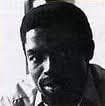
Ayi Kwei Armah is a Ghanaian writer best known for his novels including The Beautyful Ones Are Not Yet Born (1968), Two Thousand Seasons (1973) and The Healers (1978). He is also an essayist, as well as having written poetry, short stories, and books for children.







