“The beautiful room is empty. The beautiful room is empty.”
— The narrator's recurring thought about the emptiness despite external beauty or opportunity.

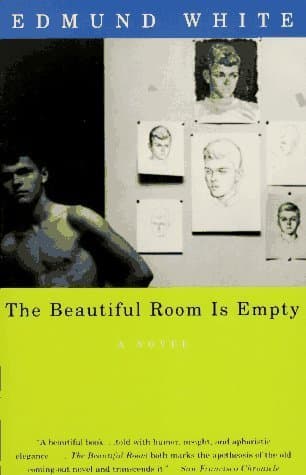
Edmund White (1988)
Genre
Literary Fiction
Reading Time
240 min
Key Themes
See below
Sign in to track this book
In 1950s America, a scholarly teenager secretly explores his sexuality, navigating hidden encounters and gay subcultures until the Stonewall uprising.
The story begins with the unnamed narrator describing his childhood in the repressive Midwest during the 1950s. He recounts a widespread atmosphere of conformity and strong pressure to follow societal norms, especially regarding sexuality. From a young age, he recognizes his attraction to other boys, a realization that brings both confusion and shame, given the complete lack of positive representation or acceptance for homosexuality. He struggles to align his inner desires with the outward expectations of his family and community, which leads to a deep sense of isolation and feeling different. This early period is marked by his intellectual curiosity and sensitivity, often feeling like an outsider observing the 'normal' world around him.
In college, the narrator finds a slightly more open environment, though it remains deeply closeted. He begins to carefully explore his homosexual desires, often through encounters with older men he meets secretly. These early experiences are filled with excitement, fear, and a lingering sense of guilt. He grapples with the hidden nature of these relationships and the societal disapproval that surrounds them. His intellectual pursuits continue, but his main focus is on understanding and expressing his sexual identity, often feeling like he is navigating a hidden world where rules are unwritten and dangers are present. He seeks connection and validation, but often finds only brief encounters.
Believing that homosexuality is a mental illness that can be 'cured,' the narrator starts intensive psychotherapy. He describes his sessions with a psychoanalyst, who is often portrayed as well-meaning but ultimately ineffective and mistaken in his approach to homosexuality. The therapy involves exploring his childhood, his relationship with his mother, and various Freudian interpretations, all aimed at 'correcting' his sexual orientation. These sessions are frustrating and emotionally draining, as the narrator struggles to express his true self while trying to meet the therapist's expectations. He feels like he is playing a role rather than truly healing, showing how pointless such 'conversion' efforts were.
Feeling stifled by the Midwest and the failed therapy, the narrator decides to move to New York City. He arrives with hope and anticipation, believing that the city's anonymity and cultural diversity will offer him freedom. He finds work and an apartment, slowly learning to navigate the large city. This move is a significant step in his coming-of-age, as he actively seeks to escape his past's limitations and find a place where his identity might be accepted rather than seen as a disease. The city, with its hidden spots and growing subcultures, promises a new kind of life.
In New York, the narrator begins to discover and immerse himself in the city's underground gay subculture. He visits bars, bathhouses, and other secret meeting places, encountering many gay men — from flamboyant 'queens' to more reserved individuals. He describes the unique language, codes, and rituals of this hidden world, a stark contrast to the repressive environment he left behind. While still marked by secrecy and the threat of exposure, this community offers him a sense of belonging and friendship he has never known. He forms new friendships and starts to understand the complexities of gay identity beyond his individual struggles.
The narrator has a series of relationships and sexual encounters, some brief, others more meaningful. He describes the emotional complexities of these connections, often marked by a longing for true intimacy amid the casual nature of many encounters. He explores different aspects of his sexuality, experimenting with roles and desires, constantly trying to define what love and connection mean to him as a gay man. These experiences are not always easy; he faces heartbreak, unrequited desire, and the challenges of forming meaningful bonds in a society that still largely denies the validity of gay relationships. Each encounter, however, helps him understand himself better.
Beyond the sexual aspects of his life, the narrator also finds intellectual and artistic connection within New York's literary and artistic circles. He meets writers, artists, and intellectuals who share his sensibilities and provide stimulating conversation. These connections offer him another way to express himself and feel validated, reinforcing his identity not just as a gay man, but also as an intelligent and creative individual. He discusses literature, philosophy, and art, finding a sense of belonging among those who appreciate intellectual pursuits. This part of his life helps broaden his perspective and balances the often-solitary nature of his sexual explorations.
As the story continues, the narrator subtly observes the changing social and political landscape of the late 1960s. There is a growing sense of unrest and a developing counter-culture movement that, while not initially focused on gay rights, creates a more welcoming environment for challenging established norms. He witnesses the early signs of collective identity and a questioning of authority that will eventually lead to more open activism. While still operating within a largely hidden world, the seeds of change are being planted, and the narrator's personal journey reflects the broader societal shifts towards greater openness and defiance against oppressive structures.
The novel's climax happens when the narrator is at the Stonewall Inn on the night of the first gay uprising in June 1969. He describes the oppressive atmosphere leading up to the police raid, the sudden eruption of defiance from the patrons, and the subsequent days of rioting and protest. This event is a major turning point, not just for the gay community, but for the narrator personally. He sees firsthand the courage and anger that had been simmering beneath the surface, realizing the power of collective action and the birth of a visible gay rights movement. The 'beautiful room' of his isolated existence begins to fill with the noise and energy of liberation.
After Stonewall, the narrator considers the uprising's deep meaning. He recognizes that the world has changed irreversibly, and the era of silent suffering and hidden lives is ending. While the fight for full acceptance is far from over, the events at Stonewall spark hope and possibility. He thinks about the future of gay identity, now moving from private shame to a public and political demand for rights and recognition. The novel ends with cautious optimism, suggesting that the journey toward self-acceptance and societal change has just begun, but now with a collective voice and visible movement.
The Protagonist
He evolves from a closeted, guilt-ridden individual seeking a 'cure' to an openly gay man who witnesses and participates in the birth of the gay liberation movement, finding a sense of belonging and defiance.
The Supporting
The psychoanalyst's character remains largely static, representing the rigid and unenlightened medical establishment, ultimately failing to 'cure' the narrator.
The Supporting
Collectively, they symbolize the burgeoning gay community moving from hidden existence to public defiance during the Stonewall Uprising.
The Mentioned
Her influence on the narrator diminishes as he finds independence and self-acceptance, symbolizing his breaking away from societal norms.
The Supporting
Their collective action transforms them from victims of police harassment into catalysts for a social revolution.
This is the main theme, as the unnamed narrator goes on a lifelong journey to understand and accept his homosexual identity in a world that denies it. From his early struggles with shame and guilt in the conservative Midwest, through his misguided attempts at 'conversion therapy,' to his eventual immersion in New York's gay subculture and witnessing the Stonewall Uprising, every step is toward self-knowledge. The novel shows the deep internal conflict of living authentically when society demands concealment. The 'beautiful room' of the title can be seen as the narrator's inner self, initially empty of self-acceptance but gradually filled with understanding and pride.
“America was a big gray country of families on drowsy holiday, and it had no room for me.”
The novel clearly shows the oppressive societal atmosphere for gay individuals in mid-20th century America, especially the 1950s and 60s. It details the widespread fear, secrecy, and legal persecution that forced gay people into the shadows. The 'empty room' also refers to the lack of public space or acceptance for gay identity. The story carefully builds toward the Stonewall Uprising, which is a strong symbol of collective liberation. This event marks a shift from individual, hidden struggle to a public, political movement, showing how societal repression can lead to defiance and the demand for freedom.
“We were not men, we were not women, we were not children, we were not animals. We were nothing.”
A large part of the novel focuses on the narrator's experience with psychotherapy, which he undertakes to 'cure' his homosexuality. This theme critiques the medical and psychiatric views of the time, which labeled homosexuality as a mental illness. The psychoanalyst is shown as well-meaning but ultimately ineffective and mistaken, demonstrating how useless and psychologically harmful such 'conversion' efforts were. The narrator's eventual abandonment of therapy and his acceptance of his identity highlights the flaw in trying to 'fix' something that is not broken. It shows the damage caused by a society that labels natural variations of human sexuality as diseases.
“My psychoanalyst, a man of infinite good will and monumental incomprehension, was trying to cure me of a disease that wasn't a disease.”
Initially, the narrator's journey is solitary, marked by isolation and a feeling of being unique in his desires. However, in New York, he discovers a growing gay subculture, where he finds belonging and friendship among other gay men. This community, though often hidden, provides support and validation. The theme culminates with the Stonewall Uprising, where individual acts of defiance come together into a powerful collective action. This event shows how a shared identity and common struggle can empower a marginalized group to challenge oppression and demand recognition, turning personal shame into public pride and political force.
“Something had changed. The air was different. We were no longer alone.”
The story is told from the narrator's mature perspective, looking back on his youth.
The novel employs first-person retrospective narration, allowing the unnamed narrator to recount his experiences from a position of greater understanding and emotional distance. This device provides a reflective and analytical tone, as the narrator can comment on his past self's naivete, struggles, and growth with the wisdom gained over time. It also allows for insightful social commentary on the historical period and the evolution of gay identity. The 'beautiful room' of his memory is carefully curated, offering a poignant and often humorous lens through which to view a challenging past.
The title itself serves as a central metaphor for emptiness and potential.
The phrase 'The Beautiful Room Is Empty' functions as a powerful, multi-layered symbol throughout the novel. It can represent the narrator's inner self, initially empty of self-acceptance and understanding due to societal repression. It also symbolizes the lack of a public, affirming space for gay identity in pre-Stonewall America – a beautiful country, perhaps, but one that had no room for him. As the narrative progresses and the narrator finds community and witnesses liberation, the 'room' begins to fill, first with hidden experiences, then with collective defiance, suggesting a journey from void to fullness, from isolation to belonging.
The narrative traces the protagonist's journey from youth to maturity.
The novel is structured as a Bildungsroman, chronicling the narrator's psychological and moral growth from his adolescence in the conservative Midwest to his young adulthood in New York City, culminating with the Stonewall Uprising. This device allows the reader to witness his evolution from a confused, guilt-ridden teenager to a more self-aware and defiant individual. The story explores his education, his early sexual experiences, his intellectual development, and his eventual political awakening, all contributing to his formation as an adult who finds his place and voice within a marginalized community.
The repressive 1950s and the revolutionary 1960s act as defining forces.
The historical backdrop of mid-20th century America, particularly the conservative 1950s and the tumultuous 1960s, serves almost as a character in itself. The pervasive societal repression, the legal persecution of homosexuals, and the cultural silence surrounding gay identity directly shape the narrator's experiences and internal conflicts. Conversely, the nascent counter-culture movement and the eventual explosion of the Stonewall Riots provide the catalyst for his liberation and the emergence of a collective gay consciousness. The changing decades are not merely settings but active forces that dictate the possibilities and challenges of the narrator's journey.
“The beautiful room is empty. The beautiful room is empty.”
— The narrator's recurring thought about the emptiness despite external beauty or opportunity.
“I was always trying to find a home, a place where I truly belonged, but every time I thought I'd found it, it turned out to be just another beautiful room, empty.”
— Reflecting on his lifelong search for belonging and recurrent disappointment.
“Sex was a refuge, a way of not being alone, even if it was just for a few hours.”
— Discussing the role of sexual encounters in his life as a means of escaping loneliness.
“I was a connoisseur of my own unhappiness.”
— A self-aware statement about his tendency to analyze and perhaps even indulge in his own sorrow.
“To be an artist, I thought, was to be condemned to perpetual observation, to never truly participate.”
— His musings on the nature of being an artist and its impact on personal experience.
“The past was a country I visited often, but never truly lived in.”
— A poetic reflection on his relationship with his past memories and experiences.
“Every secret was a burden, but also a kind of power.”
— Considering the double-edged nature of keeping secrets, especially regarding his sexuality.
“Love was always just out of reach, a shimmering mirage in the desert of my desires.”
— His persistent struggle to find lasting and fulfilling love.
“I discovered early on that books offered a more reliable form of companionship than people.”
— Explaining his early reliance on literature for comfort and understanding.
“The world was full of beautiful things, but I was often too busy looking for what was missing.”
— A poignant observation about his focus on absence rather than presence.
“He moved through life like a ghost, observing, but rarely touching, rarely being touched.”
— Describing another character, but perhaps also reflecting his own feelings of detachment.
“There was a certain luxury in despair, a kind of dark comfort.”
— A paradoxical statement about finding a perverse solace in his own despair.
“My life felt like a series of beginnings that never quite led to an end, just another beginning.”
— Reflecting on the episodic and unfulfilled nature of his life's trajectory.
“To live was to accumulate regrets, like dust motes in a sunbeam.”
— A reflective and somewhat melancholic view on the inevitability of accumulating regrets over time.
Ready to see how well you understood this book? Take our interactive quiz with 10 questions.

Edmund Valentine White III is an American novelist, memoirist, playwright, biographer and an essayist on literary and social topics. Since 1999 he has been a professor at Princeton University. France made him Chevalier de l'Ordre des Arts et des Lettres in 1993.







