“I don't want to live, I want to love first, and live incidentally.”
— Gloria to Anthony, expressing her desire for passionate experience.

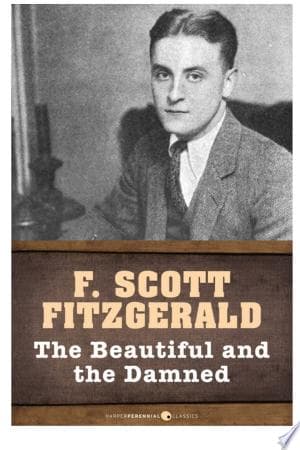
F. Scott Fitzgerald (2013)
Genre
Literary Fiction / Historical Fiction / Romance
Reading Time
600 min
Key Themes
See below
Sign in to track this book
A story of self-destruction and disillusionment, following an aristocratic couple in the Jazz Age as their pursuit of pleasure and inheritance unravels.
Anthony Patch, a Harvard graduate, lives idly in his New York apartment, supported by a trust fund from his wealthy grandfather, Adam Patch. He hopes to become a writer or historian but lacks discipline, spending his days reading, drinking, and socializing with his friends, Maury Noble, an intellectual, and Dick Caramel, a novelist. Anthony knows his grandfather disapproves of his lifestyle and that his inheritance depends on Adam's view of his character. He often thinks about his privileged position and the expectations on him, feeling a vague dissatisfaction despite his comfort.
Anthony meets the beautiful and lively Gloria Gilbert through Maury Noble. Gloria is captivating, with youthful charm, wit, and a reckless spirit that immediately fascinates Anthony. She represents the allure of the Jazz Age, with her modern outlook. Their first meetings involve intense flirtation and growing infatuation. Anthony is completely drawn to her beauty and personality, seeing her as his ideal. Gloria is attracted to his charm and the promise of an unconventional life. Their connection quickly deepens, leading them to consider a future together.
Anthony and Gloria's courtship is a period of intense passion and shared experiences, marked by long talks, parties, and mutual admiration for each other's perceived brilliance and beauty. They spend more time together, often neglecting other friends and duties. Despite some worries about their finances and the practicality of their union, their romantic idealism wins out. Anthony, deeply in love and convinced Gloria is his soulmate, proposes, and Gloria, equally charmed and excited by the promise of an exciting life, accepts. Their marriage begins with hopeful, if naive, optimism.
The initial joy of Anthony and Gloria's marriage soon fades. They settle into a luxurious but unproductive routine, spending lavishly and seeking pleasure without purpose. Their days are filled with late mornings, drinking, and superficial social events. Financial realities begin to appear as their expenses exceed Anthony's allowance. Arguments become more frequent, often fueled by alcohol and their shared idleness. Gloria, once lively, becomes bored and prone to self-pity. Anthony struggles with his lack of ambition and a growing disillusionment with their life, despite still finding Gloria attractive.
Adam Patch, Anthony's strict and wealthy grandfather, makes an unannounced visit to their New York apartment. He expects to find a respectable, hardworking young couple but instead sees Anthony and Gloria's decadent life. He finds them in disarray, surrounded by liquor bottles, and observes their idleness. Deeply offended by what he sees as their depravity, Adam Patch decides to disinherit Anthony. This event throws Anthony and Gloria into a severe financial crisis, forcing them to face the results of their extravagant living.
With his inheritance gone and their finances worsening, Anthony is drafted into the army when America enters World War I. He becomes a first lieutenant and is sent to a training camp in the South. This period offers a temporary escape from his troubled marriage and aimless life. Though he does not see combat, the military routine and camaraderie give him a structure he has lacked. Gloria, left alone in New York, struggles with loneliness and anxiety, which worsens her emotional state. The war, while not directly involving Anthony in battle, interrupts their decline, though it does not fundamentally change them.
When Anthony returns from the war, he and Gloria are in a more desperate situation. Their financial problems continue, and their relationship has worsened. They move from one temporary home to another, their lives increasingly dominated by heavy drinking and bitter arguments. Alcohol becomes their main way to cope, dulling the pain of their failed ambitions and dwindling resources. Gloria's beauty begins to fade under the strain, and Anthony's once-charming manner becomes sour and resentful. Their social circle shrinks as friends tire of their self-destructive behavior, leaving them isolated in their misery.
Desperate for money, Anthony starts a long and emotionally draining lawsuit to challenge his grandfather's will. He believes he was unfairly disinherited and that his grandfather was not of sound mind when he changed the will. The legal battle consumes their remaining energy and resources, offering a small hope amid their deepening despair. They cling to the possibility of winning the inheritance as their only salvation, believing it will solve all their problems. The lawsuit lasts for years, a constant source of anxiety and a drain on their fragile health, further isolating them.
During the long legal battle, Gloria's close friend, Muriel Kane, dies tragically. Muriel had been a confidante and comfort for Gloria, and her death sends Gloria into a deeper state of depression. This loss, along with their financial struggles and the pressure of the lawsuit, pushes Gloria further into alcoholism and emotional fragility. Anthony, absorbed in his own anxieties and increasingly distant, offers little comfort. The couple's decline quickens, marked by more frequent arguments, public embarrassments, and a complete loss of their former charm and social standing.
After years of legal battles, Anthony finally wins his lawsuit. He is awarded his grandfather's large fortune, making him a millionaire. However, the victory is empty. The years of anxiety, alcoholism, and their destructive lifestyle have taken a severe toll. Anthony is physically and mentally broken, a shell of his former self. He has had a nervous breakdown and depends on his nurse, Miss McMahan. Gloria, though relieved by the financial security, is also deeply scarred and has lost her youthful vitality and beauty. The money, which they thought would solve everything, arrives too late to save them, leaving them rich but ruined.
The novel ends with Anthony, now wealthy, on a transatlantic voyage with his nurse. He is a shadow of his former self, frail and mentally diminished, often speaking in clichés without real insight or ambition. Gloria, though present, is equally diminished, her beauty faded, her spirit broken by years of dissipation. They have achieved the material wealth they sought, but at the cost of their youth, love, and themselves. Their victory is deeply ironic, leaving them with much money but no spirit, showing the tragic outcome of their beautiful but damned lives.
The Protagonist
Anthony devolves from a charming, if directionless, young man into a physically and mentally broken alcoholic, winning his inheritance but losing himself in the process.
The Co-protagonist/Love Interest
Gloria transforms from a vibrant, alluring beauty into a faded, alcoholic, and emotionally broken woman, whose physical and spiritual decline mirrors her husband's.
The Antagonist/Catalyst
Adam's character remains largely static, serving as an inflexible moral arbiter whose actions set the stage for Anthony's struggles.
The Supporting
Maury remains a consistent, if slightly passive, observer, witnessing the decline of his friends without significant personal transformation, though he eventually marries and settles into a more conventional life.
The Supporting
Dick successfully pursues his literary ambitions, eventually becoming a celebrated author, providing a stark contrast to Anthony's stagnation.
The Supporting
Muriel's character remains consistent as a supportive friend, with her death serving as a catalyst for Gloria's further despair.
The Supporting
Dot's role is limited to a brief interlude in Anthony's life, serving to illustrate his moral erosion.
The Supporting
Miss McMahan's role is functional, appearing at the story's end to underscore Anthony's ruined condition.
The novel shows how inherited wealth, without purpose, leads to moral and spiritual decay. Anthony and Gloria, initially charming, slowly decay as they waste time and money on frivolous pursuits, drinking, and self-indulgence. Their financial struggles after Anthony's disinheritance force them to seek wealth, but this pursuit is tainted by their habits of leisure and vice. Their eventual inheritance, meant to save them, finds them too far gone to use it constructively, showing that unearned wealth can be a curse. This is clear in their early marriage, where days are a blur of late mornings and drinks, leading to arguments and emptiness.
“They were but two children, playing at living, and they would never know the cost till they had to pay it.”
Anthony and Gloria's love story begins with strong idealization, each seeing the other as perfect. However, this romantic vision quickly breaks down under the weight of reality, their flaws, and shared self-destructive tendencies. Their love, initially joyful, becomes a bond of mutual destruction, fueled by resentment, alcohol, and unmet expectations. They cling to the idea of their love even as it harms them, showing how an unrealistic view of romance can lead to deep disillusionment. Their constant arguments and inability to support each other after their disinheritance show this destructive dynamic.
“He knew that he loved Gloria, but he also knew that he hated her.”
The novel critiques the superficiality of the American Dream during the Jazz Age, especially for the privileged. Anthony and Gloria pursue happiness through wealth and status, believing money and beauty will bring fulfillment. However, their story shows that achieving these external successes does not bring inner peace. Despite being 'beautiful' and eventually 'rich,' they are 'damned' by their choices and lack of character. Their endless pursuit of pleasure and avoidance of responsibility leaves them empty and broken, revealing the hollowness of a dream built only on external validation.
“They were going to the dogs. The whole generation was going to the dogs.”
A central theme, especially for Gloria, is the temporary nature of youth and physical beauty. Gloria is aware her beauty is her main asset and fears its decline. As the novel progresses, the stresses of their lifestyle, alcoholism, and time visibly erode her looks. Anthony also loses his youthful charm. The novel shows how these characters, who rely heavily on their physical appeal, are left with nothing but their ruined lives once youth and beauty fade, highlighting the superficiality of their values and the tragic results of living only for external validation.
“She was a magnificent anachronism, a survival of a dead romance.”
The novel comments on the excesses and disillusionment of the Jazz Age. Set after World War I, it captures the hedonistic pursuit of pleasure, modern sensibilities, and the breakdown of traditional morals. Anthony and Gloria represent the 'lost generation,' adrift in newfound freedom but without purpose. Their lavish parties, heavy drinking, and aimless lives reflect the era's superficial glamour and its eventual moral and spiritual bankruptcy. The story critiques the era's focus on material wealth and fleeting pleasures, showing how these ultimately lead to emptiness for those who cannot find meaning beyond them.
“Here was a new generation, shouting the old cries, learning the old lessons, and making the old mistakes.”
Characters who highlight the protagonist's flaws through contrast.
Dick Caramel, the aspiring novelist who actually achieves success, serves as a direct foil to Anthony Patch, who only pretends to have literary ambitions. Dick's discipline and eventual triumph underscore Anthony's chronic idleness and failure to realize his potential. Similarly, Maury Noble, while sharing some of Anthony's cynicism, possesses a sharper intellect and a more grounded, albeit still flawed, perspective, often observing Anthony's decline with a critical eye, thus highlighting Anthony's self-deception and lack of self-awareness.
Alcohol represents escape, self-destruction, and the erosion of character.
Alcohol is a pervasive symbol throughout the novel, initially representing the carefree indulgence of the Jazz Age, then gradually evolving into a symbol of escape, self-destruction, and the couple's unraveling. What begins as social drinking quickly escalates into alcoholism for both Anthony and Gloria, dulling their senses, fueling their arguments, and accelerating their physical and mental decline. It becomes a crutch that prevents them from confronting their problems, ultimately contributing to their ruin and signifying their complete loss of control and agency.
A MacGuffin that drives the plot and symbolizes false hope.
Adam Patch's vast inheritance acts as a central MacGuffin, the object of Anthony's lifelong expectation and the driving force behind his actions, or rather, his inaction. It symbolizes the false hope that external wealth can solve internal problems. Anthony's pursuit of it, first through waiting and then through a lawsuit, consumes his life, yet its eventual acquisition proves to be a hollow victory. The inheritance, rather than bringing happiness, merely arrives to a man already destroyed, highlighting that true fulfillment cannot be bought and that the pursuit of unearned wealth can be corrosive.
The physical environment mirrors the characters' internal states.
The settings in the novel often reflect the characters' internal states and the progression of their decline. Anthony's initially luxurious New York apartment, filled with books and art, symbolizes his early, if superficial, intellectual aspirations. As their lives descend into chaos, their residences become increasingly temporary and unkempt, mirroring their internal disarray and moral decay. The opulent parties of their early marriage contrast sharply with the squalid conditions they endure during the lawsuit, physically manifesting their spiritual and financial destitution. Even the final setting, a luxury liner, highlights their hollow victory, as they are rich but too broken to enjoy it.
“I don't want to live, I want to love first, and live incidentally.”
— Gloria to Anthony, expressing her desire for passionate experience.
“The victor belongs to the spoils.”
— A reflection on the outcome of a struggle, particularly financial.
“He knew that in spite of all the rotten gold and all the rotten dreams, the rotten things that had happened, that it had been a great love.”
— Anthony's reflection on his relationship with Gloria at the story's end.
“She was a woman of twenty-two, but she was still a child.”
— A description of Gloria Gilbert's youthful, somewhat immature nature.
“We're all so beautiful and so damned.”
— Anthony's internal thought, summarizing the novel's central theme.
“The world was a a Jeweled cup, and if you didn't drink, someone else would.”
— A metaphor for seizing opportunities and enjoying life's pleasures.
“There was a great deal to be said for the wisdom of not trying to understand too much.”
— A cynical observation on the complexities of life and relationships.
“He had discovered that the only way to get through life was to let it drift.”
— Anthony's philosophy of passivity and inaction.
“They were but the broken reeds of a broken generation.”
— A commentary on the disillusionment and fragility of their generation.
“It was borrowed sunshine, a borrowed happiness, a borrowed peace.”
— Describing the ephemeral and ultimately unsustainable nature of their joy.
“The world was full of men who had been clever and who had had their day; but the men who were going to have their day were those who were clever enough to be in the right place at the right time.”
— A commentary on ambition, timing, and success.
“Their love was a fever, a delirium, a madness that consumed them both.”
— Describing the intense and destructive nature of Anthony and Gloria's love.
“He was a man who had been rich too long, and too young.”
— A description of Anthony Patch's character, spoiled by early inheritance.
“She was a woman who could make you forget that there was anything else in the world.”
— Anthony's perception of Gloria's captivating allure.
Ready to see how well you understood this book? Take our interactive quiz with 10 questions.
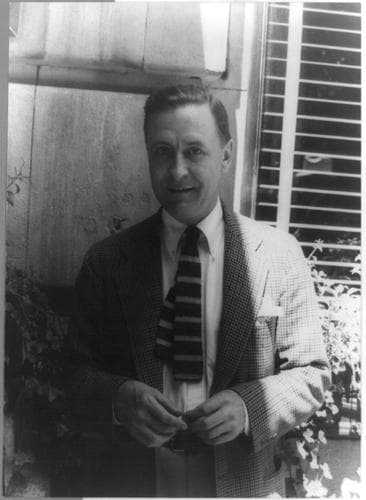
Francis Scott Key Fitzgerald was an American novelist, essayist, and short story writer. He is best known for his novels depicting the flamboyance and excess of the Jazz Age—a term he popularized in his short story collection Tales of the Jazz Age. During his lifetime, he published four novels, four story collections, and 164 short stories. Although he achieved temporary popular success and fortune in the 1920s, Fitzgerald received critical acclaim only after his death and is now widely regarded as one of the greatest American writers of the 20th century.







