“Dearest Beatrice, I have not forgotten you. I have not forgotten your kindness, or your bravery, or your penchant for keeping secrets, or your love for the written word.”
— From the opening letter, setting the tone for Lemony's enduring affection.

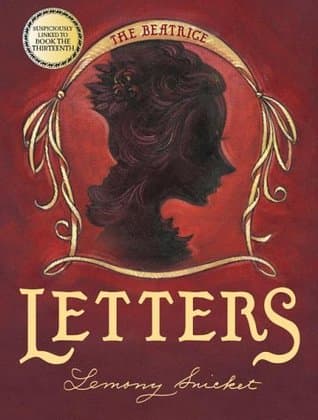
Lemony Snicket (2006)
Genre
Fantasy / Children's / Mystery / Young Adult / Romance
Reading Time
30 min
Key Themes
See below
Sign in to track this book
Lemony Snicket uses a sad collection of cryptic letters and mementos to show the untold secrets, regrets, and tragic love story behind the Baudelaire saga.
The book begins with a brief, sad introduction from Lemony Snicket. He sets a somber mood and warns the reader about the upsetting contents. He explains that these are letters between himself and a mysterious woman named Beatrice, offering fragmented glimpses into their complicated relationship and the calamitous world of the Baudelaire orphans. Snicket emphasizes the secrecy and sensitive nature of the letters, implying they hold painful keys to understanding 'A Series of Unfortunate Events.' He cautions the reader about the sorrow and unanswered questions that will come up, reinforcing the themes of loss and the futility of happiness in his work.
The first letter is from Beatrice to Lemony, dated before 'The Bad Beginning.' She writes with deep sadness and regret, explaining why she cannot marry him. Beatrice reveals she has returned the ring he gave her (implied to be an engagement ring) and is marrying someone else. This letter is deeply personal, hinting at a shared past and a love that, for reasons not yet fully explained, cannot happen. Her words suggest a sense of duty or outside pressure forced her decision, rather than a lack of affection for Lemony, leaving the reader to wonder what separated them.
Lemony's response to Beatrice is a desperate plea, full of confusion and heartbreak. He struggles to understand her decision, questioning her sudden change of heart and her choice to marry another. His letter is a flood of unanswered questions and emotional turmoil, showing his deep love for Beatrice and his inability to accept their separation. He recalls shared memories and inside jokes, trying to remind her of their bond and hoping to change her mind. This letter reveals the depth of Lemony's personal tragedy and his profound sense of abandonment, painting a picture of a man dealing with immense personal loss.
Beatrice's next letter clarifies her decision, though it offers little comfort to Lemony. She reveals her marriage is not for love of her new husband, but a necessary act tied to her involvement with V.F.D. (Volunteer Fire Department). She hints at complex organizational duties and an obligation that overrides her personal desires. This letter suggests their separation is a result of their commitment to a secret society and its dangerous work. Her words show resignation, indicating she made a sacrifice for what she believed was a greater good, even if it meant sacrificing her happiness with Lemony.
Throughout the letters, the 'sugar bowl' is mentioned repeatedly, becoming a central mystery. Both Lemony and Beatrice allude to its importance, its capture, and its contents, though its exact nature and purpose remain unknown. The letters suggest the sugar bowl holds important information or an item vital to the V.F.D. and the conflict between its factions. The pursuit of the sugar bowl is shown as a driving force behind many characters' actions, and its loss or acquisition has major consequences for the Baudelaire orphans and the wider V.F.D. story. It symbolizes a key piece of a larger puzzle.
In a sad letter, Lemony makes a promise to Beatrice. He vows to protect her children, Violet, Klaus, and Sunny Baudelaire, if anything happens to her. This commitment foreshadows Lemony's later role as their chronicler and distant protector. He expresses his lasting love and his determination to honor her memory and legacy, even in her absence. This letter shows Lemony's unwavering devotion and deep grief, revealing the personal reasons behind his relentless pursuit of the Baudelaire story and his attempts to explain the tragic events that befall them.
While not stated in one letter, the impact of Beatrice's letters, especially those closer to the Baudelaire fire, hints at her death. Her letters become more urgent and somber, discussing dangerous assignments and the growing conflict within V.F.D. Readers can infer that Beatrice, as one of the Baudelaire parents, died in the fire that destroyed their mansion, leaving her children orphans. Lemony's later letters mourn her loss and the tragedy that befell her family, confirming that Beatrice is the deceased mother of the Baudelaire orphans, and her death is a central tragedy.
Towards the end of the collection, a letter from a different Beatrice appears, written by a young girl. This Beatrice is Kit Snicket and Dewey Denouement's daughter, adopted by Lemony Snicket after Kit's death. This letter, addressed to Lemony, her adoptive father, is full of youthful curiosity and affection. It offers a glimmer of hope amid the sadness, suggesting that while the original Beatrice is gone, her name and legacy continue. This introduces a cyclical element, where new life and relationships emerge from past tragedies, offering a bittersweet continuation.
In his final contributions, Lemony Snicket reflects on his lasting, unrequited love for the original Beatrice. He rehashes the pain of their separation and her death, and his ongoing commitment to documenting the Baudelaire orphans' misfortunes. His words are filled with melancholic resignation, acknowledging that while some mysteries may be partly solved, the fundamental tragedy of their lives remains. He hints at the continuing struggles of Violet, Klaus, and Sunny, reinforcing the idea that their story, and his own, is one of constant sorrow and the elusive search for truth and justice in a world often without both.
Despite giving important insights into the V.F.D. and the Baudelaire saga, 'The Beatrice Letters' leaves many questions unanswered. The exact contents and meaning of the sugar bowl remain unclear, the full extent of the V.F.D.'s operations is never completely revealed, and the reasons behind certain characters' actions are only partly explained. This intentional ambiguity reinforces the theme of the unreliable narrator and the difficulty of finding the full truth in a complex world. The letters deepen the mystery rather than fully solving it, inviting readers to keep thinking about the web of secrets and unfortunate events.
The Protagonist/Narrator
From a heartbroken lover, he transforms into a dedicated chronicler and a surrogate protector of Beatrice's legacy and her children.
The Central Figure/Deceased Love Interest
Her arc is largely revealed through retrospect, moving from a conflicted lover to a tragic figure whose death sets the stage for the Baudelaire orphans' misfortunes and Lemony's chronicling.
The Mentioned/Protagonist
Her arc is primarily detailed in 'A Series of Unfortunate Events', but these letters reinforce her role as a child needing protection and a symbol of Beatrice's legacy.
The Mentioned/Protagonist
His arc is primarily detailed in 'A Series of Unfortunate Events', but these letters emphasize the tragic origins of his and his siblings' misfortunes.
The Mentioned/Protagonist
Her arc is primarily detailed in 'A Series of Unfortunate Events', with these letters providing context for the family's tragic background.
The Antagonist/Mentioned
His arc is detailed in 'A Series of Unfortunate Events', with these letters offering a glimpse into his V.F.D. connections and motivations.
The Supporting/New Character
Introduced as a baby, she grows into a young girl, representing hope and a new generation for Lemony.
The Mentioned/Supporting
Her arc is detailed in 'A Series of Unfortunate Events', with these letters solidifying her connection to Lemony and the V.F.D.
The main theme is Lemony Snicket's lasting, unrequited love for Beatrice and the deep loss he feels from their separation and her death. His letters are full of grief, regret, and a desperate longing for what could have been. Beatrice's letters convey her sadness about not being able to marry Lemony, showing their mutual, but tragically unfulfilled, affection. This theme is key to understanding Lemony's sad narrative voice and his dedication to the Baudelaire story, as seen in his promise to protect Beatrice's children and honor her memory after her death.
“My dearest darling, dearest, darling, dearest Beatrice, I write to you from the depths of my despair, for it seems that my life will never be happy again.”
The book explores how secrets are everywhere and how powerful (and dangerous) information can be. The entire V.F.D. organization is built on secrets, codes, and hidden knowledge, as shown by the cryptic references to the sugar bowl and various V.F.D. missions. The letters themselves are fragmented truths and veiled hints, making the reader piece together the larger story. This theme shows how knowledge can be both a weapon and a shield, and how its manipulation can lead to both heroic acts and tragic outcomes, as seen in Beatrice's decision to marry for V.F.D. duties.
“There are some secrets which are better left untold, and there are some questions which are better left unanswered.”
The theme of sacrifice, especially for a greater cause, is clear in Beatrice's actions. Her letters reveal she chose to marry someone other than Lemony, not because she didn't love him, but because of her duties within the V.F.D. This decision, and ultimately her death, highlights the high price paid by those dedicated to the organization. Lemony, in turn, sacrifices his personal happiness to tell the Baudelaire orphans' story, seeing it as his duty to Beatrice and a way to explain the V.F.D.'s complex history.
“I hope you will understand that sometimes one must do what is right, even if it is not what one wants to do.”
While mostly sad, the book also subtly touches on the cyclical nature of tragedy and the fragile presence of hope. The repeated mention of the name 'Beatrice,' ending with Lemony adopting Kit Snicket's daughter and naming her Beatrice, suggests that while individual lives end tragically, new beginnings and the continuation of legacies are possible. This offers a bittersweet resolution, implying that even in a world of misfortune, love and connection can last through new generations, balancing despair with the chance of a brighter future.
“Perhaps one day, when all our troubles are behind us, we will meet again under a more fortunate sky.”
The story is told entirely through letters.
The entire book is presented as a collection of letters exchanged between Lemony Snicket and Beatrice, along with a few other correspondences. This epistolary format allows for a fragmented, subjective, and often unreliable narrative, mirroring the elusive nature of truth within the V.F.D. world. It creates a sense of intimacy and immediacy, drawing the reader directly into the characters' personal thoughts and emotional turmoil, while also emphasizing the gaps in information and the difficulty of piecing together a complete picture, much like Lemony Snicket's own struggles.
Lemony Snicket's perspective is colored by his personal grief.
Lemony Snicket, as the primary voice, acts as an unreliable narrator. His deep personal grief over Beatrice's death and their lost love colors his recollections and interpretations of events. While he strives for accuracy, his emotional state and the inherent secrecy of the V.F.D. mean that the reader only receives a partial, often biased, account. This device forces the reader to critically analyze the information presented, question motivations, and accept that some mysteries will remain unresolved, reinforcing the series' overarching theme of the elusive nature of truth.
An object of intense pursuit with unknown contents.
The 'sugar bowl' serves as a classic MacGuffin throughout the letters and the wider 'A Series of Unfortunate Events' narrative. Its exact contents and significance are never fully revealed, yet its pursuit drives many of the characters' actions and is repeatedly referenced as a crucial item in the V.F.D. conflict. This device creates suspense and mystery, providing a tangible, albeit vague, goal for the characters and a focal point for the V.F.D. schism, without requiring the reader to fully understand its precise nature. Its ambiguity enhances the sense of an unfathomable secret world.
Hints of future events and reflections on past tragedies.
The letters expertly weave together elements of foreshadowing and retrospection. Lemony's vows to protect Beatrice's children clearly foreshadow his role as their chronicler, while his lamentations over her death and the Baudelaire fire are retrospective accounts. This dual temporal perspective enriches the narrative, providing context for the main series while also offering glimpses into the tragic origins of its events. It allows the reader to understand the emotional weight behind Lemony's warnings and the enduring impact of past misfortunes on the present.
“Dearest Beatrice, I have not forgotten you. I have not forgotten your kindness, or your bravery, or your penchant for keeping secrets, or your love for the written word.”
— From the opening letter, setting the tone for Lemony's enduring affection.
“The world is a bad place, and good people are often punished for no reason at all.”
— A recurring theme in Snicket's work, reflecting the harsh realities faced by the characters.
“It is a curious thing, the fate of letters. They can be lost, they can be found, they can be read, they can be ignored.”
— Lemony's reflection on the precarious journey and impact of written communication.
“I hope you are not too miserable without me. I hope you are not too happy without me.”
— A bittersweet expression of longing and conflicted emotions from Lemony.
“The truth, of course, is that I have always loved you. And I have always loved the idea of you.”
— Lemony confessing his deep and enduring affection for Beatrice, even in absence.
“There are many things in life that will make you miserable. But there are also many things that will make you happy. You just have to find them.”
— A rare moment of guarded optimism amidst the usual melancholy.
“Sometimes I think I will never see you again. And then I think, what if I do?”
— Lemony grappling with the uncertainty of reunion and the flicker of hope.
“A secret is not a secret if it is told to two people.”
— A poignant observation on the nature of secrets and trust.
“I often wonder what you are doing. I often wonder if you are wondering about me.”
— Lemony's constant thoughts of Beatrice and the potential for mutual longing.
“The world is full of questions, and very few answers.”
— A philosophical statement reflecting the overarching mystery and unresolved nature of the series.
“I hope you are reading something good. I hope you are not reading something sad.”
— Lemony's concern for Beatrice's well-being, even in the simple act of reading.
“Every letter is a small act of hope. Every letter is a small act of despair.”
— A dualistic view of the power and futility inherent in sending letters.
“I know that I am not the only one who misses you. I know that I am not the only one who remembers you.”
— Lemony acknowledging that Beatrice's impact extended beyond just him.
Ready to see how well you understood this book? Take our interactive quiz with 10 questions.

Biography coming soon.







