BookBrief
The Beast in the Jungle cover
Archivist's Choice

The Beast in the Jungle

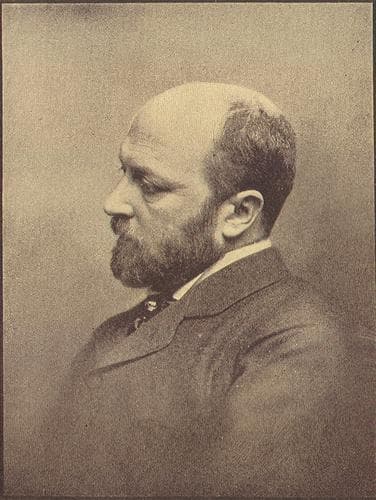
Henry James (1915)

Genre

Literary Fiction

Reading Time

45 min

Key Themes

See below

Track Your Reading

Sign in to track this book

A man obsessed with a singular, catastrophic event realizes the true 'beast' is the emptiness of a life unlived and love ignored.

Synopsis

John Marcher believes a unique, terrible destiny awaits him, a 'beast in the jungle' that will strike at an unknown moment. He shares this premonition with May Bartram, who dedicates herself to waiting with him. Their relationship centers on this shared expectation, not on what happens. Years pass, but the beast never appears. May's health declines, and she dies, still waiting. Only after her death, grieving at her grave, does Marcher understand. The 'beast' was not an external disaster but his own wasted life, devoid of experience, love, and, most devastatingly, his failure to recognize and return May's love. This realization, a crushing emptiness, is the true 'beast' that has sprung, leaving him desolate.
Reading time
45 min
Difficulty
Medium
Pacing
Slow
Mood
Melancholy, Introspective, Tragic, Subtle
✓ Read this if...
You appreciate psychological depth, intricate prose, and explorations of unlived lives and the nature of self-deception.
✗ Skip this if...
You prefer fast-paced plots, clear external conflicts, or stories with a traditional 'happy' ending.

Plot Summary

A Fateful Reacquaintance

At a country house in England, John Marcher meets May Bartram, whom he vaguely remembers from a decade earlier in Rome. May remembers him clearly and hints at a significant secret he once told her. Marcher had forgotten the details, only recalling a general sense of an impending, unique destiny. May, however, remembers his exact secret: a belief that an extraordinary, perhaps terrible, fate awaits him, which he calls 'the beast in the jungle.' This meeting begins their unusual, lifelong relationship.

The Burden of Expectation

Marcher, surprised by May's memory and understanding, tells her the full extent of his obsession. He explains his strong belief that he is marked for a singular experience, a 'beast' that will one day spring from the 'jungle' of his life. He lives in constant anticipation, unable to fully engage with normal life. May Bartram, instead of dismissing him, shows deep sympathy and an unusual willingness to share his vigil. She states her intention to stay by his side, to watch and wait with him for this strange destiny, effectively dedicating her life to his burden.

A Shared Vigil

For many years, John Marcher and May Bartram continue their unique companionship. They spend countless hours together, often in quiet conversation, their lives centered on Marcher's preoccupation. May, through her steady presence, becomes the only confidante and witness to Marcher's inner drama. They travel, visit galleries, and attend social events, but always with the unspoken understanding that their main purpose is to observe and interpret signs of the approaching 'beast.' Marcher often discusses his theories with May, analyzing potential omens and dismissing ordinary events as not grand enough for his fate. May, always patient, listens and offers subtle observations, becoming an essential part of his life, though he remains unaware of the depth of her sacrifice.

May's Fading Health

As time passes, May Bartram's health declines. She grows weaker, but continues her vigil with Marcher. During this time, their dynamic subtly shifts. May, perhaps sensing her own end, tries to guide Marcher toward understanding what his 'beast' might truly be. She repeatedly questions his perception, hinting that he might be missing the very thing he waits for. Her words become more direct, urging him to look beyond the dramatic and consider that his fate might relate to his own inner life and his relationship with her. Marcher, however, remains fixed on his original, dramatic interpretation.

The Unsprung Beast

As May's condition worsens, she makes one last attempt to make Marcher see the truth. In a conversation, she tells him she knows what his 'beast' is, and that it has already sprung—or rather, failed to spring. She implies he has missed it, that it was something he failed to experience or recognize. She speaks of 'the real thing' that has passed him by. Marcher, self-absorbed, sees her words as a sign of her weakening mind or a cryptic future prediction. He remains convinced his great fate is yet to come, failing to grasp the deep meaning of her words about his wasted life and missed chances for human connection. Soon after this conversation, May Bartram dies, leaving Marcher alone.

Marcher's Solitude

After May Bartram's death, John Marcher finds himself completely alone. Her constant, patient presence leaves a void. He travels extensively, but his journeys are aimless, and his mind remains fixed on his original obsession. He continues to wait for the 'beast,' convinced its grand arrival is still imminent, perhaps even hastened by May's departure. He reflects on their shared past, but primarily through the lens of his own anticipation, never fully understanding the depth of May's devotion or her sacrifice. His solitude deepens, and his life becomes even more hollow without the one person who shared his burden.

A Visit to May's Grave

Months after May's death, John Marcher returns to England and visits her grave. He stands before her tombstone, still consumed by self-pity and unfulfilled expectation. While there, he observes another mourner at an adjacent grave—a man visibly overcome with deep grief, his face showing raw, inconsolable sorrow. This stranger's anguish strikes Marcher forcefully. He watches the man intently, perhaps for the first time truly seeing the depth of human suffering and loss outside his own inner drama. This encounter plants a seed of unease and a new emotion within him.

The Revelation at the Tomb

The sight of the grieving stranger becomes a catalyst for Marcher's ultimate, devastating realization. He understands, with sudden, horrifying clarity, that the stranger's capacity for such intense sorrow is precisely what has been missing from his own life. The 'beast' meant to spring upon him was not a dramatic external event, but the simple, profound human experience of love, loss, and the capacity for deep feeling. He realizes he has been a man to whom nothing has ever happened because he has never truly lived or loved. His fate was to be the man on whom nothing was to happen, the man incapable of passion, the man who let love and life pass him by. May had loved him, and he had failed to return it, failed to even recognize it until it was too late.

The Beast Springs

The realization hits Marcher like a physical blow, a 'leap' of the beast from the jungle of his own mind. His unique fate was not to suffer some extraordinary trauma, but to be the man incapable of suffering, loving, or living fully. He allowed the one person who truly cared for him, May Bartram, to dedicate her life to his delusion, never returning her affection, never truly seeing her beyond her role as his confidante. The horror is not in what happened to him, but in what did not happen, what he prevented. He wasted his entire existence waiting for a dramatic external event, while true, profound human experience passed him by, leaving him utterly empty. This emptiness, this realization of his emotional barrenness, is the terrible beast he awaited.

Despair and Emptiness

Overwhelmed by this devastating realization, John Marcher collapses on May Bartram's grave. The full weight of his wasted life, his emotional sterility, and his failure to love or be loved crushes him. He finally understands May's last, cryptic words and her immense sacrifice. His unique destiny was to experience the most profound human emptiness: to have lived without truly living, to have been loved without truly loving, and to have let the one chance for genuine connection slip away. The 'beast' has indeed sprung, but it is the beast of his own colossal ego and his tragically missed life, leaving him with unbearable, eternal regret and absolute, desolate solitude.


Principal Figures

John Marcher

The Protagonist

Marcher begins as a man anticipating a dramatic external fate, and ends as a man devastated by the realization that his fate was internal: a life lived without love or genuine experience.

May Bartram

The Supporting

May's arc is one of selfless devotion and quiet suffering, culminating in her death, which ultimately serves as the catalyst for Marcher's devastating epiphany.

The Grieving Stranger

The Mentioned

The stranger's role is purely catalytic; he serves as a symbol, not a character with a personal arc.

Themes & Insights

The Tragedy of Unlived Life

The main theme is John Marcher's failure to live because of his overwhelming obsession. By constantly waiting for an extraordinary external event, he becomes passive and detached, missing the richness of everyday experience and chances for real human connection. His life is a long wait that ends in the devastating realization that he has only existed, not lived. This is clear when May, on her deathbed, hints that his 'beast' has already 'not sprung,' meaning he failed to experience the essence of life (love, connection, suffering) he supposedly waited for.

He had been the man of his time, the man to whom nothing was to have happened.

Narrator

Self-Absorption and Emotional Blindness

Marcher's deep self-absorption makes him emotionally blind to May Bartram's love and sacrifice. He is so consumed by his own unique destiny that he cannot see the devotion and suffering of the woman who dedicates her life to him. He uses May as a listener and witness, but never truly sees her as an individual with her own needs and feelings. This blindness is the true 'beast' that stops him from experiencing love and connection. His inability to 'see' May's love until after her death, when he sees the stranger's grief, highlights the tragic results of his self-centered view.

The real thing, the thing that was to happen to him, was to be a man to whom nothing on earth was to have happened.

May Bartram (implied meaning)

The Nature of Fate vs. Free Will

The story explores whether Marcher's 'beast' is a predetermined fate or a self-fulfilling prophecy from his own choices. While Marcher believes he merely waits for an inevitable external event, the story suggests his fate is a result of his inaction and emotional paralysis. His 'destiny' to be a man to whom nothing happens is made by his refusal to engage with life and his inability to embrace love. The 'beast' is not an external force but an internal void, a result of his choice to remain detached and anticipate rather than participate.

He had been at his post, an object himself, at last, of the wonder and horror that had kept him for ever incredibly standing.

Narrator

Love and Sacrifice

May Bartram embodies selfless love and deep sacrifice. She dedicates her entire adult life to Marcher's obsession, offering him steady companionship, understanding, and unrequited love. Her sacrifice is made without expectation of return, and her devotion ultimately leads to Marcher's late and agonizing realization. Her love, though ignored by Marcher, is the most real and profound element in the story, highlighting the tragedy of Marcher's inability to recognize or return such a precious gift.

She had lived for him, and for him alone, and she had died for him, and for him alone.

Narrator (Marcher's belated realization)

Plot Devices & Literary Techniques

The 'Beast in the Jungle' Metaphor

A central metaphor for Marcher's anticipated, unique fate.

The 'beast in the jungle' serves as the story's dominant and evolving metaphor. Initially, it represents Marcher's vague but powerful premonition of some extraordinary, perhaps terrible, event destined to befall him. It functions as a symbol of his perceived uniqueness and the dramatic climax he anticipates. As the story progresses, the metaphor subtly shifts, becoming a symbol of Marcher's unlived life, his emotional barrenness, and the profound tragedy of his self-absorption. Its 'spring' is ultimately revealed to be an internal, psychological collapse rather than an external event, making it a powerful symbol of psychological revelation.

Dramatic Irony

The reader understands Marcher's true fate before he does.

Dramatic irony is a key device, enhancing the tragic impact of the story. From early on, the reader, often guided by May's subtle hints and the narrator's commentary, understands that Marcher's 'beast' is not an external event but rather his own emotional paralysis and inability to love or live fully. Marcher's prolonged ignorance, despite May's increasingly desperate attempts to enlighten him, creates a sense of suspense and pathos. This gap in understanding between Marcher and the reader (and May) heightens the tragedy of his eventual, belated epiphany.

The Encounter at the Grave

A pivotal scene that triggers Marcher's ultimate epiphany.

The scene at May Bartram's grave, where Marcher observes the grieving stranger, functions as a powerful turning point and a classic example of epiphany. The stranger's raw, uninhibited display of sorrow acts as a mirror, forcing Marcher to confront his own emotional void. This external manifestation of profound grief allows Marcher to finally understand the 'real thing' May had tried to convey: the capacity for deep human feeling, love, and loss, which he has tragically lacked. It is the catalyst that transforms his abstract fear into concrete, devastating self-knowledge.

Unreliable Narration (Limited Third-Person)

The story is primarily told from Marcher's limited, biased perspective.

The narrative is primarily delivered through a limited third-person perspective, closely aligned with John Marcher's consciousness. While not strictly unreliable in the sense of deliberately misleading, Marcher's profound self-absorption and emotional blindness mean that the 'reality' presented is filtered through his skewed perception. This forces the reader to interpret events and May's actions, often understanding their true significance long before Marcher does. It highlights his isolation and inability to see beyond himself, making his eventual realization all the more impactful when his own internal world finally shatters.

Critical analysis

Notable Quotes

What was it to be, what was it to be? He had been for years so markedly aware of himself and of the knowledge that he had been an object of some special—how should he say it?—demonstration.

John Marcher reflects on his unique destiny, a 'beast' lurking in his future.

The fact of the matter was that he had been born with a peculiar sensibility, one which made him feel that he was marked out for some strange and singular fate.

Marcher's internal conviction about his exceptional, yet unknown, future.

He had the sense of being a man to whom something was to happen; it might be good or bad, but it would be something.

Marcher's constant expectation of a significant, life-altering event.

He was a man of a single secret, a secret that was not his own.

Referring to Marcher's peculiar sense of impending doom or glory, shared with May Bartram.

The beast in the jungle, always in ambush, was a strange, an insidious, an unspeakable thing.

Marcher's metaphor for the great event he believes awaits him.

The only thing he was a master of was the sense of a doom that was to come.

Highlighting Marcher's preoccupation and the extent of his self-absorption.

He had lived to see the day when his fate, his beast, had sprung.

Marcher's eventual realization of what his 'beast' truly was.

The escape would have been to love her; then, in the light of that, he would have seen it.

Marcher's profound regret and understanding of his missed opportunity after May's death.

He had been the man of his time, the man to whom nothing was to happen.

The ironic truth of Marcher's life, that his 'beast' was the absence of a significant event.

The real truth was that he had missed his life.

Marcher's ultimate, devastating understanding of his existence.

He had been the man of the world, the man of taste, the man of feeling. He had been all that, and yet he had been nothing.

Marcher's self-assessment of his outwardly successful but inwardly empty life.

The only thing that had happened to him was that he had been in love with her, and had not known it.

Marcher's final, heart-wrenching recognition of his true feelings for May.

He had seen the beast in his jungle, and it was himself.

The chilling climax where Marcher realizes his own nature was the 'beast'.

The escape from the cage of his life was to have been through her, and he had not known it.

Marcher's reflection on how May Bartram could have saved him from his isolation.

Quiz

Test Your Knowledge

Ready to see how well you understood this book? Take our interactive quiz with 10 questions.

10
Questions
~5
Minutes
?
Best Score

Key Questions (FAQ)

The story follows John Marcher, a man convinced he is destined for some extraordinary, unique fate – a 'beast' waiting to spring from the jungle of his life. He shares this profound secret with May Bartram, a woman who commits herself to waiting with him for this mysterious event.

About the author

Henry James

Henry James was an American-British author. He is regarded as a key transitional figure between literary realism and literary modernism, and is considered by many to be among the greatest novelists in the English language. He was the son of Henry James Sr. and the brother of philosopher and psychologist William James and diarist Alice James.