“The bear was big. Bigger than anything I had ever seen, even in a book.”
— Anna's first encounter with the bear, setting the tone for its formidable presence.

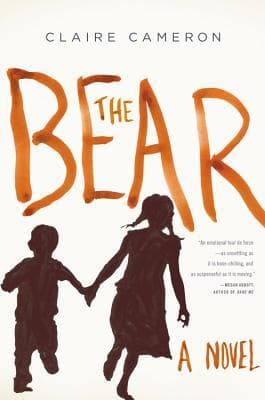
Sign in to track this book
Five-year-old Anna must navigate a dangerous wilderness, battling hunger, the elements, and the lingering fear of a bear attack, all while protecting her toddler brother, after their parents are brutally killed.
While camping on a remote island, five-year-old Anna wakes to her mother's screams. A large black bear is attacking their campsite, mauling her parents. Anna's father tries to fight off the bear but is overpowered. Her mother, severely injured, whispers instructions to Anna: to take her younger brother, Alex, and leave in the canoe. Despite her terror, Anna understands the seriousness of the situation, and with her mother's last strength, she helps Anna push the canoe into the water. The children paddle away, leaving their parents to face the bear.
Anna, despite her young age and limited experience, paddles the canoe away from the campsite. The small boat eventually capsizes, dumping both children into the cold lake. They struggle to shore, landing on an unfamiliar part of the island. Disoriented and terrified, Anna tries to gather their few belongings, including their 'bear bag' which contains some food. The immediate danger of the bear is gone, but they are now alone, exposed to the wilderness, and completely reliant on Anna's new survival instincts.
As dusk falls, Anna, still in shock and processing the events, tries to create a makeshift shelter for herself and Alex. She remembers her father's lessons about building a lean-to and tries to replicate it with branches and leaves. The night is cold and dark, filled with unfamiliar sounds. Alex is frightened and cries for their parents, forcing Anna to suppress her own terror to comfort him. She sings songs and tells stories, trying to keep things normal and protect her brother from their harsh reality.
Days pass in a struggle for survival. Anna discovers their 'bear bag' only contains a few granola bars and some dried fruit, which she carefully rations for Alex and herself. Her father had taught her about edible plants and berries, and she tries to identify them, making several mistakes. She attempts to catch fish with her hands in the shallow water, with little success. Hunger becomes a constant companion, forcing Anna to be resourceful and brave, pushing past her fear of unknown plants and her despair at dwindling supplies.
Even though they are far from the original campsite, Anna is constantly aware of the 'Bear'—not just the animal, but the terrifying event itself. She imagines its presence, hears noises in the woods, and is gripped by fear whenever she thinks of it. The 'Bear' becomes a symbol of the danger that took her parents and now threatens her and Alex. This constant anxiety influences her decisions, making her hesitant to explore too far and keeping her watchful, even when exhausted and weak.
After days of wandering and growing weaker, Anna finds a small, rundown cabin hidden in the woods. It's empty and dusty, but offers solid walls and a roof—a significant improvement over their makeshift shelters. Inside, she finds a few basic items: an old blanket, some rusty pots, and a small, empty can. The cabin provides a temporary sense of security and a base from which to continue their survival efforts. It represents a small victory and a renewed spark of hope in Anna's desperate journey.
Inside the cabin, Anna finds a broken radio. Remembering her father talking about emergency signals, she fiddles with it, hoping to get a sound, a sign of connection to the outside world. She also tries to start a fire, recalling her father's methods, but struggles with the damp wood and her limited tools. The smoke she manages to create is thin and quickly disappears. These efforts, though mostly unsuccessful, show Anna's determination to not only survive but also to reach out for rescue, demonstrating her resilience and cleverness.
As days turn into weeks, Alex's condition worsens. He becomes lethargic, feverish, and his cries are weaker. He stops eating much of the food Anna finds, and his cough becomes more persistent. Anna, despite her own hunger and exhaustion, grows more worried about her brother. She tries to keep him warm, feeds him small amounts of water, and sings to him constantly. His declining health increases Anna's sense of responsibility and her desperate need to find help, as she realizes she cannot save him alone.
One day, while exploring the shoreline near the cabin, Anna sees a boat in the distance. It's a small speck, but it represents their only chance. Overjoyed but also terrified of missing the opportunity, she tries to signal to it, waving her arms and yelling, though her voice is weak. The boat, however, continues on its course, seemingly unaware of the two children. This near-miss is a crushing blow, but it also strengthens Anna's resolve to keep trying, knowing that rescue is possible.
As Anna's physical and mental state declines from hunger, exhaustion, and trauma, her memories of her parents become more vivid and intertwined with her current reality. She has conversations with her mother in her mind, recalling advice and comfort. Her father's lessons about survival and nature echo in her thoughts, guiding her actions. These memories are a source of comfort and strength, but also a painful reminder of her loss, blurring the lines between what is real and what is a product of her struggling mind.
Driven by Alex's worsening condition and a desperate, primal urge for survival, Anna focuses on building a large, visible signal fire. She gathers all the dry wood she can find, meticulously arranging it. After several failed attempts, she finally manages to ignite a steady flame, creating a column of smoke. This time, her efforts are rewarded. A search plane, part of a wider rescue operation, spots the smoke. The sight of the plane brings a wave of relief and the terrifying realization that their ordeal might finally be over.
The search plane guides a rescue team to the cabin. Anna, weak but determined, leads them to Alex. The rescuers provide immediate medical attention to both children, wrapping them in blankets and giving them food and water. The arrival of the rescue team marks the end of their struggle for survival in the wilderness. Anna's journey from a terrified child to a resilient survivor culminates in this moment, as she and Alex are finally safe, though the emotional scars of their ordeal will remain.
The Protagonist
Anna transforms from a dependent child into a resourceful and brave survivor, demonstrating immense resilience and love in the face of unimaginable trauma.
The Supporting
Alex remains largely a dependent figure, symbolizing the innocence and vulnerability Anna strives to protect.
The Mentioned
Her character is static, serving as the initial catalyst and a recurring memory for Anna.
The Mentioned
His character is static, serving as a source of remembered knowledge and strength for Anna.
The Antagonist
The Bear's role is primarily as an instigator and a persistent psychological threat, not a developing character.
The Supporting
The rescuers appear at the climax, providing the resolution to Anna's physical struggle.
The most prominent theme is Anna's incredible capacity to survive against overwhelming odds. Despite being only five, she uses her memories of her father's teachings and her natural will to live, enduring hunger, cold, and immense psychological trauma. Her efforts to build shelter, find food, and care for Alex (e.g., rationing food, trying to start a fire, finding the cabin) show her strong resilience and adaptation to a hostile environment.
“My dad always said to look for the green things. The green things mean life.”
Anna's journey is a brutal and rapid loss of her childhood innocence. The bear attack forces her to confront death, fear, and responsibility far beyond her years. She loses her parents and the safety of her world in an instant. Her internal thoughts, which often shift between childlike wonder and grim determination, highlight this theme. For instance, her early attempts to 'play' survival games quickly give way to the desperate reality of her situation.
“I used to think the woods were my friend. Now I know the woods are just the woods.”
Anna relies heavily on her memories of her parents—their lessons, their voices, their love—to guide and comfort her. Her father's survival tips become her practical guide, while her mother's presence in her thoughts offers emotional solace. Her imagination, a typical child's trait, also helps her cope, allowing her to create a narrative around her ordeal and communicate with her absent parents, blurring the lines between reality and coping mechanisms.
“I could hear my mom's voice, like she was right beside me, telling me what to do. 'Be brave, my sweet girl.'”
Anna's strong love and fierce protectiveness for her younger brother, Alex, is a central driving force. Despite her own fear and pain, she prioritizes his needs above her own, sharing food, providing comfort, and constantly seeking ways to keep him safe. This deep bond gives her the strength to endure, showing the powerful instinct to protect family, even in the face of extreme adversity. Her mother's final act of sacrificing herself to save her children also supports this theme.
“I had to keep Alex safe. That was my job now.”
The wilderness is portrayed as both a source of great danger (the bear, the elements) and stark beauty. While it presents life-threatening challenges, it also provides resources and moments of quiet wonder. The initial attack highlights nature's brutal indifference, but Anna also learns to appreciate its rhythms and resources for survival. This duality reflects the complex relationship between humans and the natural world, showing it as neither benevolent nor malevolent, but simply existing.
“The lake was so big and blue, and the trees went on forever. It was pretty, but it was also so big you could get lost in it.”
The story is told entirely from the limited perspective of five-year-old Anna.
This device creates immediate intimacy and heightens the sense of vulnerability and immediacy. Anna's child-like language, innocent observations, and fragmented understanding of adult concepts (like death) make the horrific events even more impactful. It also allows the author to reveal plot details gradually, as Anna processes them, and to subtly imply deeper truths that the child narrator doesn't fully grasp. This perspective also makes the moments of resilience more profound.
Anna's parents' lessons about nature and survival subtly prepare her for the ordeal.
Throughout the narrative, Anna recalls her father's advice on building fires, identifying edible plants, and navigating. These seemingly innocent family camping lessons, mentioned in flashback, become crucial survival tools. This device not only provides Anna with the means to survive but also serves as a poignant reminder of her lost parents, enhancing the emotional depth while subtly foreshadowing the challenges she will face and overcome.
The attacking bear represents not only physical danger but also trauma, loss, and the untamed wilderness.
While the bear is a real animal that commits a horrific act, it quickly transcends its literal form to become a powerful symbol. For Anna, 'The Bear' embodies the terror that shattered her world, the absence of her parents, and the constant, lurking threat of the wilderness. Its unseen presence after the initial attack maintains a pervasive sense of dread, representing the trauma that continues to haunt Anna even when the immediate physical danger has passed.
Anna's thoughts and internal conversations drive much of the narrative.
Given the isolation, Anna's internal monologue is crucial for character development and plot progression. It reveals her fears, her coping mechanisms, her attempts to rationalize events, and her conversations with her absent parents. This device allows the reader deep insight into her psychological state, her resilience, and her child-like interpretation of adult concepts, making her journey intensely personal and emotionally resonant.
“The bear was big. Bigger than anything I had ever seen, even in a book.”
— Anna's first encounter with the bear, setting the tone for its formidable presence.
“He said the bear was God's creature, and we were in his house now.”
— Dad's explanation to Anna about their precarious position in the wilderness.
“The silence was the worst part. The silence after he stopped screaming.”
— Anna reflecting on the immediate aftermath of her father's attack.
“I had to be a brave girl. For Dad. For myself.”
— Anna's internal monologue as she tries to cope with her father's injuries.
“Every morning, I checked if he was still breathing. Every morning, I was surprised.”
— Anna's daily routine of caring for her injured father, highlighting her youth and the severity of the situation.
“The lake was a mirror, reflecting the sky and the trees, and our little tent, lost in the middle of it all.”
— A descriptive passage emphasizing their isolation in the vast wilderness.
“He told me stories. Even when he couldn't talk, he told me with his eyes.”
— Anna's deep bond with her father, even as he weakens and can no longer speak.
“The bear knew we were there. It was always watching.”
— Anna's constant feeling of being hunted and observed by the bear.
“I was hungry, but I didn't want to eat the fish. It felt wrong, like eating a friend.”
— Anna's childhood innocence clashing with the harsh realities of survival.
“The world was bigger than I thought. And much, much colder.”
— Anna's realization of the vastness and indifference of nature.
“He always said, 'Listen to the forest, Anna. It has things to tell you.'”
— A memory of her father's teachings about understanding nature.
“Sometimes I wished the bear would just come and get it over with.”
— Anna's moments of despair and exhaustion, wishing for an end to her ordeal.
“I had to remember what he looked like before. Before the bear. Before the blood.”
— Anna struggling to retain positive memories of her father amidst the trauma.
“The stars were so bright out here, like someone had spilled a box of diamonds across black velvet.”
— A moment of awe and beauty amidst the horror, showcasing nature's dualistic presence.
“He was gone, but he was still with me. In the way I walked, in the way I breathed.”
— Anna's enduring connection to her father after his death, highlighting his lasting impact.
Ready to see how well you understood this book? Take our interactive quiz with 10 questions.

Claire Cameron is a Canadian author known for her evocative and suspenseful fiction. Her most acclaimed novel, "The Bear," was a finalist for the Rogers Writers' Trust Fiction Prize and praised for its lyrical prose and intense exploration of childhood trauma. Cameron's work often delves into themes of family, survival, and the natural world.







