“Winter is a hungry beast, Vasya. It will eat your heart if you let it.”
— Vasya's nurse, Dunya, often warns her about the dangers of winter and the old ways.

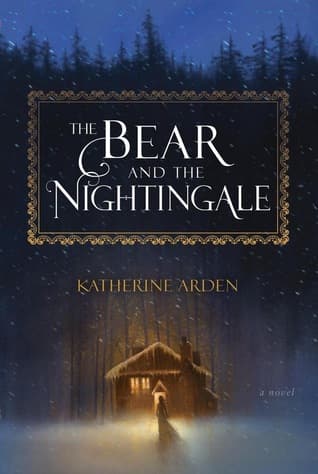
Katherine Arden (2017)
Genre
Fantasy / Historical Fiction / Young Adult
Reading Time
400 min
Key Themes
See below
Sign in to track this book
In a snow-laden medieval Russia, a young woman who sees ancient spirits must defy her devout stepmother and a rising demonic evil to protect her family and village from a winter demon.
Vasilisa Petrovna, known as Vasya, is born in the remote village of Lesnaya Zemlya, in northern Rus', during a harsh winter. Her mother, Marina, a noblewoman with a touch of magic, dies shortly after Vasya's birth, but not before prophesying that Vasya will have a difficult life and a powerful destiny. Vasya grows up with her siblings Sasha, Alyosha, Kolya, and Irina, cared for by her nurse, Dunya. Dunya tells them tales of ancient Russian folklore, particularly the 'chyerti' – house spirits, water spirits, and the Frost Demon, Morozko. Vasya, unlike her siblings, sees and interacts with these spirits, a gift she keeps secret, often leaving offerings for the domovoi, dvorevoi, and leshy.
After Marina's death, Vasya's father, Pyotr Vladimirovich, a boyar, feels lonely and worried for his children. He travels to Moscow at the Grand Prince's request to seek a new wife. There, he marries Olga Vladimirovna, the pious sister of the Grand Prince's wife, a woman devoted to the Russian Orthodox Church. Olga, accompanied by a zealous priest named Konstantin Nikonovich, arrives in Lesnaya Zemlya. Appalled by the villagers' continued adherence to pagan customs and household spirits, Olga immediately forbids such practices, viewing them as sinful idolatry. Konstantin reinforces this new doctrine, preaching against the 'demons' and the old ways.
Under Olga's strictures and Konstantin's sermons, the villagers, including Vasya's family, stop leaving offerings for the household spirits. Vasya, however, secretly tends to them, observing their growing weakness and sadness. The absence of traditional protections soon affects the physical world. Crops begin to fail, livestock fall ill, and the harsh Russian winter becomes more brutal. People sicken, and a sense of dread settles over Lesnaya Zemlya. Vasya notices more malevolent chyerti, such as the rusalka and the vodianoi, growing bolder, their power unchecked by the weakened good spirits.
The young priest, Konstantin, is drawn to Vasya, but his fascination is twisted by his religious fervor. He perceives her wildness, unusual eyes, and independence as signs of demonic influence, particularly after witnessing her unkempt hair and discerning gaze. He tries to 'save' her through prayer and increasingly harsh admonishments, viewing her as a temptress or a witch. Vasya finds Konstantin's presence unsettling and his fervent faith threatening to her world. Her stepmother, Olga, also sees Vasya as a rebellious, ungodly child, a constant source of frustration and a threat to her own spiritual well-being.
As the spiritual protections of the village dwindle, a greater evil begins to stir. The ancient, malevolent Bear, Medven, a force of chaos and destruction, starts to awaken. Its influence shows in terrifying nightmares that plague the villagers, particularly Olga. These dreams depict a monstrous bear, demanding offerings and sowing fear. The chyerti, particularly the more malevolent ones, grow in strength and number, actively harming people and animals. Vasya, sensing the true danger, tries to warn her family, but her warnings are dismissed as childish fantasies or, by Olga and Konstantin, as further evidence of her wickedness.
Driven by her connection to the spirits and her concern for her village, Vasya ventures deeper into the forbidden forest. There, she encounters Morozko, the Frost Demon, the figure of legend from Dunya's tales. He is not entirely malevolent, but a powerful, ancient being of winter and death. Morozko, initially intrigued by Vasya's ability to see him and her fierce spirit, reveals to her the true nature of the escalating crisis: his brother, Medven, the Bear, is awakening, feeding on the fear and neglect of the old ways. Medven seeks to break free and reclaim his dominion, threatening to plunge the world into eternal winter and chaos.
The nightmares and misfortunes intensify, pushing Olga to desperation. Believing the village is cursed due to its pagan past and Vasya's perceived wickedness, Olga becomes convinced that a human sacrifice is necessary to appease the evil spirits. She targets Vasya, seeing her as a suitable offering. She manipulates Pyotr into agreeing to send Vasya to a convent or marry her off, effectively removing her from the village. The true threat of Medven looms, and Vasya realizes that simply leaving will not save her family or her home. She understands that she must confront the Bear directly, using her unique gifts.
Armed with her courage and the knowledge from Morozko, Vasya enters the forest to face Medven. She finds the ancient Bear, a monstrous, shadowy entity, growing in power. Morozko appears, torn between his desire to maintain the balance of nature and his familial bond with Medven. Vasya, using her ability to see and command spirits, rallies the weakened but still present good chyerti, including the domovoi and leshy, to her aid. She confronts Medven not with brute force, but with cunning and the power of belief, weakening his hold by restoring faith in the spirits and challenging his perception of his own power.
Vasya, with Morozko's subtle assistance and her own growing power, defeats Medven, banishing him back to his slumber. The immediate threat to Lesnaya Zemlya is averted, and the nightmares cease. The villagers, still influenced by Olga and Konstantin, remain largely unaware of the true battle fought. Konstantin, witnessing Vasya's abilities, is terrified and further convinced of her demonic nature. Olga, though relieved, remains resentful. To protect her, and to allow her to fully embrace her destiny, Vasya's brother Sasha, now a monk, sends her a horse and encourages her to leave. Vasya, understanding she can no longer live a conventional life in the village, rides away, embracing her freedom and her connection to the magical world, ready to seek her own path.
The Protagonist
Vasya grows from a spirited, observant child to a powerful young woman who accepts her magical abilities and embraces her destiny as a protector of the balance between worlds.
The Supporting/Mentor
Morozko moves from an aloof, observational deity to an active, albeit subtle, participant in Vasya's journey, revealing his deep connection to the balance of the world.
The Antagonist
Olga's initial fear and piety escalate into a desperate, destructive zeal, driven by her terrifying nightmares and inability to understand the true threats.
The Antagonist
Konstantin's internal struggle between piety and desire leads him to increasingly fanatical and destructive actions, culminating in his terrified recognition of Vasya's power.
The Supporting
Pyotr navigates the challenges of leadership and family, often torn between tradition and the new religious order, ultimately allowing Vasya to follow her own path.
The Supporting
Sasha's journey from a boyar's son to a monk allows him to gain perspective and ultimately support Vasya's unique destiny.
The Supporting
Dunya remains a steadfast figure of traditional wisdom, passing on the knowledge and stories that empower Vasya.
The Antagonist
Medven awakens from his slumber due to the waning of old beliefs, but is ultimately forced back into dormancy by Vasya.
The Mentioned
Though deceased, Marina's legacy and prophecy guide Vasya's journey and reveal the source of her powers.
The central conflict of the novel is the clash between the ancient pagan beliefs of rural Rus' and Russian Orthodox Christianity. Olga and Konstantin represent the zealous new faith, suppressing the worship of household spirits and traditional practices. This suppression weakens the protective chyerti, allowing malevolent forces like Medven to gain power. Vasya, with her ability to see and interact with these spirits, becomes the bridge and battleground for these two opposing worldviews, showing the dangers of abandoning ancient wisdom for rigid dogma. The book explores the idea that both belief systems have their place and power, and that balance is essential.
“For good or ill, the world was changing. It had been changing since the first prince rode out of Kiev to be baptized in the Dnieper, and it would change still more, now that the Grand Prince sat in Moscow. But the spirits of the hearth and the forest did not change. They remained.”
Vasya's journey is one of self-discovery and embracing her unique identity. Born with the gift of seeing spirits, she struggles to reconcile her true nature with the expectations of her family and society. Her wildness and independence are viewed as a curse by Olga and Konstantin, pushing her towards either marriage or the convent. Through her encounters with Morozko and her confrontation with Medven, Vasya learns to accept and use her powers. Her decision to ride out into the world at the end signifies her full embrace of her identity, free from societal constraints, and her determination to forge her own path.
“She was not a girl. She was a spirit of the woods, a witch, a creature of the night. She was Vasya.”
The novel shows the power of belief and the enduring legacy of stories. The strength of the chyerti, the benevolent household spirits, is tied to the villagers' belief in them and their offerings. When Olga and Konstantin forbid these practices, the spirits weaken, leading to misfortune. Dunya's fairy tales, initially just entertainment, become Vasya's guide to understanding the true nature of the world and its threats. The narrative suggests that belief, whether in pagan spirits or Christian saints, shapes reality, and that forgetting old stories leaves one vulnerable to the darkness they once warded off.
“The chyerti were fading. They were like a fire, and the people's belief was the fuel. If the fuel went out, so did the fire.”
A tension in the novel is the struggle between freedom and various forms of confinement. Vasya's wild spirit chafes against domestic expectations for women—marriage or the convent. Olga and Konstantin seek to confine Vasya, either physically or spiritually, believing her nature to be dangerous. The pagan spirits themselves are bound by the rules of their world and human beliefs. Vasya's ultimate choice to leave Lesnaya Zemlya on horseback symbolizes her rejection of societal confinement and her embrace of a life of freedom, charting her own course in a world that is both magical and dangerous.
“She had thought she wanted to be free. Now she was free. And it was a terrifying thing.”
The Russian wilderness itself is a character in the story, intertwined with the supernatural. The harsh winters, deep forests, and frozen rivers are not merely settings but living entities with spirits—both benevolent and malevolent. The natural world reflects the spiritual health of the village; as the spirits wane, the land suffers. Vasya's deep connection to nature allows her to understand and navigate this supernatural world, recognizing the ancient magic that permeates every aspect of her world. The chyerti are manifestations of nature's forces, and their well-being is important to the survival of the human inhabitants.
“The forest was full of eyes tonight. Not human eyes, but the glints of things that watched from the shadows, things that had lived in the woods since before men had built their first fires.”
Anthropomorphic spirits representing elements of Russian folklore, whose power is tied to human belief.
The chyerti are a central plot device, personifying the ancient pagan beliefs of Rus'. They include the domovoi (house spirit), dvorevoi (yard spirit), bannik (bathhouse spirit), leshy (forest spirit), and vodianoi (water spirit), among others. Vasya's ability to see and interact with them is her unique gift. Their strength and ability to protect the village are directly linked to the villagers' belief in them and the offerings they receive. When Olga and Konstantin forbid these practices, the chyerti weaken, creating a vacuum that allows the more malevolent Medven to awaken and grow in power, driving the main conflict of the story.
The enigmatic Frost Demon's warnings and insights that steer Vasya's actions.
Morozko, the legendary Frost Demon, serves as a crucial guide and source of information for Vasya. His initial encounters with her are cryptic, but he gradually reveals the true nature of the threat posed by his brother, Medven. He explains the weakening of the chyerti and the consequences of the villagers' abandonment of the old ways. Morozko's warnings and the knowledge he imparts are essential for Vasya to understand her own powers, the ancient forces at play, and what steps she must take to protect her family and village. He represents a blend of mentor and dangerous, elemental force.
A classic fairy tale motif used to create conflict and force the protagonist's growth.
Olga, Vasya's stepmother, embodies the classic fairy tale 'evil stepmother' trope. Her arrival disrupts the family's peace and traditions, creating significant internal and external conflict for Vasya. Olga's rigid piety and fear-driven antagonism towards Vasya's wild nature and perceived 'witchcraft' force Vasya into isolation and ultimately compel her to act. This trope serves to heighten the stakes, provide a clear antagonist within the domestic sphere, and drive Vasya out of her comfort zone, propelling her towards her destiny and the confrontation with larger, supernatural evils. Her actions are indirectly responsible for the weakening of the village's protections.
A looming, ancient evil that serves as the primary external antagonist and catalyst for crisis.
Medven, the primordial Bear, is the ultimate external antagonist and a crucial plot device. His awakening, triggered by the neglect of the old ways and the weakening of the protective chyerti, introduces a tangible, existential threat to Lesnaya Zemlya. His influence manifests in nightmares, illness, and the intensification of winter's severity, creating a sense of escalating crisis. Medven represents chaos and destruction, and his presence forces Vasya to fully embrace her powers and confront him, bringing the magical and human conflicts to a dramatic head. His defeat signifies the temporary restoration of balance.
“Winter is a hungry beast, Vasya. It will eat your heart if you let it.”
— Vasya's nurse, Dunya, often warns her about the dangers of winter and the old ways.
“There is no such thing as a free gift. The forest always wants something back.”
— Vasya's interactions with the forest spirits and her understanding of their nature.
“A girl is a bird without wings, who must make her home in a cage.”
— Vasya reflects on the limited choices and expectations for women in her society.
“Fear is a cold companion, Vasya. It will keep you warm, but it will never truly comfort you.”
— Vasya's internal struggles and the advice she receives about facing her fears.
“The world is full of wonders, if you know how to look for them.”
— Vasya's unique ability to see and interact with the spirits of the old ways.
“Some stories are meant to be told, and some are meant to be kept.”
— The tension between the old pagan beliefs and the new Christian faith.
“What is a man without his faith? A ship without a rudder.”
— Father Konstantin's perspective on the importance of Christian belief.
“Old ways die hard, especially when they live in the bones.”
— The persistence of ancient traditions and beliefs despite attempts to suppress them.
“To be truly free, you must first know who you are.”
— Vasya's journey of self-discovery and accepting her unique identity.
“Even the smallest spark can light a great fire.”
— Vasya's growing power and her impact on the world around her.
“The forest keeps its secrets well, but it also remembers.”
— The ancient wisdom and memory held within the natural world.
“Some people are born with fire in their blood, and some are born with ice.”
— Reflecting on the different temperaments and destinies of characters.
“A good horse, a good axe, and a good heart. That's all a man truly needs.”
— Vasya's father, Pyotr, embodies practical virtues and a simple strength.
“The world always finds a way to balance itself, Vasya. Even in the darkest winter.”
— The underlying order of the world and the cyclical nature of life and death.
Ready to see how well you understood this book? Take our interactive quiz with 10 questions.

Biography coming soon.







