“The problem with socialism is that you eventually run out of other people's money.”
— Jack Ryan reflecting on economic systems while dealing with Russia's financial woes.

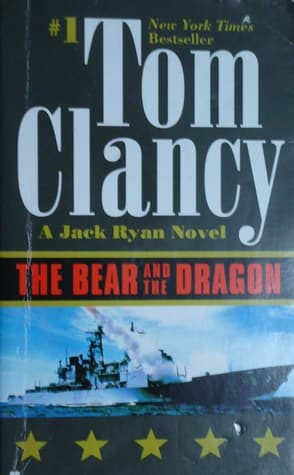
Tom Clancy (2000)
Genre
Thriller / Mystery
Reading Time
1895 min
Key Themes
See below
Sign in to track this book
President Jack Ryan races to uncover a global plot. John Clark heads to a volatile Russia, while China plans a world-altering move that could shatter the balance of power.
The novel opens with an assassination attempt in Moscow on Sergey Golovko, the chairman of Russia's Foreign Intelligence Service (SVR), using a rocket-propelled grenade. Golovko survives with injuries, immediately alarming Moscow and Washington. President Jack Ryan, recently elected, learns of the attack and its potential impact on global stability, given Russia's unstable political situation. Ryan sends his black ops specialist, John Clark, and his protégé, Domingo 'Ding' Chavez, to Russia to quietly investigate the attack and find the perpetrators and their motives, suspecting it might be more than just internal Russian conflict.
At the same time, China faces a severe economic crisis. Decades of rapid, unsustainable growth have led to widespread unemployment, social unrest, and a looming financial collapse. The Chinese Politburo, led by Chairman Zhang Han San, desperately seeks a solution to maintain power and prevent internal rebellion. Zhang and his hardline group propose a bold plan: a full-scale invasion and annexation of Siberia, rich in natural resources, especially oil and gas. They believe this will solve their economic problems and secure China's future as a global superpower, despite the immense risks of provoking Russia and the international community.
John Clark and Ding Chavez arrive in Moscow and begin their covert investigation. They navigate the complex and often dangerous world of Russian intelligence and organized crime. Through contacts and careful detective work, they discover that the assassination attempt on Golovko was not an internal Russian affair, but was planned by Chinese intelligence agents working with parts of the Russian mafia. This discovery points to a much larger, more sinister plot than initially suspected, suggesting China is actively destabilizing Russia for its own strategic gains, though the full extent of their plan remains hidden.
Under the guise of a large military exercise, China launches a quick and brutal invasion of Siberia. Millions of People's Liberation Army (PLA) troops cross the sparsely defended border, overwhelming Russian garrisons and seizing critical infrastructure. The scale and speed of the invasion surprise Russia and the world. The Chinese leadership, believing the West will be too busy with its own problems and too cautious to confront a nuclear-armed China, moves quickly to secure its gains, presenting the world with a done deal. The invasion significantly increases international tensions.
Upon learning of the Chinese invasion, President Ryan calls an emergency meeting of his national security team. Recognizing the huge threat to global stability and the violation of international law, Ryan immediately condemns China's actions and begins to gather international support for Russia. He orders a rapid deployment of US forces, including naval and air assets, to the Pacific region and Europe to deter further Chinese aggression and to signal a willingness to intervene. Ryan also starts diplomatic efforts to unite NATO and other allies against China, while offering strategic and logistical aid to Russia.
Despite being initially overwhelmed, Russian forces, under General Bondarenko, begin to organize strong resistance against the Chinese invaders. Siberia's vastness and harsh winter conditions pose significant challenges for the PLA. The US, through Clark and Ding's team on the ground and various intelligence assets, provides critical intelligence, supplies, and strategic advice to the Russians. US special operations forces, including Clark and Ding, engage in covert actions to disrupt Chinese logistics and command, while US airpower, operating from bases in Alaska, begins to provide reconnaissance and limited air support.
In a bold and unprecedented move, Pope John Paul II travels to China, despite the ongoing conflict and the Chinese government's strong opposition to religious freedom. His visit is a powerful moral statement against the invasion and the human rights abuses committed by the PLA. The Pope's presence draws immense international media attention, putting more pressure on the Chinese leadership. While his direct influence on the military conflict is limited, his moral authority and global appeal increase international condemnation of China's actions, making it harder for the Politburo to control its narrative and global perception of the war.
The war in Siberia intensifies, becoming a brutal, large-scale conflict. The PLA, despite having more soldiers, faces strong resistance from the Russians, who are fighting on their home soil with US intelligence and special forces support. Major battles erupt across the vast Siberian landscape, marked by heavy casualties and the devastating use of modern weapons. The Chinese leadership, increasingly frustrated by the lack of a decisive victory and growing domestic unrest, considers even more desperate measures, raising fears of potential nuclear escalation as the conflict threatens to spin out of control.
As the war continues and casualties mount, dissent grows within the Chinese Politburo and military leadership. The economic benefits promised by Chairman Zhang have not appeared, and international isolation is crippling China. A group led by senior military and political figures, unhappy with Zhang's reckless actions, stages a coup attempt. The coup is led by General Tan Deshi, a pragmatic general who believes Zhang's actions are leading China to ruin. The internal power struggle in Beijing creates more chaos and uncertainty, significantly affecting the command and control of PLA forces in Siberia.
The coup against Chairman Zhang Han San succeeds, though with significant internal conflict and bloodshed in Beijing. General Tan Deshi takes control, immediately ordering a ceasefire and the withdrawal of all Chinese forces from Siberia. The war ends, but at a huge cost in lives and resources for all sides. The international community breathes a sigh of relief. President Ryan works with the new Chinese leadership to reduce tensions and begin the long process of rebuilding international relations, though the scars of the conflict, especially for Russia and China, will likely last for generations.
The Protagonist
Ryan solidifies his position as a decisive and principled world leader, navigating a global crisis without resorting to nuclear conflict.
The Supporting
Clark continues to prove his invaluable effectiveness as a covert operative, adapting to a large-scale international conflict.
The Supporting
Ding further develops his leadership and tactical skills, proving his mettle in a large-scale conflict.
The Supporting
Golovko navigates the political complexities of a recovering Russia while forging an alliance with the US.
The Antagonist
Zhang's ambition and miscalculations lead to his overthrow and the collapse of his expansionist plans.
The Supporting
Tan transforms from a loyal general to a revolutionary leader, saving China from further self-destruction.
The Supporting
West witnesses the profound impact of moral leadership on a global scale, solidifying his faith and purpose.
The Supporting
The Pope asserts moral authority on a global scale, influencing the resolution of a major international conflict.
The novel clearly shows how the unchecked ambition of an authoritarian regime, particularly Chairman Zhang Han San's China, can lead to terrible outcomes. Zhang's desire to keep power and solve economic problems through military expansion shows the dangers of prioritizing nationalistic goals over human lives and international law. The story shows the internal dissent and eventual collapse that such ambition can cause, as seen in the coup against Zhang when his plans fail and bring China to the edge of ruin. This theme is central to the conflict, demonstrating that even powerful nations face consequences for their pride.
“History has many lessons, but the most frequently ignored is that one cannot indefinitely suppress the will of a people.”
The plot is driven by the complex links between geopolitical events and economic realities. China's economic crisis directly causes its decision to invade Siberia, showing how domestic issues can lead to international conflict. President Ryan's administration constantly deals with the economic effects of the war, understanding that a global conflict would have devastating financial consequences beyond the immediate battlefields. The interconnectedness also extends to intelligence, as the assassination attempt in Moscow is revealed to be part of a larger Chinese strategy, demonstrating that seemingly isolated events are often linked in a complex global web.
“A nation's economy is not a thing apart from its foreign policy. Indeed, it often drives it.”
While military force is central to the thriller genre, the novel also highlights the important role of moral authority and diplomacy in solving international crises. President Ryan consistently seeks diplomatic solutions and builds international agreement against China, rather than immediately going to war. Most notably, Pope John Paul II's brave visit to China, despite the dangers, serves as a powerful moral statement that mobilizes international opinion and puts immense pressure on the Chinese leadership. This shows that non-military interventions, driven by ethical considerations, can significantly influence the outcome of large-scale conflicts, offering an an alternative to pure power politics.
“Sometimes, the strongest weapons are not made of steel, but of conviction.”
The story relies heavily on effective intelligence gathering and covert operations. John Clark and Ding Chavez's investigation into the Moscow assassination attempt is important for uncovering China's true intentions, giving the US vital early warnings. Throughout the Siberian conflict, their special operations provide critical support to Russian forces, disrupting Chinese logistics and command structures behind enemy lines. This theme shows how intelligence and discreet actions, often unseen by the public, can significantly influence the course of major international events and provide options beyond conventional warfare.
“Information is not just power, Mr. President. It is survival.”
The valuable natural resources of Siberia act as the primary catalyst for the Chinese invasion.
The vast, untapped natural resources of Siberia, particularly oil and gas, serve as the primary MacGuffin in 'The Bear and the Dragon.' These resources are the driving force behind China's audacious invasion plan. While the specific details of these resources are less important than their existence, they provide the compelling motivation for Chairman Zhang Han San's desperate gamble. The MacGuffin effectively sets the entire plot in motion, creating the central conflict and justifying the extreme measures taken by the Chinese government to secure them, thus propelling the narrative forward.
The rapid advance of the Chinese invasion and the looming threat of nuclear escalation create constant urgency.
A pervasive ticking clock device is employed throughout the novel, creating intense suspense. From the initial swiftness of the Chinese invasion of Siberia, which presents the world with a fait accompli, to the escalating casualties and the dwindling time for diplomatic solutions, the narrative maintains a sense of urgency. The most critical ticking clock is the increasing likelihood of China or Russia resorting to tactical nuclear weapons as the conventional war grinds on. This constant pressure on Jack Ryan and other leaders to act quickly and decisively keeps the stakes incredibly high and the reader engaged.
Russia, while an ally against China, remains a complex and sometimes unpredictable partner for the US.
Russia functions as an unreliable ally throughout the conflict. While the US and Russia share a common enemy in China's aggression, their historical animosity and differing geopolitical interests create friction. Jack Ryan must constantly manage this delicate alliance, providing aid and intelligence without fully trusting Russia's long-term intentions or internal stability. This device adds layers of complexity to the international dynamics, as the US cannot fully commit to a partnership without considering potential betrayals or shifts in Russian policy once the immediate threat is contained, complicating the strategic decisions Ryan faces.
The Pope's unexpected trip to China provides a critical moral and political turning point.
The Pope's decision to travel to China, an unprecedented and highly risky move, functions somewhat as a Deus ex Machina. While not directly resolving the military conflict, his presence significantly alters the political landscape and international pressure on the Chinese government. His moral authority and global media attention make it impossible for China to ignore the ethical implications of its actions, contributing to the internal dissent that ultimately leads to the coup. This intervention, while plausible within the narrative's established world, provides a sudden and powerful shift in the non-military aspect of the conflict's resolution.
“The problem with socialism is that you eventually run out of other people's money.”
— Jack Ryan reflecting on economic systems while dealing with Russia's financial woes.
“The greatest enemy of a good plan is the dream of a perfect plan.”
— A Russian general discussing military strategy and the pursuit of unattainable perfection.
“Democracy is two wolves and a lamb voting on what to have for lunch. Liberty is a well-armed lamb contesting the vote.”
— A character's cynical view on democracy and the importance of individual rights and self-defense.
“The trick to being a good leader is not to be perfect, but to be able to admit your mistakes.”
— Jack Ryan's internal monologue about leadership qualities, especially during a crisis.
“Power is never given; it is taken.”
— A Chinese official's ruthless perspective on the acquisition and retention of political power.
“Sometimes the only way to make things right is to do something wrong.”
— A character contemplating morally ambiguous actions for a greater good.
“Fear is a great motivator, but a terrible master.”
— A discussion about the role of fear in international relations and personal decisions.
“The most dangerous weapon is the one you don't know your enemy has.”
— A military analyst's observation on intelligence gathering and the element of surprise.
“Diplomacy is the art of letting someone else have your way.”
— A senior diplomat's wry definition of their profession.
“History is not a burden but a lesson.”
— Jack Ryan reflecting on past conflicts and their relevance to current international challenges.
“Every nation has its own internal logic, and it's rarely the same as yours.”
— A character's reminder about the importance of understanding cultural and political differences.
“The truth is a highly overrated commodity in politics.”
— A cynical remark from a political operative about the use of information.
“The greatest strength of a free society is its ability to correct its own mistakes.”
— Jack Ryan's belief in the resilience and adaptability of democratic systems.
“Never underestimate the predictability of stupidity.”
— A character's frustrated observation about human error and repeated mistakes.
Ready to see how well you understood this book? Take our interactive quiz with 10 questions.

Biography coming soon.







