“The past is a stubborn thing, always there, always waiting to remind you of what you've lost.”
— Ignatius reflecting on his past and the weight of his decisions.

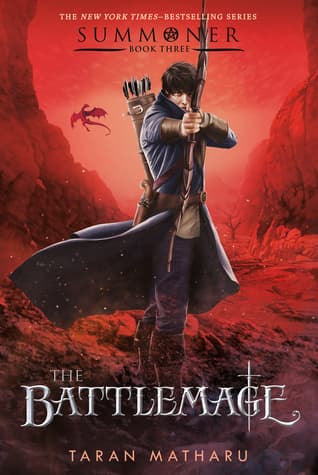
Taran Matharu (2017)
Genre
Fantasy / Young Adult
Reading Time
7-8 hours
Key Themes
See below
Sign in to track this book
As war looms, Fletcher and his demon navigate dangerous realms and fragile alliances to face his orc enemy, Khan, hoping to save his home and prevent destruction.
After the events of 'The Inquisition,' Fletcher and his demon Ignatius are in the ether, a chaotic dimension where demons live. With him are his friends Othello, Sylva, and the dwarf Atilla. They are lost and separated from the main human armies. Their first challenge is to survive the hostile environment and the ether's unpredictable nature, which distorts perception. Fletcher soon realizes they must find a way back to Hominum, or at least a more stable part of the ether, to understand the rift's full impact and their world's fate. Their initial journey is dangerous, as they face wild demons and struggle to find their way in the changing landscape.
As Fletcher, Othello, Sylva, and Atilla go deeper into the ether, they meet the powerful demon lord, Vulnus, and his demon, Koto. Vulnus is hostile at first, but Fletcher makes a truce, explaining the rift's catastrophic opening. Vulnus, an old and wise demon, says the rift's opening was foretold, part of a prophecy, and warns them of a greater danger: the Orcus, a evil entity that wants to consume everything. He explains that the ether is now linked to Hominum, and the Orcus threatens both worlds. This changes their goal from just returning home to understanding and fighting this threat, forming an uneasy alliance with Vulnus.
The Orcus's influence appears as darkness and corruption in the ether, making neutral demons hostile and twisting the landscape. Fletcher and his allies, now including Vulnus and Koto, realize the only way to stop the Orcus is to close the rift between Hominum and the ether. Vulnus reveals that a powerful item, a 'Catalyst,' is needed, located in a dangerous part of the ether called the 'Abyss.' This journey is very risky, testing their courage and forcing them to face their deepest fears. The group must cross treacherous land, fight more corrupted demons, and race against time as the Orcus's power grows, threatening to engulf both realms.
After getting the Catalyst from the Abyss, Fletcher and his friends open a temporary portal back to Hominum. But their return is not a relief. They find that orc forces, led by Khan, have used the chaos from the rift to invade human lands. The capital city of Vocans is under attack, and human armies are struggling. Fletcher is horrified by the destruction and the betrayal of Khan, his former friend and now enemy. This immediately changes their priorities; they must now defend Hominum from the orcs while still dealing with the larger threat of the Orcus and the need to close the rift.
Fletcher, with Othello, Sylva, and Atilla, joins the struggling human forces defending Vocans. He quickly takes charge, his proven strategies and ability to summon powerful demons becoming vital. The battle is fierce, with many casualties on both sides. Khan, driven by his hatred for humans and Fletcher, leads his orc warriors effectively. Fletcher faces Khan directly many times, their personal rivalry adding intensity to the desperate conflict. The human kingdom's fate is uncertain, and Fletcher must use his summoner abilities to their fullest to protect his people.
During the intense fighting, a betrayal is revealed: General Arcturus, a high-ranking human commander, is working with the orcs, or at least using the chaos for his own gain. He tries to weaken Fletcher's command and create division among human soldiers, believing only he can lead or that a new order is needed. This internal sabotage further weakens the human defense, forcing Fletcher to not only fight Khan's army but also expose Arcturus's actions. Arcturus's deception is a severe blow to human morale and adds political intrigue to the war.
As the battle for Vocans continues, the Orcus, now much stronger because of the open rift, begins to appear in Hominum. Its corrupting influence affects both humans and orcs, creating mutated creatures and making both sides more desperate. This threat forces a realization: neither race can survive alone. Fletcher, understanding the situation, tries to make a temporary, difficult truce with Khan. He argues they must unite against the Orcus, the real enemy, before both their worlds are destroyed. This is hard, given the deep hatred between races, but the Orcus's overwhelming power makes it necessary.
An alliance forms between the remaining human forces, Khan's orc army, and Fletcher's demon allies, including Vulnus. Together, they confront the physical form of the Orcus, a monstrous entity of corruption. The battle is huge, involving combined magic and physical attacks from all races. Fletcher, using the Catalyst and his full summoning power, leads the fight. He must coordinate the different forces, overcoming centuries of racial hatred, to strike a decisive blow against the Orcus. This tests his leadership, summoning abilities, and belief in a united future.
The battle against the Orcus pushes everyone to their limits. During the conflict, a critical sacrifice is needed to fully use the Catalyst and seal the rift. This sacrifice comes from a major character, whose death provides the power or focus to complete the ritual. With the combined efforts of Fletcher, Khan, and Vulnus, and empowered by the sacrifice, the Catalyst is activated, and the rift between Hominum and the ether begins to close. The Orcus, weakened and unable to exist without the open rift, is defeated, its corruption fading from both worlds. This moment is bittersweet, marking both victory and great loss.
After the Orcus's defeat and the rift's sealing, Hominum is devastated but safe. The temporary alliance between humans and orcs showed that coexistence is possible. Fletcher, now a hero, works to establish lasting peace between the races. Khan, changed by the shared struggle, agrees to a ceasefire and begins talks for his people's future. The world starts to heal, physically and politically. Fletcher, having fulfilled his destiny, looks to a future where humans, orcs, and even demons can find a way to live together, starting an era of understanding and rebuilding.
The Protagonist
Fletcher evolves from an outcast commoner seeking belonging to a legendary hero who unites disparate races against a common foe, ultimately becoming a peacemaker.
The Supporting
Ignatius remains steadfastly loyal, his bond with Fletcher strengthening into an unbreakable partnership that transcends the typical master-familiar relationship.
The Supporting
Othello's loyalty to Fletcher deepens, and he learns to look beyond racial prejudices for the greater good.
The Supporting
Sylva's combat skills and strategic mind prove invaluable, and she grows in her role as a leader and trusted advisor.
The Supporting
Atilla's inventiveness and practical skills are crucial to the group's survival and success, solidifying his role as a vital contributor.
The Antagonist/Supporting
Khan transitions from a vengeful, genocidal leader to a pragmatic, albeit reluctant, ally, forced to confront a greater enemy and reconsider his racial prejudices.
The Supporting
Vulnus, initially an observer, becomes an active participant in the fight for existence, sharing ancient wisdom and power to protect both Hominum and the ether.
The Antagonist
Arcturus's lust for power leads to his downfall, exposing his treachery and solidifying his role as a villain who puts personal gain above all else.
The novel shows that even enemies can find common ground when facing a major threat. Fletcher's journey often makes him bridge gaps between commoners and nobles, humans and dwarves, and especially humans and orcs. The alliance between humans, orcs, and demons against the Orcus is the clearest example of this. It shows that survival often means overcoming prejudice and working together, as seen when Khan and Fletcher, despite their hatred, must fight side-by-side to save their worlds.
““We are not so different, you and I. Both of us fight for our people. Perhaps it is time we fought for all peoples.””
Throughout the series, and especially in 'The Battlemage,' prejudice between races (humans, orcs, elves, dwarves) and social classes (commoners, nobles) is a main conflict. Fletcher, a commoner who befriends non-humans, often challenges these biases. The book shows how prejudice can blind individuals and societies to bigger truths and threats. The eventual, reluctant alliance between humans and orcs against the Orcus forces characters like Khan and some human generals to confront their deep-seated hatreds, showing that acceptance, though hard-won, is necessary for progress and survival.
““Hatred is a fire that consumes the hater more than the hated.””
Fletcher's change from an orphaned commoner to a leader is a main theme. He often faces situations where he must make hard choices, inspire loyalty, and plan for the greater good. His leadership includes empathy, courage, and a willingness to listen to different views, even from enemies. The weight of responsibility affects him, especially when Hominum and the ether face destruction. His ability to unite different groups, from his friends to powerful demons and even his rival Khan, demonstrates true leadership.
““A true leader does not command by fear, but by inspiring hope and trust.””
The novel explores the immense power of summoning and magic, but also its costs and sacrifices. Fletcher constantly pushes his limits, risking his life and his demons' lives. The opening of the rift, a huge act of magic, has terrible results, leading to the Orcus's appearance. In the end, defeating the Orcus and sealing the rift demands a great sacrifice, showing that great power often comes with a great price. This theme highlights that true victory often requires personal loss and selflessness.
““Some victories are bought with a currency far more precious than gold.””
A tear between Hominum and the ether, serving as the central catalyst for conflict.
The rift is a physical and magical tear in reality that connects the human world (Hominum) with the demon dimension (the ether). Its opening at the end of the previous book serves as the primary catalyst for all major conflicts in 'The Battlemage.' It allows demons to freely enter Hominum, facilitates the Orcus's manifestation, and forces Fletcher's party into the ether. The existence of the rift introduces an existential threat that compels unprecedented alliances and drives the narrative towards a desperate, world-saving quest. Closing the rift becomes the ultimate goal, symbolizing the restoration of order and the protection of both realms.
A powerful artifact required to seal the rift and defeat the Orcus.
The Catalyst is a mythical and immensely powerful artifact located deep within the perilous Abyss of the ether. It is introduced as the only known means to effectively seal the rift between Hominum and the ether, and thus, to defeat the Orcus. The quest to find and retrieve the Catalyst forms a significant portion of Fletcher's journey through the ether, providing a clear objective in a chaotic environment. Its activation requires not only immense magical power but also a significant sacrifice, making it a crucial element in the climax of the story and underscoring the theme of the price of power.
A malevolent, corrupting entity that threatens to consume all worlds.
The Orcus is the ultimate antagonist of 'The Battlemage,' a malevolent entity of pure corruption and chaos that originates from the deepest parts of the ether. Its influence spreads through the open rift, threatening to consume and destroy both Hominum and the ether. The Orcus serves as a common enemy so terrifying that it forces humans, orcs, and demons to set aside their differences and form an unprecedented alliance. It embodies the ultimate stakes of the conflict, elevating the story from a racial war to a cosmic battle for existence. Its defeat signifies the culmination of all efforts and sacrifices.
The ingrained animosity and stereotypes between humans, orcs, elves, and dwarves.
Racial prejudice is a pervasive plot device that drives much of the conflict and character development. The deep-seated hatred between humans and orcs, fueled by centuries of conflict and misunderstanding, is a constant obstacle. This prejudice initially prevents alliances and fosters betrayal, as seen with General Arcturus. However, the overwhelming threat of the Orcus forces characters to confront and, to some extent, overcome these biases. This device highlights the destructive nature of intolerance and sets the stage for the eventual, difficult unity that becomes crucial for survival, reinforcing the theme of overcoming adversity through cooperation.
“The past is a stubborn thing, always there, always waiting to remind you of what you've lost.”
— Ignatius reflecting on his past and the weight of his decisions.
“True power isn't about how many spells you can cast, but about the strength of your will and the purity of your intentions.”
— A mentor figure imparting wisdom to Ignatius about the nature of magic.
“Sometimes, the hardest battles are fought not with swords and spells, but within your own mind.”
— Ignatius struggling with internal conflict and moral choices.
“Hope is a fragile thing, easily shattered, but without it, we are truly lost.”
— Characters facing overwhelming odds and clinging to a glimmer of hope.
“A leader's greatest strength is not their ability to command, but their capacity to inspire.”
— Discussing the qualities of effective leadership in a time of war.
“Sacrifice is not merely giving something up; it is choosing what is more important than yourself.”
— A character making a difficult and selfless decision.
“The greatest magic lies not in what we can do, but in what we choose to believe.”
— A philosophical discussion about faith and conviction.
“Even in the darkest of times, there is always a flicker of light, if you only know where to look.”
— Offering comfort and encouragement during a period of great hardship.
“Fear is a powerful enemy, but it can also be a powerful teacher.”
— Ignatius confronting his fears and learning from the experience.
“The world is not always fair, but that does not mean we should stop fighting for what is right.”
— A character expressing their resolve in the face of injustice.
“Loyalty is a bond forged in fire, and it is stronger than any spell.”
— Emphasizing the importance of camaraderie and trust among allies.
“Every choice we make, no matter how small, ripples through time and shapes our destiny.”
— Reflecting on the butterfly effect of individual actions.
“To truly understand your enemy, you must first understand yourself.”
— A strategic insight shared during preparation for a major conflict.
“The greatest stories are not written by fate, but by the courage of those who dare to defy it.”
— A heroic declaration about free will and defying destiny.
Ready to see how well you understood this book? Take our interactive quiz with 10 questions.
Biography coming soon.







