“Only by living outside the law, can you be truly free.”
— Cosimo's philosophy after leaving his family's home.

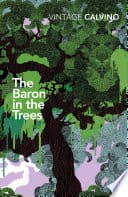
Italo Calvino (2019)
Genre
Literary Fiction / Fantasy / Historical Fiction
Reading Time
6-8 hours
Key Themes
See below
Sign in to track this book
A young baron, rebelling against his family, chooses to live entirely in the trees, navigating adventures, love, and the Enlightenment from his arboreal kingdom while never touching the ground again.
On June 15, 1767, twelve-year-old Cosimo Piovasco di Rondò, frustrated by his family's strict dinner customs and especially by his sister Battista's disgusting snail dish, declares he will never again eat with them. After an argument with his father, Baron Arminio Piovasco di Rondò, Cosimo storms out and climbs into an ilex tree in the family garden. His younger brother, Biagio, narrates the story, at first believing Cosimo's act to be a childish tantrum. However, Cosimo stays in the trees, making it clear this is a permanent decision, much to his bewildered family's dismay and eventual acceptance. He begins to explore the tree world, establishing his new life above ground.
Cosimo quickly learns to navigate the complex network of branches, moving with agility and skill. He meets other tree-dwellers, including children who live in the woods and a mysterious, wild girl named Ursula, whom he first mistakes for a bandit. These interactions mark his first steps in forming a community separate from his family on the ground. He begins to hunt for food, build simple shelters, and observe the world from his unique spot. His early days are a mix of survival and exploration as he sets up the practicalities of his new life, still puzzling the people below.
Cosimo forms an unexpected friendship with Gian dei Brughi, a feared local bandit. Instead of reporting him, Cosimo talks with the bandit, providing him with books he gets from his father's library using a rope and basket. Gian dei Brughi, despite his criminal life, develops a love for reading and philosophy, inspired by Cosimo. Their intellectual discussions become a significant part of Cosimo's early adult life in the trees, showing his growing impact on the world around him, even from his elevated position. This friendship highlights Cosimo's ability to connect with different people regardless of their social standing or location.
Cosimo's main romantic relationship is with Viola, the Marchesa d'Ombrosa, a beautiful and spirited noblewoman. Their love affair is passionate and turbulent, marked by secret meetings in the trees, jealous arguments, and a deep intellectual connection. Viola, drawn to Cosimo's unique life, often joins him in the branches. However, her restless nature and desire for a conventional life eventually lead her to leave him for another man, causing Cosimo great heartbreak. Her departure is a turning point for Cosimo, strengthening his commitment to his arboreal life even as he deals with the pain of lost love.
From his vantage point, Cosimo witnesses various events on land and sea. He meets a group of pirates; at first a threat, he eventually establishes a complex, almost connected relationship with them, sometimes helping them, sometimes outsmarting them. Later, he helps rescue shipwrecked Turks, who, after being saved, choose to stay in the trees, forming a small, unusual community with Cosimo. This episode shows Cosimo's growing influence beyond his immediate surroundings and his humanitarian spirit, bridging cultural divides from his elevated spot. The Turks eventually leave, giving Cosimo new insights into the world.
As the Age of Enlightenment continues, Cosimo, through his reading and unique perspective, becomes an intellectual. He writes to prominent figures like Voltaire and Rousseau, sharing his observations on society, nature, and philosophy from his tree perch. His letters circulate among European intellectuals, making him a minor celebrity. This period shows Cosimo's intellectual growth and his ability to contribute to the philosophical discussions of his time, proving that one does not need to be physically grounded to be intellectually engaged and influential. His insights are valued for their unusual origin.
When wolves begin to terrorize local villagers and their livestock, Cosimo takes charge. Using his knowledge of the forest and its creatures, gained from decades in the trees, he plans and leads a successful wolf hunt. This event solidifies his role as a protector and helper of the community, despite his physical separation. It shows that his life in the trees is not merely an eccentric retreat but a position from which he can effectively serve the common good, proving his practical value to the people of Ombrosa.
From his tree sanctuary, Cosimo witnesses the events of the French Revolution and the rise and fall of Napoleon Bonaparte. He observes the changing political scene, the societal shifts, and the impact of these historical movements on the common people below. While he remains physically distant, he is deeply engaged intellectually, offering commentary and analysis through his letters and occasional direct interactions with those on the ground. His perspective offers a unique, detached yet insightful view of history unfolding, emphasizing that human constructs are temporary against the lasting backdrop of nature.
Inspired by Enlightenment ideals, Cosimo tries to found an 'Aerial Republic' in the trees, a utopian community based on reason and freedom. While this grand vision proves impractical for widespread adoption, it reflects his commitment to social progress. Later, he meets and provides refuge to Spanish Royalists fleeing persecution, showing his continued role as a haven for the dispossessed and his willingness to help regardless of political alignment. These episodes highlight Cosimo's mix of idealism and practicality in his efforts to shape the world from his unique position.
As Cosimo ages, his body begins to fail him, but his spirit and commitment to his arboreal life remain strong. He continues to navigate the trees, though with increasing difficulty. His final act is as dramatic and unconventional as his first ascent. Nearing death, he spots a hot air balloon passing overhead. In a final burst of energy and determination, he leaps from the branches, grabs onto the anchor rope of the balloon, and is carried away, disappearing into the sky. He never touches the ground again, fulfilling his lifelong vow and leaving a lasting legacy of freedom and individuality.
The Protagonist
Cosimo transforms from a rebellious child into a wise, influential, and legendary figure who maintains his unique lifestyle until his very last breath.
The Narrator/Supporting
Biagio matures from a curious child into a dedicated chronicler, ensuring his brother's legend endures.
The Supporting
Viola enters Cosimo's life as a kindred spirit but ultimately chooses a different path, leaving Cosimo heartbroken but resolute.
The Supporting
Gian dei Brughi transforms from a common bandit into an avid reader and intellectual, eventually meeting a tragic end.
The Supporting
The Baron remains largely unchanged, perpetually bewildered and annoyed by Cosimo's life, representing the unchanging terrestrial world.
The Supporting
Battista remains a static character, a symbol of the twisted aspects of conventional life Cosimo avoids.
The Supporting
Ottimo Massimo remains Cosimo's steadfast companion, adapting to his master's unique lifestyle.
The Supporting
The Chevalier remains a consistent intellectual presence, offering a bridge between Cosimo's world and contemporary thought.
The main theme is Cosimo's choice to live in the trees as a rejection of societal norms and a pursuit of personal freedom. His decision at age twelve to leave the ground is an escape from the strict conventions of his aristocratic family and society's expectations. From his tree perch, Cosimo observes the lives of those on the ground, highlighting the absurdities and limits of their conventions. Yet, his freedom has its own challenges and loneliness, showing that true liberty often comes at the cost of conventional human connection, as seen in his relationship with Viola.
“He had never once touched the earth again, and he had never once left the trees.”
The novel explores the complex relationship between an individual and society. Cosimo's physical separation from society does not mean disengagement; instead, it gives him a unique view from which to observe, critique, and even influence the world below. He reads, writes to Enlightenment thinkers, helps bandits, rescues Turks, and organizes a wolf hunt, showing that an individual can be both outside and deeply involved with society. His life questions the need for physical presence for social participation and highlights the power of an individual's unique perspective to impact the collective, often more effectively than those fully immersed in its conventions.
“He was always on the side of justice, but from a position that no one else could share.”
For Cosimo, the trees are not just a home but a sanctuary, a school, and a way of life. They provide him with shelter, food, and a way to travel long distances, but more importantly, they offer a unique view of the world. Living in nature allows him to understand its rhythms, creatures, and laws, contrasting sharply with the artificiality of human society. His education is largely self-directed, drawing from books he reads in his aerial library and from direct observation of the natural world, illustrating nature's capacity to teach and shape character beyond formal institutions.
“He knew the ways of every bird and beast, every leaf and branch, as only one who lived among them could.”
The novel is set during the Age of Enlightenment, and Cosimo's intellectual journey reflects its ideals. He reads philosophical texts, writes to thinkers like Voltaire, and applies reason to his observations of human behavior and societal structures. His attempts to establish an 'Aerial Republic' reflect utopian Enlightenment ideals. However, the novel also subtly critiques the limits of pure reason and progress, as Cosimo witnesses wars, revolutions, and human flaws from his detached perspective. It suggests that while intellectual advancement is profound, fundamental human nature and its conflicts persist, even as society strives for progress.
“He observed the world from the height of a tree, as if from the height of reason.”
The story itself shows the power of memory and storytelling. Biagio, as the younger brother, carefully tells Cosimo's life story, ensuring his extraordinary tale is preserved. The act of narration turns Cosimo's life from a series of unusual events into a legend, giving it meaning and permanence. This theme highlights how individual lives, no matter how unconventional, gain significance through their retelling, becoming part of a larger collective memory and shaping the identity of a place or family. Biagio's commitment to his brother's narrative ensures Cosimo's legacy endures beyond his physical presence.
“And it is to me, his brother, that the task falls of relating his life, from beginning to end.”
The trees as both physical and metaphorical space.
The arboreal setting is the central plot device, serving as Cosimo's home, sanctuary, and unique vantage point. Physically, it allows him to traverse vast distances, escape ground-bound threats, and develop an intimate knowledge of nature. Metaphorically, the trees represent freedom, individuality, and an alternative perspective on human society. They enable Cosimo's detachment while simultaneously connecting him to the world in a profound, unconventional way, allowing for both observation and limited interaction. This device literally elevates the protagonist above the mundane, offering a unique narrative lens.
The story is told by Cosimo's younger brother, Biagio.
The narration by Biagio, Cosimo's younger brother, is crucial. It provides an immediate, intimate, yet often bewildered perspective from someone grounded in the conventional world, offering a counterpoint to Cosimo's radical choices. Biagio acts as a reliable witness, chronicling events with a mixture of familial affection and detached observation. His voice frames Cosimo's legend, making it accessible to readers while underscoring the profound impact Cosimo's life had on those around him. This narrative choice allows for both internal family dynamics and external societal observations to be presented.
Cosimo's correspondence with Enlightenment thinkers.
Cosimo's letters to and from prominent Enlightenment figures like Voltaire and Rousseau serve as an important plot device. These exchanges highlight Cosimo's intellectual engagement with the broader world, demonstrating that his physical isolation does not preclude intellectual influence. They provide insights into his philosophical development and his unique perspective on societal issues, bridging the gap between his arboreal existence and the intellectual currents of his time. The letters also serve to disseminate his ideas and observations, making him a recognized, albeit eccentric, figure in European intellectual circles.
Cosimo's unwavering commitment to never touch the ground.
Cosimo's vow, made at age twelve, to never again touch the ground, is the foundational plot device driving the entire narrative. This unwavering commitment dictates all his actions, problem-solving, and interactions, forcing him to adapt and innovate constantly. It creates both the central conflict (his separation from society) and the source of his unique perspective and freedom. The vow defines his character, shapes his relationships, and ultimately culminates in his dramatic final departure, ensuring his legend is consistent and impactful from beginning to end.
“Only by living outside the law, can you be truly free.”
— Cosimo's philosophy after leaving his family's home.
“He who wants to see the world, must not stay on the ground.”
— Cosimo justifying his arboreal existence.
“The true measure of a man is not how many trees he owns, but how many he has climbed.”
— A reflection on Cosimo's unconventional life.
“It is not enough to live in the trees; one must also live by the trees.”
— Cosimo developing his unique way of life and survival.
“To be truly free, one must first be able to choose one's own cage.”
— A paradoxical thought on Cosimo's self-imposed isolation.
“The world seen from above is always more interesting.”
— Cosimo observing the lives of others from his perch.
“He learned to find his way not by paths, but by the flow of branches.”
— Describing Cosimo's unique navigation skills.
“Every new branch was a new thought, every new leaf a new idea.”
— Cosimo's intellectual growth in the trees.
“There are times when it is necessary to remain motionless, to be silent, to feel the wind, to hear the leaves.”
— Cosimo's moments of contemplation and connection with nature.
“The greatest adventures are not in distant lands, but in the heart of one's own chosen world.”
— A reflection on Cosimo's extraordinary life within his familiar landscape.
“He was not a man who lived in the trees, but a tree that had learned to walk.”
— A poetic description of Cosimo's complete assimilation into his environment.
“To live in the trees is to live on the edge of the world, where the rules are different.”
— The inherent otherness of Cosimo's existence.
“He was a living argument against the tyranny of the ground.”
— Cosimo's life as a symbol of defiance against convention.
“The most important thing is not to be understood, but to understand.”
— Cosimo's perspective on observation and empathy from his unique vantage point.
Ready to see how well you understood this book? Take our interactive quiz with 10 questions.
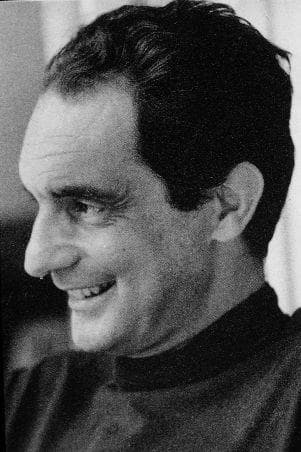
Italo Calvino was an Italian writer and journalist. His best known works include the Our Ancestors trilogy (1952–1959), the Cosmicomics collection of short stories (1965), and the novels Invisible Cities (1972) and If on a winter's night a traveler (1979).







