“Magnus Bane has been alive for centuries. He's seen empires rise and fall, been to the highest heavens and the lowest hells, and he's still here, making witty remarks.”
— General description of Magnus Bane's longevity and character.


Cassandra Clare (2014)
Genre
Fantasy / Young Adult / Romance
Reading Time
850 min
Key Themes
See below
Sign in to track this book
Explore Magnus Bane's most outrageous adventures, heartbreaking romances, and untold secrets over millennia, from Parisian catacombs to the Peruvian Andes, as he navigates the world of Shadowhunters and demons with style and wit.
The story begins with Magnus Bane, Ragnor Fell, and Catarina Loss in Peru, involved in escapades that quickly get out of control. Magnus tells of several past visits to the country, each marked by increasingly wild behavior, including trying to join a rock band, challenging a local god to a dance-off, and accidentally summoning an ancient Peruvian god during a magic trick. His flamboyant actions and disregard for local customs eventually lead to him being banned from Peru. The narrative shows his youthful recklessness and the frustration of his more careful companions, Ragnor and Catarina, who often have to fix his messes or just deal with them.
During the French Revolution, Magnus Bane helps Marie Antoinette try to escape her execution. He uses magic to create a diversion and help her temporarily escape, though he cannot prevent her eventual capture and death. The story shows Magnus interacting with historical figures and the limits of his powers when faced with human history. It highlights his compassion and occasional moral dilemmas, as well as his appreciation for beauty and extravagance, which draws him to the queen.
Magnus travels to Victorian London for a peace conference between the Shadowhunters and the local vampire clan. The conference is full of tension and misunderstandings, with the Shadowhunters' strict rules clashing with the vampires' more pleasure-seeking lifestyle. Amidst the talks, Magnus meets a young Edmund Herondale, a Shadowhunter who is kind and open-minded. Magnus is drawn to Edmund's genuine nature, hinting at a future connection to the Herondale line, and observes the growing romance between Edmund and a mundane woman, foreshadowing his own future relationships with mortals.
Magnus is invited to a party at Woolsey Hall, the Blackthorn family home, where he sees the strained relationship between Shadowhunters and Downworlders. He meets a young, sad James Herondale, who struggles with his heritage and identity. Magnus offers him subtle advice and comfort, seeing a similar spirit in James's feeling of being different. The story explores the complexities of Shadowhunter society and the burdens of lineage, as well as Magnus's role as an observer and occasional confidant to various generations of Shadowhunters, quietly influencing their lives without fully interfering.
In 1920s New York, Magnus Bane is hired by the new vampire clan to turn a run-down hotel into a lavish and working haven for them. He uses his magic and good eye for design to renovate the Hotel Dumort, making it both a glamorous spot and a secure stronghold for the vampires. The story details his involvement in the speakeasy era, his encounters with the growing Downworlder society of New York, and his rising reputation as a skilled and influential warlock. This period marks a significant step in establishing his long-term presence and influence in the city.
In 1950s New York, Magnus Bane finds that a young mundane boy named Raphael Santiago has been unwillingly turned into a vampire. He intervenes to save Raphael from a dangerous and abusive vampire nest, taking him under his protection. Magnus guides Raphael through the initial trauma of his transformation, offering him a place to stay and helping him adjust to his new existence. This story highlights Magnus's compassionate side and his willingness to help those in need, especially young Downworlders struggling to find their place. It marks the start of his long and complex mentorship with Raphael.
The once-glamorous Hotel Dumort has become run-down and disreputable by the 1970s, reflecting the changing fortunes of the New York vampire clan. Magnus observes its decline, feeling a sense of sadness for the lively era it once represented. He notes the rise of new threats to the Downworld, including the new Circle led by Valentine Morgenstern. The story bridges the opulent past of the Downworld and the more turbulent present, showing Magnus's lasting presence and his quiet resistance to the growing darkness, even as he mourns past splendors.
As Alec Lightwood's birthday nears, Magnus Bane tries to find the perfect gift, a task made harder by their unspoken romantic feelings and the societal pressures of the Shadowhunter world. He consults various friends and explores many magical and mundane possibilities, showing his endearing anxieties when it comes to love. The story is a lighthearted look at their developing relationship, full of internal thoughts about his affection for Alec and his wish to make him happy, despite the awkwardness of their not-yet-official status. It captures the charm and humor of their early courtship.
During the early days of Valentine Morgenstern's uprising, Magnus Bane, Luke Garroway, and Jocelyn Fray secretly work together to protect the New York Institute from Valentine's infiltrators. They use their combined knowledge and powers to stop the Circle's attempts to take control of the valuable Shadowhunter artifacts and information stored within the Institute. The story reveals Magnus's role in the resistance against Valentine, highlighting his loyalty to his friends and his commitment to protecting the innocent, even when it puts him in danger. It shows his deep connection to the Shadowhunter world, despite not being a Shadowhunter himself.
Magnus Bane and Alec Lightwood go on their first official date, a series of charmingly awkward encounters that take them from a mundane restaurant to a magical club. Magnus tries to impress Alec, while Alec deals with his own insecurities and the newness of their public relationship. The story captures the hesitant beginnings of their romance, emphasizing their different personalities and the genuine affection growing between them. It shows the challenges and triumphs of their relationship as they learn to communicate and openly express their feelings for each other, building the foundation for their lasting love.
This story is a series of voicemails left on Magnus Bane's answering machine by various characters from both The Mortal Instruments and The Infernal Devices series. The messages range from everyday requests and complaints to urgent pleas for help and declarations of affection. This format offers a humorous and insightful look into Magnus's busy life, his many connections, and the chaotic nature of his relationships with Shadowhunters and Downworlders. It acts as a charming epilogue, reinforcing his central role in the larger narrative and the affection his friends and allies have for him.
The Protagonist
Magnus's arc is less about fundamental change and more about coming to terms with his immortality and finding true, lasting love and belonging with Alec Lightwood, which helps him confront his fears of attachment and loss.
The Love Interest/Supporting
Alec's arc, as glimpsed through Magnus's stories, is one of self-acceptance and courage, culminating in his public declaration of love for Magnus and his growth into a confident leader.
The Supporting
Ragnor's arc is static in terms of personality, but his enduring friendship with Magnus provides a consistent anchor and highlights the depth of immortal bonds.
The Supporting
Catarina serves as a steady, moral compass for Magnus, her character consistently portraying kindness and responsibility amidst the chaos.
The Supporting/Mentee
Raphael's arc, as shown, is his transformation from a frightened new vampire into a principled and respected leader, guided by Magnus's early mentorship.
The Supporting/Ally
Jocelyn's arc is one of atonement and protection, striving to safeguard her daughter and the world from the dangers she once unwittingly helped unleash.
The Supporting/Ally
Luke's arc is one of resilience and leadership, transforming from a betrayed Shadowhunter into a respected Downworld leader and protector.
The Antagonist (mentioned)
Valentine's arc is primarily off-screen, but his pervasive influence throughout the stories establishes him as a consistent, driving antagonistic force.
Magnus Bane's centuries of existence show the loneliness that comes with immortality. He outlives friends, lovers, and civilizations, leading to a detached view of human affairs and a reluctance to form deep bonds. His flamboyant lifestyle often distracts from this underlying solitude, as seen in 'What Really Happened in Peru' where his recklessness comes from a lack of true consequence. However, his relationship with Alec Lightwood begins to change this, offering a path to meaningful connection despite his long life, as explored in 'The Course of True Love (and First Dates)'.
“What was a lifetime to a warlock? A mere blink of an eye. And that was the problem. He was tired of blinking.”
Many characters, especially Magnus and Raphael, struggle with their identities and finding where they belong. Magnus, as a half-demon warlock, is an outsider to both the mundane and Shadowhunter worlds, often finding friendship only among other Downworlders or a few friends like Ragnor and Catarina. Raphael, newly turned into a vampire in 'Saving Raphael Santiago', faces a drastic and unwanted shift in his identity, forcing him to reconcile his faith with his new nature. Alec Lightwood's early struggles with his sexuality and his place within strict Shadowhunter society also show this theme, finding acceptance and belonging through his love for Magnus.
“He was an anomaly, a creature of two worlds, belonging to neither, yet somehow, everywhere.”
The collection explores the idea of love crossing societal, racial, and even species boundaries. Magnus's relationships, culminating in his deep love for Alec Lightwood, are examples of this. Their romance in 'What to Buy the Shadowhunter Who Has Everything' and 'The Course of True Love (and First Dates)' highlights the challenges of a warlock and a Shadowhunter falling in love, especially with the stigma attached to Downworlders. Similarly, the growing romance between Edmund Herondale and a mundane woman in 'Vampires, Scones, and Edmund Herondale' hints at the theme of forbidden or unconventional love, showing that true connection goes beyond arbitrary divisions.
“Love was not a thing that could be contained or categorized. It simply was, and it was beautiful.”
Magnus's long life offers a unique view of history, showing how past events and decisions affect the present. He sees empires rise and fall, the French Revolution ('The Runaway Queen'), and the changing face of New York City ('The Rise of the Hotel Dumort', 'The Fall of the Hotel Dumort'). He carries memories of countless historical figures and personal losses, which add to his wisdom but also his weariness. The stories demonstrate that while individuals may pass, the echoes of their actions and larger historical currents persist, shaping the world Magnus lives in.
“History was a tapestry, and Magnus had been a thread woven through countless patterns, some bright, some dark.”
The interaction between the ordinary, human world and the hidden, magical world is a central element. Magnus often navigates both, finding humor and beauty in everyday experiences while wielding immense magical power. Stories like 'The Rise of the Hotel Dumort' show him using magic to turn an ordinary structure into a supernatural landmark. The challenges faced by Shadowhunters and Downworlders often come from their need to operate secretly within the mundane world, as well as the inherent differences between their realities. This theme highlights the constant tension and fascination between the two realms, often blurring their lines.
“The mundane world was full of wonders, if only one knew where to look, and how to bend it to one's will.”
A collection of distinct, non-linear short stories.
The book employs an episodic narrative structure, presenting Magnus's life through a series of self-contained short stories that jump across centuries and locations. This allows the authors to highlight specific moments and relationships in Magnus's long life without being constrained by a single chronological plot. It emphasizes the breadth of his experiences and the fragmented nature of an immortal's memory, while still building a comprehensive character portrait. The non-linear approach also keeps the reader engaged by offering fresh scenarios and historical contexts with each new tale.
Stories primarily told from Magnus Bane's point of view.
The majority of the stories are narrated from Magnus Bane's first-person perspective, offering intimate access to his thoughts, feelings, and witty commentary. This device is crucial for developing his character, allowing readers to understand his unique worldview, his loneliness, his affections, and his often-sarcastic humor. It also allows for subjective retellings of events, where Magnus's flair for the dramatic or his personal biases can color the narrative, making him a highly engaging and relatable, if sometimes unreliable, narrator.
Hints at future events and references to established lore.
The collection skillfully uses foreshadowing to hint at events and relationships established in The Mortal Instruments and The Infernal Devices, as well as callbacks to characters and plot points from those series. For example, Magnus's encounters with Edmund Herondale in 'Vampires, Scones, and Edmund Herondale' or the early mentions of Valentine Morgenstern's Circle ('The Last Stand of the New York Institute') serve to deepen the lore and provide context for the main series. This device enriches the reading experience for existing fans by connecting the dots of the broader Shadowhunter universe.
Weaving Magnus's story into real-world historical events.
The stories frequently integrate Magnus's magical life with significant real-world historical events and figures, such as the French Revolution ('The Runaway Queen') or the Jazz Age in New York ('The Rise of the Hotel Dumort'). This device grounds the fantasy elements in a recognizable reality, making Magnus's immortality more tangible and providing a rich, varied backdrop for his adventures. It also highlights his unique perspective as an immortal observer of human history, adding depth and a sense of scope to his character and the world he inhabits.
“Magnus Bane has been alive for centuries. He's seen empires rise and fall, been to the highest heavens and the lowest hells, and he's still here, making witty remarks.”
— General description of Magnus Bane's longevity and character.
“Every life is a story. Every story is a journey. Every journey is a trial. And every trial is a chance to learn.”
— Magnus reflecting on the nature of life and experience.
“I am not a hero. I am a warlock. And I do what warlocks do. I make things happen. Sometimes for good, sometimes for ill.”
— Magnus defining his role and powers, rejecting the 'hero' label.
“Love is not a choice. It is a destiny. And you cannot fight destiny.”
— Magnus contemplating the inevitability of love.
“One does not simply walk into a warlock's apartment without an invitation. Unless one is a cat.”
— A humorous observation from Magnus about his apartment and cats.
“To be truly alive, one must risk being truly vulnerable.”
— Magnus considering the emotional risks of living and loving.
“There are some things even a warlock cannot fix. Broken hearts, for instance.”
— Magnus acknowledging the limits of his magic, particularly concerning emotional pain.
“New York is a city of magic. It is a city of dreams. It is a city of secrets. And I, Magnus Bane, am one of its oldest secrets.”
— Magnus's connection and long history with New York City.
“The past is a stubborn thing. It clings to you, no matter how far you run.”
— Magnus reflecting on the inescapable nature of his long past.
“Sometimes, the hardest thing to do is to let go of what you thought you wanted for what you truly need.”
— A moment of introspection from Magnus about desires versus necessities.
“I have seen enough of the world to know that good and evil are not always as clear-cut as people believe.”
— Magnus's nuanced view on morality due to his extensive experience.
“A good party, like a good spell, requires the right ingredients and a touch of flair.”
— Magnus's philosophy on throwing successful parties, drawing a parallel to magic.
“We are all just trying to find our place in the world, even if that world is full of demons and Shadowhunters.”
— A universal sentiment about belonging, set within the fantasy world.
Ready to see how well you understood this book? Take our interactive quiz with 10 questions.
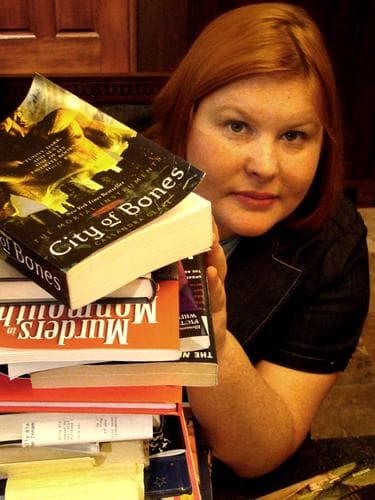
Cassandra Clare is a celebrated author of young adult fantasy, best known for her bestselling Shadowhunters series, which includes "City of Ashes" and "Clockwork Prince." Her intricate world-building and complex characters have captivated millions of readers worldwide. Clare's work often blends magical elements with relatable coming-of-age themes.







